
 Published on and written by Cyril Jarnias
For many expats, moving to Belarus is an idea that is both appealing and disconcerting. On the one hand, a generally safe country, a clean and well-organized capital, a reasonable cost of living, and a population known for its warmth. On the other hand, an authoritarian regime, a tense political environment, sometimes unstable borders, and a level of state control that can surprise a foreigner accustomed to liberal democracies.
To experience expatriation serenely, it is crucial to prepare for the country’s ambivalence. This article offers a comprehensive overview of safety, based on statistics, the legal framework, and on-the-ground reports. It covers physical, legal, financial, and health security, as well as mental comfort in daily life.
An objectively rather safe country… but politically very controlled
The first thing for any future expat to distinguish is the difference between daily safety and the political climate.
In terms of street crime, Belarus displays rather favorable indicators. The country is generally classified as “low risk” for travelers, with a safety index around 62, and even 77 for Minsk. The intentional homicide rate is around 3.58 per 100,000 inhabitants, with a theft rate of about 25.89 per 100,000. Official 2024 figures report 73,270 recorded offenses, mainly thefts, frauds, and cybersecurity-related offenses.
In other words: the most common risk is neither kidnapping nor violent assault, but petty crime – pickpocketing, snatched purses, break-ins. Crimes specifically targeting foreigners remain rare.
Belarus is an authoritarian state led since 1994 by Alexander Lukashenko. Elections are not free, repression of opponents is systematic via the police, the Ministry of Internal Affairs, and the KGB, involving arbitrary arrests, prosecutions for “extremism,” and very heavy sentences. The country is the only one in Europe that still applies the death penalty.
For an expat, this means that safety in the “crime” sense is rather good, but the “political and legal” risk is real if certain red lines are crossed: participation in protests, political publications, donations to certain organizations, overly visible critical remarks, even made abroad.
Living in Minsk or in the regions: What is daily life like?
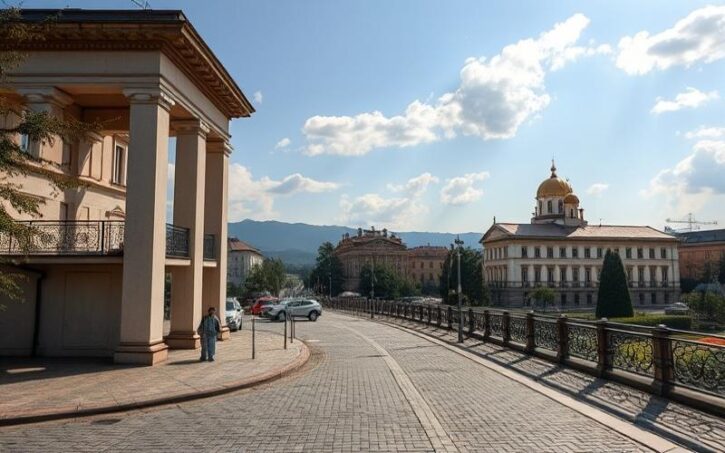
In daily life, many expats describe an surprisingly calm urban environment. Minsk, with about 2 million inhabitants, is a clean capital, with an efficient subway system, wide avenues, and many parks and green spaces. Brest and Grodno are often cited as more human-scale cities, very clean and perceived as safe.
Society is rather conservative in public behavior: people speak in moderate tones, avoid excesses, public transport is generally quiet, and rules are quite naturally respected. Culturally, the Soviet heritage (architecture, monuments, World War II commemorations) coexists with a vibrant cultural and nightlife, especially in Minsk.
Add to this a contained cost of living: the cost of living index for Belarusian cities is around 26.4, with Minsk being about 11.9% more expensive than the national average but still well below many European capitals.
A numerical overview helps give an idea:
| Expense Item | Range in Minsk (BYN) | Approximate Equivalent in USD* |
|---|---|---|
| Simple meal at a restaurant | 15 – 50 | 9 – 15 |
| Three-course meal for two, mid-range restaurant | 60 – 200 | 30 – 60 |
| Public transport ticket (one-way) | 0.80 – 1.00 | 0.30 |
| Monthly public transport pass | 35 – 65 | 12 – 15 |
| 1-bedroom apartment downtown rent | 600 – 2,035 | ~290 – 480 |
| 3-bedroom apartment downtown rent | 1,400 – 3,600 | ~525 – 770 |
| Monthly internet (fiber) | 25 – 45 | ~10 |
| Average net salary in Minsk | – | 625 – 861 |
*Conversions to dollars vary according to exchange rates; ranges are indicative.
In practice, a single person can live comfortably on a monthly budget (rent included) that remains well below that of a major Western European city, even when adding a safety margin.
Actual crime: Concrete risks and useful precautions
Common crime affects Belarus like any country, but at a moderate level. For an expat, the main points of vigilance are fairly standard.
Pickpocketing and petty theft are mainly reported in busy areas: train stations, subways, crowded buses, shopping centers, restaurants, hotel lobbies, tourist spots. Wallets, phones, and handbags left unattended disappear quickly. Car theft mainly targets SUVs and high-end European, Japanese, or American vehicles, or the theft of spare parts.
Several other fraudulent practices are worth knowing: online scams (fake jobs, fake marriage agencies, romance scams), credit card or ATM fraud, more frequent bicycle thefts, and the risk of spiked drinks in some bars or nightclubs.
In this area, the recommendations are relatively simple: do not display valuables, use a “dummy” wallet to limit losses, keep original documents safe and carry copies, avoid poorly lit streets at night, never leave belongings unattended, and in the evening, watch your drinks carefully.
Women traveling alone face a risk considered low, but assaults and sexual harassment exist and are largely underreported. Same reflexes as anywhere: avoid walking home alone late at night, decline drinks offered by strangers, inform someone of your movements, favor official taxis.
A political environment that demands caution
The most sensitive aspect for an expat is neither crime nor the weather, but the political and security framework.
Since the 2020 presidential election and the massive protests that followed, the authorities have tightened control even further: protests violently suppressed, thousands of arrests, laws applied retroactively, heavy sentences for activities labeled “extremist” or “terrorist.” Social media is monitored, many websites and platforms are blocked, and access to certain information is restricted.
For a foreigner, this translates into several very clear red lines:
It is imperative not to participate in opposition protests or political gatherings, to avoid any public stance (including on social media) against the authorities, the army, the war in Ukraine, or state symbols, to refrain from donating to organizations linked to the opposition or fighting in Ukraine (the law can be applied retroactively), and to never photograph security forces, official buildings, strategic installations, or military infrastructure.
Surveillance is not a fantasy: border checks with searches of phones and computers are possible, hotel rooms and communications can be monitored, random identity checks are frequent, and refusing a check (for example, a bag scan in the subway) can lead to arrest.
Belarus applies the death penalty for serious offenses such as murder, terrorism, or treason. This sanction applies to both its citizens and foreigners, as evidenced by the case of a German national who was sentenced. For an expat, it is crucial to avoid any legal gray area: no drugs, political activities, sensitive photos, or behavior that could be equated with espionage or provocation.
War in Ukraine and regional context: A factor of uncertainty
Belarus is not officially a country at war, but it plays a logistical and political role in the Russian conflict in Ukraine. Russian troops are stationed on its territory, military exercises are regularly organized, and some border regions have already been hit by projectiles from the Ukrainian theater, notably in the Brest region.
Several areas are identified as more exposed to military activity: Mazyr/Mozyr, Zyabrovka, Vileyka, Gantsevichi/Hantsavichy, Osipovichi/Asipovichy, and Lida. It is inadvisable to approach them without necessity. Furthermore, areas can be temporarily off-limits to the public during maneuvers or exercises.
The recommendation for an expat who wants to live peacefully is clear: settle in a large city relatively far from the most sensitive borders (Minsk, Grodno, central Brest) and avoid unnecessary travel to exercise areas or near the Ukrainian border. Staying informed via reliable sources (embassy, consular services, international organizations) about developments in the regional situation is essential, especially if tensions escalate.
Local laws: Small mistakes, big consequences
Certain offenses, fairly common elsewhere, are very severely punished in Belarus.
Drug legislation is among the strictest in the region: mere possession of a small amount of cannabis can lead to a prison sentence of up to five years, while trafficking or smuggling can result in up to 25 years of incarceration and heavy fines. Airports are very well equipped with detection equipment.
Road traffic has zero tolerance for drunk driving, with high fines and risks of imprisonment. Road checks are frequent, and the network includes police posts. The BelToll electronic toll system imposes tolls on certain roads for vehicles registered abroad, and non-payment results in penalties.
Many “minor” offenses can result in a fine: jaywalking, smoking in prohibited areas, taking photos of sensitive sites, paying or receiving money on the black market, using foreign currency for purchases. Using foreign currency to pay for goods or services is illegal: everything must be paid in Belarusian rubles, bought from authorized exchange offices, upon presentation of a passport.
Homosexual relations are legal, but society remains very homophobic and the LGBT+ scene is almost clandestine. Public displays of affection or LGBT symbols can provoke police intervention. Regarding religious activities, foreign missions are strictly regulated: they require a specific visa and can only operate within registered organizations led by Belarusian citizens.
Finally, the police have the right to check your identity at any time, without an apparent specific reason. It is therefore crucial to carry your passport (or a paper copy of the identity page), your visa or residence permit, as well as the migration card and proof of your registration with the local authorities.
Borders, visas, and registration: Leave nothing to chance
Access to Belarusian territory and cross-border movement are heavily conditioned by the political context and decisions of neighboring countries. Visa waiver regimes are combined with occasional closures or restrictions at border posts.
Several systems coexist:
Several visa-free systems exist: a 30-day regime via Minsk Airport for 76 nationalities (strict entry/exit conditions, required insurance and funds); bilateral agreements for 30 to 90 days with many South American, Asian, and former USSR countries; a specific regime for neighboring countries (Poland, Lithuania, Latvia) via all road/rail checkpoints; and a tourist zone (Brest-Grodno) accessible for 15 days without a visa under conditions (organized tour, insurance, funds).
In addition to these regimes, there are the standard B visas (transit), C visas (short stay), and D visas (long stay), issued by consulates, the central administration, or the airport consular office. D visas are required for expatriation projects (work, study, family reunification, permanent residence) and require clear justification of the reason (employment contract, university admission, residence decision, etc.).
Every foreigner must register within ten days of entry, via the official portal or with local authorities. Hotels handle this formality for their guests, but in private rentals, the procedure is done with the owner. Delay can result in fines and complications when leaving the territory.
This system has two practical implications for expats: first, keep a record of all movements (tickets, accommodation invoices) in case of a check; second, anticipate registration upon arrival, by arranging a reliable address (hotel, pre-identified apartment, etc.).
Health and insurance: Avoid bad surprises
On paper, Belarus has a fairly developed public health system: over 500 inpatient facilities, nearly 2,700 outpatient care centers, a hospital network covering rural areas, over 50 practicing physicians per 10,000 inhabitants, and over 130 nurses per 10,000 inhabitants. The country also focuses on medical tourism, with over 160,000 foreigners treated in 2023 for dentistry, heart surgery, oncology, or joint prosthetics.
For an expat, the reality is more nuanced. Emergency care is generally accessible, but standards, especially outside Minsk, are not always up to the level of Western European countries, and the language barrier complicates care. Public facilities are suitable for life-threatening emergencies; for specialized consultations and comfort, private clinics are often preferred by foreigners.
Minimum amount in euros that mandatory health insurance must cover for foreigners staying in Belarus.
In most cases, this coverage only funds emergency care in public facilities. Everything related to “scheduled” medicine – examinations, check-ups, long-term treatments – is at the patient’s expense, sometimes at higher rates for foreigners than for residents. In case of a serious condition, medical evacuation to a country with a more advanced system may be necessary.
From the perspective of personal safety, it is therefore wise to:
Before your departure, subscribe to travel/expatriation insurance covering all medical expenses and medical repatriation. Identify in advance the reference clinics in Minsk or your host city. Always carry your insurance documents (paper and digital) and the insurer’s emergency numbers. For your health, avoid tap water without boiling it, prefer bottled water, and be cautious with food bought outdoors (microbiological risks, with a residual risk related to Chernobyl in the southeast).
Note that a series of diseases exist or circulate: tick-borne encephalitis in forest areas (especially from April to November), hepatitis A and B, rabies, tuberculosis, traveler’s diarrhea, flu, COVID-19, etc. An up-to-date vaccination schedule and, depending on lifestyle (hiking in forests, contact with animals), additional vaccinations should be considered.
Money, banks, and sanctions: Financial security, another pillar of serenity
Financially, Belarus presents two opposing realities for the expat.
On the one hand, a fairly structured banking system, with 21 banks and 2 non-bank credit organizations, supervised by the National Bank. Individuals can open accounts in Belarusian rubles, dollars, euros, or Russian rubles, have Visa and MasterCard cards, access online banking and interest-bearing deposits. The state guarantees 100% of individuals’ deposits in case a bank’s license is revoked, which strengthens domestic confidence.
An environment of international sanctions complicates the use of foreign cards, Swift transfers, and relations with local banks from the West. Several major Belarusian banks or their Russian parent companies are under sanctions, some no longer able to receive payments in dollars from certain areas. International money transfer providers have suspended their services, and as a precaution, many Western banks block transactions to Belarus.
For an expat, managing financial risk therefore involves several precautions:
Before your departure, check with your bank about using your card in Belarus and blocking policies. Bring cash in euros or dollars for the first few days, to exchange at authorized offices. If you receive a local salary, open an account in a non-sanctioned bank accustomed to foreign clients. It is also advisable to maintain several accounts in different local banks to protect yourself from the effects of sanctions or sudden rule changes.
A simple overview of available account types can help anticipate:
| Type of account / product | Main use for an expat |
|---|---|
| Current account in BYN | Daily payments, local salaries, bills, housing |
| Foreign currency account (USD/EUR/RUB) | Receive international transfers, keep savings in foreign currency |
| Term deposit | Place part of savings with interest (mind taxation) |
| Bank card (Visa/MasterCard) | ATM withdrawals, in-store and online payments |
Interest earned on certain deposits may be subject to a 13% income tax, depending on the term and rate, while gains on certain instruments (savings certificates, bonds) are exempt. Here again, serenity requires a minimum of local advice – lawyer, tax specialist, or banker – to avoid bad surprises.
Housing: Safety, neighborhoods, and pitfalls to avoid
Finding safe and suitable housing is the other major condition for a peaceful expatriation. The offer is varied: one to three-room apartments, shared apartments, serviced apartments for extended stays, student residences, hotels of various categories.
In Minsk, neighborhoods like Nemiga, Victory Square, Uruchye, Kamennaya Gorka, or Malinovka are often described as clean, calm, and relatively central or well-connected. Cities like Grodno, Brest, Vitebsk, or Gomel offer lower rents, at the cost of a more limited job market for expats.
Prices vary greatly depending on location and standard, but the following ranges provide a baseline:
| Type of housing (Minsk) | Indicative monthly rent (USD) |
|---|---|
| Studio / small apartment | 50 – 350 |
| 1 bedroom | 350 – 500 |
| 2 bedrooms | 500 – 700 |
This very wide range reflects both neighborhood differences and the rental method (direct from owner or agencies). To avoid scams, a few reflexes are essential: never pay the full rent before visiting and signing a contract, verify the consistency of the price (a “great deal” that seems too good for Minsk should raise suspicion), demand presentation of the owner’s and property’s documents, use recognized platforms or established agencies.
Belarusian law stipulates that a bedroom can only be occupied by one person, except for a married couple. Thus, two unmarried roommates are not legally allowed to share the same bedroom. This rule is notably taken into account during administrative registration procedures.
Finally, do not forget that housing is central to the obligation to declare your stay: any change of address implies a new registration with the migration services if you stay more than a few days at the new address. Handling these procedures from the start, with a cooperative owner or a reliable intermediary, is an important factor for serenity.
Traffic, transport, and road safety
Internal mobility is, overall, safe. Public transport – subway, buses, trams, trains – functions adequately, but as everywhere, they are a fertile ground for pickpockets, especially during rush hours. In the Minsk subway, security checks (bag scans) are frequent, and refusing to submit to these procedures can lead to serious complications, up to arrest.
Official taxis are preferable, avoiding sharing a vehicle with strangers. Price negotiation is common but should remain within reasonable limits.
Driving standards are often unpredictable, with sudden lane changes and reduced safe distances. While major highways are in good condition, many secondary roads become difficult in winter, and roadworks or potholes are frequently poorly marked.
To drive in Belarus, an international driving permit is required, along with your national license. Third-party car insurance is mandatory and must be purchased in the country. Electronic tolls (BelToll) apply to foreign-registered vehicles on certain roads.
In this area, safety is above all about caution: adopt defensive driving, strictly respect speed limits, never drive after drinking, check road and weather conditions before long trips, and have all vehicle documents in order (ownership, insurance, possibly a power of attorney if the driver is not the owner).
Legal status, nationalities, and specific risks
Certain expat profiles must pay particular attention to their legal status.
People with dual nationality Belarusian and foreign (for example Franco-Belarusian or British-Belarusian) will never have this duality recognized by the local authorities. They will be considered exclusively as citizens of Belarus, with all the consequences that entails: possible military conscription for men aged 18 to 27, no access to consular assistance from their other country of nationality in case of arrest, full application of national laws.
This is a reality many underestimate, thinking they can “get out of it” thanks to a foreign passport. In practice, if a Belarusian passport exists, it is that document – and that status – that takes precedence.
Nationality law expert
More broadly, anyone who has participated, even abroad, in political activities related to Belarus (protests, fundraising, running opposition sites, online expression deemed extremist) can be prosecuted, as the law allows retroactive application. Before expatriating, it is therefore prudent to assess one’s own past visibility and limit any new public exposure.
Cost of living, quality of life, and mental health
Beyond the “hard” risks, the serenity of expatriation also depends on living comfort, budget, and psychological well-being.
Life in Minsk is about 40 to 45% less expensive than in Warsaw, rent included.
In terms of air quality, Minsk is generally well-rated, with a level considered “good” around 10 µg/m³ of fine particles. The city is dotted with parks and green spaces, which contributes to quality of life. Life expectancy is around 74 years, and many public health indicators are within the regional average.
Living in a country where speech is controlled, independent media muzzled, NGOs dissolved, and protests banned can generate a specific long-term stress. To navigate this reality, many expats adopt a form of “active neutrality”: they focus on their work, family, and cultural discovery, while carefully avoiding political topics in public spaces.
Integrating into an expat community (online networks, local groups, cultural activities) and maintaining regular links with the outside (family, friends, remote consultations with a psychotherapist if needed) can strongly contribute to maintaining a good balance.
Conclusion: A serene expatriation in Belarus, under what conditions?
Belarus presents a paradoxical but readable picture. It is an objectively rather safe country in terms of street crime, welcoming in daily interactions, financially affordable, with decent infrastructure and a clean and functional urban environment. But it is also an authoritarian state, heavily involved in a regional conflict, applying the death penalty and retroactivity in criminal matters, where freedom of expression and assembly is extremely limited.
A truly serene expatriation requires embracing these two realities and deriving precise guidelines:
– accept that one is not coming to advocate, but to work, study, or live within a highly regulated framework;
– scrupulously respect local laws, even when they seem too strict or absurd;
– protect oneself financially (banks, sanctions, insurance) and legally (registration, visas, statuses);
– prepare medically and logistically (insurance, locating healthcare facilities, possible exit plan);
– build a network – expats, colleagues, neighbors – to not face administrative complexity or unforeseen events alone.
Belarus can be suitable for managers of industrial subsidiaries, teachers, Russian language students, and employees of international organizations requiring a local presence. On the other hand, it is not recommended for people who are very politically exposed or for whom freedom of expression is essential, even for a temporary stay.
The essential thing, before leaving, is to replace preconceived ideas – in one direction or the other – with a fine understanding of the ground. It is this lucidity, more than the absence of risks, that constitutes the true foundation for a serene expatriation in Belarus.
Disclaimer: The information provided on this website is for informational purposes only and does not constitute financial, legal, or professional advice. We encourage you to consult qualified experts before making any investment, real estate, or expatriation decisions. Although we strive to maintain up-to-date and accurate information, we do not guarantee the completeness, accuracy, or timeliness of the proposed content. As investment and expatriation involve risks, we disclaim any liability for potential losses or damages arising from the use of this site. Your use of this site confirms your acceptance of these terms and your understanding of the associated risks.

Cyril Jarnias is an independent expert in international wealth management with over 20 years of experience. As an expatriate himself, he is dedicated to helping individuals and business leaders build, protect, and pass on their wealth with complete peace of mind.
On his website, cyriljarnias.com, he shares his expertise on international real estate, offshore company formation, and expatriation.
Thanks to his expertise, he offers sound advice to optimize his clients' wealth management. Cyril Jarnias is also recognized for his appearances in many prestigious media outlets such as BFM Business, les Français de l’étranger, Le Figaro, Les Echos, and Mieux vivre votre argent, where he shares his knowledge and know-how in wealth management.





