
 Published on and written by Cyril Jarnias
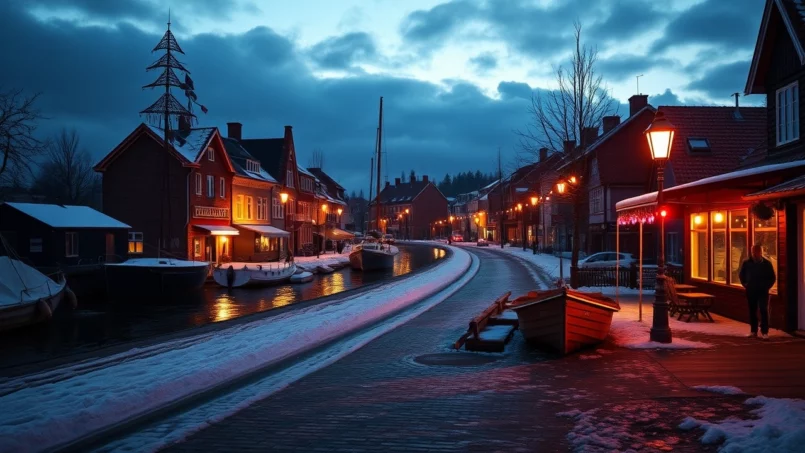
Finland’s nightlife resembles neither Berlin’s nor Barcelona’s. Here, nights unfold between northern lights and steamy saunas, cutting-edge craft beers and ultra-creative cocktail bars, unselfconscious karaoke and… ‘kalsarikänni’ evenings in your underwear at home. From the bustling clubs of Tampere to the design bars of Helsinki, from Lapland’s aurora safaris to nighttime swims in floating pools, the country offers a surprisingly rich palette of experiences after dark.
Understanding Finnish Nights
Before choosing where to go out, you need to understand the country you’re stepping into. Finland lives to the rhythm of extremes few destinations know: near-permanent light in summer, profound darkness in winter, biting cold, endless lakes, and a culture where people speak little but live intensely.
Finnish social habits are heavily influenced by the seasons. In summer, activities mostly take place outdoors (patios, concerts, ferry-bars) until late at night. In winter, with nightfall coming early, social life refocuses indoors (bars, saunas) or around specific activities like aurora borealis safaris.
This light/darkness contrast, combined with a high level of safety, a culture deeply respectful of personal space, and a particular relationship with alcohol, gives Finnish nightlife a unique character: less loud than elsewhere, but denser, more sincere – and often more surprising.
Helsinki, the Beating Heart of Finnish Nightlife
The capital concentrates the country’s most varied nightlife scene. You’ll find neighborhood bars, experimental breweries, rooftop bars with sea views, rock clubs, jazz clubs, and some of Northern Europe’s most creative cocktail bars.
Neighborhoods for Going Out in Helsinki
Several zones structure the city’s nightlife: the center around Kamppi, the alleys of the Design District, the popular Kallio district, and the lively waterfront in summer.
Here is a summary of Helsinki’s main nightlife sectors:
| Neighborhood / Area | Dominant Vibe | Flagship Venue Types |
|---|---|---|
| Kamppi / Center | Lively, urban, trendy clubs and bars | Clubs, pubs, rooftops, cocktail bars |
| Design District / Punavuori | Chic, creative, arty | Wine bars, specialty coffee shops, refined cocktails |
| Kallio | Bohemian, relaxed, rather affordable | Pubs, craft beer bars, concert venues |
| Waterfront (Löyly, Allas, Clarion) | Sea views, saunas & cocktails | Public saunas, skybars, restaurants with terraces |
| Töölö | Quieter, residential, historic cafes | Cafes, small bars, seaside spots |
Cocktail Bars: The Art of the Perfect Glass
Helsinki has seen cocktail culture explode over the last decade. Several establishments have become local, even international, references.
Runar, for example, serves as the bar for the boutique hotel F6 on Fabianinkatu. The vibe is relaxed yet polished, with funk music, casually dressed bartenders, and a creative menu with cocktails between €10 and €13. They serve a “Hair of the Dog” with chocolate cereal milk and bourbon, illustrating the venue’s playful side.
On Ludviginkatu, Grotesk boasts one of the city’s most impressive gin selections – between 70 and 90 references. The “Oilivia” cocktail (olive oil, basil, black pepper) showcases the house’s culinary approach. It’s far from a flashy bar: the atmosphere remains simple, unpretentious, accessible.
The bar Lilla E, located in Helsinki’s Hotel Lilla Roberts, offers a fully Nordic cocktail menu. It highlights local ingredients, herbs, berries, and spirits from the region. This establishment positions itself as one of the priciest on Helsinki’s cocktail scene, fully embracing a premium positioning.
In a more experimental vein, Liberty or Death emphasizes sustainability: almost all ingredients are made in-house, cocktails are designed to limit waste, and a good selection of mocktails allows non-drinkers to feel fully included.
Other spots – Goldfish for its seasonal cocktails, the Wintergarden Bar at Hotel St. George which completely reinvents the menu without using lemon or lime, Bardot or A21 Cocktail Lounge – reinforce the idea that the Finnish capital is now a solid destination for mixology enthusiasts.
Craft Beers and Pubs with Character
A country historically dominated by lager, Finland has caught up in craft beer. Helsinki is at the heart of this movement, with several highly-rated breweries and a constellation of specialized bars.
Salama Brewing, for instance, ranks among the country’s top-rated breweries on the Untappd app, with dozens of beers on tap and over 10,000 ratings. Its bar, the SalamaNation Taproom (Eerikinkatu 5), immerses you in a colorful neon setting with around twenty beers on tap. You’ll encounter evocative names: Neo-Elektro, Get Rich or Drunk Trying (triple IPA), Razzie Passion (imperial Berliner Weisse), or Brainzilla (helles).
The CoolHead Brew brewery established its production and tasting site in a renovated former greenhouse in Vikki. It has distinguished itself on the market with its creations of Nordic sours and hoppy ales. Among its emblematic beers are the Salted Licorice Raspberry Sour, which blends raspberry and salted licorice, and the Naked Sauna Sour, a playful nod to local culture combining the sauna and beer experience.
Factory Brewing, rated around 4.1 on Untappd with several tens of thousands of ratings, has specialized in supercharged IPAs and pastry stouts, with a solid barrel program. Some of its releases (Continuum, DNEIPA; Alchemy, hazy IPA) regularly win awards, including a haul of medals at the Untappd Community Awards.
Olarin Panimo, meanwhile, racks up distinctions – including gold for its Red Neck (amber ale) – and collaborates with bars like Juova Hanahuone, where a special West Coast IPA, Pachanga, appeared for the venue’s anniversary.
Around these breweries, a galaxy of bars sustains beer culture: Juova Hanahuone (which refuses music to encourage conversation), Pien Shop & Bar (over 600 references in bottle or can), Bier-Bier with its retro Renaissance-style interior, Black Door which bills itself as a “beer drinker’s salon” and serves cask ale, One Pint Pub, or Pikkulintu, a temple for whisky lovers with around 300 references.
Rooftops, Sea Views, and Unusual Concepts
Summer nights are the ideal time to head for the heights or the Helsinki waterfront. Several rooftops let you sip a drink overlooking the city’s rooftops: Ateljee Bar atop Hotel Torni, Loft at Solo Sokos Hotel Torni, Lucy in the Sky, Kattila at Lapland Hotels Bulevardi, or the Sky Room, the bar at Clarion Hotel perched on the 17th floor, often animated by DJs until 2 a.m.
Along the sea, Löyly has become iconic: a massive sculptural wooden building, terraces overlooking the Baltic, a restaurant, and above all public saunas with the possibility of diving into the sea, summer or winter. Another institution, Allas Sea Pool, facing the port, combines seawater pools, saunas, dining, and sometimes outdoor concerts.
Löyly and Allas Sea Pool, Helsinki Institutions
The city also cultivates a taste for atypical concepts: SpåraKOFF, a bar set in a tram that tours the center; Bob’s Laundry, a bar-salon-laundromat where you can sip a house lager while a machine spins; Books & Antiques, a speakeasy inspired by old libraries tucked behind another bar.
Cafes, After-Work, and the “Not Too Late But Intense” Culture
While bars can stay open until 4 a.m., nightlife in Helsinki isn’t just about alcohol. The coffee culture is almost a religion: the country ranks among the world’s biggest coffee consumers per capita, and the capital is full of cafes and bakeries very active until early evening.
The famous after-work is well established: as early as late afternoon, terraces fill up for a beer, a glass of wine, or a mocktail – often without tipping over into a real “all-nighter.” Finns prioritize work-life balance, which is reflected in schedules: many go out early, come home early, except for big occasions.
Tampere, the Rock Capital and Electric Clubs
If Helsinki is the sophisticated showcase, Tampere embodies the rawer, more musical side of Finnish nightlife. An old industrial city situated between two lakes, it has developed a particularly dynamic scene of clubs, rock bars, and techno.
Bars, Panoramic Views, and Character Pubs
One symbol of nights out in Tampere is the rooftop bar at Hotel Torni (Ratapihankatu 43). Perched atop one of the city’s tallest buildings, the bar lines up heated glass bubbles that let you enjoy the view over the lakes and industrial chimneys, cocktail in hand. Creations run around €12 to €15, with a signature “Torni Spritz,” and the venue typically opens Wednesday to Saturday until 2 a.m.
For a more subdued atmosphere, Apteekki plays the apothecary bar card, with old flasks and well-executed classic cocktails (a Sazerac around €11). Kapsakka, in Kyttälä, attracts a more bohemian crowd, fond of whiskey sours and ciders.
Price in euros for a game skewer or a bottle of rare beer at the mentioned Tampere establishments.
Clubs, Live Music, and Themed Nights
Tampere stands out for a remarkable concentration of specialized clubs: rock, techno, karaoke, queer nights, drum’n’bass nights… The Tullikamari complex, with its Pakkahuone and Klubi halls, can host over 1,000 people and schedules concerts and clubbing nights Wednesday to Saturday. Many recurring concepts are programmed there: Hang The DJ nights (indie-rock), BigPOP (pop/indie), Meininkidisco (pop/electro/indie mix), Viidakko (drum’n’bass/jungle), or Club Nylon, a queer club alternating pop, techno, RnB, and house.
Discover a selection of iconic venues for a night out in Helsinki, from electro clubs to bars with live concerts.
Large multi-purpose hall hosting events like the K40-disco for an adult audience and electronic nights.
Club open until 4am, offering live band concerts on weekends.
Club dedicated to techno, open Thursday to Saturday. Entry fee between €10 and €15.
Lakeside club, specializing in EDM and open until 5am. Known for its foam parties.
For singing, 3K, a karaoke bar on Kyttälänkatu, runs its playlists until 4 a.m. with beers at €5 and cocktails at €9. Other venues – Kaijakka, Freetime, Fat Lady, Semaforo or Vastavirta-Klubi (oriented towards alternative punk rock) – show just how dense Tampere’s nightlife is.
Prices remain overall comparable to Helsinki’s, although the atmosphere often seems more relaxed, less “polished.” Club entry generally runs between €5 and €15, to which is almost always added a mandatory cloakroom fee (€3–5).
Festivals, Electronic Nights, and the Alternative Scene
Tampere also hosts major music events, from rock to electronic music. Neonya!! Party, for example, organizes hard dance, trance, and hardcore events at venues like Tavara-asema, AllTone Natklub, or Tuulensuun Palatsi, with line-ups mixing Finnish and international DJs.
You’ll also find major concerts at venues like Tampere Hall, the Exhibition and Sports Centre, or Olympia-kortteli, with artists ranging from KODO to Alan Walker or Wardruna depending on the season. In other words: for a medium-sized city, Tampere’s nightlife offering is surprisingly broad, especially for live music lovers.
Lapland: The Night Under the Northern Lights
As you head north, nightlife changes its face. Here, it’s difficult to talk about “clubbing”: the main attraction is the sky itself. The northern lights, visible about 200 nights a year over Finnish Lapland, structure the nighttime activity offerings.
Aurora Safaris: The Light Hunt
Several operators have specialized in “aurora hunts,” mainly around Rovaniemi, Levi, and other Lapland localities.
Arctic GM, “The Original Aurora Hunters™,” relies on a twenty-generation family tradition in Lapland since the 17th century. The company, employing over 150 people in Finland, Norway, and Sweden, has accompanied more than 50,000 visitors and boasts an observation success rate of about 99%, with over 7,500 verified 5-star reviews. Tours operate in small groups (max. 8) or privately, in recent Ford Transit Tourneo 4×4 vans with leather interiors. They are optimized by a “24/7 Aurora Command Center,” monitoring weather and solar activity, and assisted by a dedicated AI tool.
The guides, certified, trained in first aid, and insured for at least a million euros, also act as photographers. DSLR photos are sent after the tour, with hot drinks and local snacks on the program, as well as cold-weather suits available (excluding boots and hats). The “Guaranteed Aurora” policy provides a refund or rescheduling if nothing is seen – without guaranteeing the phenomenon’s intensity.
Other players adopt a similar logic: Lapland Explorers, with “budget” tours or “unlimited” hunts with no time or distance constraints; Book Lapland, with a network of over 1,000 aurora spots spread across Finland, Sweden, and Norway and a direct link to a meteorologist; or Arctic Road Trips, which combines night hunts with multi-day road trips adapting the route to the weather.
Prices vary enormously: from €59–89 for simple excursions, up to nearly €1,850 for more luxurious or multi-day packages, some complete Nordic tours easily exceeding $1,700–$5,600 USD.
Where to See the Aurora and What to Do at Night in Lapland?
The main Lapland hubs for nighttime activities related to the aurora include:
– Rovaniemi, the unofficial capital of Lapland, with its Santa Claus Village where many operators organize safaris (by minibus, snowmobile, husky or reindeer sleds), and glass igloo accommodations on the outskirts.
– Levi and Ylläs, ski resorts with a great offering of après-ski bars, restaurants, and nighttime outings on the snow (snowmobile, snowshoeing, night skiing).
– Ivalo, Inari, Saariselkä, Kakslauttanen, Muonio, Pello, and around sites like Riisitunturi National Park, Lake Inari, or lakes like Lehtojärvi and Vanttausjärvi, prized for their darkness and open horizon.
This resort offers a northern lights observation experience combining nature and comfort. It features laser-heated glass igloos for 2 to 6 people, an aurora alert app, and varied nighttime activities (snowmobile safaris, husky or reindeer rides, ice fishing, sauna). Its proximity to Ivalo Airport (about 15 minutes by car) makes it an ideal destination for a short stay.
Apart from the aurora, Lapland evenings revolve around campfires, stargazing, moonlight snowshoe or cross-country ski walks, ice-hole swimming after a sauna (avantouinti), or dinners in typical restaurants (reindeer stew, salmon soup, lake fish, etc.).
When to Go for the Auroral Night?
The months most often cited as “ideal” for the aurora are from late August/September to early April, with peaks around the equinoxes (September, March) and in February-March, when nights are still long but the weather a bit more stable. In summer, under the midnight sun, observing the aurora becomes almost impossible, as the night is not dark enough.
The probability of observation is strongest around what is called magnetic midnight, around 11:30 p.m., but safaris often stretch from nightfall until late, some with no time or kilometer limits. Spots are chosen far from all light pollution, often by lakes or on hills (fells).
Saunas and Nighttime Bathing: Going Out… to Sweat
It’s difficult to talk about nightlife in Finland without mentioning the sauna. Recognized by UNESCO as an intangible cultural heritage, the sauna is everywhere: over 3 million cabins for 5.5 million inhabitants, from apartment building basements to offices, from ferries to luxury hotels – even a Ferris wheel transformed into a sauna in Helsinki.
In the evening, many public venues allow you to extend the day in an atmosphere that is both social and intimate.
Helsinki: Between Contemporary Architecture and Industrial Heritage
Löyly and Allas Sea Pool, already mentioned, are among the best known. But the capital lines up other very different spots.
Kotiharjun Sauna, in the working-class Kallio district, is Helsinki’s last large wood-heated public sauna, operating since 1928. People go there after work or before having a beer in the neighborhood, in a very local atmosphere.
The Kulttuurisauna, located at Merihaka facing the sea, is an eco-designed sauna by architect Tuomas Toivonen and designer Nene Tsuboi. The atmosphere is calm and contemplative. Groups of more than two people are not admitted. In winter, you can practice “ice swimming” by going directly into the cold water from the sauna.
Lonna Sauna, on the island of the same name a few minutes by ferry from Market Square, offers two large wood-fired saunas of 12 seats each, with a terrace overlooking the Baltic. Uusi Sauna, in Jätkäsaari, combines modern saunas, a bar, and a bistro for a complete evening. Uunisaari, Furuvik, or Sauna Hermanni (dating from 1953) add even more options, some with themed nights, barbecues, mixed or reserved sessions.
Price-wise, it’s often between €16 and €22 for a public session in Helsinki:
| Public Sauna (Helsinki & region) | Sauna Type | Indicative Price (Adult) |
|---|---|---|
| Löyly | Wood + smoke, seaside | ~€18–22 |
| Kotiharjun Sauna | Wood, historic (Kallio) | ~€16 |
| Lonna Sauna | Wood, island opposite center | ~€22 |
| Uusi Sauna | Modern + bistro | ~€18 |
| Kuusijärvi (Vantaa) | Electric + smoke, lake | ~€18 |
In other cities, prices can be even milder: Rajaportin Sauna in Tampere, operating since 1906, offers sessions around €8; more recent complexes like Saunaravintola Kuuma (Tampere), Sataman Viilu (Jyväskylä), Forum Sauna (Turku), or venues like Arctic Sauna World (Muonio, Lapland) extend the experience late into the evening, sometimes until 10 p.m. with special events under the midnight sun.
The Nighttime Ritual: Löyly, Lake, and Cold Beer
A typical evening at the sauna unfolds in several acts: mandatory shower, entry into the hot room, pouring water on the hot stones (the famous löyly), regular breaks to cool off, quiet conversations, sometimes use of the vihta (a soft birch whisk to gently whip the skin), alternating with a dip in a lake or the sea, then returning inside.
Many public saunas are equipped with a bar or restaurant, offering beers, non-alcoholic drinks, soups (like the classic salmon soup at Löyly), and snacks. This allows you to spend several hours there, beyond just the session, alternating between hot baths, cooling off, conversations, and relaxation.
Scientifically, studies link regular sauna use to better stress resistance, improved sleep quality, and enhanced mood. For Finns, it’s also an extension of socialization: they willingly invite a foreign friend to “try the sauna” one evening, and refusing without a medical reason is rarely understood.
Restaurants, Late-Night Food, and Dining Culture
Finnish nightlife happens a lot around the table. In major cities, dinners are generally taken between 5 p.m. and 10 p.m., with a peak between 6 p.m. and 8 p.m. Alcohol at lunch remains quite rare, especially on weekdays, but in the evening, beer and wine readily accompany the meal.
Eating Late in Helsinki, Tampere, Rovaniemi
In Helsinki, the offering covers the whole spectrum: fine bistros, Lappish restaurants, Italian tables, all-you-can-eat sushi, late-night street food. Most restaurants close between 10 p.m. and 11 p.m., sometimes a bit later on weekends, but fast-food joints, kebabs, pizzerias, and “nakkikioski” (hot dog kiosks) take over until very late, especially near bar areas.
In Tampere, many people head from a concert or club straight to the pizzeria or kebab place by the station, some open until 4 a.m. In Rovaniemi, where the offering is more concentrated, regular restaurants often close between 9 p.m. and 10 p.m. on weekdays, a bit later on weekends, while a few pizzerias and burger joints stay open until the early morning to absorb the flows of aurora hunters and partygoers.
Specialties not to miss in the evening: salmon soup (lohikeitto), reindeer stew, smoked fish, Karelian pies, Nordic cheeses and berries, not forgetting blueberry pie or cinnamon pastries. In bars, the emblematic Long Drink (long drink), a mix of gin and soda, remains a staple.
Prices remain in the Nordic range: a full dinner with drinks can easily climb to €50–80 per person at a mid-range spot, more at fine dining establishments. Lunch is often more affordable: many restaurants offer lunch specials around €10–12, even less in university cafeterias.
Alcohol Rules and Drinking Culture
In Finland, drinking happens within a heavily regulated framework. Alcohol sales are governed by a specific law (Alcohol Act) whose stated goal is to limit consumption and its harmful effects. The country operates with a public monopoly, Alko, for the retail sale of stronger beverages.
Where and When to Buy Alcohol?
Beverages exceeding a certain strength are only sold in Alko stores, which form a network of about 365 self-service shops, plus an order site for in-store pickup. Hours are strict: possible opening from 9 a.m. to 9 p.m. on weekdays, 9 a.m. to 6 p.m. on Saturday, mandatory closure on Sunday and major holidays. For alcohol in general, retail sales of beverages over 2.8% are limited to the 9 a.m.–9 p.m. slot; after that time, supermarkets can continue to sell groceries, but no alcohol.
Since 2024, grocery stores have been allowed to sell fermented beverages up to this alcohol percentage, thereby broadening their offering.
Legal age: 18 years old for beverages above 1.2% alcohol, 20 years old for those above 22%. ID checks are common, even in bars and clubs, where some impose their own minimum entry age of 20 or 22.
Service in Bars and Clubs
Cafes, pubs, restaurants, and clubs are, however, free to set their hours within the legal framework. Many can stay open until 4 a.m., with alcohol service possible from 7 a.m. On the other hand, beyond 1:30 a.m. and up to 4 a.m., special rules apply, particularly regarding security: one steward per 100 clients, for example.
The old license categories (A, B, C) are now simplified into a single permit allowing service of all beverage types. Establishments can also obtain authorization to sell sealed bottles for takeaway between 9 a.m. and 9 p.m. “Happy hours” are allowed and can be advertised, but advertising for very short-term promotions is limited to inside the point of sale.
A few points to remember when going out:
– buying multiple drinks at once is legal;
– paying by credit card on credit is also legal (but not yet via some mobile payment systems for alcohol);
– selling to an intoxicated customer is officially prohibited, as is selling if you know the alcohol will be given to a minor or someone already intoxicated.
For the visitor, this concretely means: plan your purchases in advance, don’t be surprised by a rigorous age check even if you’re no longer 20, and accept the idea of a last drink at the bar rather than resupplying at a supermarket late at night.
Safety, Atmosphere, and Social Codes at Night
Finland is regularly ranked among the world’s safest countries. Helsinki, in particular, figures among the best-rated capitals for safety. Violent crimes remain rare, the police are perceived as professional and trustworthy, and in many neighborhoods you can walk home late at night without feeling unsafe.
On Friday and Saturday evenings, public alcohol consumption is visible and can lead to loud behavior or intoxicated individuals. While often more spectacular than dangerous, it is recommended to keep your distance from heavily intoxicated people.
Areas around stations (rail and bus), the large central parks (Kaisaniemi in Helsinki, for example), or certain outlying neighborhoods may seem less welcoming at night, especially on weekends. But even there, incidents remain, by European comparison, limited. Pickpockets exist, especially in tourist areas and on public transport, and some organized groups take advantage of free intra-EU movement. A few classics: pretending to be police to check your papers and steal your wallet, fake petitions, insistent requests for money, or small fuel scams.
Single emergency number accessible everywhere in Finland, with operators who can answer in Finnish and English.
Regarding social codes, Finns remain true to their reputation: they appreciate discretion, respect for personal space, measured speech. Queues are sacred, interrupting someone mid-sentence is seen as rude, a voice too loud in a cafe or tram will raise a few eyebrows. On the other hand, if you ask for help, they’ll gladly give it.
The Other Finnish Nightlife: Staying In
An aspect sometimes forgotten about “nightlife” in Finland is that it also happens… at home. The country has popularized internationally a practice called “kalsarikänni”: literally, getting drunk in your underwear at home, with no intention of going out. Translated into English as “päntsdrunk,” the idea isn’t uncontrolled drunkenness, but a deliberate, comfortable, willfully anti-social moment of letting go.
This practice involves wearing comfortable clothes, consuming a simple drink (beer or wine), preparing easy snacks, turning off work notifications, and devoting yourself to a relaxing activity (TV series, game, reading) without seeking to share it on social media. Recognized as a cultural element, it is even represented by official emojis created by the Finnish government.
In a country where winters are long, dark, with temperatures that can drop well below zero and barely six hours of light in the south, this philosophy makes sense: not everyone wants to brave a blizzard to go to the corner bar on a Tuesday night in January. Kalsarikänni is thus presented as an antidote to performance pressure, a moment of recovery, a reclaimed “nothing,” a paradoxical yet coherent complement to more classic nightlife.
Practical Tips for Enjoying the Night in Finland
To explore Finnish nights, a few reference points can help.
Transport: Use the HSL app to plan your trips and buy tickets in the Helsinki region, including for night buses. Taxis are safe and apps like Bolt are common. Check night connections elsewhere. Weather: In winter, fit your shoes with removable ice cleats for slippery sidewalks, especially during thaws. Payment: Prefer bank cards or contactless, the country is nearly cashless. Dress: Opt for a ‘smart casual’ style. In winter, dress in layers to alternate between the cold outside and indoor heat. Alcohol and driving: The legal blood alcohol limit is very low; don’t drive if you drink. Watch for animals on roads in Lapland. Tipping: Not mandatory, as service is included, but rounding up the bill is an appreciated gesture.
A Finnish Night, a Thousand Ways to Live It
Nightlife in Finland can’t be summed up in a single image. It can be lived in an evening gown on a Helsinki rooftop, in a hat and thermal suit on a frozen Lapland lake, in a swimsuit in the steam of a seaside sauna, in worn-out jeans at the back of a Tampere rock club, or in socks, at home, watching a series.
The common thread? A certain honesty in the way of being together, a deep attachment to nature, a marked respect for others and for public space, and an art of fully enjoying the light when it lasts all night – or of taming the darkness when it settles in for months on end.
Living in Harmony with Nordic Cycles
For those who can juggle between a drink in the city, a sauna evening, an aurora hunt, and a deliberate kalsarikänni, Finland offers, when night falls, a playing field much richer than it first appears.
Disclaimer: The information provided on this website is for informational purposes only and does not constitute financial, legal, or professional advice. We encourage you to consult qualified experts before making any investment, real estate, or expatriation decisions. Although we strive to maintain up-to-date and accurate information, we do not guarantee the completeness, accuracy, or timeliness of the proposed content. As investment and expatriation involve risks, we disclaim any liability for potential losses or damages arising from the use of this site. Your use of this site confirms your acceptance of these terms and your understanding of the associated risks.

Cyril Jarnias is an independent expert in international wealth management with over 20 years of experience. As an expatriate himself, he is dedicated to helping individuals and business leaders build, protect, and pass on their wealth with complete peace of mind.
On his website, cyriljarnias.com, he shares his expertise on international real estate, offshore company formation, and expatriation.
Thanks to his expertise, he offers sound advice to optimize his clients' wealth management. Cyril Jarnias is also recognized for his appearances in many prestigious media outlets such as BFM Business, les Français de l’étranger, Le Figaro, Les Echos, and Mieux vivre votre argent, where he shares his knowledge and know-how in wealth management.





