
 Published on and written by Cyril Jarnias
Moving to Finland means entering a country where religion is both deeply embedded in institutions… and surprisingly discreet in daily life. For an expat, this contrast can be disorienting. How should you behave in a Lutheran church? What does “freedom of religion” Finnish-style really mean? How do you participate in a religious holiday when you work for a very secular company? And where can you find a service in English in Helsinki or Espoo?
This guide deciphers local religious practices for expats. It covers expected behavior, places of worship, the relationship between the state and religions, and key dates in the religious calendar. Its goal is to enable smooth integration by reconciling respect for sensitivities with the reality of a largely secular society.
A very Christian religious landscape… but a very secular society
The first key to understanding Finland is to distinguish between official religious affiliation and actual practice.
On paper, the country remains predominantly Christian. Approximately 62.2% of residents, or around 3.5 million people, are members of the Evangelical Lutheran Church of Finland (ELCF), and 1% belong to the Orthodox Church of Finland. But just over a third of the population—about 34.9%—declares no religious affiliation, and this proportion is constantly growing.
Finland still has two ‘national churches’ with a special legal status, while being a deeply secularized society where religion is often experienced as a private matter.
Summary of the religious situation in Finland
Here is a numerical overview of the current situation:
| Indicator | Approximate Value | Comment |
|---|---|---|
| Total population | 5.6 million | Overall estimate |
| Evangelical Lutheran Church members | 62.2% | Approx. 3.5 million people |
| Finnish Orthodox Church members | 1.0% | Approx. 58,000 members |
| No religious affiliation | 34.9% | Share growing rapidly for two decades |
| Other religions (combined) | 1.8% | Islam, Judaism, Buddhism, Hinduism, Catholicism, etc. |
Public religious practice is low, even among members of the national churches. Surveys indicate that only a minority—around 9% of the population—attends a religious service at least once a month. Most Finns go to church only for major holidays (Christmas, Easter, weddings, funerals).
For an expat, this means two very concrete things: you will see churches everywhere, but they will rarely be full; and you will meet many colleagues officially members of the Lutheran Church who nevertheless define themselves as non-believers or barely religious.
Freedom of religion and the special role of the national churches
Finland has constitutionally guaranteed freedom of religion since the 1920s. Everyone has the right to choose, practice, or not practice a religion, without discrimination. It is not mandatory to belong to a religious community, and it is possible to leave one through a simple written procedure (including online via services like Eroakirkosta.fi).
However, two churches still benefit from a special legal status: the Evangelical Lutheran Church of Finland and the Orthodox Church of Finland. They are referred to as “national churches” and have specific prerogatives, notably the ability to levy a church tax on their members.
| Key Elements | National Churches | Other Religious Communities |
|---|---|---|
| Legal status | Public law entities | Private law religious associations |
| Right to levy a tax | Yes (1–2% of members’ income) | No, funding through donations and own activities |
| Role in state ceremonies | Significant (official days, commemorations) | Variable, mostly symbolic or local |
| Specific legal framework | Own ecclesiastical laws | Freedom of Religion Act + association law |
For an expat, this framework has several practical implications:
In Finland, the ties between the state and certain denominations are institutionalized. For instance, taxpayers who are members of the Evangelical Lutheran Church or the Orthodox Church see a ‘Church Tax’ deducted from their salary. Furthermore, religious representatives (priests or pastors) officiate at public ceremonies like national holidays or the opening of Parliament. Finally, the state funds and integrates Lutheran or Orthodox chaplains within public institutions such as the military, hospitals, and certain prisons.
At the same time, the state aims to be neutral in matters of religion. Other religious communities—Muslim, Jewish, Buddhist, Hindu, etc.—can register as communities (at least 20 adults), benefit from non-profit association status, and in some cases receive public subsidies, but they do not have the same level of integration into the state system as the national churches.
The Evangelical Lutheran Church: the discreet backbone of culture
For newcomers to Finland, it is the Evangelical Lutheran Church that most visibly structures the calendar, rites of passage, and part of local social life, even among non-practicing people.
A large church with moderate practice
The Lutheran Church is organized into nine dioceses, 384 parishes, and about 3.5 million members. The archbishop’s seat is in Turku. Local parishes are real small institutions: they employ pastors, deacons, church musicians (“kanttori”), organize services, catechism classes, social activities, concerts, youth clubs, neighborhood cafes, etc.
Yet, weekly attendance at services remains low. The church estimates that about 2% of its members attend a service each week. Most congregants only visit a few times a year, often for Christmas, Easter, Midsummer (Juhannus), or family events.
For an expat, it is therefore common to have neighbors who are officially Lutheran but hardly ever set foot in a church, except for a funeral or a baptism.
Rites of passage: still very present
Even in a context of secularization, Lutheran rites remain an important reference point.
| Rite of Passage | Approximate Proportion Affected | Comment for the Expat |
|---|---|---|
| Infant baptism | ~69.8% of children | Often a family ceremony, possible in a small chapel |
| Confirmation at age 15 | ~83.6% of teenagers | Confirmation camps in summer, very typical of Finnish culture |
| Christian funerals | ~96% of funerals | Often sober, very codified, even for non-practicing families |
| Religious weddings | Minority since 2014 | Civil weddings are now the majority |
The Lutheran confirmation at age 15, accompanied by a one or two-week camp in summer, is a social as much as a religious rite: many young people participate, including those who say they are not very religious, because it is a key moment of sociability and a family tradition.
Practice and style of Lutheran services
Lutheran services are characterized by a fairly structured liturgy, but with an overall simple tone, without marked theatricality. The main service, usually on Sunday morning, is often a service with Holy Communion. The typical order includes prayers, Bible readings, sermon, hymns, and intercessory prayer.
For an expat wishing to attend a service, it is recommended to check service times and locations in advance, respect dress codes and local customs, and possibly contact the parish community or a guide to facilitate integration.
– Dress is modest but informal: clean jeans and a simple sweater are generally acceptable, especially outside of major holidays;
– You remove your headwear inside;
– You sit or stand following the congregation, with no obligation to take communion if you are not Lutheran;
– Booklets or screens usually display hymn numbers and texts, often only in Finnish or Swedish, but some urban services also offer English.
Many parishes, especially in Helsinki, Espoo, and major university cities, offer activities in English, discussion groups, or bilingual services. Information is available on local church pages or via networks like “Colourful Church in Finland.”
Ethical stance and internal diversity
For an expat from more conservative contexts, the stance of the Finnish Lutheran Church may seem relatively moderate and nuanced. Officially, it affirms traditional Christian dogmas (Creator, resurrection, etc.), while accepting dialogue with science and social developments.
On sensitive issues like homosexuality, divorce, or abortion, the official discourse remains cautious, but internal debate is intense. In recent years, bishops have paved the way for the blessing or local celebration of same-sex marriages in some parishes, even if doctrinal consensus is not complete.
For the expat, this means the atmosphere in parishes can vary: some more “conservative”, others more “progressive” and inclusive. It is perfectly acceptable to seek a community that matches your own sensibility.
Understanding the Orthodox Church of Finland
The second national church, the Orthodox Church of Finland, has a much more modest demographic weight—about 58,000 members, or around 1% of the population—but a historical and cultural importance that exceeds its numbers.
A unique status in Western Europe
The Orthodox Church of Finland is an autonomous archdiocese, under the Ecumenical Patriarchate of Constantinople. It shares with the Lutheran Church the status of a national church, a fairly rare case in Western Europe for an Orthodox church.
It is organized into three dioceses (Helsinki, Kuopio & Karelia, Oulu), for a total of 21 parishes and about 140 priests. The largest parish is Helsinki, with about 20,000 members, including many new immigrant arrivals.
One distinctive feature of this church is its decision to celebrate Easter according to the Gregorian calendar, to align with the national Finnish calendar, which distinguishes it from other Orthodox churches using the Julian calendar.
Liturgy, languages, and participation
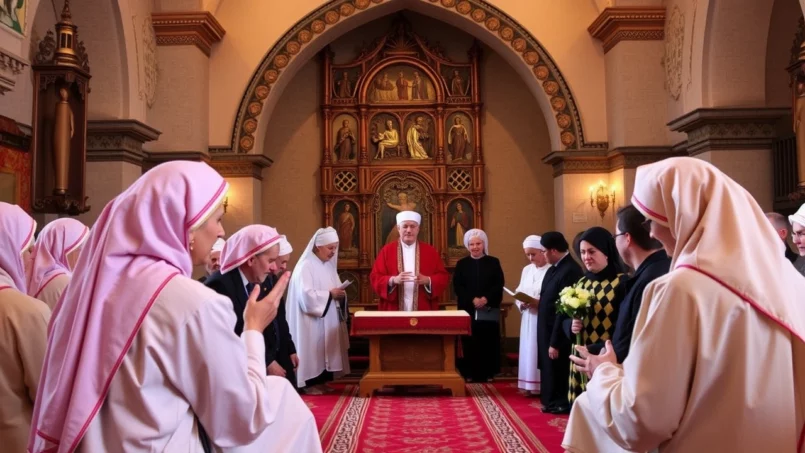
Finnish Orthodox services follow the Eastern tradition: Liturgy of St. John Chrysostom, chants inspired by Russian tradition, veneration of icons, incense, etc. The aesthetics are very different from Lutheran sobriety: many icons, colors, a cappella chanting.
The diversity of languages used in Orthodox parishes in Finland reflects the richness of this community and makes it a meeting place for believers from diverse backgrounds.
Finnish and Swedish are the most commonly used languages in the liturgy.
Use of Church Slavonic and Greek in some parishes, according to tradition.
Romanian and Arabic are practiced in parishes corresponding to these diasporas.
Presence of Skolt Sami and English to meet the specific needs of congregants.
For a non-Orthodox expat, it is entirely possible to attend the Divine Liturgy as a visitor:
At the back, observe first. You can light a candle and venerate an icon if you wish, with no obligation. Communion is strictly reserved for prepared Orthodox believers. Photography inside is sometimes permitted, but never during the central moments of the liturgy, and never of congregants receiving communion without their explicit consent.
Architecture and iconic places
The Orthodox heritage is also visible in the urban landscape. In Helsinki, the Uspenski Cathedral, perched on a hill by the harbor, is considered the largest Orthodox church in Western Europe. Its Byzantine-Russian style, golden domes, and iconostasis impress visitors, whether believers or not.
Many small Orthodox churches and chapels, sometimes wooden, dot the country, especially in Karelia and the East. After WWII, several buildings were reconstructed to replace churches lost on territories ceded to the USSR, often in a modern style, without domes.
The Orthodox Church also manages important monasteries, like the New Valamo Monastery and the Lintula Convent, both relocated after their evacuation from Karelia during the war. Many Finns, believers or not, visit these places for retreats, seminars, or simply for the peace and scenery.
Religious minorities: Islam, Judaism, Buddhism, Hinduism, and others
Beyond the two major national churches, Finland’s religious landscape has diversified with recent immigration. For an expat belonging to a religious minority, it is often possible to find a local community, especially in major cities.
Islam: a growing presence
Islam is now the most visible non-Christian religion in Finland. Officially, about 22,000 people belong to registered Muslim communities, but overall estimates range from 65,000 to 130,000 people, as many are not association members.
The first lasting Muslim communities date from the late 19th century, with the arrival of Tatars. The Finnish Islamic Congregation founded by these Tatars was the first officially recognized Muslim community in the West, as early as 1925. Today, Islam in Finland is composed of very diverse groups: Tatars, people of Somali, Iraqi, Afghan, Turkish origin, etc., from Sunni and Shia traditions.
The number of mosques and prayer rooms in Finland has increased since the late 1990s.
For a Muslim expat, several resources exist in Helsinki, sometimes with multilingual websites (Finnish, Somali, Arabic). However, challenges remain, particularly regarding specifically Muslim cemeteries or accommodating certain ritual practices (circumcision, ritual slaughter), which can conflict with Finnish legislation.
Judaism: small communities, strong symbolic visibility
The Finnish Jewish community, about 1,000 people, is concentrated mainly in Helsinki, with another community in Turku. Helsinki has a synagogue and a Jewish school with about 110 students, as well as a Lubavitch rabbi.
The Jewish presence is historical and recognized; Jews obtained citizenship after the country’s independence. For a Jewish expat, there are therefore religious and educational anchor points, but offerings remain concentrated in the capital.
Buddhism, Hinduism, Baha’i, and other movements
Finland is also home to Buddhist communities (about 5,000 adherents) and Hindu communities (approximately 5,000 people, mainly linked to immigration of IT workers from India, Nepal, and Sri Lanka). Buddhist temples exist in about a dozen cities, notably Helsinki, Tampere, Turku, Lahti, Kuopio.
Baha’is are estimated between 500 and just over 1,600, while other groups (Sikhs, Jehovah’s Witnesses, The Church of Jesus Christ of Latter-day Saints, neo-pagan movements like “Suomenusko” or Karhun kansa) complete the landscape.
For an expat belonging to one of these traditions, it is often necessary to inquire with national federations (Buddhist Union, Hindu organizations, etc.) or consult major interfaith dialogue associations, which maintain lists of active communities.
Religious practices and daily life: what an expat really needs to know
Beyond figures and statuses, what matters most for an expat are the informal codes. What is the real risk of a religious faux pas in Finland? In reality: not much, if you use common sense.
A tolerant society, but not demonstrative
Finland is often described as “liberal” in its social customs. This also applies to religious matters. Finns tend to consider religion a private subject, not to be displayed conspicuously in public. This does not mean faith is frowned upon, but rather that overly visible demonstrations (aggressive proselytizing, moralizing speeches) are likely to make people uncomfortable.
Concretely, for an expat:
– talking about your own religion is not taboo, especially in a context of trust, but insisting on convincing others will be perceived negatively;
– most colleagues will avoid the topic at the office, unless they sense a climate of trust;
– Finns generally respect individual choices: wearing a headscarf, kippah, or discreet religious symbol is not a problem, as long as it doesn’t conflict with specific professional rules.
Attending a service: basic codes
The codes in Finnish places of worship remain quite close to general European norms.
In Lutheran or Orthodox churches:
– Wear sober and decent clothing, but without formal dress requirements (except for special ceremonies like a wedding);
– Turn off or silence your phone;
– Avoid conversations during the service;
– Do not photograph congregants or important liturgical moments without permission.
As Finns are very attached to respect for silence in public spaces (transport, libraries), this respect for tranquility is even more pronounced in religious places.
Children’s schooling and religious education
An aspect that can surprise expats is the place of religious instruction in public schools. In accordance with the Constitution, no one can be forced to practice a religion against their convictions; yet, schools offer religion classes based on pupils’ affiliation.
The system works in principle like this:
In school settings, Lutheran pupils receive instruction in their religion. If at least three pupils of another religion (whose community is registered) are present in the municipality, a specific course for that denomination must be offered. Pupils with no religious affiliation can, for their part, take a course in ethics or ‘life philosophy’.
For an expat parent, the decision to enroll their child in a religion class or not is important; from age 12, the law requires the child’s consent for any change of affiliation.
Work, public holidays, and religious holidays
The official Finnish calendar is still largely shaped by Christianity, especially Lutheranism. Several public holidays are linked to religious holidays: Christmas, New Year’s Day (Feast of the Circumcision in the Christian calendar), Epiphany, Good Friday, Easter, Ascension, Pentecost, All Saints’ Day, not to mention Midsummer (Juhannus) which has transformed into the major national summer celebration.
But society treats these days more as times for rest and family than as religious obligations. An employer does not expect an expat to go to church, only to respect days off and service closures.
If you belong to another tradition (Ramadan, Jewish holidays, Hindu, etc.), it is common to negotiate days off or use vacation days, depending on your company’s flexibility. In many international organizations or large Finnish companies, managers are now used to handling such requests on a case-by-case basis.
The Finnish specificity: when nature becomes “church”
To understand Finnish spirituality, one must also look beyond neat denominational boundaries.
Surveys show that:
– a large portion of the population does not believe in the personal “God” of monotheistic traditions, but remains open to the idea of a force or spirit;
– about 42% of Finns say that time spent in nature brings them closer to God or a higher power.
The sauna is the average Finn’s version of going to church.
Contemporary authors
For an expat, this means that certain forms of Finnish “religiosity” are lived outside of temples in the strict sense: by a lake, in a forest, in a sauna cabin. Accepting an invitation to a family sauna or a getaway to a cottage can sometimes say more about your Finnish friends’ deep values than hours of discussion about theology.
Where to find English-speaking or international religious communities?
For many expats, the most practical question is not “what is the place of religion in Finnish society?”, but “where can I go to a service, pray, or meet other believers?”. The good news: in the capital and its region, English-language offerings are quite rich, especially for Christians.
Helsinki and Espoo: a mosaic of international Christian communities
In the metropolitan area, there is a range of congregations offering services, home groups, Bible studies, or social activities in English.
A few examples (without reproducing original texts):
Several options exist for attending Protestant services in English or other international languages in the region. International Protestant churches hold Sunday services in Helsinki (city center, Kaisaniemi, Kallio, Punavuori, Tammisalo) and Espoo (Matinkylä, Espoo Cathedral parish hall). Some local Lutheran parishes, like Matteuksenkirkko in Itäkeskus, also host English-speaking and other language communities (Swedish, Russian, etc.). Finally, independent or non-denominational churches, often with an evangelical inspiration, offer services in English, sometimes doubled in Finnish or with simultaneous translation.
Many of these communities present themselves as “international”, “interdenominational”, and “people-focused”, welcoming believers from different traditions. They regularly feature groups for foreign students, small prayer cells, meetings over coffee or a meal.
Several parishes also offer:
– online resources (sermon videos, digital bulletins);
– small international groups;
– simultaneous Finnish–English interpretation during the service.
Other major cities
In university cities like Tampere, Turku, Jyväskylä, Kuopio, Oulu, you generally find:
– at least one Lutheran service or regular activity in English;
– sometimes a Pentecostal or evangelical English-speaking community;
– international Christian student groups.
The Catholic Church, organized nationally by the Diocese of Helsinki, offers services in various languages like English, Polish, and Spanish, especially in the country’s major cities.
Islam, Judaism, Buddhism, Hinduism: finding your community
For Muslim, Jewish, Buddhist, or Hindu expats, community concentration is stronger in Helsinki. There are:
– several mosques and Islamic centers, some of which publish information in Finnish, Somali, and Arabic;
– two synagogues (Helsinki, Turku) and a Jewish school in Helsinki;
– Buddhist temples in many cities, sometimes linked to different traditions (Theravada, Zen, Tibetan);
– Hindu associations, stemming notably from waves of IT employment.
One effective way to find a community is through major interfaith dialogue organizations, for example the CORE Forum (COoperation of REligions in Finland). This forum brings together representatives from Christianity, Islam, Judaism, Buddhism, and the Latter-day Saints, and works with public authorities on religious and social issues. It can direct you to local communities.
Interfaith dialogue and respect for non-religious beliefs
For an expat, another important feature of Finland’s religious ecology is the focus on dialogue and peaceful coexistence between believers and non-believers.
Dialogue organizations
At the national level, the CORE Forum plays a central role. It promotes:
– interfaith and interconvictional dialogue;
– cooperation with the state, notably the Ministry for Foreign Affairs;
– reflection days on peace, human rights, and international responsibility.
In parallel, organizations like Ad Astra in Helsinki target young people more specifically, offering workshops in schools, study circles on anti-racism, personal story-sharing events, all in multiple languages. They address religious issues at the intersection of diversity, power, and inclusion.
For an expat, whether religious or not, there is a dense network of associations to join for engagement on social or community issues.
Place of non-believers
People without religion now form one of the largest “groups” in Finnish society: about 30 to 35% of the population. Organizations like the Union of Freethinkers or the Finnish Humanist Association defend their interests, particularly on issues such as:
– religious neutrality in schools;
– the option for non-religious funeral ceremonies;
– a clearer separation between state and national churches.
For an atheist or agnostic expat, Finland is generally a comfortable environment: you can live without any religious practice without it causing the slightest reaction, even in the provinces. Public and family ceremonies increasingly make room for civil or “custom” rituals.
Etiquette, politeness, and religion: mistakes to avoid, appreciated attitudes
In practice, the risk of a “major religious gaffe” is low in Finland. Society is tolerant, and Finns are used to foreigners’ blunders, which they usually treat with indulgence. Nevertheless, a few reflexes will ease your integration.
In places of worship
For tourist visits as well as services, a few universal principles apply:
– adopt attire covering at least shoulders and knees, avoid transparent or very tight clothing;
– remove your hat or cap inside;
– speak quietly, or remain silent during services;
– check if photography is allowed (often yes outside of services, sometimes no in certain areas or of praying congregants);
– avoid consuming food or drink inside the building.
In mosques, synagogues, Hindu or Buddhist temples, it is essential to respect specific rules like removing shoes, covering the head, or using a headscarf. Finns expect foreign visitors to do minimal research; asking a polite question is perfectly welcome and appreciated.
In conversation
A few useful guidelines:
– it is rare for a Finn to ask directly: “What religion are you?”;
– bringing up the topic spontaneously is not forbidden, but it’s better done in a personal setting, not in a work meeting;
– harshly criticizing someone’s religious beliefs or making heavy-handed jokes about religious minorities will be frowned upon, especially in a professional environment.
Conversely, many Finns are curious about religious experiences from elsewhere and appreciate respectful exchange, especially if they sense it is not proselytizing.
Practical advice for expats based on profile
To conclude, some recommendations according to common situations faced by expats.
Practicing Christian expat
– Inquire with local Lutheran parishes to find out about services or groups in English;
– in Helsinki–Espoo, explore international churches (Anglican, evangelical, Methodist, etc.) that offer regular services in English;
– you can freely participate in most Lutheran parish activities, even if you’re not a member, but communion remains tied to denominational affiliation in each tradition.
Muslim, Jewish, Buddhist, or Hindu expat
– Plan to live near a major urban center if proximity to a mosque, synagogue, or temple is important to you;
– contact umbrella organizations (Islamic congregations, Buddhist unions, etc.) or interfaith forums to identify the most active locations;
– discuss early with your employer about desired accommodations (prayer times, religious holidays, food, clothing), as most are open to dialogue and practical solutions.
Non-believing or searching expat
– Have no fear of presenting yourself as non-religious, it is not shocking in Finland;
– if you are invited to a religious ceremony (wedding, baptism, funeral), your respectful presence is enough: you can remain seated during prayers, without liturgical gestures if you do not wish to;
– explore if you wish the resources on civil ceremonies (notably for funerals) offered by humanist associations, which are very active in this area.
—
In Finland, religion influences the calendar, rites, and culture, but is lived without obligation or social pressure. Expats can freely explore local traditions, visit places of worship, join a community, or assert non-affiliation, without fear of being judged.
The key is to combine three things: a minimum of information about institutions (knowing what a national church is or what the church tax means), an attentive eye on concrete practices (how to behave in a Lutheran church or a Helsinki mosque) and, above all, an attitude of respect towards the diversity of beliefs—including the very Finnish one of finding spiritual renewal in the silence of a forest or the heat of a sauna.
Disclaimer: The information provided on this website is for informational purposes only and does not constitute financial, legal, or professional advice. We encourage you to consult qualified experts before making any investment, real estate, or expatriation decisions. Although we strive to maintain up-to-date and accurate information, we do not guarantee the completeness, accuracy, or timeliness of the proposed content. As investment and expatriation involve risks, we disclaim any liability for potential losses or damages arising from the use of this site. Your use of this site confirms your acceptance of these terms and your understanding of the associated risks.

Cyril Jarnias is an independent expert in international wealth management with over 20 years of experience. As an expatriate himself, he is dedicated to helping individuals and business leaders build, protect, and pass on their wealth with complete peace of mind.
On his website, cyriljarnias.com, he shares his expertise on international real estate, offshore company formation, and expatriation.
Thanks to his expertise, he offers sound advice to optimize his clients' wealth management. Cyril Jarnias is also recognized for his appearances in many prestigious media outlets such as BFM Business, les Français de l’étranger, Le Figaro, Les Echos, and Mieux vivre votre argent, where he shares his knowledge and know-how in wealth management.





