
 Published on and written by Cyril Jarnias
Moving to Senegal means embracing life with sun, heat, humidity, dust… but also with teranga, the legendary hospitality that defines the country’s reputation. For an expat, the key is to understand that the climate isn’t just about the weather: it shapes housing, clothing, work schedules, eating habits, social life, and even the organization of public services.
This guide provides practical advice for living comfortably in the Senegalese climate, particularly in Dakar, covering clothing, housing, transportation, healthcare, and daily organization, all while respecting the local culture.
Understanding the Senegalese Climate to Better Anticipate It
Senegal has a tropical climate with two distinct main seasons: the dry season and the rainy season, which manifest differently depending on whether you live on the coast (Dakar, Saly, Saint-Louis) or inland (Tambacounda, Matam, Kaolack, Casamance).
Two Seasons, Two Atmospheres
The dry season lasts roughly from November to May. The months from December to February are marked by the harmattan, a dry wind from the Sahara that brings dust, dry haze, and relative coolness in the morning. In Dakar, daytime temperatures often hover around 25–28°C (77–82°F), with nights at 17–21°C (63–70°F). The air is drier, making the heat more bearable, but the dust can irritate the throat and respiratory tract.
The rainy season, or *hivernage*, lasts from June to October, with peak intensity in July and August. During this period, temperatures frequently reach 30°C (86°F) and can exceed 40°C (104°F) inland, combined with very high humidity levels. This climate isn’t simply hot; it is perceived as heavy, muggy, and sometimes stifling, a feeling particularly pronounced in densely populated urban areas.
The showers are often brief but intense, turning streets into rivers of mud. In some regions, dirt tracks become downright impassable, and roads accessing parks or rural areas are temporarily closed.
Regional Variations: Dakar is Not Tambacounda
On the Atlantic coast, the ocean’s influence tempers extreme heat. Dakar remains generally cooler than the interior, Saint-Louis benefits from the sea breeze, Saly and the Petite Côte have a warm but breezy beach climate. In the east, towards Tambacounda, temperatures frequently exceed 40°C (104°F) during the hot season: the town is locally nicknamed the “house of heat.” To the south, in Casamance, the climate is more tropical with more rainfall and distinctly lusher vegetation.
For effective adaptation, it is crucial to consider both the season and the geographical location, as the same month can present very different thermal realities depending on the place, such as between Dakar, Ziguinchor, and Matam.
Dakar Throughout the Months: What Awaits You
In Dakar, average temperatures give a good overview of the annual feel. The table below summarizes the characteristic values of a typical year in the capital.
| Month | Avg Low (°C) | Avg High (°C) | Rainfall | Dominant Season |
|---|---|---|---|---|
| January | 17–18 | 26–28 | very low | Dry season / harmattan |
| February | 17–18 | 26–27 | almost none | Dry season |
| March | 18 | 27–28 | almost none | Dry season |
| April | 19 | 27–29 | almost none | Dry season |
| May | 20–21 | 28–30 | low | Transition |
| June | 23 | 29–30 | moderate | Start of rains |
| July | 25 | 30 | high | Rainy season |
| August | 25 | 30 | very high | Peak of rains |
| September | 25 | 31 | high | Rainy season |
| October | 24–25 | 31 | moderate | End of rains |
| November | 22–23 | 30 | almost none | Transition to dry |
| December | 20–21 | 28 | very low | Dry season / harmattan |
One quickly understands why cooperation agencies, international companies, and many expats prefer to arrive between November and March: the heat is moderate, rain is rare, and humidity is relatively low.
Dressing for Heat, Humidity… and Culture
The climate dictates clothing choices, but so does culture. Senegal is predominantly Muslim, with a sensitivity to modest dress, especially outside tourist beach areas.
Choosing the Right Fabrics and Cuts
To cope with 25 to 35 °C (77 to 95°F) almost continuously, with strong sun and sometimes high humidity, the ideal is to prioritize:
– Light, breathable fabrics like fine cotton, linen, or certain technical anti-perspiration fabrics.
– Loose cuts that allow air to circulate.
– Light colors that reflect light rather than absorb it.
For greater comfort in hot climates, avoid thick synthetic clothing, heavy jeans, and non-breathable fabrics, which quickly become unbearable. It is advisable to invest in locally adapted clothing, such as boubous and shirts made of light cotton, airy long dresses, or loose pants, a common practice among experienced expats.
Modesty and Respecting Social Codes
Outside tourist beaches, attire deemed too revealing can be very poorly received. Both women and men will benefit from adopting a sober style:
– For women: covered shoulders, discreet necklines, skirts or dresses above the knee should be avoided, especially in popular neighborhoods and religious towns (Touba, certain areas of Yoff, etc.).
– For men: long pants or at least knee-covering pants in daily life, proper shirts or t-shirts. Very short shorts are rarely worn by Senegalese men in an urban or professional context.
In mosques and religious sites, women must cover their heads and everyone must remove their shoes. It is advisable to always have a light scarf in your bag. It is useful for respecting modesty codes, but also for protecting yourself from dust carried by the harmattan wind and from the sun.
Adapting Your Attire to the Season
In the dry season, especially during the harmattan, the air is cooler in the morning and evening. A light vest or a light windbreaker is enough for those who feel the cold more. In the rainy season, the main challenge is not so much the “coolness” – temperatures remain high – but rather the humidity and sudden downpours. An ultra-light waterproof jacket or a foldable poncho, as well as closed, non-slip shoes, will save you more than once on the waterlogged streets of Dakar.
Finding Smart Housing: Climate, Comfort, and Bills
Housing is a central lever for adapting to the climate. Exposure to wind, ceiling height, ventilation quality, the presence of trees around the house, or even the type of walls play a concrete role on the indoor temperature.
Air Conditioning: Essential or Not?
Not all homes in Senegal have air conditioning. In some rental listings, the absence of AC is even the norm. In Dakar, many expats consider air conditioning a minimum in bedrooms, at least for the rainy season when heat and humidity peak. However, the energy reality is as follows:
Important factors related to electricity and climate for assessing air conditioning needs.
Electricity is prepaid via the Woyofal system, and the more you use AC, the quicker the credit runs out.
Power cuts still occur, especially in popular neighborhoods and certain regions. An air conditioner without electricity becomes a costly decorative object.
During the milder period (January–May), many expats find a fan sufficient, especially in well-ventilated coastal areas.
Before signing a lease, it is therefore crucial to check if air conditioners are installed, in which rooms, and if there are backup solutions (generator, solar panels, good natural ventilation).
Natural Ventilation and Adapted Architecture
The example of the new hospital in Tambacounda, built without air conditioning using principles of tropical architecture (double roof, perforated bricks, cross-ventilation), shows that much can be achieved with building design. Obviously, most Dakar buildings were not designed with this level of climatic sophistication, but a few practical approaches remain useful:
To improve comfort, especially in summer, prioritize a through-type apartment with opposing openings to encourage natural ventilation. Opt for light-colored walls and a well-insulated roof. Ensure you have shutters or blinds to block direct solar radiation during the day. Finally, installing mosquito nets on windows allows you to sleep with windows open at night, effectively cooling the home.
Neighborhoods and Urban Microclimates
In Dakar, neighborhoods most favored by expats (Almadies, Ngor, Virage, Mamelles, Point E, Fann, Mermoz, Sacré-Cœur, Plateau) often offer better climatic conditions than the landlocked, densely built-up areas inside the peninsula (Grand-Yoff, HLM, Parcelles-Assainies, Pikine, Guédiawaye).
Areas near the ocean benefit from the sea breeze and, in more affluent neighborhoods, water and electricity cuts are less frequent. In return, rents are significantly higher.
The following table illustrates in a simplified way the typical trade-offs in a few Dakar neighborhoods for an expat concerned about climatic comfort.
| Neighborhood | Ocean Proximity | Natural Ventilation | Electricity/Water Cuts | Rent Level (Indicative) |
|---|---|---|---|---|
| Almadies / Ngor | Very close | Good | Less frequent | Very high |
| Mamelles | Close | Good | Medium | High / medium+ |
| Point E / Fann | Relative | Adequate | Medium | High |
| Plateau | Seaside but very dense | Variable | Medium | High |
| Sacré-Cœur | Farther | Medium | Medium to frequent | Medium / medium+ |
| Grand-Yoff | Far | Often weak | Frequent | More affordable |
| Yoff village | Seaside but dense and very religious | Variable | Cuts possible | Medium / affordable |
This climatic and infrastructural dimension must be integrated as much as price or proximity to work when choosing housing.
Managing Heat Day-to-Day: Routines and Reflexes
Living with a hot and sometimes extreme climate requires a gradual adaptation of lifestyle. Senegalese people do this naturally: shifted schedules, naps, seeking shade, consumption of hot drinks like *attaya* tea even in the full heat.
Hydration and Adapted Diet
Hydration is an absolute priority, especially during the rainy season and heatwaves. In Dakar, air quality is generally poor, and heat increases respiratory fatigue. Drinking only filtered, boiled, or bottled water is recommended, as tap water is not safe to drink.
Experienced expats always keep:
To maintain good hydration, it’s advisable to have a bottle of drinking water on hand. In case of diarrhea or signs of dehydration, the use of oral rehydration salts is recommended. Furthermore, some non-alcoholic local drinks, like *bissap* (hibiscus infusion) or *bouye* (drink made from baobab fruit), are excellent and particularly refreshing alternatives.
Traditional Senegalese cuisine, like thieboudienne (fish and rice), yassa (marinated lemon-onion chicken or fish), or *mafe* (peanut stew), is often rich, hearty, and sometimes very spicy. It’s helpful, especially at first, to adjust portions and favor lighter meals at midday, particularly during periods of intense heat.
Organizing Your Day According to the Weather
With the notion of “Senegalese time,” the rigor of Western schedules sometimes clashes with local reality, where heat and the unexpected set the day’s rhythm. Several adaptations help make living with the climate easier:
For your safety and comfort, it is advisable to schedule physical activities (sports, errands, walking trips) early in the morning or late afternoon to avoid the peak heat. During the rainy season, avoid long trips in the middle of the afternoon when storms break out abruptly. In periods of extreme weather, adopt some flexibility by accepting that meetings or appointments may start late or be rescheduled.
The implementation of an early warning system for heatwaves, managed by the national meteorological agency and the Ministry of Health, illustrates how seriously the country now takes these risks. In certain pilot regions, this bulletin has already led football teams to change their training times and herders to move their herds earlier or later in the day.
Health, Illnesses, and Climate: Anticipate Rather Than Suffer
The Senegalese climate isn’t limited to heat: it also influences the spread of vector-borne diseases (transmitted by mosquitoes), waterborne and respiratory illnesses. Good medical preparation is non-negotiable for an expat.
Vaccines and Basic Prevention
Several vaccines are recommended for a stay in Senegal, especially a long-term one: typhoid, hepatitis A and B, polio (adult booster), meningitis, rabies (if exposure to animals is likely), and of course updating standard vaccines (tetanus, diphtheria, pertussis, measles-mumps-rubella). Yellow fever is a specific issue: if you are arriving from a country where the disease circulates, a vaccination certificate is required upon entry. Even without formal obligation, vaccination is highly recommended, as the disease is present in the country.
It is recommended to consult a travel medicine center 4 to 6 weeks before departure to review necessary vaccines, health precautions, and appropriate prophylactic treatments for the destination.
– the necessary vaccines,
– malaria prevention treatments (atovaquone/proguanil, doxycycline, or mefloquine, depending on your profile),
– special precautions for pregnant women, children, or the elderly.
Mosquitoes, Rainy Season, and Malaria
Malaria is present throughout Senegal all year, with a peak during the rainy season (mosquitoes multiply thanks to stagnant water). Sleeping under an insecticide-treated mosquito net, wearing long clothing in the evening, using repellents containing DEET, icaridin, or PMD (citriodiol), and avoiding stagnant water around the house are basic but vital reflexes.
The hot and humid climate of the rainy season favors the spread of diseases like dengue, chikungunya, Rift Valley fever, and water-related digestive infections. For protection, it is essential to maintain good food hygiene: consume well-cooked food, avoid questionable raw vegetables, and do not drink unpasteurized milk.
Dust, Pollution, and Respiratory Tracts
During the harmattan, especially in the northern Sahelian region, winds laden with dust dry out mucous membranes and trigger coughing, irritation, asthma attacks in susceptible individuals. Dakar also experiences significant air pollution, linked to traffic, industries, and Sahelian dust, with air quality indices rated “moderate” to “poor” for a good part of the year.
For an expat suffering from asthma or respiratory conditions, it is prudent to come with a sufficient stock of medication (reliever and controller inhalers, antihistamines) and to plan on consulting a pulmonologist on site, preferably in Dakar where medical infrastructure quality is highest.
Water, Electricity, and Connectivity: Living with Inconsistencies
The climate also affects infrastructure. Storms damage roads, extreme heat strains electrical grids, and pressure on water resources increases.
Managing Water Day-to-Day
The rainy season sometimes causes flooding in certain areas of Dakar or the interior, but this doesn’t mean drinking water flows abundantly. In several neighborhoods, water cuts occur, forcing residents to fill jerry cans or tanks.
For an expat, this often implies: adapting to a new culture, managing administrative formalities, and building a social network.
– installing some water reserves at home (jerry cans or tanks),
– not relying solely on last-minute deliveries,
– always having a stock of bottled drinking water.
As a food safety precaution, it is recommended not to drink tap water without it having been treated beforehand (by boiling, filtration, or disinfection). Furthermore, susceptible individuals should avoid using untreated water for brushing their teeth.
Prepaid Electricity and Heat
Heat leads to increased electricity consumption (air conditioning, fans, refrigerators). However, in Senegal, electricity is prepaid via Woyofal: beyond the practical aspect (no catch-up bill), this also means that the cut can be… self-inflicted if you forget to recharge your credit.
During a heatwave, an air conditioner that stops due to lack of credit can turn into a health problem for the most vulnerable. Many expats get into the habit of:
For optimal, interruption-free use, it is recommended to: regularly check the credit level on the meter box, make a significant recharge at the beginning of the month (especially during hot periods), keep a fan running to compensate for power dips, and plan for backup solutions like a generator or batteries if possible.
Internet and Phone: Adapting to the Network
Heat, humidity, and even storms can also disrupt telecom networks. Yet, for an expat – especially a remote worker – connectivity is crucial. The country has good mobile coverage (3G/4G) for West Africa, although average speeds remain modest and uneven across regions.
The most effective approach often consists of: clearly identifying objectives and mobilizing the necessary resources to achieve them.
– combining a local mobile line with a data plan (with Orange, Free/Yas, or Expresso) and a fixed internet subscription if the housing allows it,
– carrying an external battery pack to limit interruptions during power cuts,
– identifying a few reliable cafés or coworking spaces (for example in Dakar) offering decent, air-conditioned connections.
Getting Around in a Hot Climate: Transport and Safety
Transportation is heavily influenced by the weather. Rain makes some roads impassable, heat makes traffic jams more grueling, and dust complicates driving.
To Drive or Be Driven?
The main road network in Senegal is relatively developed, but the quality of secondary roads varies greatly. In the rainy season, some routes turn into mud baths, especially outside major cities. For an expat considering driving:
To get around in good conditions, prefer a 4×4 vehicle if you plan to travel off main roads, especially between June and October. Absolutely avoid night driving due to insufficient lighting, the presence of unlit vehicles, pedestrians, and animals on the roadway. Remain constantly vigilant regarding the sometimes unpredictable behavior of other drivers, especially overloaded taxis and minibuses.
Many expats, especially in Dakar, opt for taxis or ride-hailing services rather than personal driving, at least initially. Negotiating prices, knowing the main routes, and adapting to the absence of formal addresses are part of the learning curve.
Taking the Season into Account for Travel
In the dry season, if the harmattan blows strong, visibility can decrease and dust invades the vehicle. Closing windows and possibly using a mask or scarf in the city, especially for motorcyclists, makes trips more comfortable.
In the rainy season, rapid runoff turns some streets in Dakar and other cities into veritable torrents during storms, and giant potholes form. To cope, it is advisable to adapt your outing schedules to avoid periods of intense storms and to have water-appropriate shoes.
Climate, Work, and Professional Rhythm
The climate also influences the way of working, even if this topic is rarely mentioned in job descriptions.
Air-Conditioned Offices… or Not
In large companies, international NGOs, or institutions, air-conditioned offices are the norm in Dakar. But in smaller organizations, provincial administrations, or some schools, air conditioning is sometimes absent or limited to a few rooms. This has concrete consequences:
– increased fatigue in the afternoon during the hot season,
– decreased concentration,
– need to interrupt work more often to drink, cool down, ventilate.
In Sahelian schools, episodes of extreme heat lead to an increase in fainting among children. For adults, the most serious manifestation of these conditions is the increased risk of heat stroke, a medical emergency.
Managing Expectations and Deadlines
Local partners, whether public or private, also live in this climate. The rainy season sometimes complicates logistics (roads cut off, delayed deliveries, flooded buildings). Projects get delayed, meetings are postponed. Anticipating this “seasonality” of setbacks, adapting schedules and expectations accordingly, is an integral part of good professional integration.
Climate and Culture: How Heat Shapes Social Life
The heat and abundant light also structure Senegalese sociability. Streets come alive early in the morning and at nightfall, squares and sidewalks become living spaces, café terraces fill up, religious and family ceremonies unfold throughout the daily prayers.
Living Outside… in the Shade
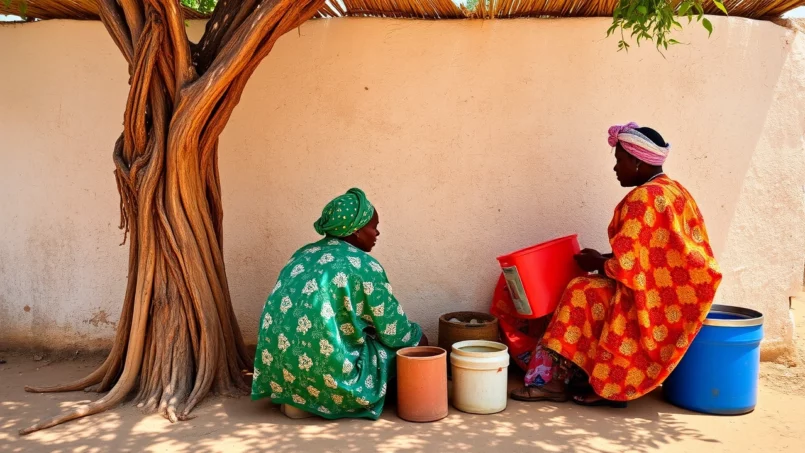
During the day, especially in the rainy season, shade is actively sought: under a tree, in a compound, under a metal sheet shelter. Attaya tea is often drunk outside, in a very social posture: people chat, exchange news, comment on the weather, politics, the previous day’s match. In the evening, walks along Dakar’s Corniche or on the beaches of Yoff, Ngor, or Saly bear witness to this outdoor culture, despite the heat, or rather with it.
For an expat, integration involves adopting social rhythms, like going out during cooler hours, taking time to sit down, exchanging prolonged greetings, and listening. This adaptation is essential for entering the country’s human climate as much as its meteorological climate.
Religious Festivals, Ramadan, and Personal Adaptation
The religious calendar, closely followed in a predominantly Muslim society, also interacts with the climate. During the month of Ramadan, Muslims fast from dawn to sunset, which, under the Senegalese heat, can lead to more pronounced fatigue in the late afternoon. Even if you don’t fast, it is recommended to:
During the month of Ramadan, it is advisable to avoid eating and drinking conspicuously in the street out of respect for those who are fasting. One must also be patient with services that may be slower or offer adjusted hours. Finally, it is important to be mindful of the heat felt by those fasting, especially during meetings or physical work, and adjust your expectations accordingly.
Major festivals, like the Grand Magal of Touba or Tabaski (Feast of Sacrifice), also generate massive travel, monstrous traffic jams, and last-minute adaptations, which heat or rain can further amplify.
Concrete Strategies for Successful Adaptation
Beyond general considerations, a successful move to Senegal relies on very practical decisions made from the start.
Choosing the Right Time to Move
Arriving between November and March allows you to discover the country in its mildest climatic conditions. Your body then has time to get used to the heat before the rainy season arrives, you discover the city without massive flooding, and administrative procedures are easier to manage without the fatigue of a heatwave.
Building Your Personal “Climate Kit”
From the first weeks, it is useful to put together a small adaptation arsenal:
For a comfortable stay, pack light and modest clothing, as well as effective sun protection (hat, sunglasses, sunscreen). An impregnated mosquito net, a backup fan, a sturdy water bottle, and tissues or masks for the harmattan dust are also recommended if your housing is not equipped with them.
Informing Yourself Locally About Weather and Risks
Subscribing to local weather bulletins, following communications from health authorities and meteorological services – especially during the rainy season and heatwaves – allows you to anticipate travel and activities. Heat alert systems are being set up, and community radios play an important role in disseminating these messages.
Relying on the Expat Community… and on Teranga
Many associations, online groups, and expat support networks exist in Senegal, particularly in Dakar. They are often the best channels for answering very concrete questions: where to buy a reliable fan, which neighborhood remains the most ventilated, which doctor to consult for dust-related respiratory problems, how to manage a long trip during the rainy season, etc.
Hospitality (teranga) is an authentic and lived value in Senegal. The local population is a precious resource, spontaneously offering advice, water, coolness, and help. To integrate and ease your adaptation, it is highly appreciated to learn a few words of Wolof (like the greetings « Na nga def ? » or « Yangi ci jàmm ? ») and to respect local customs.
—
So, adapting to the Senegalese climate isn’t just about surviving the heat. It’s about learning to live with a demanding but generous environment, respecting its rhythms, preparing for it intelligently, and accepting to adjust your habits. By combining medical preparation, adequate clothing choices, adapted housing, water and energy management, understanding of the seasons, and openness to local practices, an expat can not only endure but appreciate this climate that profoundly shapes life in Senegal.
Disclaimer: The information provided on this website is for informational purposes only and does not constitute financial, legal, or professional advice. We encourage you to consult qualified experts before making any investment, real estate, or expatriation decisions. Although we strive to maintain up-to-date and accurate information, we do not guarantee the completeness, accuracy, or timeliness of the proposed content. As investment and expatriation involve risks, we disclaim any liability for potential losses or damages arising from the use of this site. Your use of this site confirms your acceptance of these terms and your understanding of the associated risks.

Cyril Jarnias is an independent expert in international wealth management with over 20 years of experience. As an expatriate himself, he is dedicated to helping individuals and business leaders build, protect, and pass on their wealth with complete peace of mind.
On his website, cyriljarnias.com, he shares his expertise on international real estate, offshore company formation, and expatriation.
Thanks to his expertise, he offers sound advice to optimize his clients' wealth management. Cyril Jarnias is also recognized for his appearances in many prestigious media outlets such as BFM Business, les Français de l’étranger, Le Figaro, Les Echos, and Mieux vivre votre argent, where he shares his knowledge and know-how in wealth management.





