
 Published on and written by Cyril Jarnias
Sport in Togo is not limited to a few football matches listened to on the radio. From the coast to the northern savannas, the country lives to the rhythm of very diverse disciplines, ranging from professional football to initiation wrestling, including beach handball, social basketball, and high-level cycling. For anyone wanting to play sports in Togo – resident, student, expatriate, or simply a passing traveler – the possibilities are numerous and deeply rooted in local culture.
This article provides an overview of the most practiced sports in Togo, based on national competitions, active federations, and the main development trends of Togolese sports.
Football, the national sport and daily passion
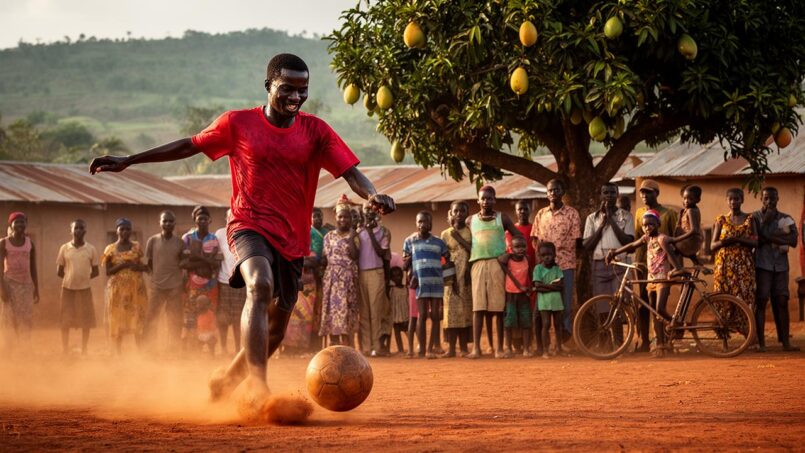
It is hard to talk about sports in Togo without starting with football. The discipline is both the national sport, a major spectacle, a daily leisure activity, and a vehicle for social mobility.
In urban neighborhoods as well as in villages, makeshift fields fill up from late afternoon. Men, women, children, everyone plays, sometimes barefoot, with a worn-out ball, but with the same passion that drives major official matches.
At the top of the pyramid is the National First Division Championship, managed by the Togolese Football Federation (FTF), recognized by FIFA and the African Football Confederation (CAF). This division, born in 1961 – the year of independence – remains the showcase of local football.
Playing football within the federation system
The FTF structures competitive football through a well-established system of regional leagues. They cover the entire territory, from Lomé to Dapaong, passing through Kpalimé, Atakpamé, Sokodé, and Kara. These leagues organize local championships that allow clubs to gradually climb toward the elite.
Here is a simplified overview of the territorial organization of football in Togo:
| League / Zone | Main cities (examples) |
|---|---|
| Lomé Commune | Lomé |
| Maritime East League | Aného, Tabligbo, Vo, Togoville, Akoumapé |
| Maritime West League | Lomé (Tsévié, Kévé) |
| Kloto League | Kpalimé, Amou, Danyi |
| Plateaux East | Atakpamé, Notsé, Tohoun |
| Plateaux West | Amlamé, Badou |
| Center League | Sokodé, Tchamba, Sotouboua, Bassar, Blitta, Guérin-Kouka |
| Kara League | Kara, Niamtougou, Pagouda, Bafilo |
| Savanes League | Dapaong, Mango, Kanté, Barkoissi, Bombouaka |
For a player who wants to progress, joining a club affiliated with one of these leagues is often the first step. The National Championship currently brings together 14 teams, with a promotion/relegation system between the first and second divisions. Kara teams – notably ASKO and ASC Kara – dominate the historical rankings, while clubs from Lomé like Étoile Filante or Dynamic Togolais maintain a long-standing rivalry.
The FTF has created the Professional Football League (LFPT) via new statutes and membership criteria that have been approved. Eventually, the 1st and 2nd divisions will be managed by this league, with reinforced requirements in management, infrastructure, and training.
The National Championship as a major popular event
The National Championship season, despite historical interruptions due to political or organizational problems, has stabilized in recent years with a more regular schedule. Each match then becomes a neighborhood event, especially when the country’s big teams travel.
Ranking rules remain standard: three points for a win, one for a draw, zero for a defeat, with goal difference as the first tiebreaker. The champion earns a valuable ticket to the African Champions League, even if the gap in resources with the continent’s major nations remains significant.
For amateurs, this context offers a perspective: play for a district club, move up the division, get noticed, and maybe one day join the Éperviers, the national team that played in the 2006 World Cup and whose iconic figure remains Emmanuel Adebayor, who played for Monaco, Arsenal, and Manchester City.
Combat sports and traditions: boxing, wrestling, and Evala
If football takes center stage, combat sports hold a special place in Togolese culture, blending modern practice with ancient tradition.
Boxing: humble rings, but a real fighting culture
Boxing is popular, driven by figures like Zafrou Balloqou, ranked among the world’s best super-middleweights in the late 1990s. Other boxers like Yacoubou Moutakilou or Abdoukerin Hamidou have also achieved notable performances.
In the neighborhoods of Lomé and other cities, boxing clubs allow young people to train in this demanding sport. Boxing is often seen as a path to discipline, social advancement, and expressing combativeness. For a beginner, signing up at a local gym allows them to learn the basics of the noble art under coaches who know the harsh reality of the ring.
Traditional Evala wrestling: a sport, a rite, an identity
In northern Togo, wrestling is not just played on mats, but at the heart of a major ritual: Evala. This practice mainly concerns the Kabyè people, in the Kozah region, around the city of Kara. Every year, during the rainy season, young boys from Kabyè villages face off in wrestling matches that are both a sports competition and a rite of passage.
Young wrestlers, called “Evalo,” prepare for several months starting in May with strength exercises, throwing techniques, endurance, and mental preparation, coached by former champions who pass on the values of courage, patience, and self-control.
The fights take place over a week, village by village. Each confrontation becomes a test where strength, agility, and strategy are closely scrutinized by the elders, families, and visitors. Victory is a source of pride, defeat a step in the long learning process of adulthood.
Spirituality is central among the Evalor. The young follow a three-year ritual including ritual consumption of dog meat, isolation, and abstinence. The dog symbolizes endurance and intelligence. After initiation, the young man no longer eats dog, gains the right to bear arms, marry, and be buried as an adult.
For those who want to practice wrestling in a sporting sense without necessarily entering the initiation framework, some structures organize purely athletic training inspired by this tradition. But Evala, as a complete system of passage to adulthood, remains deeply communal and codified.
Basketball: from playgrounds to empowerment programs
Togolese basketball does not yet have the aura of football, but the orange ball is gaining ground, especially among young people. Hoops can be found in many neighborhoods, where impromptu games are organized on concrete courts.
A federation seeking professionalization
The National Basketball Federation (often referred to as FNB-Togo or FTBB) has launched a major capacity-building program for its leaders: club presidents, league officials, administrators. The idea is clear: to develop basketball, you first need to structure governance, club management, fundraising, and long-term planning.
A six-month training program, with monthly sessions, has been set up. Topics covered range from governance principles to project structuring, including fundraising strategies. The goal is to transform from within the way basketball is managed in the country: less short-term improvisation, more professionalism and vision.
The federation plans to monitor the concrete application of the lessons learned in clubs, evaluate participants, and produce a final report to guide future policies. The ambition is to raise the national level closer to that of Nigeria or Côte d’Ivoire, by multiplying participation in FIBA Africa competitions and organizing youth camps (U14, U16, U18), including in 3×3.
Beyond performance, basketball also serves as a social lever. The Togolese association Leading Youth Sport and Development (LYSD), founded in 2013, has made it its field of action. Its flagship program, Milédou – meaning “We are together” in the Mina language – targets thousands of young people from vulnerable backgrounds.
The Milédou program combines basketball training, educational support, and social assistance in more than 15 communities across the country. About 5,000 young people participate. Three pillars structure this program: coach training, the opportunity to compete in local championships, and extracurricular activities aimed at academic success, career guidance, mental health, sexual health, and gender equality.
The project “Basketball for the empowerment and fulfillment of youth in Togo,” supported by the AFD, is implemented by LYSD in Kouvé. It includes a network of trained educators, bi-weekly training sessions, local leagues, weekly dance sessions, and a network of young mentors called “Milés.” Hundreds of young people aged 8 to 20, with special attention to girls, participate in the programs.
For a young Togolese person, playing basketball is therefore sometimes much more than just playing: it means accessing a space for listening, learning, and opportunities.
Continental visibility with the Basketball Africa League
Togo is also part of pan-African initiatives like the “Alley-oop Africa” project, co-financed by the AFD and the Basketball Africa League (BAL). A mini-series features young basketball players from seven African countries, including Togo, who must both perform on the court and develop projects related to the Sustainable Development Goals (health, gender equality, environment).
This educational dimension through sport fosters a favorable climate for the development of basketball in Togo, whether in clubs, schools, or on the playgrounds.
Handball and beach handball: a new international showcase
Handball is among the well-established team sports in Togo, particularly in villages where it is often played with modest means. But in recent years, the discipline has also gained an international showcase with the rise of beach handball.
Indoor handball: the foundation of practice
The Togolese Handball Federation (FTHB), chaired by Auguste Dogbau, organizes local championships and monitors clubs involved in national competitions. Teams like Handball Club Lomé or Kara Handball Club structure the practice. Youth competitions, school clubs, and interregional tournaments offer spaces for initiation and improvement.
Beach handball: Lomé, continental capital
Lomé’s beaches are not just places for relaxation or sand football. They have become, during major competitions, the center of African handball. In April 2026, Togo organized two major events back-to-back: the IHF Trophy Africa (zone 3) for men’s cadets and juniors, followed by the first African Beach Handball Cup of Nations.
Seven West African countries participated in the IHF Trophy in Lomé, a qualifying stage for the continental phase.
The following table summarizes the participants in the African beach handball championship organized in Lomé:
| Tournament | Participating teams (examples) | Notable result for Togo |
|---|---|---|
| IHF Trophy Zone 3 (youth) | Benin, Burkina, Côte d’Ivoire, Ghana, Niger, Nigeria, Togo | Successful organization, showcase for youth |
| African Beach Handball Cup – Men | Tunisia, Benin, Togo, Côte d’Ivoire, Mali, Kenya | Togo runner-up in Africa |
| African Beach Handball Cup – Women | Benin, Togo, Mali, Kenya | Togo runner-up in Africa |
Lomé thus wrote a page in the history of continental beach handball, with impressive performances from the Togolese selections, which finished second in both the men’s and women’s tournaments. For practitioners, these events had a ripple effect: multiplication of beach tournaments, emergence of specialized clubs, increased attractiveness of the discipline for young people.
For those who enjoy fast, spectacular outdoor team sports, beach handball on the beaches of Lomé is becoming an increasingly accessible option, whether for leisure or by heading toward clubs that are starting to structure the discipline.
Volleyball and beach volleyball: a discreet rise in power
Volleyball, long in the shadow of football, is gaining ground. The Togolese Volleyball Federation (FTVB), chaired by Noël Tadegnon, is multiplying initiatives to revive national championships and strengthen national teams.
The return of the national championship
The ninth edition of the national championship finals marked a turning point: the presence of the Minister of Sports in the stands, after fifteen years of absence, was interpreted as a sign of renewed political support. On the court, clubs LAISS for women and L’Étoile Filante for men won the titles, after closely contested matches.
Togo achieved seventh place at the African Volleyball Championship in the 1970s.
Beach volleyball, an international showcase
The real spotlight came from beach volleyball. In 2025, a Togolese duo, Bruno Kotoka and Achile Samanie, qualified for the first time for the senior Beach Volleyball World Championships, held in Adelaide, Australia. The raw sports record – three losses in three matches – is less important than the experience gained against the major nations of the discipline.
The Togolese scored 61 points over the entire tournament, measuring the gap separating them from nations that play eight to ten major events per year.
For a practitioner, the beaches of Lomé and other coastal sites offer an ideal natural terrain for beach volleyball. Local tournaments and informal or structured training sessions are developing, in a context where the FTVB is clearly pushing this practice that has allowed Togo to show itself on the world stage.
Athletics, running, and hiking: a country that runs
Athletics holds an important place in Togo’s participation in the Olympic Games and major international competitions. The Togolese Athletics Federation (FTA) manages national records, trains coaches, and organizes the national season.
An Olympic tradition and national records
Since 1972, Togo has regularly sent athletes to the Summer Olympics – except for the boycotts of 1976 and 1980. The country obtained its first Olympic medal in 2008, thanks to Benjamin Boukpeti, bronze in K1 slalom canoeing. In athletics, many sprinters and middle-distance runners have marked national records, from Franck Amégnigan on 100 m to Sandrine Thiébaud-Kangni on 400 m, including middle-distance runners like Makman Yoagbati.
The FTA organizes many internal competitions (national championships, youth meets, regional selections) and keeps records up to date by discipline. Training camps prepare athletes for the African Games and the Youth Olympic Games.
Running and hiking: practices on the rise
Alongside athletics competitions in the stadium, road running and hiking are developing as mass activities. Projects plan to organize hiking competitions at the regional level, with selection of the best teams for a national championship that will allow forming a selection representing Togo abroad, particularly in Côte d’Ivoire and Benin.
The Sokodé Marathon attracts runners and tourists for an original discovery of the country. Internationally, Togo’s participation in the Lagos City Marathon and the Africa Running conference creates ties with African runners.
For those who wish to practice running, the avenues of Lomé early in the morning, the less frequented roads around cities, and the bush tracks offer varied terrain, while the FTA gradually structures a calendar of official races.
Cycling: from leisure to the Tour of Togo
The bicycle is a common means of transport in cities and countryside, but it is also becoming structured as a high-level sports activity. The Togolese Cycling Federation (FTC) organizes competitions ranging from local races to large national tours.
The Tour of Togo, showcase of the discipline
The flagship event, the Tour of Togo, brings together Togolese and international riders. Its 31st edition plans six stages, with the participation of nine countries, including teams with cycling traditions like Belgium or France. Togo aims to win at least one stage, which requires serious preparation.
The FTC selects riders through races in Atakpamé, followed by a specific training plan. Road distances vary: 25-50 km for beginners, 75-100 km or more for elites.
The table below gives an overview of the typology of distances frequently practiced:
| Type of ride / race | Approximate distance | Target level |
|---|---|---|
| Short leisure ride | 25–50 km | Beginners / occasional riders |
| Intermediate ride | 50–75 km | Regular club cyclists |
| Long ride | 75–100 km | Trained amateurs |
| Elite race stage | 100–150 km | National competition |
| International tour stage | 150–200 km | High level / professional |
For an amateur, joining a local club or simply participating in the many informal group rides allows progress. The prospect of seeing the country host foreign teams and competing against them fuels the motivation of young cyclists.
Water sports, canoeing, and sport fishing
With a coastline of 56 km and bodies of water like Lake Togo, the country also offers interesting possibilities for water sports.
Canoe-kayak: from leisure to Olympic medal
Canoe-kayak gave Togo its first and only Olympic medal thanks to Benjamin Boukpeti in 2008. This feat highlighted a discipline that is still underdeveloped in terms of infrastructure. On the ground, practices often remain linked to traditional transport and fishing, but clubs and sections are beginning to organize around lakes and lagoons.
On Lake Togo, near Kpessi or Agbodrafo, discover the traditional pirogue, leisure kayaking, or sporty forms of navigation.
Navigate on Lake Togo aboard a traditional pirogue, an authentic experience of local culture.
Paddle a kayak on the calm waters of Lake Togo for a relaxing time in nature.
Try more sporty forms of navigation on Lake Togo, for thrill-seekers.
Sport fishing and maritime activities
Off the Togolese coast, operators offer deep-sea fishing trips, for half a day or a full day, on small boats. Targets include species like swordfish, tuna, jacks, captain fish, or barracuda.
Humpback whale watching campaigns are also possible at certain times of the year, offering a spectacular natural experience, on the border between tourism and sea sports.
Additional team sports: village handball, street basketball, sand volleyball
Beyond the big federation structures, a significant part of sports practice in Togo is informal, rooted in neighborhood or village habits.
Handball is often played in schoolyards or on small concrete courts, with rules sometimes adapted to the available space. Street basketball mobilizes young people on open playgrounds, where impromptu tournaments are an opportunity to compete against the neighborhood “stars.”
Sand volleyball, for its part, benefits from beaches and vacant lots. In Lomé, the beaches are especially lively on weekends, especially Sundays. People play football, beach volleyball, dance, listen to music. This sociability is an integral part of Togolese sports practice: playing sports is as much about exertion as it is about sharing a community moment.
Women’s sports: still uneven development, but moving forward
As in many countries, the Togolese sports scene remains largely dominated by men, whether in international representations or access to infrastructure. However, efforts exist to correct this trend.
In football, women play in local clubs and some leagues. Seminars were organized as early as the late 1990s to promote women’s participation. In athletics, sprinters like Sandrine Thiébaud‑Kangni, Judith Akouvi Koumédzina, or Naomi Akakpo have proudly represented the country.
The minimum percentage of girls benefiting from social basketball programs like Milédou
For a young Togolese woman, it is thus becoming increasingly possible to engage in sports once perceived as reserved for men, whether team sports, combat sports, or individual disciplines.
Why Togo is a privileged ground for sports practice
This overview of popular sports to practice in Togo highlights a reality: the country is at the crossroads of several sports worlds.
On one hand, an indestructible popular passion for football, with increasingly professionalized structures and a national league gaining stability. On the other hand, well-known disciplines – basketball, volleyball, handball, boxing, athletics, cycling – benefit from targeted initiatives: social programs, international partnerships, organization of continental competitions.
In parallel, traditional culture remains very much alive: Evala wrestling in the Kozah region is the most spectacular example, blending physical performance and symbolic depth. Traditional sports like wrestling, archery, or pirogue races continue to punctuate local festivals.
Finally, the country takes advantage of its natural assets: coastline suitable for beach volleyball and beach handball, lakes and sea for water sports, northern reliefs conducive to hiking, trail running, or challenging cycling.
For anyone wishing to play sports in Togo, entry points are numerous: affiliated clubs, neighborhood associations, structured federations, social projects like those carried by LYSD, or simply sand courts and paved lots where improvisational games forge, day after day, the Togolese sports culture.
A heritage project or a question? Contact us now to speak with a wealth management expert.
Disclaimer: The information provided on this website is for informational purposes only and does not constitute financial, legal, or professional advice. We encourage you to consult qualified experts before making any investment, real estate, or expatriation decisions. Although we strive to maintain up-to-date and accurate information, we do not guarantee the completeness, accuracy, or timeliness of the proposed content. As investment and expatriation involve risks, we disclaim any liability for potential losses or damages arising from the use of this site. Your use of this site confirms your acceptance of these terms and your understanding of the associated risks.

Cyril Jarnias is an independent expert in international wealth management with over 20 years of experience. As an expatriate himself, he is dedicated to helping individuals and business leaders build, protect, and pass on their wealth with complete peace of mind.
On his website, cyriljarnias.com, he shares his expertise on international real estate, offshore company formation, and expatriation.
Thanks to his expertise, he offers sound advice to optimize his clients' wealth management. Cyril Jarnias is also recognized for his appearances in many prestigious media outlets such as BFM Business, les Français de l’étranger, Le Figaro, Les Echos, and Mieux vivre votre argent, where he shares his knowledge and know-how in wealth management.





