
 Published on and written by Cyril Jarnias
Settling in Togo means entering a country where the climate structures practically every aspect of daily life: health, housing, travel, food, cost of living. For an expatriate, fully understanding this context is not a luxury, it is a condition of comfort… and sometimes safety.
Good to know:
This guide provides concrete tips on clothing, housing, transportation, hydration, healthcare, and work organization when faced with heat, rainy seasons, air and water quality, mosquitoes, and the realities of infrastructure and public health in Togo.
Understanding Togo’s Climate to Better Organize Your Life
The country stretches approximately 600 km from the Gulf of Guinea to the northern savannas. This simple fact explains much of the climatic diversity: a humid coastal climate in the south, wetter mountains in the center, and a drier, hotter savanna in the north.
Across the entire territory, the average annual temperature hovers around 27°C, but the way heat, rain, and wind combine varies significantly by region.
North, Center, Coast: Three Faces of the Same Climate
In the south, along the coast and around Lomé, the climate is tropical subequatorial. The sea remains warm year-round, temperatures generally range between 24 and 32°C, with high humidity. Rainfall is less abundant than one might imagine for the Gulf of Guinea: the coast receives an average of around 800 to 900 mm per year, which is low by regional standards.
2,000
Annual precipitation in western mountainous Togo reaches up to 2,000 mm.
In the north, around Kara, Dapaong, or the Savanes region, the climate is more Sahelo-Sudanian. A single, shorter rainy season from May to September, with annual totals around 1,000 to 1,400 mm depending on the area. The dry season is long, very hot during the day (up to 40°C before the rains), but nights can be surprisingly cool, sometimes dropping to around 15°C.
Seasons, Harmattan, and “Hivernage”: What This Means for You
We are not talking about four seasons here, but the alternation of rains/dry season, modulated by the movement of the intertropical convergence zone. Three major periods punctuate an expatriate’s life.
Good to know:
From November to March, the harmattan wind blows from the Sahara, bringing dust, dry air, and reduced visibility. On the coast, highs are 31 to 33°C, while in the center and north they exceed 35°C during the day, with cool nights of 15 to 20°C inland — bring a light sweater.
Between February and April, before the rains truly set in, the heat rises sharply. This is a “heat-up” period particularly pronounced in the north, where 38–40°C is common. For a newcomer, this is the most physically demanding phase.
Attention:
The rainy season (hivernage) from April to October in Togo, with monthly rainfall peaks of up to 200 mm in the south (April-July and September-October) and north (May-September), makes roads muddy, cuts off some rural tracks, and can flood neighborhoods in Lomé and other cities.
Already Visible Warming and More Frequent Extremes
Climate series show that Togo has been warming for several decades: the surface temperature trend is about 0.24°C per decade since the 1950s, but the pace accelerated to approximately 0.34°C per decade since 1991. Nights are warming faster than days, reducing the nocturnal thermal “reprieve.”
Projections indicate that the share of the population exposed to very hot days (maximum temperature > 35°C) could rise from about half historically to more than 80% by 2075. Days with a high heat index (hot and humid) are already very frequent: about two-thirds of the population is exposed, and they would become the norm.
For an expatriate, this translates into a simple reality: you must think of your daily life in permanent “heat management” mode, not just as a temporary discomfort.
Health and Climate: What Every Expatriate Must Anticipate
The climate in Togo is not just about heat and rain; it has direct consequences on health, through vector-borne diseases like malaria, waterborne infections, and respiratory conditions aggravated by dust and pollution.
Malaria, Respiratory Diseases, Meningitis: Where Are the Risks?
Malaria is present throughout the country, all year round, with higher risks in areas where the rainy season is long and stagnant water is abundant. A study conducted with the Ministry of Health identified particularly significant risk hotspots in the center and south, especially in the districts of Vo, Lacs, Moyen-Mono, Kpélé, and Bas-Mono. Transmission periods depend on the length of the rainy season, flooding, and the quality of sanitation systems.
Tip:
Respiratory infections are more prevalent in the north and center due to the irritating cocktail of harmattan dust, field burning, vehicle exhaust, and smoke from household fires during the dry season. The districts of Oti, Kpendjal, Tandjoare, Doufelgou, and Tône present the highest risks, especially for children, the elderly, and asthmatics.
Meningitis, a disease typical of the African “meningitis belt,” is also highly linked to climate: it is favored by very dry, dusty air and large temperature swings. Here again, the north concentrates the highest risks, with peaks expected during the driest months.
Pollutants, Smoke, Dust: A Challenge for Breathable Air
To these natural factors, significant air pollution is added. In 2016, more than 8,000 premature deaths were attributed to exposure to air pollution. The main cause: cooking with wood or charcoal, still used by more than 90% of the population, but also poor-quality fuels (even though Togo joined West African countries banning the import of “dirty fuels” from Europe), road traffic, and bushfires.
Attention:
From December to February, the combination of harmattan and burning season makes the air dangerous for children, seniors, and people with asthma, COPD, or heart conditions.
Water, Diarrhea, Schistosomiasis: Protecting Against Waterborne Risks
A significant part of the population does not have access to “safely managed” drinking water. Even in cities, tap water is neither uniformly treated nor safe from contamination in the network or storage. Diarrheal diseases, typhoid, cholera, and schistosomiasis are present.
For an expatriate, the rule is clear: never drink tap water without treatment, avoid swimming in freshwater (rivers, lakes, ponds) to prevent schistosomiasis, and be wary of ice cubes, juices, and salads prepared with unsafe water.
Housing Without Suffocating: Adapting Your Home to the Climate
Adapting to the climate begins with choosing—or modifying—your home. In Togo, the way a house is designed has a direct influence on indoor temperature, air quality, and even your electricity bill.
The Subtle Strengths of Traditional Architecture
Many vernacular Togolese constructions have developed, over centuries, effective responses to heat. Earth houses, thatched roofs, enclosed inner courtyards, small roof overhangs, and circular or square layouts are not merely traditional: they manage ventilation, shade, security, and insulation.
The circular “tata” dwellings of certain northern groups, for example, combine thick earthen walls and vegetative roofs to dampen daytime heat peaks and maintain relative coolness inside, while insulating against nocturnal cold. The compact shape limits sun exposure, and openings are reduced and well-oriented.
Good to know:
For comparable houses, earthen walls offer better thermal comfort than cement block walls, as the latter accumulate more heat and release it slowly at night.
Orientation, Ventilation, Materials: The Three Key Levers
Studies conducted in Togo have produced a map of optimal building orientation based on prevailing winds (monsoon trade winds from the southwest and harmattan from the northeast) and solar path.
In a hot and humid climate, the goal is twofold: maximize natural ventilation and minimize direct solar gain. Practically, this means:
– promote cross-ventilation from prevailing winds: large openings on southwest and northeast facades are recommended, with air flowing from one side to the other;
– reduce glazed or poorly shaded surfaces on the east and west, the most exposed to the low morning and late afternoon sun;
– systematically protect openings from the sun with roof overhangs, awnings, sunshades, or vegetation.
Simulations show that good orientation, combined with solar protection, can significantly lower the perceived indoor temperature, complementing effective cross-ventilation.
Good to know:
For an expatriate building or renovating, it is essential to incorporate simple rules from the design stage: reject plans that align large west-facing windows without protection, as this turns the home into an oven in the afternoon, even if the view is beautiful.
Local Materials, Vegetative Insulation, and Summer Comfort
Material choice plays a huge role. Research conducted in Togo on local bio-sourced materials shows, for example, that using vegetable fibers like Typha (a wetland plant) in walls and roofing significantly improves insulation: measurements indicate up to 6°C cooler inside buildings treated with these solutions compared to standard corrugated metal roofs.
Compressed earth blocks (CEBs) have also proven their value: they store less heat than cement blocks and have moderate thermal conductivity, helping to smooth temperature variations between day and night. Moreover, they are local and low-carbon.
Example:
Plasters made from néré (Parkia biglobosa) husks tested on earth bricks proved effective against rain erosion while maintaining wall breathability, a crucial advantage in a climate alternating between intense rain and drought.
Concrete Recommendations for Your Home
For an expatriate renting a city apartment, the architecture is often already fixed, but some choices remain possible when searching or furnishing.
When possible, it is better to prioritize:
– a non-attic top floor rather than a top level directly under an uninsulated metal roof;
– a building with windows on at least two opposite facades to promote cross-ventilation;
– living spaces oriented north or south rather than due west;
– walls made of heavy materials (earth, CEBs, solid blocks) rather than lightweight partitions made of highly conductive materials.
On an existing home, simple improvements can make a real difference: installing external blinds or shutters, planting trees or shrubs to shade the most exposed facades, painting metal roofs light colors to limit heat absorption, and adding ceiling fans.
Managing Heat in Daily Life
Even with a relatively well-adapted home, heat is part of the landscape in Togo. It affects how you dress, work, exercise, and travel.
Clothing, Hydration, Daily Rhythms
The hottest days (especially in the north and during the pre-rainy season) impose a logic of African siesta or schedule reorganization. Many outdoor activities are concentrated in the morning and late afternoon, leaving midday for sheltered tasks or rest.
Recommendations from research on health in hot climates are worth integrating into your habits:
Tip:
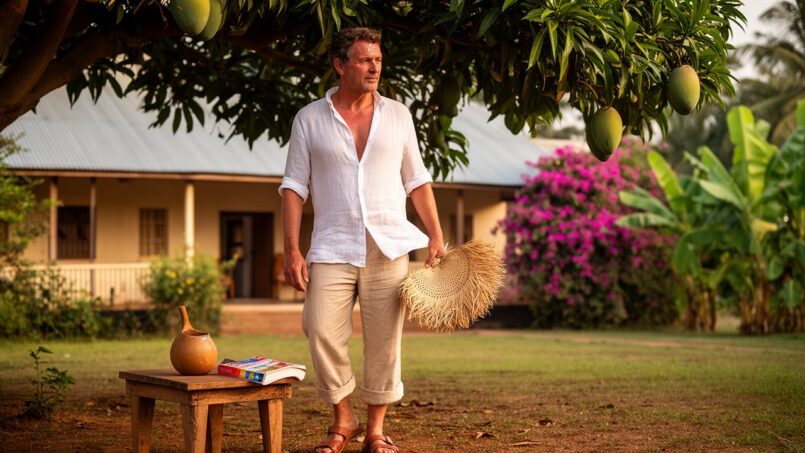
Choose loose, lightweight, light-colored clothing made of cotton or linen. Cover arms and legs during the day to protect against the sun and mosquitoes. Drink regularly before you feel thirsty, spacing water intake throughout the day. Avoid intense physical exertion during the hottest hours. Gradually acclimatize your body to exertion and heat through a period of acclimatization, especially for endurance activities.
Health authorities recommend that workplaces provide breaks in ventilated areas, constantly available cool water, and acclimatization programs for employees exposed outdoors. Even if these measures are not always formalized in companies, an expatriate in a position of responsibility would do well to promote them.
Air Conditioning: Solution or Trap?
Air conditioning may seem like the obvious answer. However, in a context where electricity is still sometimes unstable, expensive, and where temperature differences between air-conditioned interiors and scorching exteriors strain the body significantly, a measured approach is preferable.
Good to know:
In a hot-humid climate, it is more effective to set the air conditioner to 27–28°C and use a fan to circulate the air. This combination improves perceived comfort, reduces electricity consumption, and limits thermal shock compared to forcing the AC to 20°C.
Rainy Seasons: Adapting to Excess Water… and Mosquitoes
Rainfall in Togo is not just a matter of humidity and umbrellas; it changes mobility, road conditions, the safety of certain neighborhoods, and exacerbates certain health risks.
Flooding, Impassable Roads, Vulnerable Neighborhoods
The main climate risks identified nationally include flooding, poor rainfall distribution, and coastal erosion. In Lomé, some flood-prone neighborhoods regularly get waterlogged during heavy August or September rains; inland, rural tracks sometimes become impassable for days on end.
For an expatriate, the impact translates into:
Attention:
Longer travel times, shared taxis reducing rotations or changing routes, difficulty accessing some professional sites or rural projects, possible disruptions to the supply of fresh produce or materials, and an increased risk of road accidents on degraded roads.
Anticipating means, for example:
– avoid intercity travel on unpaved roads during peak rainfall periods as much as possible;
– allow for larger time margins for important appointments;
– inquire about the flood vulnerability of the neighborhood where you wish to rent.
Mosquitoes and Malaria: A Constant Management Task
The rainy seasons extend or intensify the habitats of malaria vector mosquitoes: ponds, puddles, stagnant water in ditches, poorly drained containers. The risk is present year-round but generally rises during and just after heavy rains.
Malaria Prevention for a Stay in Togo
Health authorities and travel medicine specialists recommend malaria chemoprophylaxis for any stay, even short. Several molecules are available, each with its advantages and contraindications. A specialized consultation before departure is essential to choose the treatment suitable for your profile.
An antibiotic active against malaria, taken daily. Suitable for short or long stays, but contraindicated in children under 8 and pregnant women.
A well-tolerated drug combination, taken one day before, during, and one week after the trip. Ideal for short stays but requires a prescription.
A weekly treatment suitable for long stays. Carries risks of neuropsychiatric side effects, requiring prior evaluation by a doctor.
In addition to medication, protection against bites is essential:
– wear covering clothing from late afternoon onward;
– use an effective repellent on exposed skin, following international recommendations;
– sleep under an impregnated mosquito net, even in the city;
– limit stagnant water around the home (buckets, tires, planters, etc.).
Official data remind us that rapid access to diagnosis and treatment is crucial: in case of fever during or after a stay in a malaria-endemic area, consult without delay, even after returning to your home country (malaria can occur up to several months after exposure).
Water, Food, and Hygiene: Habits to Adopt
Adapting to the climate also involves adapting to the sanitary environment, especially concerning water and food. In a context of intense heat, risks related to water and food combine with potential dehydration.
Drinking Without Getting Sick
International assessments show that only a minority of the population benefits from a “safe at home” water service, even though a majority have at least basic source access. For an expatriate, the precaution rule is uniform, whether in Lomé, Kara, or Atakpamé: drink bottled water with a sealed cap or water you have treated yourself (boiling, appropriate filtration, chemical disinfection, or UV).
Some simple principles:
– use safe water not only for drinking but also for brushing teeth;
– avoid ice cubes of unknown origin;
– be wary of freshly squeezed juices or syrups mixed with tap water;
– check the seal on bottles sold on the street or in small shops.
Good to know:
For a long stay, a gravity, ceramic, or UV filter is more economical and ecological than disposable bottles, but rigorous maintenance is essential to prevent it from becoming a source of contamination.
Local Food, Seasonality, and Preservation
The climate and its evolution also affect local agriculture. More than half the population depends on rain-fed agriculture, which accounts for nearly 45% of GDP. Rainfall irregularities, droughts, and land degradation threaten these systems, and producers are adapting their practices: shifting sowing and harvest dates, adopting short-cycle varieties, diversifying crops, agroforestry, hedgerows, and grass strips.
Good to know:
For an expatriate, the supply of fresh produce is highly seasonal: abundant vegetables at the end of the rainy season, scarcity during the lean period, with staple cereals like maize or sorghum. Traditional methods (drying, fermentation, smoking, salting) extend the availability of foods such as dried leaves, dry okra, smoked fish, or fermented cereals.
These techniques, adapted to a hot and often humid climate, have the advantage of providing stable products year-round, but they are not always free from hygiene issues or nutrient losses (for example, a reduction in vitamin C during sun drying). Preferring known supply chains and observing preparation conditions remain useful reflexes.
Hygiene and Heat-Related Infections
In a country where temperatures remain persistently high, bacteria multiply rapidly in poorly preserved food. A few habits can help limit digestive troubles:
– prefer well-cooked dishes served piping hot;
– avoid raw vegetables or cut fruits that you have not peeled yourself;
– wash hands frequently or use hand sanitizer, especially before eating;
– be careful with buffets where dishes sit lukewarm for a long time.
At the same time, hydration must be monitored: the combination of heat + diarrhea can quickly lead to dehydration. Keeping oral rehydration solution sachets is a simple precaution that can prevent complications.
Air Quality, Harmattan, and Burning Season: Protecting Your Lungs
The December–February period combines two phenomena: the harmattan, which brings fine dust from the Sahel, and the field burning season, which spreads smoke over a wide area. These episodes are superimposed on urban pollution from traffic, massive use of biomass for cooking, and sometimes waste burning.
Who Is Most Exposed?
The most vulnerable groups are well identified: children, adolescents, those over 65, people with respiratory diseases (asthma, chronic bronchitis, COPD), heart conditions, or diabetes, and outdoor workers (motorcycle taxi drivers, construction workers, street vendors, etc.).
0
National health studies show that vulnerability to acute respiratory infections is particularly high in the north and center, where the combination of drought, dust, and more difficult access to care worsens the situation.
How to Limit the Impact for an Expatriate?
While unable to change the weather, several strategies are possible:
Tip:
Follow air quality warnings via apps or local information; reduce strenuous outdoor activities during pollution peaks or dusty winds; wear an FFP2 filtering mask during high exposure; ventilate your home during the least dusty times while avoiding smoke from burns; and equip the kitchen with solutions that limit smoke (good ventilation, gas or electricity preferably over charcoal).
At the national policy level, Togo has already launched a National Plan for Reducing Air Pollutants and Short-Lived Climate Pollutants, with 11 measures likely to significantly reduce fine particulate matter and certain greenhouse gas emissions. For an expatriate, this context means that the issue of air quality is being addressed, but the benefits will be felt progressively.
Traveling, Working, Living with the Seasons
The climate also influences the organization of travel, fieldwork, and leisure activities. The same journey may be easy in January and complicated in July.
Traffic, Roads, and Weather
During the dry season, most roads remain passable, although at night roads are dangerous (poor lighting, potholes, unpredictable animal or pedestrian traffic). During the rainy season, things get complicated: flooded streets, degraded roads, traffic jams.
For those working on projects in rural areas or parks, the optimal window remains the dry season, more predictable and safe. Indeed, some nature parks simply close during the rainy season when tracks become impassable.
Tip:
For a long-term installation, several adjustments are useful.
– plan the most critical rural missions outside the months of peak rainfall;
– keep an emergency kit in the vehicle (water, small first-aid kit, flashlight, charged phone) to cope with unexpected breakdowns;
– factor into professional planning the high likelihood of delays during periods of intense rain.
Cost of Living, Energy, and Climate
The climate also indirectly affects the budget. In Lomé, a single expatriate typically spends between 700 and 1,200 USD per month, including housing, but the electricity bill rises quickly when air conditioning is used intensively. For a couple or small family, the budget rises to 1,600–2,000 USD, where health (insurance) and schooling take a significant share.
Good to know:
Togo is betting on solar energy to expand electricity access in rural areas, through large plants like Blitta (50 MW), pay-as-you-go solar kits, and village mini-grids. This improves local access to reliable, clean energy, which is also beneficial for expatriates in remote areas.
For an expatriate household, considering the installation of autonomous solar panels (or a quality solar kit) can offset frequent power outages while reducing dependence on an sometimes fragile electrical grid, especially if you need a cold chain (medications, food) or a minimum of thermal comfort.
Being Part of a Country in Adaptation
Togo is not passive in the face of these climate challenges. The country has a National Action Program for Adaptation, a National Climate Change Adaptation Plan currently being updated, and has made emission reduction commitments under its Nationally Determined Contribution (target of a 21% reduction in emissions by 2030, conditional).
These national frameworks identify as priority sectors energy, agriculture, human settlements and health, water, coastal zones, and land use. They emphasize measures such as energy efficiency, integrated water management, strengthening the resilience of agricultural production systems, habitat adaptation, and coastal zone protection.
For an expatriate, this context has several implications:
Adaptation to Climate Change
Integration of climate adaptation across various key sectors
Many projects in infrastructure, urban planning, agriculture, health, and energy now incorporate a climate adaptation dimension.
Urban policies encourage bioclimatic construction, use of local materials, greening, and ventilation corridors.
Early warning and disaster response systems (floods, strong winds, bushfires) are being strengthened.
Adapting to the local climate, for an expatriate, is therefore also about being part of this collective dynamic: understanding the constraints experienced by the population (for example, internal migration linked to climate degradation and lack of rural infrastructure), supporting local adaptation initiatives (agroforestry, mangrove restoration, ancestral water management techniques), and avoiding reproducing unsuitable urban planning or lifestyle patterns.
In Summary: Turning Climate Constraints into Expatriate Skills
Living in Togo means learning to deal with a hot, humid, changing climate, subject to hydrological extremes (droughts, intense rains) and periodically heavy air pollution. This requires:
Tip:
To adapt to a tropical environment, it is recommended to choose a suitable home (orientation, ventilation, materials, solar protection), integrate heat and mosquitoes into daily organization (clothing, schedules, hydration, mosquito nets, repellents, prophylaxis), treat water and constantly monitor food hygiene, plan travel and activities according to the seasons, and pay attention to air quality, especially during harmattan and burning season, for those at respiratory risk.
What may first appear as a set of constraints becomes, over time, a set of reflexes. Local communities, through their architecture, agricultural techniques, and rituals for managing water and soil, have developed numerous responses over generations. By observing these practices, relying on recent scientific data, and staying attentive to your own health, an expatriate can not only endure but also tame Togo’s climate, building a daily life that is both safe and comfortable.
A wealth management project or a question? Contact us now to speak with a wealth management expert.
Disclaimer: The information provided on this website is for informational purposes only and does not constitute financial, legal, or professional advice. We encourage you to consult qualified experts before making any investment, real estate, or expatriation decisions. Although we strive to maintain up-to-date and accurate information, we do not guarantee the completeness, accuracy, or timeliness of the proposed content. As investment and expatriation involve risks, we disclaim any liability for potential losses or damages arising from the use of this site. Your use of this site confirms your acceptance of these terms and your understanding of the associated risks.

Cyril Jarnias is an independent expert in international wealth management with over 20 years of experience. As an expatriate himself, he is dedicated to helping individuals and business leaders build, protect, and pass on their wealth with complete peace of mind.
On his website, cyriljarnias.com, he shares his expertise on international real estate, offshore company formation, and expatriation.
Thanks to his expertise, he offers sound advice to optimize his clients' wealth management. Cyril Jarnias is also recognized for his appearances in many prestigious media outlets such as BFM Business, les Français de l’étranger, Le Figaro, Les Echos, and Mieux vivre votre argent, where he shares his knowledge and know-how in wealth management.





