
 Published on and written by Cyril Jarnias
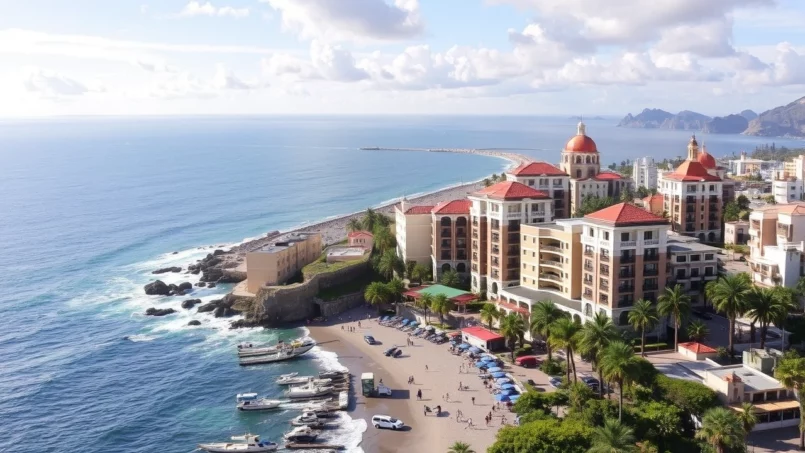
Mexico attracts tens of millions of visitors each year, drawn by its beaches, colonial cities, cuisine, and culture. But beyond the postcard images, this tourist wave is profoundly reshaping the country’s real estate landscape. From seaside condos in Tulum to neighborhood houses in Mexico City, demand from travelers, expatriates, and digital nomads now carries as much weight as that from residents. The result: soaring prices in tourist areas, a boom in seasonal rentals, but also social tensions and new regulatory safeguards.
Tourism is a major engine but also a factor of imbalance in Mexico’s real estate market, particularly in major beach destinations and the most sought-after metropolitan areas.
Tourism, a Central Driver of Real Estate Growth
The observation is clear: tourism is now one of the pillars of the Mexican economy and a direct fuel for real estate. The sector represents about 8.5 to 8.7% of the national GDP, generates several million formal jobs, and accounts for over three-quarters of service exports. In 2023, tourism value-added exceeded 2.58 trillion pesos, up 4.4% from the previous year.
The total volume of the national real estate market is projected to reach approximately $183.7 billion by 2030.
Researchers examining the link between tourism and local development confirm the scale of the impact. A study by Benjamin Faber and Cécile Gaubert, based on decades of municipal data, shows that an additional 10% in local tourism revenue translates on average into a 2.5% increase in total employment, a 4% increase in nominal municipal GDP, and a 3.9% increase in manufacturing GDP. In other words, destinations attracting more visitors see not only hotels and restaurants thrive but also related industry and services, further stimulating housing demand.
A Market Driven by Coasts and Major Cities
The weight of tourism on real estate is not uniform. It is mainly coastal municipalities, home to about 14% of the population, that capture two-thirds of the country’s hotel revenue. Areas like the Riviera Maya, Los Cabos, Puerto Vallarta, or Mazatlán have seen their economies and real estate prices skyrocket in line with the arrival of international visitors.
The average value of a home financed by credit in Mexico is approximately 1.86 million pesos.
The tourism effect is also evident in rental dynamics. The average gross yields around 5.7% for apartments remain attractive, with peaks above 6% in cities like Monterrey, Mérida, or Guadalajara. In highly frequented beach destinations, vacation rentals often far exceed these figures, with gross yields potentially reaching 10 to 15% on high-end properties.
How Tourism is Transforming Real Estate Demand
The Mexican tourism boom no longer relies solely on the image of the “all-inclusive” hotel stay. It is fueled by a mosaic of profiles: classic vacationers, North American retirees, digital nomads, investors seeking rental yields, and companies benefiting from “nearshoring.” Each of these groups feeds a specific real estate demand, which adds to that of local households.
Massive Flows of Visitors and Foreign Currency
Mexico welcomes over 40 million international tourists annually. In 2019, nearly 45 million spent about $25 billion. After the pandemic shock, recovery was rapid, boosted by a relatively open border policy: in 2023, foreign visitors spent a record $30.8 billion, over 25% above the 2019 level. Just between January and October 2025, nearly 16.6 million international arrivals by air were recorded, overwhelmingly dominated by the United States and Canada.
Over a million Americans now live in Mexico, fueling demand for tourist accommodations and second homes.
The Explosion of Short-Term Rentals
The rise of platforms like Airbnb or VRBO has profoundly reshaped tourist accommodation. In the capital, for example, Airbnb lists over 26,000 properties, equivalent to half the hotel capacity. In beach resorts, a growing share of the supply relies on apartments and villas rented short-term by individuals or investors.
This shift towards vacation rentals has several structural effects on real estate:
– it encourages developers to design “turnkey” condos optimized for rental;
– it encourages the purchase of purely speculative properties, intended solely for Airbnb or medical/wellness tourism;
– it reduces the share of housing remaining for long-term rental, fueling pressure on rents for residents.
Promised annual yields for short-term rentals are high, notably 8-12% in Playa del Carmen (with 70-90% occupancy in high season) and 8-15% for luxury villas in Tulum, despite more complex management and high seasonality.
The “Digital Nomad” and Expatriate Effect
The pandemic accelerated an already visible trend: North American and European employees, now in permanent remote work, are settling in Mexican cities where the cost of living is lower and quality of life attractive. Mexico City (Roma, Condesa, Polanco neighborhoods), Playa del Carmen, Tulum, Mérida, or Puerto Vallarta have become digital nomad hubs.
For these newcomers, paying 1,500 to 2,000 dollars per month to rent in a central neighborhood may seem affordable compared to New York, San Francisco, or Vancouver. But, from the perspective of a Mexican household earning the equivalent of a few hundred dollars per month, this new price norm is out of reach. In Mexico City, some median rents in the most sought-after neighborhoods have reportedly shifted from around 800 to 1,800 dollars monthly, while rents over 2,000 dollars are becoming commonplace in Condesa or Polanco.
This “affordability arbitrage” attracts ever more expatriates but simultaneously creates strong pressure on housing accessibility for the local population.
The Highly Uneven Geography of Price Increases
The impact of tourism on real estate is clearly visible in regional statistics. The most touristic states and municipalities – particularly on the two coastlines – record spectacular price increases, well above national averages.
When the Sea Sends Square Footage Soaring
Several destinations illustrate this price surge driven by the combined effect of tourism, foreign investment, and major infrastructure projects.
| Area / Municipality | Annual Price Increase (Q2 2025) | 5-Year Increase | Dominant Tourist Profile |
|---|---|---|---|
| Benito Juárez (Cancún) | +15.16% | +92.05% | Beach resort, mass tourism |
| Los Cabos (Baja California Sur) | +13.80% | +94.81% | Luxury, golf, cruises, affluent clientele |
| Solidaridad (Playa del Carmen) | +13.61% | +88.05% | Beach, condos, digital nomads |
| Quintana Roo (State) | +14.68% | n.a. | Riviera Maya, intensive beach tourism |
| Baja California Sur (State) | +13.07% | n.a. | Los Cabos, La Paz, high-end tourism |
In Cancún, the average price per square meter is around $2,400, 10 to 20% higher than in Puerto Vallarta. In Los Cabos, neighborhoods like Palmilla or Pedregal now boast multi-million dollar villas, with an entry ticket around $500,000 for a decent-quality property. Puerto Vallarta, considered one of the country’s most expensive markets alongside Mexico City and Los Cabos, has sea-view condos starting at $300,000, but luxury villas easily exceed a million.
In some areas, residences are designed as investment products, primarily intended for short-term rental. This practice treats real estate as a tourist asset, similar to a hotel, and creates a direct link between visitor influx and land value appreciation.
Riviera Maya: Laboratory of Real Estate “Touristification”
The Riviera Maya almost caricaturally concentrates the effects of tourism on real estate. This Caribbean corridor, stretching from Cancún to Tulum via Playa del Carmen, alone welcomes over 20 million tourists annually and has seen its real estate prices double since 2020 in some segments.
| Destination | Condo Price Range (USD/m²) | Recent Estimated Annual Appreciation | Real Estate Market Profile |
|---|---|---|---|
| Cancún | 2,000 – 4,000 | 7 – 9% | Mature market, high density, many hotels |
| Playa del Carmen | 2,000 – 3,500 (up to 4,000) | 7 – 10% | Condos, strong digital nomad presence |
| Tulum | 2,000 – 5,500 | 10 – 15% | Eco-luxury, villas and rental-oriented condos |
| Riviera Maya (overall) | 2,000 – 5,500 | 8 – 12% | Major tourism corridor in the country |
In neighborhoods like Aldea Zamá in Tulum, pre-construction prices have sometimes doubled in a few years, going from $150,000 to over $300,000 for a condo. In Playa del Carmen, the average price per square meter rose from about $2,470 to over $3,800 in less than a decade. This frenzy is clearly inseparable from tourism success: over 5.4 million visitors and 2.34 million cruise passengers in just the first quarter of 2024 for the Riviera Maya alone.
Other Boiling Markets: Pacific Coast and Cultural Cities
On the Pacific coast, Puerto Vallarta and the Riviera Nayarit are playing a comparable tune but with a more diversified positioning: beach tourism, North American retirees, LGBTQ+ community, digital nomads. Rental yields there hover around 5 to 7% for beachfront condos, with a long tourist season cushioning vacancy. The market experienced strong expansion during the pandemic before entering a correction phase: inventory of properties for sale climbed by 54 to over 100% depending on the segment, stretching the average time to sell to nearly 270 days and creating a buyer’s advantage.
This is the rental yield, expressed as a percentage, one can expect in Mexican colonial cities like San Miguel de Allende and Mérida.
Tourist Rental vs. Residential Housing: The Major Tension
While tourism has boosted construction, investment, and employment, it has also seriously strained the housing market in many cities. The meteoric rise of short-term rentals and the massive arrival of temporary foreign residents have contributed to shrinking supply for locals, driving up rents, and accelerating the gentrification of entire neighborhoods.
When Airbnb Becomes a Direct Competitor to Residential Housing
The case of Mexico City is emblematic. With over 26,000 listings on Airbnb, the platform occupies a nearly systemic place: about 5% of all rental housing in the city is estimated to be dedicated to short-term stays. In some highly sought-after neighborhoods (Roma, Condesa, Narvarte, Nápoles, Juárez), tenants have seen their leases terminated to allow owners to convert apartments into tourist rentals. One account mentions a monthly rent of 10,000 pesos (about $500) replaced by an Airbnb offer at 32,000–35,000 pesos.
The reduction in the stock of housing available for local households leads to a significant rise in rents. In central neighborhoods of the capital, prices have now reached levels comparable to some US markets, despite much lower local wages.
In beach cities, the situation is comparable. Where an apartment previously served as a primary residence or long-term rental for tourism workers, it now becomes a yield-oriented product designed for stays of a few days or weeks aimed at tourists or foreign remote workers.
Increasingly Polarized Rental Markets
The yield dynamic reinforces this polarization between short-term and long-term rentals. Data compiled across different markets illustrates this divergence well.
| Market Type / City | Typical Gross Yield (Long-Term) | Typical Gross Yield (Short-Term) |
|---|---|---|
| National Market (Apartments) | ~5.7% | 8 – 10% (average major destinations) |
| Playa del Carmen (Mid-Range Condos) | 5 – 7% | 6 – 8% net, higher in peak season |
| Tulum (Luxury Villas) | 7 – 9% | 8 – 15% |
| Mérida (Colonial Houses) | 6 – 8% | Variable, less mass tourism |
| Mexico City (Polanco, 1 Bedroom) | 5.7 – 7.7% | More business/mid-term oriented |
| Puerto Vallarta (Beachfront) | 5 – 7% | Higher in vacation rental |
For an investor, the arbitrage is clear: for an equivalent space, renting by the night in a highly frequented tourist zone can yield two to three times more than a classic residential lease, despite higher management costs and seasonality. As long as tourist flows remain robust, the temptation to shift housing from long-term to short-term is therefore very strong.
Toward a “Dual Society” in Tourist Destinations
This conversion of a significant portion of the housing stock to tourist use has visible social consequences. In the most touristic areas, a form of “soft segregation” is observed: tourists and expatriates occupy the best locations, enjoy modern infrastructure and high-end services, while local workers, often employed in hospitality or restaurants, are pushed to the periphery, with longer commutes and limited access to quality urban services.
In Cancún, many hotel employees from the tourist zone are forced to reside in distant neighborhoods, with living conditions far less favorable than those of the guests they serve. This spatial and social divide can generate tensions, as evidenced by some hostile graffiti targeting foreign tourists (“Gringos”) seen in Mexico City neighborhoods, expressing a sense of dispossession and resentment.
When the State Intervenes: Regulations, Caps, and Frameworks
Faced with rising prices, the massive conversion of housing into tourist rentals, and resident protests, authorities have begun to regulate the market more strictly, particularly in major metropolises and the most touristic states.
Mexico City: Limiting Platform Appetite
The capital has established one of the country’s most comprehensive regulatory frameworks for short-term rentals. Recent reforms to the Tourism Law and housing legislation notably establish:
In Barcelona, tourist rental is strictly regulated. Hosts must register on an official registry and display the obtained number on each listing. Rental is limited to 180 days per year per property. From the fourth property rented, a commercial license and operating permit are mandatory. Finally, it is prohibited to list on Airbnb any housing from social, affordable, or post-earthquake reconstruction programs.
Tax constraints have also been strengthened: accommodation service tax (3 to 5%), 16% VAT, and income tax on rental profits. In some cases, platforms collect and remit these taxes on behalf of hosts.
Simultaneously, the city has begun to regulate the rise in residential rents, capping annual increases to inflation and announcing the creation of a Reasonable Rent Index in “areas of real estate tension.” The stated goal is to contain speculation and preserve accessible housing in the most coveted neighborhoods.
Toward a Wave of Regulations in Other Destinations
Mexico City is not an isolated case. Other tourist municipalities – Playa del Carmen, Cancún, Tulum, Mérida, Los Cabos – are progressively strengthening operating licenses for short-term rentals, homeowner association rules, and the collection of tourist taxes.
In the state of Baja California Sur, a specific chapter of the Civil Code governs short-term leases (1 to 11 months), providing a legal framework for tourist rentals and defining owner obligations. It is important to note that some homeowner associations may impose, via their internal regulations, restrictions or outright bans on such rentals to preserve resident tranquility.
These initiatives are part of a global trend: major North American and European cities have already limited the number of Airbnb nights or imposed “primary residence” rules. Mexico is following this trajectory, with a balance still being struck between protecting local housing and preserving the tourism windfall.
Major Infrastructure Projects: Accelerators of Land Value Appreciation
Tourism doesn’t just benefit from existing infrastructure; it also justifies enormous public and private investments in transport, roads, airports, or urban amenities. These projects, in turn, further fuel the rise in real estate values in the affected territories.
Tren Maya, Airports, and Highways: The New Real Estate Map
The most emblematic case is the Tren Maya, a railway line of over 1,500 kilometers designed to connect the main tourist destinations of the Yucatán Peninsula (Quintana Roo, Yucatán, Campeche, Tabasco, Chiapas). With a budget around $30 billion, this project has already begun to alter land value expectations: near future stations, land prices have reportedly increased by 15 to 20% in some areas, with annual surges exceeding 20% near Tulum, Playa del Carmen, or Valladolid.
Tulum’s new international airport is capable of handling several million passengers per year.
Other corridors are experiencing similar effects. The new highway linking Oaxaca to Puerto Escondido cut travel time by more than two-thirds, transforming the region from a confidential surf spot to an emerging destination for tourists and investors. Since the route opened, Puerto Escondido has recorded a very rapid increase in its indicators: visitation, land prices (+95% over five years for some development lots), value of beachfront properties (+85%).
When Infrastructure Attracts Private Investment
Major tourism infrastructure also acts as a magnet for private capital. In the Yucatán Peninsula, investments related to tourism – between Tren Maya, airports, roads, hotels, residences – are expected to exceed $35 billion by 2026. In Los Cabos, the expansion of the international airport, for an amount close to $600 million, is accompanied by a surge of new luxury residences and hotel complexes, encouraged by strong tourism figures (3.86 million international arrivals in 2023, over 80% occupancy rate in Q1 2025).
The cost of living in La Paz is about 30% lower than in comparable US beach resorts.
Macroeconomic Effects and Well-being: Between Gains and Imbalances
At the macroeconomic level, the rise of tourism and tourist real estate undeniably creates wealth. The reference study by Faber and Gaubert estimates that international and domestic tourism integration provides a welfare gain equivalent to 4.6 to 4.8% of Mexican household consumption, even after accounting for the cost of public investment. In short, the country as a whole benefits from welcoming tourists and developing beach and cultural destinations.
But these overall benefits do not prevent the emergence of sectoral and territorial imbalances:
Tourism development can lead to a “Dutch disease” effect, diverting resources from more productive industrial sectors. It creates a dependence on foreign visitor and capital flows, increasing vulnerability to crises. Finally, it can reinforce territorial inequalities, enriching certain coastal areas at the expense of other less touristic regions.
In the real estate domain, these imbalances translate into growing tensions over housing accessibility, a risk of a bubble in some luxury segments (notably condos in Tulum), and a proliferation of usage conflicts between residents and investors.
Environment, Sustainability, and New Real Estate Standards
Mass tourism has a considerable environmental impact: coastal urbanization, pressure on water resources, pollution, reef degradation, beach erosion. In several Mexican destinations, these damages are beginning to weigh on the very attractiveness, forcing public and private actors to revise their real estate development models.
The Rise of Eco-Friendly Tourist Real Estate
Faced with these challenges, a portion of the new tourist real estate supply now positions itself as “sustainable”: certified hotels, ecological residences, eco-resorts integrated into conservation zones, low-consumption labeled buildings. Figures show real interest in these products: about 78% of consumers say they prefer eco-friendly housing, and many travelers are willing to pay more for certified “green” accommodations.
In Tulum, neighborhoods like Luum Zama or Selvazama are developed around strong ecological principles: preservation of green spaces, use of natural materials, and renewable energy production. Furthermore, labels like the “Sello Verde” in the state of Quintana Roo harmonize international standards (ISO, LEED, EarthCheck, Blue Flag, Green Key) to establish new sustainable construction criteria.
This green trajectory is not purely altruistic. Developers highlight very concrete arguments: better long-term valuation, lower operating costs (energy, water), enhanced appeal to high-income tenants, particularly international ones.
Limits and Contradictions
However, this transition towards “sustainable” tourist real estate is neither uniform nor free of ambiguity. Some projects are content with a marketing veneer without real transformation of practices, fueling the specter of “greenwashing”. In other cases, the creation of protected areas can come at the expense of local communities, displaced to make way for reserves or resorts claiming ecotourism.
The Tren Maya project aims to open up poor regions and spread tourism, but it faces criticism regarding its impacts on biodiversity, forests, and archaeological sites. Mexico must reconcile this development with its climate and ecosystem preservation commitments, in a context of pressure on public budgets dedicated to the environment.
Outlook: Towards What Balance Between Tourism and Housing?
Tourism has profoundly reshaped the Mexican real estate market: it has supported price and volume growth, attracted mountains of capital, spurred new quality and sustainability standards. But it has also exposed structural weaknesses: a deficit of affordable housing, risks of overheating in some segments, growing social tensions in gentrified neighborhoods.
Trends to Watch
Several trends will continue to structure the relationship between tourism and real estate in Mexico in the coming years:
The tourist real estate market in Mexico is marked by several strong trends: short-term rental continues to progress in attractive areas despite stricter regulatory frameworks. Tourist urbanization intensifies in dynamic corridors, supported by major infrastructure projects. The phenomenon is expanding geographically with the emergence of secondary markets combining tourism, quality of life, and new economic activities. Finally, environmental standards are gaining importance, driven by traveler expectations and the CSR commitments of major hotel groups, also influencing residential projects.
Projections from organizations like Fitch Ratings, which still anticipate 7 to 9% national price increases for 2025, and up to 8 to 9% for 2026, suggest that the Mexican real estate cycle is not about to reverse, at least on a macro scale.
The Decisive Question: For Whom Are We Building?
Behind the percentages and millions of tourists, one question now runs through public debate: who truly benefits from the real estate transformation of major tourist destinations? The investors earning double-digit yields on beach condos? The urban middle classes seeing their assets swell? The tourism workers benefiting from additional, yet often precarious, jobs? Or the residents of popular neighborhoods who increasingly struggle to keep up with rising rents and are pushed further and further from the centers?
The answers are not simple. Economic studies show net gains for the country as a whole and for a portion of households. But, on the ground, the rising cost of living, urban congestion, usage conflicts, and the sometimes feeling of ‘dispossession’ of the city by visitors fuel resistance.
Economic studies and field observations
How Mexico arbitrates, in the coming years, between tourist openness and protection of the right to housing will say much about its ability to make its formidable real estate dynamism not a factor of division, but a lever for more balanced development. For now, one thing is certain: the Mexican real estate market can no longer be understood without looking, in mirror, at the planes landing, the trains being built, the beaches filling up – in short, the growing footprint of tourism across the entire territory.
Disclaimer: The information provided on this website is for informational purposes only and does not constitute financial, legal, or professional advice. We encourage you to consult qualified experts before making any investment, real estate, or expatriation decisions. Although we strive to maintain up-to-date and accurate information, we do not guarantee the completeness, accuracy, or timeliness of the proposed content. As investment and expatriation involve risks, we disclaim any liability for potential losses or damages arising from the use of this site. Your use of this site confirms your acceptance of these terms and your understanding of the associated risks.

Cyril Jarnias is an independent expert in international wealth management with over 20 years of experience. As an expatriate himself, he is dedicated to helping individuals and business leaders build, protect, and pass on their wealth with complete peace of mind.
On his website, cyriljarnias.com, he shares his expertise on international real estate, offshore company formation, and expatriation.
Thanks to his expertise, he offers sound advice to optimize his clients' wealth management. Cyril Jarnias is also recognized for his appearances in many prestigious media outlets such as BFM Business, les Français de l’étranger, Le Figaro, Les Echos, and Mieux vivre votre argent, where he shares his knowledge and know-how in wealth management.





