
 Published on and written by Cyril Jarnias
Long perceived as an affordable vacation destination, Mexico is now establishing itself as one of the most dynamic markets for high-end real estate. Behind the postcards of beaches and colonial chic, the numbers tell a different story: that of a country where $20, $30, or $40 million villas are sold, where international branded residences are multiplying, and where some regions now rival Miami, Dubai, or Monaco in terms of prestige.
Los Cabos, at the tip of the Baja California peninsula, stands out for the highest prices and the highest proportion of all-cash sales in Mexico. Its growth is part of a national luxury boom, driven by international investments, a growing local wealthy class, and dynamic high-end tourism.
A Mature Mexican Luxury Market
The luxury property market in Mexico is no longer a niche. It carries significant weight, is growing faster than the rest of the residential sector, and attracts a structured global clientele.
In 2024, the value of the luxury real estate segment was estimated at just over $22 billion.
The wealth present in the country provides a solid foundation. There are approximately 172,000 dollar millionaires, a population expected to grow by about 6.8% per year until 2025, as well as just over 1,000 ultra-high-net-worth individuals with assets exceeding $30 million. Notably, real estate represents nearly one-third (32%) of the investment portfolios of these major fortunes, ahead of many other asset classes.
In 2024, over 40,000 real estate properties in Mexico were acquired by non-resident buyers.
The overall dynamics of the Mexican real estate sector serve as a backdrop. National residential prices increased by about 9–9.7% year-over-year at the end of 2024; the national real estate price index has more than doubled over the past decade. Forecasts through 2028–2030 project an overall market exceeding $180 billion, with a very robust residential component, driven by population growth, a structural housing deficit, and the rise of an affluent middle class.
Los Cabos, Laboratory of the Ultra-High-End
Within this expanding landscape, Los Cabos stands as the locomotive of the coastal luxury market. Located at the southern tip of Baja California, the destination comprises Cabo San Lucas, San José del Cabo, and a corridor dotted with resorts, marinas, and gated communities. It is now described as one of the largest second-home markets in North America.
Prices Rivaling Major Capitals
The price ranges practiced in Los Cabos set the tone. So-called “luxury” properties typically start around $1 million, but the actual range is much wider: seaside villas, golf course residences, or architect-designed homes regularly exceed $10 million, and ultra-luxury has become commonplace.
In the most sought-after private communities, the numbers take on a nearly surreal dimension:
| Area / product (Los Cabos) | Indicative Price Level (USD) |
|---|---|
| Standard luxury homes | From ~$1M, up to $10M+ |
| Ultra-luxury segment ($2–5M) – Q1 2025 | 48 sales, $166M cumulative volume |
| Golf villas at Maravilla | From approximately $9M |
| Oceanfront lots at Maravilla | $20M to $30M |
| Beachfront estates at Maravilla | $20M to $50M |
| Oceanfront homes at El Dorado | From approximately $20M |
| Custom residences at Chileno Bay | $30M to $40M |
Behind these iconic examples, the “normal” Los Cabos market is already very high-end compared to the rest of the country. In the first quarter of 2025, the average home price there reached about $727,000, the average condo price was close to $793,000, while properties classified as “luxury” averaged $1.32 million. In the Pacific area, the average rose to $2.25 million, and around San José del Cabo to $1.38 million.
The average price of homes in Los Cabos increased by approximately 13% between 2023 and 2024.
A Market Dominated by Cash and Scarcity
The structure of transactions illustrates the ultra-high-end nature of the destination. In the first quarter of 2025, total sales volume there reached approximately $559 million, up about 70% year-over-year. And, a key detail, luxury properties represented 77% of this volume in value. Most of these acquisitions are made in cash, a particularity that distinguishes Los Cabos from many North American markets heavily reliant on credit.
The market favors sellers due to a limited supply of land and prestige properties, constrained by topography, environmental regulations, and controlled urban development. This scarcity, coupled with growing international demand, supports an estimated price appreciation of 3% to 7% per year for the next 18 months.
Ultra-Equipped Properties, Integrated into Private Clubs
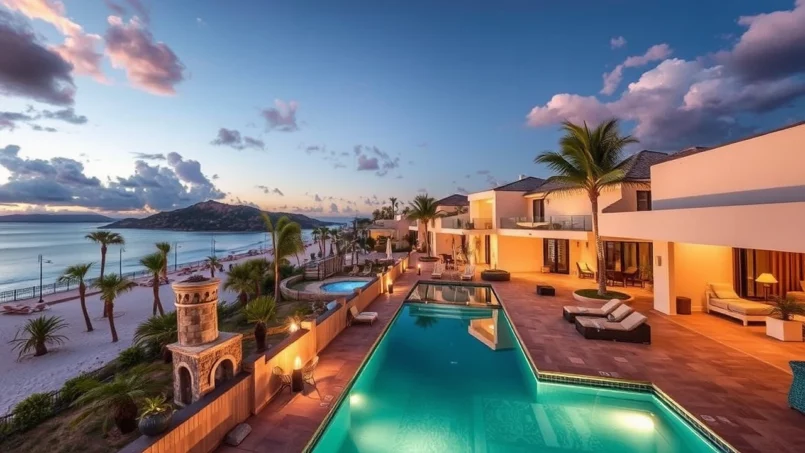
In Los Cabos, the notion of “luxury” goes far beyond mere square footage. Oceanfront villas and golf homes present themselves as true private complexes, with infinity pools, expansive outdoor terraces, gourmet kitchens, wine cellars, home automation systems, cinema rooms, and often one or more “casitas” for guests. The architecture blends contemporary Mexican vocabulary with Mediterranean influences, playing with light, views, and indoor-outdoor continuity.
Most properties in Los Cabos are located in 24/7 secured gated communities, offering exclusive amenities such as golf courses, spas, private beach clubs, restaurants, and concierge services. Developers are creating entire neighborhoods structured around a highly codified club experience, with facilities reserved for residents.
Specialized agencies – VanSirius Luxury Real Estate, Ronival Real Estate, Oceanside Real Estate Group, Karla and Erick Cabo Realty, among others – share this market, often working closely with an expatriate and retiree clientele.
Profitability: A High Entry Price / High Yield Combination
For the investor, Los Cabos presents a particular equation: a high entry ticket but rental income often above international standards. In the short-term seasonal rental segment, gross yield rates can reach 8–10%, significantly higher than in comparable U.S. markets, where a city like Scottsdale, Arizona, sits around 5% for upscale properties. All with extremely light property taxation: the annual property tax is typically between 0.1% and 0.3% of the assessed value, whereas a $500,000 property in some U.S. states can generate over $6,000 in annual tax.
This combination – sustained appreciation, high rental income, low recurring costs – explains why Los Cabos is described as one of the best global destinations for luxury second homes. The trade-off is a strong dependence on international tourism: a shock to travel flows can abruptly impact occupancy rates and rental income.
Beyond the Beaches: Mexico City and Colonial Hubs
The luxury property market in Mexico is not limited to the coast. Mexico City, San Miguel de Allende, or Mérida occupy an increasingly central place in high-end investment strategies, particularly for profiles seeking more stable rental income, less dependent on tourist seasons.
Mexico City: Polanco, Lomas, Bosques, New Hubs of Urban Luxury
The capital is by far the largest urban market in the country. It concentrates a large share of the ultra-wealthy and corporate headquarters, and some of its neighborhoods display price levels comparable to global capitals.
The Polanco neighborhood in Mexico City, nicknamed the “Beverly Hills of Latin America,” perfectly illustrates the luxury real estate market. It concentrates high-end boutiques (Louis Vuitton, Dior, Gucci, Rolex), Michelin-starred restaurants like Pujol and Quintonil, and upscale residences. Luxury property prices there typically range from $4,000 to $5,500 per square meter, with an average price of about $1.8 million for high-end properties. Classic condominium apartments start around $370,000, while prestige penthouses can reach several million dollars.
Nearby, Lomas de Chapultepec, Bosques de las Lomas, Santa Fe, Condesa, or Roma Norte also display high values. In these neighborhoods, single-family homes can be worth between $700,000 and over $7 million, on generous lots with gardens, pools, and high levels of security. Rental profitability there is less spectacular than on the coast but much more regular: in the capital, one-bedroom apartments can yield a 6.9–7.7% gross return with occupancy rates approaching 90–95%.
For investors, Mexico City therefore adds a complementary dimension: stable rental income (executives, students, expatriates, digital nomads), market depth, high liquidity in prime neighborhoods, but with slightly less explosive appreciation prospects than in ultra-sought-after tourist zones.
San Miguel de Allende, Mérida, Rising Colonial Cities
San Miguel de Allende illustrates another face of Mexican luxury: that of classified colonial centers, favored by American and Canadian retirees, artists, and a European clientele sensitive to historical charm. In this UNESCO city, sales over $1 million have become commonplace, with several transactions at $3 million and some between $5 and $6 million. Branded residence projects, like Armani Casa, advertise entry prices around $3 million there.
Mérida, the capital of Yucatán, is experiencing strong real estate appreciation with a more than 30% increase in values over two years. Demand is high for renovated colonial homes and recent secure subdivisions. Rental yields there are generally between 6 and 8%, driven by a diverse clientele of expatriates, remote workers, and tourists attracted by local culture and gastronomy.
These inland markets present a key advantage: less exposure to the vagaries of mass tourism, at the price of entry tickets generally lower than those of Los Cabos, but with appreciation potential supported by infrastructure (the Tren Maya nearby for Mérida) and perceived safety.
The Legal Framework: The Central Role of the Fideicomiso
For foreigners, Mexico has established a specific legal architecture allowing the purchase of properties, including in sensitive areas like coasts and borders, which form what is called the “Restricted Zone” (a 50 km strip along the coasts and 100 km at borders).
Bank Trusts and Mexican Corporations
In this zone, a foreigner cannot directly hold a land title in their own name. They must use a fideicomiso, a bank trust where a Mexican bank holds the title as trustee, while the foreign buyer is the beneficiary. The latter retains all substantive rights: use, rental, improvement, resale, and transfer to heirs. The fideicomiso is established for 50 years, renewable indefinitely, and can be assigned or modified.
An alternative for foreigners is to create a Mexican corporation, even if entirely owned by foreigners. This corporation can own property in the restricted zone, provided its use is commercial, tourist, industrial, or development-related, and not purely residential for personal use. This scheme is common for investors developing or operating multiple properties intended for rental.
Outside the restricted zone, foreigners can purchase directly, like any Mexican citizen, except for ejidal lands (communal agricultural lands) which are subject to a specific regime and require regularization procedures before any privatization.
Ancillary Costs: Taxes, Fees, and Income Taxation
Transaction costs for a foreigner remain significant but competitive on an international scale. Generally, between 4% and 6% of the purchase price are due at the time of the transaction (transfer tax, notary fees, legal fees, registration), although, including resale, the round-trip cost can climb between 6.5% and 13.5% depending on the case.
The common scheme looks like this: the steps are clearly defined and aligned.
| Main Cost Item | Typical Range |
|---|---|
| Transfer Tax (ISAI) | 2.0% – 5.0% of reference price |
| Notary Fees | 0.5% – 1.5% |
| Legal Fees | 1.0% – 1.5% |
| Registration Fees | 0.5% – 1.0% |
| Fideicomiso Setup | ~$450 to $3,000 USD (one-time) |
| Annual Fideicomiso Fees | ~$300 to $800 USD/year |
| Title Insurance (optional) | ~0.5% – 0.7% of value |
Recurring taxation, however, remains surprisingly light for an international investor accustomed to North American or European standards. The annual property tax (Predial) typically varies between 0.05% and 0.3% of the assessed value – a major competitive advantage compared to markets like Florida or California.
Rental income is taxable in Mexico: for non-residents, a flat rate of approximately 25% on gross income is often applied, unless a regime allowing for expense deductions is established. At resale, a capital gains tax is due, generally around 25% of the gross sales price or 35% of the net gain, depending on tax status and structuring. Hence the importance of being assisted by a local tax advisor and lawyer to optimize the structure.
Yields and Risks: What the Numbers Really Say
The available data allows for a nuanced portrait of expected yields in the Mexican luxury property market, particularly when comparing Los Cabos to the rest of the country.
Attractive Yields in Tourist Markets
Overall, the average gross rental yield on apartments nationwide is around 5.5–6% in the mid-2020s. But this figure hides significant disparities:
Overview of gross yields and occupancy rates for different property types in several sought-after destinations.
Gross yield: 8–15%. Strong seasonality to consider.
Gross yield often cited: 8–10%.
Gross yield: 5–6%. Occupancy rate around 80%.
Gross yield: 6–8%. Occupancy: 75–85%.
Gross yield: 6.9–7.7%. Very high occupancy: 90–95%.
Gross yield: 5–7%. Occupancy rate: 70–80%.
In short, an investor willing to accept a higher level of tourist risk can target double-digit gross yields in certain market pockets, whereas more prudent urban strategies will yield around 5–7% but with much more stable occupancy.
Volatility, Overheating, and Environment
The risks should not be underestimated. Several signals warn of overheating phenomena, notably in Tulum, where certain condo segments appear to be in oversupply, with struggling developers and declining rental yields. Construction costs, rising sharply (about +15% in 2024 for materials), are also putting pressure on some projects.
The regulatory environment for short-term rentals is tightening, particularly in major cities (e.g., day limits in Mexico City, registration obligations, tax changes). These restrictions are expected to gradually extend to other major tourist markets.
Finally, several destinations – including Los Cabos – are built on fragile ecosystems. Pressures related to water consumption, pollution, destruction of coastal habitats, or beach erosion are subject to increasingly strict environmental regulations, especially on the coast. This complicates construction permits but also, ultimately, reinforces the value of properties already established in well-managed enclaves.
The Boom of Branded Residences and Wellness
One of the defining characteristics of the Mexican luxury market is the explosion of so-called “branded” residences, developed in partnership with major hotels or lifestyle brands, and the rise of wellness-focused real estate.
Mexico is the fourth largest market globally for luxury and design hotels.
Branded residences typically trade at a premium of 30 to 60% compared to similar non-branded projects, and studies show they can resell with a premium of up to 50% after three to five years. This premium is explained by a mix of image, hotel-quality management, services (concierge, maintenance, rental), architectural coherence, and legal security – all elements highly sought after by international ultra-high-net-worth individuals.
The market for “wellness” high-end real estate is growing strongly in areas like Tulum, the Riviera Maya, the Pacific coast, and some inland regions. Investors are seeking energy-efficient properties, with international certifications (WELL, EDGE), integrated wellness spaces (spa, yoga, pools, cryotherapy), healthy materials, and proximity to nature. This “green luxury” positioning is particularly visible on the Pacific coast and in Yucatán, and is now also influencing markets like Los Cabos, where landscape integration and environmental sobriety are becoming key selling points.
Why Los Cabos Attracts International Ultra-High-Net-Worth Individuals
Over the years, Los Cabos has succeeded in carving out a reputation that extends far beyond the Mexican framework. Several factors explain this power of attraction, particularly for a very wealthy clientele from the United States and Canada.
Accessibility and Proximity to Major North American Centers
Los Cabos International Airport has a dense offering of direct flights with many major U.S. cities (Los Angeles, Dallas, Houston, Phoenix, etc.), Canada, and Mexico. It has a dedicated terminal for private jets, reinforcing the image of a weekend destination for billionaires. For residents of California, Arizona, or Texas, it is possible to reach a property in Cabo in just a few hours, making it a closer alternative than some island destinations.
For ultra-high-net-worth individuals based in the American West, major Mexican resorts like Cabo benefit from an ‘accessibility arbitrage’. A round trip is often simpler, faster, and less costly than to destinations like the French Caribbean, Europe, or Pacific islands, while offering equivalent prestige.
Relative Value and Low Carrying Costs
Compared to major luxury capitals (New York, London, Monaco, Miami, Dubai), Los Cabos often offers more space, views, land, and services for an equivalent amount, with significantly lighter property taxation and simpler ownership rules (despite the fideicomiso mechanism). For a second-home buyer seeking a sunny and secure refuge, this “relative value” is a major asset.
For a comparable price, a buyer can obtain in Cabo San Lucas an oceanfront villa with a pool, dedicated staff, access to a private golf course, and a beach club. In contrast, the same sum would only allow for a simple apartment in some ultra-prime neighborhoods of cities like New York or London. This disparity in terms of space and lifestyle level is a central argument in the marketing of real estate agencies specialized in these destinations.
Image, Lifestyle, and Perceived Security
Los Cabos has established itself as a symbol of the “baja chic” lifestyle: desert climate with over 300 days of sunshine per year, low rainfall, spectacular landscapes between desert and ocean, golf offerings, big-game fishing, yachting, gourmet restaurants, intimate but very high-quality nightlife. It is also a destination where police presence and security management are particularly visible in high-end enclaves. Gated communities offer an enhanced sense of security, which reassures a clientele concerned about this point.
Official statistics must be read with caution, but some surveys place the city among the relatively safe urban areas of the country, particularly in tourist and luxury residential sectors. The majority of security incidents covered in the media are concentrated in other regions, allowing Los Cabos to maintain a generally positive image in international media, unlike some border cities.
How to Position Yourself in the Mexican Luxury Property Market
For an investor, expatriate, or second-home buyer interested in the Mexican luxury property market, and particularly in Los Cabos, the key lies in combining several parameters: detailed understanding of micro-markets, appropriate legal structuring, clear vision of the holding horizon, and appetite for tourist risk.
It is crucial to distinguish at least four major families of strategies:
Discover four distinct approaches to investing in Mexican real estate, each with its own objectives, advantages, and risk considerations.
Acquisition in Los Cabos or another high-end area, prioritizing personal use. Rental profitability is an additional advantage.
Targeting tourist areas like Los Cabos, Tulum, or Puerto Vallarta to benefit from strong demand, while accepting volatility and regulatory risks.
Acquisition in Mexico City, Monterrey, or Mérida for more stability. Steady yields and lower dependence on international tourism.
Investment in developer projects (branded residences, new resorts). Significant capital gains potential, but exposure to construction and delay risks.
In all cases, recourse to experienced local professionals – accredited agents (AMPI), notaries, specialized lawyers, tax advisors – is essential. The level of sophistication in the Mexican luxury market, especially in Los Cabos, has little left to envy compared to that of Florida or California: due diligence, careful reading of HOA regulations, analysis of developer solidity, understanding of short-term rental rules have become indispensable.
Outlook: Los Cabos as a Barometer of Mexican Luxury
In the medium term, all indicators point towards a continuation of the upscaling of the luxury property market in Mexico. Structural factors – growth in the number of millionaires, intergenerational wealth transfer, industrial nearshoring, rise of remote work, infrastructure like the Tren Maya or interoceanic corridors – support demand. The luxury market, in particular, is expected to grow faster than the rest of the residential sector.
Demand for high-end second homes in Los Cabos is a barometer for the sector. Its maintenance will lead to investments and price increases above the national average. Conversely, a slowdown in this ultra-wealthy segment (due to an economic shock, mobility restrictions, or tax changes) will first manifest in Los Cabos statistics before spreading to other markets.
What is certain is that Mexico is no longer just an “alternative” market for retirees seeking sun. Through Los Cabos, Cancún, Puerto Vallarta, Mexico City, or San Miguel de Allende, it has become a major stage in the global luxury real estate game, where booming local fortunes, North American investors engaged in cost arbitrage, and new generations of wealthy nomads seeking a lifestyle between sea, culture, and profitability converge.
The luxury property market in Mexico, particularly in Los Cabos, presents considerable opportunities. However, it is essential to understand the market and its specifics thoroughly before any investment.
Disclaimer: The information provided on this website is for informational purposes only and does not constitute financial, legal, or professional advice. We encourage you to consult qualified experts before making any investment, real estate, or expatriation decisions. Although we strive to maintain up-to-date and accurate information, we do not guarantee the completeness, accuracy, or timeliness of the proposed content. As investment and expatriation involve risks, we disclaim any liability for potential losses or damages arising from the use of this site. Your use of this site confirms your acceptance of these terms and your understanding of the associated risks.

Cyril Jarnias is an independent expert in international wealth management with over 20 years of experience. As an expatriate himself, he is dedicated to helping individuals and business leaders build, protect, and pass on their wealth with complete peace of mind.
On his website, cyriljarnias.com, he shares his expertise on international real estate, offshore company formation, and expatriation.
Thanks to his expertise, he offers sound advice to optimize his clients' wealth management. Cyril Jarnias is also recognized for his appearances in many prestigious media outlets such as BFM Business, les Français de l’étranger, Le Figaro, Les Echos, and Mieux vivre votre argent, where he shares his knowledge and know-how in wealth management.





