
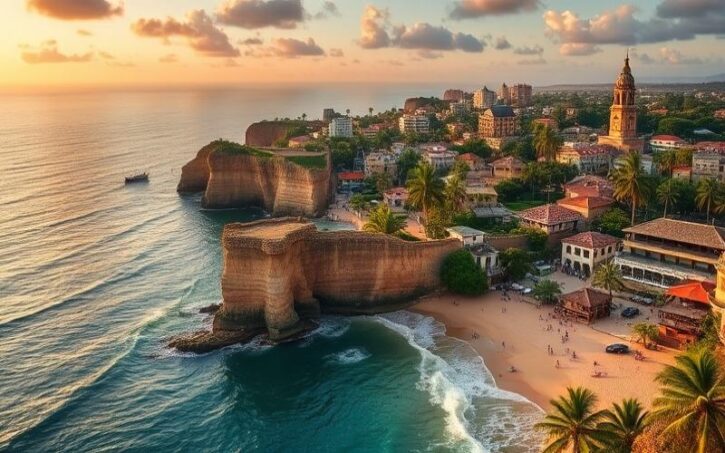
 Published on and written by Cyril Jarnias
Real estate in Côte d’Ivoire is generating growing interest, with promising investment opportunities in an expanding market.
Indeed, this West African country, benefiting from sustained economic growth and rapid urbanization, offers a favorable environment for those looking to diversify their portfolio.
Whether in major metropolises like Abidjan, where housing demand stems from a constantly increasing population, or in developing regions, investing in Ivorian real estate proves to be an attractive strategy for savvy investors.
This article explores the current trends of the real estate market in Côte d’Ivoire and the key strengths that make it a wise choice for any investor seeking substantial returns.
Reasons to Invest in Real Estate in Côte d’Ivoire
Côte d’Ivoire presents a particularly favorable economic environment for real estate investment, driven by stable growth, accelerated urban development, and incentive policies.
Favorable Economic Factors
- Solid Economic Growth: Projected growth rate of 6.2% in 2025, among the highest in West Africa, with an average of 6.4% expected until 2027.
- Resilience to Global Shocks: The Ivorian economy continues to progress despite international and regional uncertainties.
- Rising GDP: Forecast of USD 83.85 billion in 2025, and nearly USD 94.75 billion in 2027.
| Year | Economic Growth (%) | GDP (USD Billions) |
|---|---|---|
| 2024 | 6.0 | 78.3 |
| 2025 | 6.2 | 83.85 |
| 2026 | 6.4 | 89.13 |
| 2027 | 6.4 | 94.75 |
Real Estate Opportunities in Major Cities
- Growing Housing Demand: Rapid urbanization, particularly in Abidjan, creates strong pressure on the residential market.
- Urban Development: The expansion of neighborhoods and modernization of infrastructure promote the rise of real estate.
Tax Incentives and Government Policies
- Tax Exemptions for Developers: Possibility to benefit from tax reductions on new real estate investments or in certain official programs.
- Streamlining of Administrative Procedures: Simplification of acquisition and land security procedures for investors.
- National Development Plan: Objective to strengthen human capital, accelerate industrialization, and support private investment until 2030.
Real Estate Appreciation Potential
- Rising Real Estate Prices: Land and housing prices continue to grow in highly urbanized areas, generating prospects for high capital gains for investors.
- Attraction of Infrastructure Projects: Construction of new roads, bridges, industrial zones, and urban transport that enhance outlying neighborhoods and support real estate demand.
Major Infrastructure Projects
- New Abidjan Metro Line
- Extension of the Autonomous Port
- Modernization of Intercity Road Axes
- Development of Special Economic Zones
Political Context and Investor Confidence
- Relative Political Stability: Despite the pre-electoral period, Côte d’Ivoire maintains strong attractiveness, with solid institutions and prudent macroeconomic governance.
- Improvement in Business Climate: Reforms to facilitate foreign investment and legal protection of capital.
Summary of Reasons to Invest in Ivorian Real Estate
- Sustained economic growth and favorable prospects
- Strong demand for urban housing, particularly in Abidjan
- Tax incentives and pro-investment policies
- High potential for real estate appreciation due to price evolution and infrastructure projects
- Overall stable political context, strengthening investor confidence
Medium-term prospects remain optimistic for real estate investment, supported by economic dynamics, urbanization, and attractive government measures.
Good to Know:
Côte d’Ivoire benefits from stable economic growth and rapid urban development, particularly in Abidjan, supported by attractive tax incentives and government policies favorable to real estate investments. The appreciation potential is reinforced by the continuous rise in real estate prices and ambitious infrastructure projects, all within a stable political context that reassures investors.
Understanding the Real Estate Market: Prices and Housing Types
Overview of Ivorian Real Estate Market Trends
Côte d’Ivoire displays robust economic growth (rate close to 7% per year until 2025), coupled with accelerated urbanization expected to reach 60% by 2025. These factors energize the real estate sector, particularly in major urban areas like Abidjan, Bouaké, and Yamoussoukro. Neighborhoods in Abidjan such as Cocody, Riviera, Marcory, and Yopougon are undergoing rapid transformation, driven by significant infrastructure investments (bridges, metro, port extension), creating new attractive hubs for investors.
Booming Regions:
- Abidjan (Cocody, Riviera, Marcory, Yopougon)
- Bouaké
- Yamoussoukro
Data on Average Housing Prices (2024-2025)
| Housing Type | Urban Location (Abidjan) | Suburban/Rural Location |
|---|---|---|
| Apartment (2-3 rooms) | 30–50 million FCFA | 10–25 million FCFA |
| Single-Family House | 50–120 million FCFA | 20–45 million FCFA |
| High-End Villa | 150–400 million FCFA | 60–120 million FCFA |
| Social Housing | 8–15 million FCFA | 5–10 million FCFA |
Prices vary significantly based on proximity to the city center, quality of amenities, and neighborhood security.
Key Factors Determining Real Estate Prices
- Proximity to Infrastructure: The presence of new road axes, the Abidjan metro, or major commercial infrastructure significantly enhances the value of adjacent neighborhoods.
- Housing Demand: The gap between supply and demand, with an estimated deficit of over 400,000 housing units (especially in Abidjan), exerts upward pressure on prices.
- Socio-Economic Evolution: The rise of the middle class, population growth, and the arrival of foreign investors contribute to increasing real estate values.
- Improvement in Regulatory Framework: Digitization of land registry, land security, tax incentives, simplification of procedures.
- Land Scarcity in sought-after urban areas.
Popular Housing Types Among Investors
- Luxury Apartments and High-End Villas: Sought after for rental to expatriate and executive clients, offering good returns and rapid appreciation.
- Secure Mid-Range Residences: Attractive to the emerging middle class, combining security and quality.
- Affordable and Social Housing: Strong rental demand, particularly in Yopougon or developing areas, with high rental yields.
- Office and Commercial Real Estate: Particularly sought after in transforming business districts.
Future Market Development Prospects
- Digital Transformation of the sector (PropTech, online property management, virtual tours).
- Development of Eco-Friendly Neighborhoods and green buildings.
- Enhancement of Areas Served by the New Abidjan Metro.
- Arrival of New Investment Vehicles (specialized funds, REITs).
- Continuous State Support through social housing programs and modernization of the legal framework.
The Ivorian market thus offers high growth potential, with price stability and increasing diversification of opportunities, particularly in major cities and neighborhoods connected to new infrastructure.
Good to Know:
The regions of Abidjan and San-Pédro are booming with average apartment prices around 500,000 FCFA/m²; villas, prized for their proximity to infrastructure, range between 800,000 and 1,200,000 FCFA/m². Investors favor houses on the outskirts of Abidjan, benefiting from rising demand and promising economic developments.
Where to Invest? The Most Attractive Areas in Côte d’Ivoire
Urban Areas with Expanding Economies in Côte d’Ivoire
Abidjan remains the country’s economic engine, with neighborhoods like Cocody, Plateau, Riviera, II Plateaux, and Marcory. Cocody, in particular, shows sustained real estate growth, marked by the rise of sectors like Angré, Cocody Nord, and Riviéra 4. The Plateau, the nerve center of business, remains highly sought after despite the scarcity of available land. Outlying regions such as Bingerville, Songon, and Grand-Bassam are also attracting more and more investors due to their development potential and gradual land appreciation.
Attractiveness Factors of Urban Areas
- Developing Infrastructure
Major projects like the Abidjan Metro, rehabilitation of lagoon bays, new roads and bridges enhance connectivity and neighborhood attractiveness. - Economic Stability
GDP growth estimated between 6 and 8% per year, relatively stable political environment, increased confidence from foreign investors. - Demographic Growth Potential
Constant influx of urban population, expanding middle class, strong rental demand (especially for F3/F4 apartments and luxury villas). - Land Scarcity in Central Neighborhoods
The limitation of available land stimulates appreciation and guarantees lasting capital gains, especially in Cocody and Plateau.
Real Estate Investment Profitability
| Neighborhood/Region | Property Type | Average Purchase Price (2025) | Average Monthly Rent | Estimated Annual Appreciation | Rental Potential |
|---|---|---|---|---|---|
| Cocody (Deux Plateaux) | 600 m² Land | 300,000,000 FCFA | – | 8-10% | High |
| Cocody (Les Perles) | Duplex Villa (290 m²) | – | 2,750,000 FCFA | 8-10% | Premium |
| Cocody (Apartment) | R+2 High Standard | – | 1,800,000 FCFA | 7-9% | Very Strong |
| Plateau | Prestige Building | Very High | >3,000,000 FCFA | >10% | Excellent |
| Marcory | Residence/Commercial | Medium to High | 1,200,000 FCFA | 7-8% | Good |
| Bingerville/Songon | Land or New Villa | Accessible | 500,000–900,000 FCFA | 6-8% | Growing |
Comparison with Other Regions of the Country
Urban areas in Abidjan offer superior profitability and asset security due to constant demand, land scarcity, and accelerated modernization. In contrast, secondary regions (Yamoussoukro, Bouaké, San Pedro) remain less dynamic, with limited capital gains (2-4% per year) and weaker rental demand.
Government Programs Supporting Real Estate Development
- National Development Plan (PND 2021-2025)
Support for the construction of social and economic housing, modernization of urban infrastructure, tax incentives for developers. - Ivorian Real Estate Promotion Company (SIPIM)
Delivery of over 20,000 housing units, integrated projects in expanding neighborhoods, support for investors. - Major Urban Projects
Launch of the Abidjan Metro, redevelopment of lagoon fronts, extension of water and electricity networks, creation of commercial and residential hubs.
Long-Term Investment Prospects
- Asset Appreciation Potential
Land scarcity and international demand (diaspora, expatriates, foreign groups) ensure sustained price growth. - Security and Stability
Investing in premium neighborhoods of Abidjan helps preserve asset value and benefit from solid rental demand, even in an economic slowdown. - Investor Testimonials
“I opted for a villa in Cocody Angré Nord, the capital gain over three years exceeded 25% and the rental is assured year-round.”
“The Plateau remains essential for prestige investments, the demand never wanes.”
Recent Statistics (2025)
- Real Estate Market Growth in Cocody: +8% per year
- Rental Demand for F3/F4 Apartments in Abidjan: +15% over 12 months
- Foreign Investment in Abidjan Real Estate: +20% compared to 2024
The central neighborhoods of Abidjan (Cocody, Plateau, II Plateaux, Marcory) offer the best prospects for profitability and medium to long-term appreciation, driven by urban dynamics, economic stability, and major infrastructure projects.
Good to Know:
Abidjan, particularly Cocody and Plateau, stands out for its modern infrastructure and sustained demographic growth, offering profitable real estate opportunities supported by government incentives like tax exemptions. Outlying regions are also gaining attention due to ambitious development projects, while yields here remain competitive compared to the rest of the country.
Foreign Investment and Rental Profitability in Côte d’Ivoire
The increase in foreign investment in the Ivorian real estate sector is spectacular, driven by solid economic growth and incentive policies.
Main Foreign Investors Come From:
- France (executives, expatriates, companies)
- Lebanon (merchants, developers)
- China (large construction groups, developers)
- Gulf Countries (private and institutional funds)
- African Diaspora (notably Ivorian and West African)
Preferred Geographic Areas Are:
- Abidjan: Cocody, Le Plateau, Zone 4, Riviera, Angré (high-end real estate, offices, connected residences)
- Bingerville, Grand-Bassam, Azito: eco-districts and new residences
- Yopougon, Anyama, Attécoubé: outlying neighborhoods with high appreciation potential
- Bouaké: diversification outside Abidjan
Tax and Regulatory Advantages for Foreign Investors:
- Temporary Exemptions from Registration Fees for certain new programs
- Legal Security of Land Transactions
- Regulation of Transparency and Fight Against Speculation
- Facilitation of Access to Credit for Structuring Investments
- No Major Restrictions on Real Estate Acquisition by Foreigners
Rental Profitability in Côte d’Ivoire (2025):
| City | Property Type | Average Rental Yield |
|---|---|---|
| Abidjan | High-End Apartment | 7 to 10 % |
| Abidjan | Furnished Rental Housing | 8 to 12 % |
| Bingerville | New Villa | 6 to 8 % |
| Yopougon | Standard Apartment | 8 to 9 % |
| Bouaké | Family Apartment | 7 to 8 % |
In Abidjan, 78% of inhabitants are tenants, which guarantees sustained demand and high occupancy rates.
Economic Factors Influencing Rental Profitability:
- GDP Growth (6.5 to 7 %/year)
- Rapid Urbanization (+1.3 million inhabitants in Abidjan in 7 years)
- Increase in Purchasing Power of Middle Classes and Expatriates
- Political Stability
- Structural Housing Deficit (strong pressure on rents)
- Still Limited Access to Financing for Local Households
- Formalization of the Sector and Digitization of Transactions
Opportunities and Challenges Illustrated by Testimonials:
French Investor in Cocody: “I invested in a new apartment under VEFA (Sale in Future State of Completion), the exemption from registration fees and the 98% occupancy rate largely secured my investment. The challenge remains tenant management and the volatility of charges.”
Lebanese Developer in Zone 4: “Yields are stable, but land security and speed of procedures are essential to limit risks.”
Chinese Expatriate in Bingerville: “The market is dynamic, rents increase every year, but competition in new developments imposes high standards to attract international clientele.”
Foreign investors benefit from an expanding market, tax incentives, and strong legal security, but must contend with still restrictive access to financing and strong competition in high-end segments.
- Growth, urbanization, and internationalization of the market reinforce rental profitability, particularly in central neighborhoods of Abidjan and new peripheral hubs.
- Diversification towards inland cities and emerging neighborhoods offers attractive opportunities for bold investors.
Good to Know:
Foreign investments in real estate in Côte d’Ivoire are mostly made by French, Lebanese, and Chinese investors, particularly in Abidjan, benefiting from tax advantages like VAT exemption for five years; rental yields reach an average of 8% to 12% depending on the city, with challenges related to inflation and disparities in purchasing power.
Disclaimer: The information provided on this website is for informational purposes only and does not constitute financial, legal, or professional advice. We encourage you to consult qualified experts before making any investment, real estate, or expatriation decisions. Although we strive to maintain up-to-date and accurate information, we do not guarantee the completeness, accuracy, or timeliness of the proposed content. As investment and expatriation involve risks, we disclaim any liability for potential losses or damages arising from the use of this site. Your use of this site confirms your acceptance of these terms and your understanding of the associated risks.

Cyril Jarnias is an independent expert in international wealth management with over 20 years of experience. As an expatriate himself, he is dedicated to helping individuals and business leaders build, protect, and pass on their wealth with complete peace of mind.
On his website, cyriljarnias.com, he shares his expertise on international real estate, offshore company formation, and expatriation.
Thanks to his expertise, he offers sound advice to optimize his clients' wealth management. Cyril Jarnias is also recognized for his appearances in many prestigious media outlets such as BFM Business, les Français de l’étranger, Le Figaro, Les Echos, and Mieux vivre votre argent, where he shares his knowledge and know-how in wealth management.





