
 Published on and written by Cyril Jarnias
Investing in Côte d’Ivoire represents a unique opportunity for investors looking to grow their real estate portfolio in West Africa. With its booming economy and urban dynamism, the country positions itself as an attractive destination.
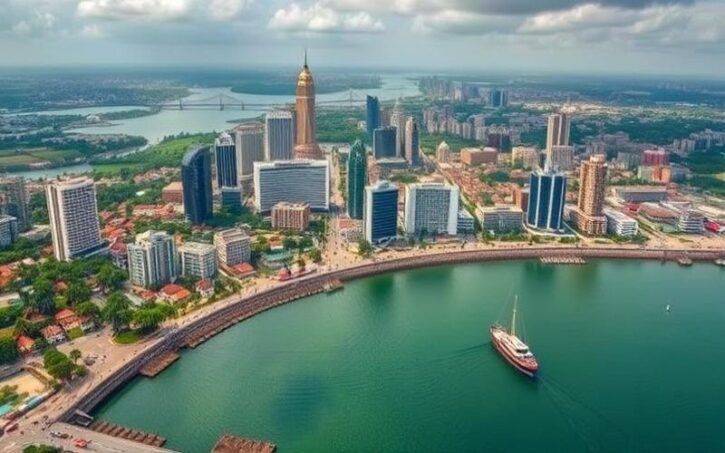
Abidjan, often called the pearl of the lagoons, is at the heart of this buzz, offering diverse neighborhoods, each with its own strengths in terms of profitability and appreciation potential.
From upscale residential areas like Cocody to rapidly changing business districts such as Marcory, each neighborhood tells a story of opportunity.
For those seeking long-term growth and stability, understanding the nuances of these neighborhoods is essential to making an informed and profitable investment.
Neighborhoods with High Potential for Investing in Côte d’Ivoire
Côte d’Ivoire is experiencing rapid urbanization, with a projected 60% urban population by 2025. This dynamic creates strong demand for housing and commercial spaces, especially in major cities and their outskirts. Several emerging neighborhoods still offer attractive prices and significant appreciation potential.
| Neighborhood/Area | Attractive Prices | Infrastructure Development | Economic Proximity | Government Initiatives | Rental Demand | Project Examples |
|---|---|---|---|---|---|---|
| Bingerville | Yes | Roads, schools, hospitals | Near Abidjan | Social housing | Growing | Satellite cities, new subdivisions |
| Songon | Yes | Transport, modern roadways | Near industrial zones | Social housing | High | Innovative residential projects |
| Yopougon | Yes | Modern shopping centers | Quick access to Abidjan hubs | Urban projects | High | Cosmos Yopougon (retail, leisure) |
| Marcory | Moderate | Offices, coworking, shops | Business hub | Investment support | Very high | Playce Marcory (shopping center) |
| Cocody/Riviera | Variable | Education, health, coworking | Near Plateau | Public investments | Very high | Riviera Residence, Waterfront Riviera 4 |
Key Potential Factors
- Infrastructure Development: Construction of bridges (e.g., Henri Konan Bédié), expansion of the autonomous port, new roads and interchanges, development of modern shopping centers.
- Proximity to Economic Zones: Bingerville and Songon benefit from their proximity to Abidjan and industrial hubs, facilitating access to jobs and services.
- Government Initiatives: Presidential program of 150,000 social housing units by 2025, National Development Plan allocating over 20% of its budget to urban and social infrastructure.
- Population Growth: +2.5% per year, with an estimated deficit of over 600,000 housing units per year, especially in the affordable segment and for the emerging middle class.
- Rental Demand: Very high in neighborhoods near economic centers, universities, and modern infrastructure.
Recent Statistics
- Urbanization Rate: 60% by 2025
- Urban Population Growth: +2.5% per year
- Housing Deficit: >600,000 units/year
- Rent Increase: Annual progression in developing neighborhoods
Local Expert Opinions
- Real estate specialists recommend focusing on changing peripheral neighborhoods (Bingerville, Songon) to benefit from rising demand and price increases.
- Neighborhoods like Cocody, Marcory, and Plateau remain safe bets due to their dynamism and ongoing infrastructure modernization.
- The emergence of new concepts (student residences, coworking, retail parks) reflects market diversification and growing demand sophistication.
Concrete Examples of Successful Investments and Ongoing Projects
- Cosmos Yopougon: Modern shopping center, boosting neighborhood attractiveness and rental demand.
- Riviera Residence (Riviera Bonoumin): Iconic residential project, combining prestige with proximity to economic hubs.
- Playce Marcory: Next-generation shopping center, showcasing the rise of modern commerce in Abidjan.
- Satellite Cities of Bingerville and Songon: New residential areas with modern infrastructure, attracting the middle class and diaspora.
Key Takeaway: Peripheral neighborhoods of Abidjan, driven by infrastructure projects and ambitious public policies, currently offer the best appreciation prospects for real estate investors seeking an attractive risk-return profile.
Good to Know:
Neighborhoods like Abobo and Yopougon, benefiting from rapid population growth and infrastructure expansion, are considered promising by local experts, with attractive government initiatives and potential illustrated by successful projects like the Bingerville technology park development.
Investment Opportunities: Areas to Watch
Most Promising Neighborhoods for Real Estate Investment in Côte d’Ivoire
| Neighborhood | Economic and Demographic Profile | Infrastructure and Urban Projects | Real Estate Dynamics | Key Sectors |
|---|---|---|---|---|
| Cocody (Riviera, Deux Plateaux, Angré) | Affluent population, expats, high rental demand, stable appreciation | Efficient road networks, proximity to universities and embassies, high-end residential projects | High prices, strong demand for modern villas and apartments | High-end residential, offices, retail |
| Plateau | Business center, headquarters, administrations, strong appeal | Metro, urban renovation, excellent transport network | Commercial real estate, offices, land scarcity | Offices, commercial spaces, mixed-use projects |
| Marcory | Dynamic neighborhood, social diversity, proximity to port and airport | Port expansion, major road axes | Mid-range and high-end housing, commercial spaces | Commerce, logistics, residential |
| Yopougon | Over 1 million residents, youth, strong population growth | New bridge, metro extension, educational projects | Affordable housing, small shopping centers, high expected added value | Student housing, mid-range residential, small businesses |
| Bingerville | Expanding residential suburb, families, young professionals | Improved road connections, new real estate programs | New apartments, secure residences | Real estate development, social housing |
| Grand-Bassam, Port-Bouët | Tourism potential, rapid development, beach appeal | Hotel projects, reinforced road infrastructure | High-end residences, hotels, rising prices | Tourism, hospitality, beachfront real estate |
| Treichville | Historic commercial neighborhood, proximity to port | Infrastructure modernization, commercial hubs | Commercial spaces, affordable housing | Commerce, crafts, logistics |
Economic and Demographic Attractiveness Criteria
- Sustained economic growth and political stability
- Rapid urbanization and increase in urban population
- Strong rental demand, especially in central and university neighborhoods
- Gradual land appreciation and land scarcity in business areas
- Diversification of population profiles (young professionals, expats, families, students)
Growth Potential and Transport Infrastructure
- Launch of the Abidjan metro facilitating urban mobility
- Construction of new bridges and rehabilitation of main road axes
- Expansion of the Port of Abidjan, a regional logistics hub
- Proximity to the airport in some neighborhoods (Marcory, Port-Bouët)
Ongoing Urban Development Projects
- Modernization of Plateau and creation of commercial hubs
- Development of secure residences in Bingerville
- Social and affordable housing program with the state
- Reorganization of lagoon fronts and creation of eco-districts
Recent Trends and Investment Outlook
- Strong demand for bright, secure F3/F4 apartments
- Rapid growth in the market for prestige villas with private pools
- Rising prices in beachfront and peripheral neighborhoods
- Lucrative buy-to-sell strategy in changing areas (Bingerville, Yopougon)
- Emergence of technology hubs and startups in central neighborhoods
Favorable Public Policies
- State support for real estate program implementation
- Simplified acquisition procedures for foreign investors
- Tax incentives for social and affordable housing projects
- Support for creating commercial and technology hubs
Key Sectors Offering Attractive Returns
- High-end residential real estate (Cocody, Riviera, Plateau)
- Offices and commercial spaces (Plateau, Marcory, Treichville)
- Real estate development and social housing (Bingerville, Yopougon)
- Tourism and hospitality (Grand-Bassam, Port-Bouët)
- Student and young professional housing (Yopougon, Angré)
Opportunities to Watch
Central neighborhoods (Cocody, Plateau, Marcory) remain the safest for medium- to long-term profitability.
Developing areas (Bingerville, Grand-Bassam, Yopougon) offer rapid appreciation potential and still accessible prices.
Major urban projects and public policies support a sustainable investment dynamic, strengthening the appeal of the Ivorian real estate market.
Good to Know:
Neighborhoods like Cocody and Marcory in Côte d’Ivoire present strong investment potential thanks to their urban development projects, improved transport infrastructure, and a booming real estate market supported by favorable public policies. The technology and commerce sectors also offer interesting opportunities for investors seeking attractive returns.
Promising Growth: Forecasts for Ivorian Real Estate
The rise of the Ivorian real estate market is based on a combination of structural economic factors, government reforms, accelerated urbanization, and the rapid expansion of the middle class. These dynamics shape demand and attract new investors, while posing challenges to be addressed to ensure sustained growth.
Main Growth Factors
Government Reforms:
- Revision of property tax (IPF): new measures to encourage the market release of underutilized properties and support homeownership.
- Harmonization of fees for real estate agencies and brokers for greater transparency and sector appeal.
- Emergency programs for the construction of 25,000 social and affordable housing units (2024-2025), with expansion to Abidjan and several inland cities.
- Modernization of the legal framework: land reform, urban planning and urban land code, construction and housing code.
- Temporary tax exemptions for new buyers and incentives for real estate investment.
- Recapitalization of BHCI, support for mortgage credit, and creation of the Social Housing Guarantee Fund.
Growing Urbanization:
- Abidjan concentrates nearly 5 million residents, with annual urban growth exceeding 3%.
- Development of over 2,000 hectares of urban land for new housing construction.
Rise of the Middle Class:
- Increase in purchasing power and aspirations for homeownership.
- Growing demand for modern, secure, and well-located housing, especially through rent-to-own schemes.
Real Estate Market Forecasts (2025-2030)
| Year | Transaction Volume | New Housing Units (Abidjan) | Estimated Sector Growth (%) | Average Mortgage Rate |
|---|---|---|---|---|
| 2025 | 22,000 | 8,000 | +8.5 | 5.95% |
| 2026 | 25,000 | 10,500 | +9.2 | 6.00% |
| 2027 | 28,000 | 12,000 | +10.0 | 6.05% |
| 2028 | 31,000 | 13,500 | +10.5 | 6.10% |
| 2029 | 34,000 | 15,000 | +11.0 | 6.15% |
| 2030 | 37,000 | 16,500 | +11.5 | 6.20% |
Current Demand Trends and Neighborhood Attractiveness
- Strong demand for affordable and social housing, mainly in Abidjan communes such as Yopougon, Cocody, Abobo, and Marcory.
- Emergence of new attraction hubs: Bingerville, Songon, Anyama, driven by infrastructure and land development programs.
- Appreciation of neighborhoods near new road axes and economic activity hubs.
- Preference for rent-to-own, allowing gradual property access.
- Development of condominiums and secure residences, tailored to the demand of an expanding middle class.
Challenges and Solutions for Sustainable Growth
List of Main Challenges:
- Access to secure land and limitation of disputes.
- Control of land pressure and price regulation.
- Persistent housing deficit for low-income households.
- Risks of urban saturation and insufficient infrastructure.
- Need for adapted and accessible financing.
List of Solution Levers:
- Continuation of legal and institutional reforms to ensure transaction transparency and security.
- Strengthening mortgage credit supply and diversifying financial products.
- Acceleration of public social and affordable housing programs.
- Development of public-private partnerships for the construction and management of new neighborhoods.
- Investment in urban infrastructure (roadways, networks, community facilities).
Key Takeaway:
Ivorian real estate is on a path of sustained growth, driven by public action, rapid urbanization, and solid demand, but must address structural challenges to consolidate its attractiveness and investment potential.
Good to Know:
Real estate in Côte d’Ivoire is expected to grow by 8% per year until 2025, supported by urbanization and the emergence of the middle class, despite challenges like limited access to financing and infrastructure. Abidjan neighborhoods see increased demand for modern housing, making them key areas for investment.
Disclaimer: The information provided on this website is for informational purposes only and does not constitute financial, legal, or professional advice. We encourage you to consult qualified experts before making any investment, real estate, or expatriation decisions. Although we strive to maintain up-to-date and accurate information, we do not guarantee the completeness, accuracy, or timeliness of the proposed content. As investment and expatriation involve risks, we disclaim any liability for potential losses or damages arising from the use of this site. Your use of this site confirms your acceptance of these terms and your understanding of the associated risks.

Cyril Jarnias is an independent expert in international wealth management with over 20 years of experience. As an expatriate himself, he is dedicated to helping individuals and business leaders build, protect, and pass on their wealth with complete peace of mind.
On his website, cyriljarnias.com, he shares his expertise on international real estate, offshore company formation, and expatriation.
Thanks to his expertise, he offers sound advice to optimize his clients' wealth management. Cyril Jarnias is also recognized for his appearances in many prestigious media outlets such as BFM Business, les Français de l’étranger, Le Figaro, Les Echos, and Mieux vivre votre argent, where he shares his knowledge and know-how in wealth management.





