
 Published on and written by Cyril Jarnias
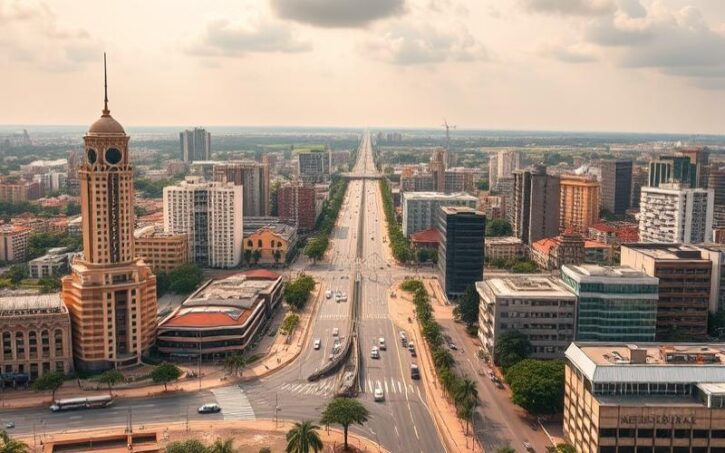
Ivory Coast, as the economic engine of West Africa, is embarking on an ambitious urban transformation with development projects aimed at modernizing its infrastructure while respecting its cultural heritage.
From Abidjan, the cosmopolitan metropolis, to Bouaké and San Pedro, each city will be at the heart of these visionary changes, which promise to revolutionize the urban landscape and improve citizens’ quality of life.
Local authorities, in collaboration with international partners, are working tirelessly to revitalize public services and strengthen resilience against growing climate challenges.
Let yourself be swept away by this urban adventure that offers a fascinating glimpse into Ivory Coast’s future, while highlighting the crucial importance of technological innovation and sustainability in this quest for progress.
Urban Transformation in Ivory Coast: The Future of the Real Estate Landscape
Ivory Coast is undergoing a major urban transformation, driven by structuring projects and a government vision focused on modernization, sustainability, and improving the living environment.
Key Urban Projects Under Development:
Road Network and Mobility:
- Paving of 1,922 km of roads in 2025, renovation of an additional 993 km, and maintenance of over 27,000 km of unpaved roads in Abidjan and the interior of the country.
- Abidjan Urban Transport Project (PTUA): construction of new bridges (4th and 5th), interchanges, and modernization of the urban road network.
- Abidjan Metro: a 37 km line crossing the city from north to south, facilitating mobility for millions of people and reducing traffic congestion.
- Financial closing of the BRT (Bus Rapid Transit) line on Boulevard Latrille, development of multimodal exchange hubs, lagoon stations, smart traffic lights, and professionalization of artisanal transport.
Infrastructure and Urban Facilities:
- Extension of Félix Houphouët-Boigny International Airport.
- Abidjan Exhibition Park, inaugurated in 2023.
- Construction of a new administrative city in Abidjan, featuring modern and eco-friendly buildings.
- Social housing program to address rapid urbanization.
- Rehabilitation of infrastructure in Dabou (roads, market, historic fort) and urban sanitation.
Eco-Responsible Neighborhoods and Sustainable Innovations:
- Creation of green neighborhoods where living, working, and leisure coexist in the same space, reducing the ecological footprint and ensuring sustainable urban space management.
- Abidjan Urban Park: transformation of a former landfill into a green space, waste-to-energy conversion, promotion of a healthy living environment.
- Adoption of the Greater Abidjan Urban Planning Master Plan integrating the Sustainable Urban Mobility Plan (PMUS) 2040.
Government Plans and Socio-Environmental Impacts:
- Desire to create modern metropolises addressing ecological and social challenges.
- Emphasis on social cohesion through public spaces (Agora of Abobo, modern markets, rehabilitation of historic sites).
- Improved mobility, reduced urban pollution, easier access to services and jobs.
- Integrated waste management, improved sanitation and air quality.
International Examples of Successful Transformations:
| Country | Flagship Project | Economic and Social Benefits |
|---|---|---|
| Morocco | Casablanca Green City | Job creation, soft mobility, green spaces |
| Rwanda | Kigali Green City | Affordable housing, renewable energy |
| Singapore | Urban Redevelopment Authority (URA) | Functional mix, climate resilience, urban innovation |
| France | Confluence District (Lyon) | Renaturation, energy efficiency, social cohesion |
Integration with Global Trends:
- Adoption of sustainable city principles: green mobility, smart neighborhoods, integrated waste management, social inclusion.
- Respect for local cultural heritage, rehabilitation of historic sites (e.g., Fort of Dabou).
- Alignment with the United Nations Sustainable Development Goals (SDG 11: sustainable cities and communities).
List of Key Innovations Observed:
- Urban metro and BRT to decongest cities.
- Integrated neighborhoods minimizing travel.
- Urban green spaces from brownfield redevelopment.
- Multimodal mobility platforms and intelligent traffic management.
Ivory Coast is thus aligning with the global dynamic of smart cities, while enhancing its cultural identity and ensuring inclusive and sustainable growth.
Good to Know:
Ivory Coast is investing in ambitious projects like the renovation of Abidjan and the creation of eco-responsible neighborhoods, drawing inspiration from successful transformations in Scandinavia to combine modernity with respect for heritage. The government emphasizes the environmental impact of new infrastructure while seeking sustainable models aligned with global trends.
The Ambitious Projects Reshaping Ivory Coast’s Territory
Major Projects Transforming Ivory Coast’s Infrastructure and Urban Landscape
Construction and Modernization of the Road Network
- 1,922 km of new paved roads planned for 2025, with a budget of 703 billion FCFA
- Reinforcement of 993 km of existing roads and renovation of over 27,000 km of unpaved roads nationwide
- Rehabilitation of main and secondary roads in strategic neighborhoods of Abidjan like Marcory
- Major civil engineering projects: 4th and 5th bridges of Abidjan, new interchanges, densification of the intercity and urban road network
Public Transit and Urban Mobility
- Abidjan Metro (investment of over 1.36 billion euros), planned for 2025, a structuring axis for mobility and economic growth
- Yopougon–Bingerville Bus Rapid Transit (BRT) line (20 km), 5 new international bus stations, 8 lagoon stations, acquisition of modern boats
- Abidjan Inter Modality Project (AIM): creation of 180 drop-off points and 32 multimodal exchange hubs to strengthen public transport interconnection
Residential and Commercial Developments
- Massive social housing program to meet high urban demand
- Construction of new administrative and commercial districts, such as the Abidjan Administrative City
- Expansion of the Port of Abidjan and extension of Félix Houphouët-Boigny International Airport to support economic and commercial growth
Summary Table of Major Infrastructure
| Project | Sector | Primary Impact | Expected Delivery |
|---|---|---|---|
| Abidjan Metro | Urban Mobility | Fluidity, employment, attractiveness | 2025 |
| 4th and 5th Bridges of Abidjan | Road | Decongestion, mobility | 2025 |
| Northern Highway | Road | South-North connection | 2025 |
| Port of Abidjan Expansion | Logistics | Trade, competitiveness | 2025-2030 |
| Social Housing Program | Residential | Access to housing | 2025+ |
| Biovea Biomass Plant | Energy | Employment, renewable energy | 2025 |
| Solar Power Plants (4 sites) | Energy | Energy transition | 2025-2026 |
| BRT Yopougon–Bingerville | Transport | Urban mobility | 2025 |
Economic and Social Impacts
- Creation of direct and indirect jobs during construction (construction, engineering, maintenance) and in induced sectors (services, trade)
- Improved quality of life through reduced travel times, easier access to jobs and services, safer travel, and increased supply of decent housing
- Revitalization of regional economic hubs through the decentralization of infrastructure and the growth of secondary cities
Environmental and Social Challenges
- Risks of pollution, destruction of natural habitats, and pressure on resources during large-scale projects
- Forced displacement of populations and land-use conflicts in certain urban areas
- Inequalities in access to new housing or services for the most vulnerable populations
Government and Private Sector Responses
- Adoption of master plans to anticipate logistical, energy, and social needs until 2050
- Promotion of ecological solutions (biomass plants, solar, construction waste management)
- Strengthened dialogue with local communities, compensation measures, and social inclusion policies
- Increased involvement of the private sector through public-private partnerships for the design, financing, and management of infrastructure
Future Outlook
- Expected completion of most major projects by 2025–2030, marking a profound transformation of Ivory Coast’s urban landscape
- Increased economic attractiveness, better regional integration, development of new activity hubs
- Expected benefits: sustained growth, employment, reduction of urban poverty, tangible improvement in the living environment for millions of Ivorians
Key Takeaway: Ivory Coast’s major infrastructure projects, driven by a strategic vision, are transforming mobility, housing, and the economic fabric, while requiring innovative responses to social and environmental challenges to ensure shared long-term benefits.
Good to Know:
The construction of the Abidjan metro is a flagship project that promises to transform urban mobility while creating thousands of jobs, but it raises environmental challenges that the government is trying to mitigate through ecological measures. Social housing projects in Yopougon aim to provide affordable homes, thus addressing population growth while revitalizing the local economy.
A Market in Flux: The Impact of Urban Projects
An Ivorian real estate market in full transformation, driven by major urban projects and accelerated urbanization.
Current trends in the Ivorian real estate market are marked by:
- Sustained economic growth (annual rate close to 7%)
- Sharply rising urbanization rate (60% expected by 2025)
- Growing demand for housing in urban areas, boosted by the emergence of a middle class
Examples of Recent and Planned Urban Projects
| Project / Area | Nature of Project | Expected Impact |
|---|---|---|
| Henri Konan Bédié Bridge | Transport infrastructure | Real estate appreciation in Abidjan |
| Port of Abidjan Expansion | Logistics and trade | Increased attractiveness of nearby neighborhoods |
| Abidjan Metro (2025) | Urban transport | Increase in real estate prices along the route |
| Cocody Bay | Urban development | Creation of a new residential hub |
| 150,000 Social Housing Program | Affordable housing | Reduction of deficit, revitalization of peripheral neighborhoods |
Attractiveness of New Development Areas
Neighborhoods like Marcory, Riviera, Cocody, and Yopougon are seeing increased investment, each with a different typology: high-end, mixed, or affordable.
Areas served by new transport infrastructure (metro, bridges) are expected to experience accelerated real estate appreciation.
Evolution of Real Estate Prices
With demand exceeding supply, purchase and rental prices continue to rise, with some neighborhoods recording an annual capital gain exceeding 10% over the last decade.
Social housing programs aim to ease price pressure and broaden access to housing.
Impact on Existing Infrastructure and Local Employment
New urban projects generate jobs in construction, property management, and services.
The expansion of transport networks and the modernization of neighborhoods improve mobility and connectivity, but also put pressure on existing infrastructure (roads, water and electricity networks).
Potential Challenges
- Gentrification: Transformation of certain neighborhoods, risk of exclusion for the most modest populations.
- Pressure on public services: Health, education, roads, water, and energy are strained by the demographic influx.
- Housing deficit: Despite public programs, the deficit remains above 400,000 units in Abidjan.
Responses from Decision-Makers
- Administrative reforms: Simplification of building permits, digitization of the land registry, land tenure security.
- Tax incentives: Support for developers in social housing and eco-responsible infrastructure projects.
- Modernization and sustainability: Adoption of PropTech, encouragement of sustainable construction and green buildings.
- Social programs: Massive construction of social housing, development of peripheral urban hubs to decongest centers.
Structuring Trends by 2025
- Property Technology (PropTech): Smart property management, virtual tours, smart buildings.
- Eco-responsible neighborhoods: Sustainable construction, energy efficiency.
- Internationalization of the market: Arrival of specialized funds and new investment vehicles.
The Ivorian real estate market, stimulated by large-scale urban projects, offers growth opportunities, but requires decision-makers to address social and infrastructural challenges to ensure an inclusive and sustainable transformation.
Good to Know:
Urban projects in Ivory Coast, such as those in Abidjan, are stimulating interest in new areas, leading to rising real estate prices and infrastructure challenges, while strategies are being implemented to counter gentrification.
Investing in Ivory Coast: New Opportunities to Seize
Ivory Coast is currently experiencing a remarkable dynamic of urban development, supported by large-scale government projects that are sustainably transforming the country’s economic and social landscape.
Recent Urban Development Projects
- Urban renewal program in Abidjan, with addressing and rehabilitation of precarious neighborhoods, aiming to make Abidjan a modern and ecological metropolis by 2030, before extending to 15 other cities in the country.
- Launch of the Abidjan Green Plan and transformation of the V23 axis in Yopougon into a modern urban boulevard, integrating bike lanes, green spaces, and public facilities, as part of the Sustainable Cities Platform.
- Paving of 1,922 km of roads and reinforcement of an additional 993 km in 2025, with a budget of 703 billion FCFA for transport infrastructure.
- Major projects in Dabou: road rehabilitation, construction of new markets, sanitation, and enhancement of historic sites with high tourism potential.
- Modernization of the Bounkani region: rehabilitation of roads, construction of a regional hospital, educational infrastructure, and urban roads.
- Public-private partnerships to strengthen the supply of affordable housing, particularly in Attecoubé, with support from the International Finance Corporation (IFC).
Key Beneficiary Sectors
| Sector | Flagship Projects and Opportunities |
|---|---|
| Transport | Road networks, interchanges, lagoon stations, BRT lines, smart traffic lights |
| Housing | Development of model neighborhoods, partnerships for affordable housing |
| Energy | Modernization of networks, integration of sustainable infrastructure |
| Environment | Creation and rehabilitation of green spaces, ecological corridors |
| Trade & Tourism | Construction of markets, enhancement of historic sites |
| Health and Education | Construction of hospitals and educational facilities |
Tax Incentives and Investment Mechanisms
- Tax exemptions on the importation of equipment for priority sectors (construction, energy, etc.).
- VAT and corporate tax reductions for new investments in social housing and urban infrastructure.
- Structured Public-Private Partnership (PPP) frameworks to secure and accelerate major projects, particularly in housing and transport.
- Personalized investor support from dedicated government agencies.
Potential Impact on Growth and Sustainable Development
- Acceleration of economic growth through the creation of direct and indirect jobs (construction, urban services, maintenance).
- Improved mobility and attractiveness of cities, stimulating private investment.
- Reduction of inequalities in access to housing and essential services.
- Promotion of sustainable practices: ecological neighborhood management, development of green corridors, fight against urban sprawl.
- Strengthening of social cohesion through the modernization of infrastructure and enhancement of local heritage.
Challenges and Mitigation Measures
Challenges:
- Financing and management of large projects.
- Resistance to change in some urban communities.
- Risks of exclusion or displacement of vulnerable populations.
- Adherence to deadlines and ecological standards.
Measures Taken:
- Multiplication of PPPs and guarantees to secure investments.
- Social dialogue and consultation during planning phases.
- Support and resettlement programs for affected populations.
- Rigorous environmental monitoring and gradual adoption of international standards.
Good to Know:
The Ivorian government offers attractive tax incentives and public-private partnerships to boost investments in transport infrastructure, housing, and energy, while implementing measures to mitigate risks and ensure sustainable economic growth.
Key Takeaway: Ivory Coast offers an attractive and dynamic environment for investors wishing to engage in structuring urban projects, with innovative mechanisms and a sustainable vision, while actively anticipating and managing the risks inherent in urban transformation.
Disclaimer: The information provided on this website is for informational purposes only and does not constitute financial, legal, or professional advice. We encourage you to consult qualified experts before making any investment, real estate, or expatriation decisions. Although we strive to maintain up-to-date and accurate information, we do not guarantee the completeness, accuracy, or timeliness of the proposed content. As investment and expatriation involve risks, we disclaim any liability for potential losses or damages arising from the use of this site. Your use of this site confirms your acceptance of these terms and your understanding of the associated risks.

Cyril Jarnias is an independent expert in international wealth management with over 20 years of experience. As an expatriate himself, he is dedicated to helping individuals and business leaders build, protect, and pass on their wealth with complete peace of mind.
On his website, cyriljarnias.com, he shares his expertise on international real estate, offshore company formation, and expatriation.
Thanks to his expertise, he offers sound advice to optimize his clients' wealth management. Cyril Jarnias is also recognized for his appearances in many prestigious media outlets such as BFM Business, les Français de l’étranger, Le Figaro, Les Echos, and Mieux vivre votre argent, where he shares his knowledge and know-how in wealth management.





