
 Published on and written by Cyril Jarnias
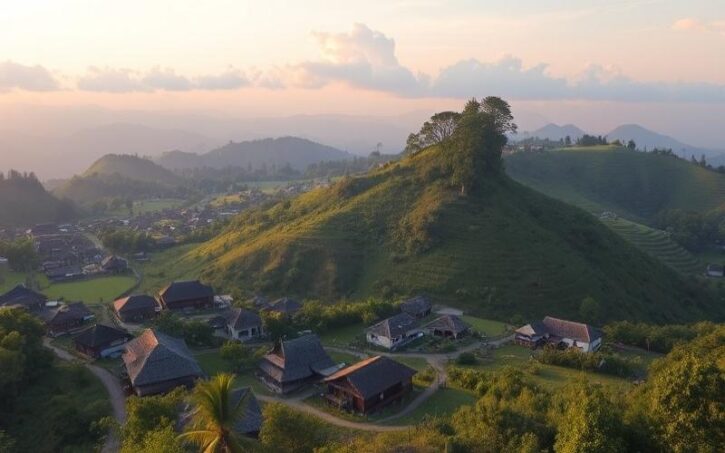
The Philippines, with its picturesque landscapes and a culture deeply rooted in authenticity, offers unique opportunities for investors looking to capitalize on a booming sector: real estate in traditional villages.
As the year 2025 approaches, a renewed interest in sustainable development and cultural preservation positions Philippine villages at the heart of a strategic investment dynamic.
Combining timeless charm and economic potential, investing in these areas is not only a commitment to protecting local heritage, but also an anticipation of strong economic growth fueled by international tourism and community development initiatives.
The Benefits of Investing in Authentic Philippine Villages
Investing in authentic Philippine villages offers several major economic advantages:
Attractive Real Estate Costs
Real estate prices in rural villages remain significantly lower than in major urban or tourist areas. This affordability allows for acquiring properties with high appreciation potential, while minimizing exposure to initial financial risk.
| Area Type | Average Price (€/m²) |
|---|---|
| Authentic Village | 500 – 1,500 |
| Manila Urban Area | 2,500 – 5,000 |
High Tourism Potential
Philippine villages offer exceptional cultural and natural wealth: living traditions, preserved landscapes, local craftsmanship. This appeal fosters the development of sustainable tourism centered on authenticity, capable of attracting an international clientele seeking unique experiences.
Government Support and Tax Incentives
The Philippine government actively encourages regional development through the creation of special economic zones benefiting from favorable tax regimes and administrative relief for investors. Infrastructure is being developed to facilitate access to rural areas and promote local economic growth.
Positive Impacts on Local Communities
- Direct and indirect job creation (construction, tourism services, crafts)
- Infrastructure improvement: roads, schools, access to clean water
- Enhancement of cultural heritage by highlighting local know-how
- Increased purchasing power through tourism-generated income
Strategic Interest for Diversification
- Geographic diversification away from saturated traditional markets
- Exposure to a dynamic economy with strong demographic growth potential
- Opportunity to benefit long-term from the expected rise in real estate values in these emerging regions
Finally, investing in these villages actively contributes to the preservation of Philippine cultural heritage: traditional architectural restoration, support for local festivals, and maintaining the rural way of life against the risk of urban exodus.
Investing in authentic villages therefore allows not only for potentially high profitability but also for a lasting social impact while participating in safeguarding the unique heritage of the Philippines.
Good to Know:
Investing in authentic Philippine villages offers several notable economic advantages, including lower real estate costs compared to big cities, making these investments attractive for a diversified portfolio. With the Philippine government’s support for regional development and tourism promotion, these villages, rich in culture and nature, offer significant tourism growth potential. This investment positively contributes to local communities through job creation and infrastructure improvement, while providing an opportunity to preserve the country’s unique cultural heritage. For example, developing an eco-resort can not only attract travelers seeking authentic experiences but also align with local ecological and cultural preservation initiatives.
Decoding Rural Real Estate Potential: A Profitable Market
The rural real estate market in the Philippines presents several specific factors that make it a potentially profitable investment by 2025.
Profitability Factors of the Philippine Rural Real Estate Market:
| Factor | Impact on Investment |
|---|---|
| Increased demand for rural areas | Rise in property values, increase in transactions |
| Infrastructure development | Rapid appreciation, enhanced attractiveness |
| Lower acquisition costs | Reduced entry barrier, higher margins |
| Agricultural and tourism potential | Income diversification, increased yield |
Detailed List of Key Elements:
Increased Demand Linked to Lifestyle Changes
More and more urban dwellers are seeking a natural or semi-rural setting to telework or recharge. This phenomenon is accentuated by the rise of “workation” and the growing desire for a better work-life balance. Families also favor green and less densely populated spaces.
Growing Appeal of Local Tourism
The development of domestic tourism stimulates demand for rural accommodations (lodges, ecolodges). Investors can benefit from the boom in short and alternative stays in these regions.
Positive Impact of Infrastructure Development
The continuous improvement of the road network facilitates access to previously isolated areas. The rapid expansion of high-speed internet paves the way for rural telework, thus increasing both residential and rental appeal. These public investments mechanically revalue surrounding land.
Key Takeaway: A plot of land well-served by a new road or benefiting from a reliable internet connection will see its value increase significantly.
Financial Advantages Compared to Urban Areas
- Significantly lower average prices per square meter
- Generally lower property taxes
- Increased opportunities in group or fractional acquisition (agricultural lots)
- Possibility of yield through:
- Seasonal rental (rural Airbnb)
- Diversified agricultural operation: organic farming, educational farms
- Ecotourism
Legal and Regulatory Aspects to Monitor Until 2025
- Restrictions on foreign land ownership: only certain structures allow non-citizens to invest indirectly in land.
- Local regulations may limit certain tourist or agricultural uses; specific permits are often required.
- Expected reforms aimed at simplifying certain notarial acts, but vigilance is required regarding any legislative changes concerning rural zoning.
Summary List – Key Points to Verify Before Any Purchase:
- Exact legal status of the land (agricultural/residential/tourist)
- Possible existence of hidden mortgages or local customary rights
- Actual access to main roads/essential public networks
- Compliance with regional environmental plans
In summary: investing in the Philippine rural real estate market today allows — thanks to structurally rising demand, moderate cost, and possible diversification — attractive appreciation, subject to a rigorous analysis of local legal constraints!
Good to Know:
Investing in rural real estate in the Philippines presents profitable potential due to several factors. Demand for rural properties is increasing, driven by a lifestyle shift towards seeking tranquility and a growing appeal for local tourism. Infrastructure improvements, such as roads and internet connections, increase the value of rural properties by making them more accessible and attractive to investors and tourists. Additionally, acquisition costs are often lower than in urban areas, offering attractive yield opportunities through agriculture or tourist accommodation. However, it is crucial to consider the legal and regulatory aspects that could influence the investment, as well as local rules regarding land acquisition by foreigners by 2025, to maximize opportunities and minimize risks.
Preserving Philippine Authenticity and Cultural Heritage
Preserving the authenticity and cultural heritage of the Philippines is essential to maintaining the identity of local communities and ensuring the transmission of their unique traditions to future generations. Investing in authentic villages is not limited to economic enhancement: it is also an act of cultural preservation that benefits society as a whole.
The importance of this preservation is illustrated notably by:
- Maintaining traditional crafts, languages, rituals, and architecture.
- Protecting a historical heritage that nurtures a sense of belonging and strengthens social cohesion.
- The ability to offer a differentiating tourist experience based on authenticity.
National and Local Initiatives for Heritage
Several structuring projects demonstrate this commitment:
| Initiative / Project | Main Objective | Scope |
|---|---|---|
| National Heritage Act (RA 10066) | Legal protection of tangible/intangible heritage | National |
| Philippine Registry of Cultural Property (PRECUP) | Inventory, documentation, awareness | National |
| Municipal programs in Vigan | Architectural preservation, conservation of old houses | Local/Vigan |
| Mangyan Heritage Center (Mindoro) | Safeguarding ancestral script and “ambahan” poetry | Local/Mangyan |
These efforts often involve cooperation between government agencies (National Museum, NCCA…), local authorities, cultural NGOs, or community associations.
Economic Opportunities Linked to Preservation
Heritage enhancement is a powerful lever for attracting public/private investments:
- Cultural tourism generates a steady flow of visitors seeking authenticity and immersion in living traditions.
- Investors are encouraged by the sustainable potential offered by these destinations distinguished by their strong identity.
- Infrastructure improvements serving tourism also benefit residents.
Concrete examples where economic development goes hand in hand with cultural preservation:
- Vigan (Ilocos Sur), a UNESCO World Heritage site: systematic restoration of Spanish colonial buildings thanks to strict municipal legislation combined with economic incentives. This model has not only attracted national/international tourists but also hotel investors respectful of the historical setting.
- Mangyan Region (Mindoro): educational initiatives around the Hanunoo-Mangyan script promoted through local cultural centers; logistical support for artisans to market their works while protecting their ancestral know-how.
Challenges Related to Modernization
Despite these notable successes, several obstacles remain:
- Rapid urbanization threatening traditional spaces in favor of modern infrastructure sometimes unsuitable for the heritage context;
- Land pressure pushing some residents to sell or transform old properties;
- Risk of excessive folklorization if tourism development is not controlled or coordinated with the communities concerned;
- Recurring lack of sustainable funding or insufficient specialized skills to restore according to international standards;
To sustainably address these challenges:
- Systematically involve local populations in every decision-making step.
- Promote respectful urban planning integrating protected zones around sensitive sites.
- Focus on tourism diversification centered on quality rather than volume.
These successful models like Vigan can inspire elsewhere in the Philippines: they demonstrate that combining local economic development AND the living transmission of cultural heritage is not only possible but desirable — subject to shared governance between public/private actors and concerned citizens.
Good to Know:
Investing in authentic villages in the Philippines offers a unique opportunity to preserve the country’s authenticity and cultural heritage. Projects like the eco-tourism development of the Banaue Rice Terraces highlight ancestral agricultural practices while attracting environmentally conscious tourists. In Vigan, the urban restoration effort of the historic district has strengthened the local economy and reinforced cultural identity, attracting both tourists and investors concerned with preservation.
These initiatives demonstrate how respect for local traditions can coexist with economic development, creating jobs and supporting infrastructure without compromising cultural integrity. However, rapid modernization poses a challenge, threatening to dilute or replace traditions. It is crucial to involve local communities in the decision-making process to ensure development that respects cultural heritage. These models of successful cooperation between tradition and economy can be replicated in other villages, transforming the Philippines’ cultural wealth into a sustainable and dynamic resource.

Cyril Jarnias is an independent expert in international wealth management with over 20 years of experience. As an expatriate himself, he is dedicated to helping individuals and business leaders build, protect, and pass on their wealth with complete peace of mind.
On his website, cyriljarnias.com, he shares his expertise on international real estate, offshore company formation, and expatriation.
Thanks to his expertise, he offers sound advice to optimize his clients' wealth management. Cyril Jarnias is also recognized for his appearances in many prestigious media outlets such as BFM Business, les Français de l’étranger, Le Figaro, Les Echos, and Mieux vivre votre argent, where he shares his knowledge and know-how in wealth management.





