
 Published on and written by Cyril Jarnias
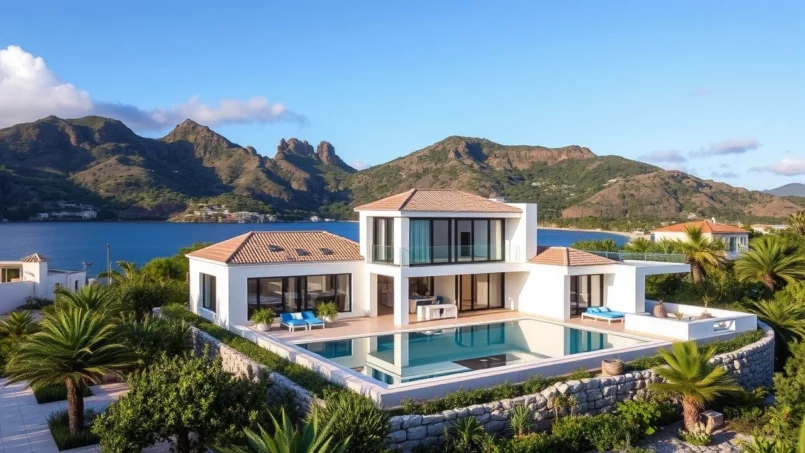
Saint Barthélemy is one of those names that immediately conjures images of villas perched over the water, yachts lined up in a turquoise bay, and anonymous celebrities behind dark sunglasses. But behind the postcard, the island hides what is primarily one of the world’s most expensive, regulated, and resilient real estate markets.
Before any real estate investment in Saint Barthélemy, it is crucial to understand the specifics of this micro-market. It features atypical taxation, a structural land shortage, and high rental yields. However, it also carries real risks, such as hurricanes, potential regulatory changes, and difficulties in obtaining building permits. Therefore, a thorough analysis is necessary, far from any impulsive decision.
This guide offers a structured dive into Saint Barthélemy real estate: context, prices, taxation, seasonal rentals, key neighborhoods, purchase procedures, risks, and outlook.
A Tiny Island That Became a Global “Brand”
Saint Barthélemy is a French overseas collectivity of just 8 to 9 square miles, or about 21 to 25 km², with approximately 10,000 inhabitants. Officially French, French-speaking, and using the euro, it remains outside the Schengen Area and has its own visa policy. The capital, Gustavia, concentrates the harbor, luxury boutiques, and a significant portion of the apartments.
The island of Saint Barthélemy relies mainly on luxury tourism and retail. Its offerings include around twenty famous beaches (Saint-Jean, Flamands, Gouverneur, etc.), over 70 restaurants ranging from casual spots like Shellona to fine-dining establishments like Bonito, and prestigious hotels such as Eden Rock, Cheval Blanc, or Rosewood Le Guanahani.
Over a few decades, Saint Barthélemy has gone from a relatively discreet island to a link in the “millionaires’ circuit.” New Year’s Eve has become a global event: private jets, mega-yachts, villas rented for several hundred thousand dollars a week. In 2023, the island welcomed nearly 293,000 visitors, almost 30 tourists per inhabitant, with a clear majority of American clientele.
This extreme appeal has a corollary: constant pressure on land and housing, which entirely structures the real estate market.
An Ultra-Tight Market, Driven by Scarcity and Regulation
Real estate in Saint Barthélemy is often compared to Monaco or Manhattan: a tiny territory, limited supply, global clientele, stratospheric prices per square meter. The difference is that the island is also subject to strong ecological constraints and local authorities determined to curb overheating.
Several characteristics structure the market.
First, physical scarcity: the island is barely 21 km², with a landscape of hills, valleys, and protected coastlines. A significant portion of the territory is undevelopable, in green zones or protected natural areas. Building permits are issued sparingly, with strict rules on height, density, and landscape integration. The collectivity even went so far as to temporarily suspend granting new permits to slow economic growth, preserve quality of life, and redirect supply towards housing for residents.
After the crises of Irma and Covid, the Territorial Council tightened taxation on short-term capital gains and strengthened control over major hotel projects, as evidenced by the judicial cancellation of a permit for a $170 million hotel in Saint-Jean for environmental reasons.
Finally, speculative scarcity: many owners prefer to keep their property and rent it out seasonally rather than sell, especially since the capital gains tax increase to 35% for resales within the first eight years. Result: even though transaction values have reached records, the number of properties truly available remains minuscule.
A Market That Soared, Then Rebalanced
The recent trajectory of the market shows both its brutality and its capacity for resilience.
After Hurricane Irma in 2017, which devastated part of the built environment, reconstruction was done to a higher standard: enlarged villas, higher-end materials, infinity pools, contemporary architecture. In the following years, prices climbed by about 20%.
The Covid pandemic played a paradoxical role. While global tourism collapsed, Saint Barthélemy, perceived as a sanitary refuge, attracted a wealthy clientele eager to isolate in a villa rather than an urban hotel. Another price surge, again around 20%. Over ten years, the price per square meter has increased by about 70%.
Transaction statistics illustrate this cycle:
| Year | Approximate Number of Transactions | Market Commentary |
|---|---|---|
| 2021 | 113 | Record year, > €500M volume |
| 2022 | 95 | Moderate slowdown |
| 2023 | 70 | Fewer sales but mega-deals (e.g., Rockefeller) |
| 2024* | 94 | Rebound, return to a more balanced market (*partial data) |
Simultaneously, since late 2022, the most violent price increases have stopped. Selling times are lengthening, especially for the most expensive properties: an ultra-prime segment above €10 million can now take 24 months to find a buyer, compared to 12 months previously, with negotiations lowering prices by 12 to 20%. Houses between €5 and €10 million follow the same logic. On the other hand, villas between €2.5 and €5 million still sell in about four months.
Extraordinary Prices Per Square Meter
Available price data shows an extremely wide, yet consistently very high, range.
On certain reports, these ranges are indicated for Saint Barthélemy.
| Indicator (all areas combined) | Price / m² (approx.) |
|---|---|
| Minimum observed | €6,500 – €20,000 |
| Average | €26,000 – €36,000 |
| Maximum | €60,000 – €74,000 |
In practice, for well-located luxury villas (Gustavia, Saint‑Jean, Flamands, Pointe Milou, Gouverneur, Colombier), ratios between €15,000 and €30,000/m² are frequently seen, and even more for exceptional properties.
Additional benchmarks in square feet, from recent reports:
| Property Type / Period | Median Price (€/sq ft) |
|---|---|
| Apartment (May 2025) | 339 |
| House (May 2025) | 3,659 |
| Apartment (July 2025) | 298 |
| House (July 2025) | 6,071 |
The disparity between reports is due to the small size of the market: a few very high-end sales are enough to significantly move the statistics.
On an international platform, 171 luxury homes were listed, with:
| Indicator | Value |
|---|---|
| Average listing price | $9,062,587 |
| Price range | $1,118,111 – $59,480,742 |
| Average house size | 187 m² |
| Average price per square foot | $4,526/sq ft (data to be used cautiously) |
In summary, the entry ticket for a true luxury villa is readily between €3 and €7 million, while large waterfront or private estate properties soar to €20, €30, or even over €50 million.
Key Areas for Investing in Saint Barthélemy
The island’s micro-geography is crucial, as two neighboring hills can have very different prices depending on the view, accessibility, sunlight, or proximity to a beach.
Gustavia: The Urban Heart and Harbor
Gustavia, the capital and main town, concentrates the marina, luxury brands, bars and restaurants, and several residences with apartments and duplexes. You can find:
– Apartments with harbor views, highly sought after for short-term seasonal rentals,
– A few villas perched on the heights with panoramic views over the harbor,
– Rare but strategic commercial opportunities (shops, restaurants).
A small plot of 0.029 acre is thus listed, illustrating how expensive every parcel is. A duplex in a residence like “Les Suites du Roi Oscar II” or “Beaulieu” can easily exceed €2 to €3 million.
Saint‑Jean: The Living Postcard
Saint‑Jean, with its namesake beach, Eden Rock, Nikki Beach, shops, and proximity to the airport, is one of the island’s most iconic neighborhoods. You can find:
– Villas overlooking the bay,
– A few very rare beachfront villas,
– High-end apartments and small boutique buildings.
A 56 m² apartment in Saint-Jean, sold off-plan for €3.15 million, illustrates the high-end real estate market. For villas, similar prestigious properties are also available on the market.
– Villa BOM (5 bedrooms, 5.5 bathrooms, heated pool, waterfront), offered from €75,000 per week in high season,
– Villa Maéva or Golden Palm, both positioned in the very high-end segment.
Pointe Milou: The Kingdom of Sunsets
Pointe Milou is synonymous with cliffside villas, 180° ocean views, and spectacular sunsets. It’s a highly sought-after residential area for:
– Privacy,
– High-end rental potential,
– The presence of large contemporary properties.
Notably, you can find:
– Villa Casa Nostra: 7 bedrooms, 270 m² on a 794 m² plot, listed at €6.5 million, with renovation potential,
– Land projects with permits (Land PBB for a 4+ bedroom villa over 400 m²).
Prices easily exceed $8 to $10 million for villas like CR‑NGA (4 bedrooms, infinity pool).
Flamands, Lorient, Colombier, Gouverneur: Other Major Hubs
Flamands is home to the island’s largest beach, five-star hotels, and seafront or hillside villas. A beachfront villa here can reach €20, €30 million, sometimes more.
The Lorient neighborhood appeals to clients seeking an ideal compromise between authentic charm, sea views, and rental ease. Discover its main assets.
Lorient retains an authentic and peaceful character, far from the hustle and bustle of major centers, offering a typical and pleasant living environment.
Many properties enjoy open sea views, a major asset for lovers of marine landscapes and light.
The neighborhood is highly sought after for rentals, ensuring good rental yield and relative ease in finding tenants.
Lorient represents the perfect balance for investors and residents seeking to combine serenity, rental potential, and quality of life.
– Large contemporary villas with infinity pool and gym (CR‑STL, 6 bedrooms, nearly $19 million),
– Building plots like Land TFP.
Colombier, long marked by the influence of the Rockefeller family, saw the record sale of a 52-hectare estate in 2023, for about €135 million. The area is synonymous with large, multi-hectare estates, sometimes accessible only by boat or trail.
Gouverneur and Lurin feature spectacular estates, often signed by renowned architects (Architectonik, Johannes Zingerle, Bruneau Ghezzi), with panoramas over Saint‑Jean or Gustavia Bay. Their villas are almost systematically priced above €10 million.
The Lagoons and Quiet Bays
Grand Cul‑de‑Sac, Petit Cul de Sac, Marigot, or Anse des Cayes host less central villas but highly demanded for rentals, especially by families and water sports enthusiasts (kite, paddle, windsurfing). Properties such as:
– Villa CR‑GDN in Petit Cul de Sac, 6 bedrooms on over 5,800 m², with cinema, gym, and solar panels,
– Villa CR‑CZS in Marigot (3 bedrooms, independent studio, professional kitchen, solar),
illustrate the rise of “green” villas, integrating photovoltaic panels, water recovery, and sustainable materials.
A French Legal Framework, with a Strong Local Touch
Investing in Saint Barthélemy means entering a juridically French universe, but with strong local specificities.
No Restrictions on Foreign Ownership
Any person, regardless of passport, can buy real estate in Saint Barthélemy. It is not necessary to be a tax resident or have a French co-owner. Most properties are held in full ownership, either directly or via a company (French or foreign), which allows for some estate planning optimizations (inheritance, joint ownership, etc.).
However, the island has implemented a specific preemption right: the Collectivity can step in to acquire a property, particularly when the seller and buyer are non-residents or when excessive speculation is feared. Upon signing the preliminary contract, the notary notifies the Collectivity, which has 60 days to respond. Until this period expires, the sale cannot be finalized.
A Notary at the Center of the Game
As everywhere in France, a notary (notaire) is mandatory. They act as both a public official, document drafter, escrow holder, title verifier, and “quasi-insurer” of ownership. Their missions:
To secure a real estate transaction, it is crucial to: verify the chain of ownership and the absence of hidden mortgages or easements; check urban planning compliance (zoning, building rights, environmental risks); carefully draft the preliminary sales contract and final deed; register the transfer with the land registry; and finally, collect and remit transfer duties and taxes.
It is highly recommended to add a local business attorney to structure the acquisition (company, trust, etc.), anticipate inheritance issues (French forced heirship), and coordinate with advisors in the investor’s country of residence.
A Regulated and Quite Lengthy Purchase Procedure
The typical transaction process is as follows:
1. Search and Offer The buyer, often accompanied by a local agency (Barnes Saint‑Barth, Sibarth Real Estates, RE/MAX Island Properties, Island Empire Realty, etc.), identifies a property. A written offer is submitted to the seller.
2. Preliminary Sales Contract Once the offer is accepted, the notary prepares a preliminary contract (promise to sell) within 30 to 45 days. The buyer then pays a deposit of about 10% of the price, held in escrow by the notary. If they are a non-professional individual, they benefit from a one-week withdrawal period.
The notary performs legal checks (titles, mortgages, easements, compliance, diagnostics). The Collectivity is informed of the sale and has a 60-day period to decide whether or not to exercise its preemption right on the property.
4. Final Deed In the absence of preemption, the authentic deed is signed after 3 to 4 months, sometimes longer depending on complexity. The buyer does not need to be physically present: a notarized power of attorney is sufficient. The balance of the price and fees must be paid into the escrow account before signing.
Average announced duration: between 4 and 6 months from initial agreement to handover of keys.
Transaction Costs: 6 to 8% to Add to the Price
For the buyer, the fees added to the sale price are mostly fixed and predictable:
| Item | Order of Magnitude |
|---|---|
| Registration duties (Collectivity) | ~ 5% of price |
| Notary fees and charges | ~ 1 to 2% |
| Total acquisition costs | ~ 6 – 7%, sometimes up to 8% |
In practice, part of what is called “notary fees” actually corresponds to taxes, not the notary’s fees. Agency fees are, on the other hand, included in the listed price (“HAI”) and borne by the seller, with a usual ceiling around 5 to 6% of the price.
The seller, for their part, bears:
– The agency commission,
– Mandatory diagnostics (electricity, gas, termites, asbestos, sanitation),
– If applicable, capital gains tax and social contributions,
– Fees for a fiscal representative if non-resident.
Atypical Taxation: Paradise or Mirage?
The taxation of Saint Barthélemy is often presented in a caricatured way as “zero tax”. The reality is more nuanced but remains very attractive for certain profiles.
Absence of Recurring Taxes for Long-Term Residents
For persons who have legally resided on the island for more than five years and are recognized as tax residents, Saint Barthélemy applies a very favorable territorial regime:
– No local income tax,
– No wealth tax,
– No inheritance or gift tax for assets located on the island,
– Absence of property tax in practice (rate voted at 0% in 2014),
– No classic residence tax, but occupancy fees.
In other words, a long-term “Barthélemois” resident who owns real estate assets in Saint Barthélemy does not bear any recurring local tax on holding.
Newcomers remain subject to French metropolitan taxation during a transition period, typically five years, depending on their situation. It is therefore essential to cross-check local rules with those of France or the country of residence.
Real Estate Capital Gains: A Deterrent for Short-Term
To limit speculation, the Collectivity significantly increased, in May 2017, the capital gains tax rate on the quick resale of a property. Several regimes coexist depending on the texts and categories (residents / non-residents), but the main lines are as follows:
– Since 2017, the gain on a resale within the first eight years bears a rate that can go up to 35%,
– Past this threshold, an annual 10% discount applies to the taxable base, leading to total exemption around 15 years of ownership,
– Some provisions mention a 20% rate after eight years, with decreasing allowance,
– The sale of a primary residence is not systematically exempt as in mainland France and requires case-by-case examination.
For non-residents, other rates may come into play, such as 16% for European residents, 19 to 27% for French residents, or even 33% for residents of third-party states, depending on the reference texts and tax treaties.
The calculation of real estate capital gains must include French social contributions in some cases, as well as the potential taxation of the investor’s country of residence. However, it is possible to exclude the value of furnishings from the base of this capital gain.
Taxation of Rental Income and Ancillary Taxes
On rental income, several levies exist:
– A 5% tourist tax is applied to paid overnight stays (hotels, seasonal rentals, etc.),
– A 5% tax on rental profits from tourist accommodations is mentioned,
– The management of this collection is often entrusted to rental agencies.
Additionally:
– Import duties of 5% on most goods, 8% on vehicles, even 30% for certain heavy trucks,
– A fixed annual contribution for businesses (CFAE): €400 plus €50 per employee,
– A vehicle registration tax.
For investors using a company to hold their property, an annual declaration of beneficial owners is mandatory. In case of default, an annual tax of 3% of the property’s market value can be claimed.
In summary, long-term holding is tax-light, but quick resale is penalized, and rental operation requires mastering a set of specific taxes.
The Rental Market: Among the World’s Highest Weekly Rents
If purchase prices are vertiginous, seasonal rents are just as high. It is this combination – high patrimonial value, plus substantial rental income – that appeals to many investors.
A Quasi-Insatiable Demand in High Season
The rental inventory is estimated at around 1,000 villas, with 650 managed by sixty to seventy specialized agencies, and about 300 listed on platforms like Airbnb. In addition, there are about 500 hotel rooms, insufficient to absorb the tourist flow, which reinforces the role of villas.
The high season generally runs from December to April, with an absolute peak during the Christmas and New Year holidays. During this period, the occupancy rate nears 100% in the luxury segment.
Rent levels give a measure of the market:
| Property Type / Period | Order of Magnitude of Rents |
|---|---|
| Small 1-bedroom villa | $500 – $1,000 / night |
| Large luxury villa (4–6 bedrooms) | $2,000 – $5,000 / night |
| Luxury villa – high season (weekly) | $10,000 – $50,000 / week |
| Ultra-prime villa – New Year’s | $100,000 to $350,000 / week |
Concrete examples:
Minimum weekly rental price for Villa BOM in Saint-Jean, a 5-bedroom waterfront villa.
On average, a good standard villa can be rented for about twenty weeks per year, sometimes more for the best-managed addresses. Gross yields are generally between 2% and 4% of the acquisition price, which may seem modest, but long-term capital appreciation must be added.
Operational Management: A Real Profession
The flip side is that managing a luxury villa in Saint Barthélemy is close to hotel operation. Tenant expectations are those of a five-star hotel:
The service includes daily housekeeping (except Sundays and holidays), pool and garden maintenance, and a concierge service for transfers, organization of meals with private chefs, reservations, and excursions. Permanent technical assistance is also provided.
Most owners therefore rely on a villa rental agency or property management company (Le Barth Villa Rental, RE/MAX Island Properties, Corcoran St Barth, etc.) which:
– Markets the villa (professional photos, presence on platforms, social media),
– Manages bookings and client relations,
– Coordinates staff and service providers,
– Applies dynamic pricing according to season, occupancy, and competition.
Management fees are often between 20% and 30% of collected rents. After deducting these fees, the tourist tax, maintenance, insurance, various expenses (water, electricity, internet, subscriptions), and any loan interest, the net yield can be significantly lower than the gross yield but remains attractive considering market security and capital gain potential.
Financing: A Strongly “Cash” Market
A large part of acquisitions are made in cash. Several reasons for this:
– Difficulty for non-residents to obtain a loan from local banks,
– High amounts, more relevant to private banking than standard credit,
– A clientele often possessing significant liquidity,
– Enhanced due diligence constraints (anti-money laundering, CRS, FATCA).
It is, however, possible to resort to:
– French metropolitan banks,
– International private banks,
– Alternative lenders (funds, family offices, etc.).
The most common structures include:
– Classic mortgage on the property in Saint Barthélemy,
– Loan secured by a securities portfolio,
– Structuring via a company, with corporate financing.
Non-residents sometimes benefit from borrowing in their country of residence to take advantage of potentially more favorable rates or a better understanding of the risk by the bank.
Advantages and Drawbacks: The Other Side of Paradise
Investing in Saint Barthélemy is not a neutral operation. Beyond the postcard image, one must accept a number of constraints.
Major Assets for an Investor
Several can be distinguished.
First, stability and resilience: the market absorbed the 2008 financial crisis, a devastating hurricane in 2017, the Covid pandemic, without a lasting collapse in values. Long-term studies converge on an expected annual increase of about 8 to 10%.
Next, structural scarcity: a tiny territory, restrictive regulation, sometimes suspended permits, and global demand. This configuration protects the market from mass speculation while maintaining constant upward pressure.
Third, favorable taxation for long-term residents and patient investors: no local income tax, no property tax, no wealth tax, progressive relief of capital gains over the years.
Owning a villa in Saint Barthélemy represents a prestige asset, comparable to a work of art or a yacht. Its value goes beyond the purely financial aspect, incorporating a dimension of quality of life and a strong brand image.
Finally, the ability to generate high rental income in high season, thanks to a clientele willing to pay a premium for privacy and tailor-made services.
Risks and Limitations Not to Underestimate
The picture is not idyllic, however.
The first barrier is the entry ticket: very few significant real estate products are available under €1 or €2 million. Truly attractive villas are contested starting at €3 to €5 million, with the core market much higher.
The second concerns liquidity: in such a restricted market, with a limited pool of buyers, a property, especially an ultra-prime one, can take up to two years to find a buyer. The slightest pricing misstep can further lengthen the delay.
The example of the Hôtel Étoile in Saint-Jean illustrates regulatory risks, such as permit suspension, which can halt a project, even one worth $170 million.
Fourth point, climate vulnerability: Saint Barthélemy is in a cyclonic zone. New constructions follow strict anti-cyclonic standards, but insurance and maintenance must be adapted accordingly, with a non-negligible cost.
Fifth issue, the social impact: the real estate boom makes access to housing extremely difficult for local tourism workers. Some live on boats or in overcrowded shared housing. This tension fuels political debates that may, in the long run, translate into new measures further regulating construction or rental use.
Finally, operationally, managing a villa remotely in such a demanding environment requires partnering with reliable professionals. Poor management can quickly degrade profitability and the property’s image.
Investment Strategies: How to Position Yourself Intelligently
Faced with these parameters, several approaches emerge for an investor.
The Prestige Villa with a Patrimonial Vocation
This is the most classic profile: a very wealthy buyer acquires a villa in a prime sector (Pointe Milou, Gouverneur, Flamands, Colombier, Lurin, Saint‑Jean), for:
– Personal use several weeks a year,
– High-end rental the rest of the time.
The goal is not to maximize rental yield, but to capitalize on long-term value appreciation, while generating income to cover most operational costs (maintenance, staff, expenses, insurance). In this scheme, the holding period is often over 10 years, to optimize capital gains taxation.
The Development or Renovation Project
Given the suspension of new permits and land scarcity, some investors position themselves on:
The Saint Barthélemy real estate market notably includes two types of opportunities. On the one hand, plots already equipped with a valid building permit, such as the Land PBB plot at Pointe Milou or the TGL/TBR plots in Flamands or Lurin. On the other hand, older villas requiring renovation or restructuring work, such as properties from the 1960s located in Lorient.
The challenge is then to: succeed in reconciling the different requirements and expectations of stakeholders.
– Secure the urban planning framework (zoning, height, footprint, right to a pool or extension),
– Arbitrate between heavy renovation and reconstruction,
– Integrate contemporary expectations (eco-design, solar panels, water recovery, large indoor-outdoor living spaces).
The potential gain is high, but the regulatory complexity and construction cost on the island require working with very experienced local architects and project managers (François Pécard, Architectonik, Johannes Zingerle, Nicolas Gessat, etc.).
Investment in an Apartment or Small Unit
For more “modest” budgets (by Saint Barthélemy’s scale), an apartment in Gustavia or Saint‑Jean can constitute a first exposure:
Engineering is simpler and the cost is lower than for a villa. There is strong rental demand, especially for well-placed properties with views of the harbor or sea. Management is easier with smaller spaces.
However, one must keep in mind that a two-bedroom can be negotiated at several million euros, with prices per square meter that sometimes rival those of villas.
The Purely Patrimonial Approach (No Rental)
Some owners choose not to rent, for reasons of confidentiality, simplicity, or image positioning. The investment then comes closer to acquiring a “trophy asset,” meant to be passed on to future generations. In this case, annual cash flows are non-existent or negative, but the very long time horizon allows smoothing market cycles.
Practical Advice Before Getting Started
Several best practices emerge from the experience of agencies, notaries, and specialized attorneys.
It is essential, first, to clarify your objectives: Are you primarily looking for a family vacation home, a rental yield tool, or a patrimonial asset to pass on? The answer will determine the choice of neighborhood, property type, and level of risk exposure.
Next, you must work with local professionals: at least a reputable agency, a notary, an attorney, possibly a tax specialist. The market is discreet, with many unpublished “pocket listings.” A significant portion of opportunities depends on networking.
Third, do not neglect technical and urban planning diagnostics:
Before any purchase, analyze the land situation precisely: check for easements, access, and natural risks. Confirm its zoning status (buildable or not) and applicable building coefficients. Also investigate any potential neighboring construction projects that could harm the view or tranquility of the location.
Fourth, anticipate tax and inheritance dimensions upfront: holding in personal name or via a company? What impact on French forced heirship, rights in the country of residence, the 3% annual tax on real estate held by entities?
Finally, be realistic about yields and timelines: an overpriced property can remain on the market for months or even years, while a villa correctly priced will sell in a few months. For rentals, aim for a decent occupancy rate targeting 2% to 4% gross yield, rather than an unrealistic profitability promise.
Outlook: An Expensive Market, But Not at Any Price
Everything indicates that Saint Barthélemy will remain, in the coming years, a niche market, reserved for a very wealthy international clientele and investors accustomed to complex environments. The unique combination of:
– Small territory,
– Strict regulation,
– Global luxury brand,
– Advantageous tax framework for long-term residents,
– Growing high-end tourism,
continues to support prices, even as the post-Covid euphoria subsides.
Recent signals, such as lengthening selling times, price corrections of 12% to 20% on some properties above €10 million, and social tensions over worker housing, indicate the market is not disconnected. A short-term consolidation phase is likely, especially in segments where sellers have overestimated the market’s absorption capacity.
For the investor, the key remains the same: analyze Saint Barthélemy not as a simple beachside tax haven, but as a full-fledged real estate micro-market, with its cycles, rules, risks, and tremendous opportunities for those who know how to combine patience, rigor, and a long-term vision.
Disclaimer: The information provided on this website is for informational purposes only and does not constitute financial, legal, or professional advice. We encourage you to consult qualified experts before making any investment, real estate, or expatriation decisions. Although we strive to maintain up-to-date and accurate information, we do not guarantee the completeness, accuracy, or timeliness of the proposed content. As investment and expatriation involve risks, we disclaim any liability for potential losses or damages arising from the use of this site. Your use of this site confirms your acceptance of these terms and your understanding of the associated risks.

Cyril Jarnias is an independent expert in international wealth management with over 20 years of experience. As an expatriate himself, he is dedicated to helping individuals and business leaders build, protect, and pass on their wealth with complete peace of mind.
On his website, cyriljarnias.com, he shares his expertise on international real estate, offshore company formation, and expatriation.
Thanks to his expertise, he offers sound advice to optimize his clients' wealth management. Cyril Jarnias is also recognized for his appearances in many prestigious media outlets such as BFM Business, les Français de l’étranger, Le Figaro, Les Echos, and Mieux vivre votre argent, where he shares his knowledge and know-how in wealth management.





