
 Published on and written by Cyril Jarnias
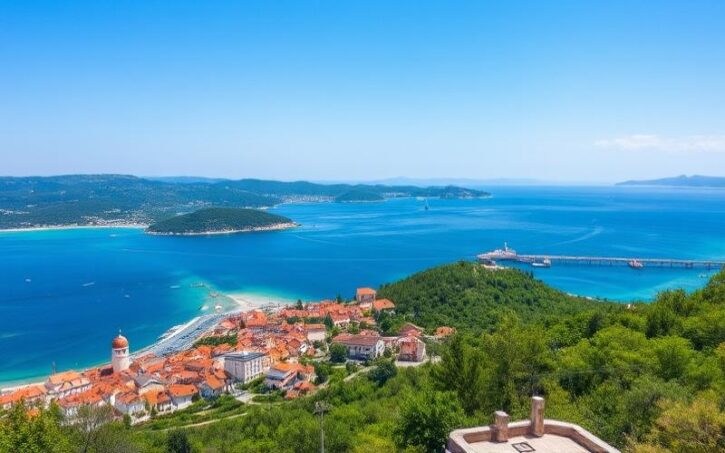
Before getting into the details, an inescapable geographical reality must be stated: Slovakia is a landlocked country with no access to the sea. In other words, there is no such thing, strictly speaking, as “seaside property” in Slovakia. No coastline, no sea beaches, no oceanfront villas like in Croatia, Greece, or France.
Foreign investors in Slovakia are looking for properties offering the benefits of a coastal second home: water views, a vacation setting, potential for seasonal rental, and a resort atmosphere. These criteria are found primarily on lake shores, near large reservoirs, or close to major rivers like the Danube, rather than by the sea.
This guide therefore proposes a pragmatic approach: use the framework and expectations of a “seaside” purchase and transpose them to the real Slovak context, relying solely on available data on the real estate market, local law, and taxation. The goal is to help a French-speaking buyer build a coherent waterfront property project in Slovakia, while precisely understanding how this market works.
Understanding What “Seaside” Means in Slovakia
An investor seeking a seaside property is generally looking for four things: a water view, a strong leisure component, tourist appeal, and seasonal rental potential higher than classic long-term rental. In Slovakia, these criteria exist, but around three main types of locations.
In Slovakia, domestic tourism is developing around three main poles offering alternatives to beach tourism. Near dam lakes, such as Orava or Domaša, you find infrastructure similar to a seaside resort: accommodations with views, beaches, restaurants, and water activities. Along the Danube, developed areas with marinas and promenades create a resort ambiance. Finally, mountain basins like Liptov, at the foot of the High Tatras, offer a complete multi-season offering (skiing, hiking, thermal baths) attracting clientele year-round.
In all these cases, the investor must remember that the Slovak regulatory framework does not distinguish between “seaside house” and “mountain house”: it simply distinguishes between types of property (house, apartment, land), their use (residential, commercial, agricultural), and their location (urban, rural, tourist, agricultural land). This is the framework within which any waterfront property purchase takes place.
The Legal Framework: An Open Market But No Golden Passport
For a foreign buyer, the first good news is that Slovakia is one of the most open markets in the European Union. Foreign individuals and companies can freely purchase residential or commercial properties there, with property rights identical to those of Slovak citizens. The market was liberalized after EU accession and has no quotas or shell company creation requirements for a simple apartment or house purchase.
The acquisition of agricultural or forest land by non-residents is subject to specific restrictions, notably a principle of reciprocity. EU membership eases some constraints for European citizens. For a real estate project, it is crucial to check the land classification (agricultural or residential) and the acquisition conditions applicable to foreigners.
The basic rules are clear: all real estate transactions must be in writing, the sale only becomes legally binding after registration in the land registry, and property is strongly protected by law. The signed deed must be formalized in such a way that the cadastral office can proceed with the registration; otherwise, the buyer is not considered the owner.
Rights and Limitations for the Foreign Buyer
The foreign buyer benefits from a property right guaranteed by the Constitution, identical to that of a Slovak citizen. They can buy, hold, rent, and resell. However, the purchase, even of a substantial property, does not entitle one to an automatic residence permit or citizenship. Slovakia has no “Golden Visa” type program linked to real estate investment.
In practice, owning a residence by a lake or near a major tourist site can serve as proof of accommodation in a residence permit application or strengthen an application for a multiple-entry Schengen visa. However, this property never replaces the fundamental criteria of work, an economic activity, or strong family ties. Preparing a real estate project imagining it alone will guarantee a right of residence would be a mistake.
How a Property Purchase in Slovakia Actually Works
The acquisition procedure follows a fairly classic pattern for an EU country, but with important specifics at the level of the land registry and fees.
A foreign buyer starts by obtaining a Slovak tax identification number and, in most cases, by opening a local bank account. This secures financial flows and facilitates dealings with banks if a local loan is considered. Property search is done either via major real estate platforms (including international portals that already list Slovak properties) or through local agencies.
After identifying a property, signing a reservation contract, accompanied by a deposit of 5 to 10% of the price, is a common step to secure the sale. It is then crucial to conduct a thorough check of the title deed in the land registry. This verification ensures the absence of hidden mortgages, easements, or ongoing legal proceedings. This step is all the more important in a context where the history of expropriations and restitutions between 1945 and 1990 may have created complex ownership situations, sometimes still being resolved.
The final sales contract must be drafted in writing, signed by the parties, and include the authenticated signature of the seller. The notary primarily intervenes as a guarantor of the authenticity of this signature and compliance with the forms required for the land registry to accept registration. A lawyer, on the other hand, can draft the deed, ensure proofreading, and file the application with the registry. The property legally changes hands only when the registration is completed in the land registry.
Registration Deadlines and Fees
The registration deadlines vary depending on whether the buyer opts for a standard or accelerated procedure. A standard application results in a decision in about 30 days, for a cost of around 66 euros. An accelerated procedure allows obtaining a transfer decision in 15 days, but at a higher fee. Using an electronic transmission reduces these amounts by half.
Ancillary costs for buying property in Slovakia can reach up to 7% of the price, including various fees and commissions.
Where to Buy to Capture the “Seaside” Spirit
Even without a sea, Slovakia offers several types of areas that may correspond to what an investor associates with a seaside purchase: aquatic landscape, tourist potential, leisure lifestyle, and rental profitability.
Lake and reservoir shores, although not fully detailed by the available data, fit this logic as long as they are located in high-traffic regions. In parallel, several cities and regions stand out from investment statistics as preferred targets for seasonal or mixed-use rental.
Bratislava and the Danube: A Metropolis on the Water
The capital, Bratislava, is located on the Danube and combines three assets for an urban resort residence project: a location on a major navigable river, strong rental demand, and solid economic dynamism. The market is the most expensive in the country, but it also offers secure yields and high liquidity.
In central districts (Old Town, Ružinov, Petržalka), prices can exceed €3,000/m², especially for premium properties. These well-located apartments offer easy rental to a clientele of businesspeople, expatriates, and tourists, with gross rental yields of 4 to 5%. For a buyer accustomed to coastal city centers, Bratislava offers an attractive alternative around the Danube, with its promenades, terraces, cruises, and cultural life.
From an investment perspective, data shows that net yields, once expenses and taxes are accounted for, are around 2.5 to 3.5% in the capital. Demand is boosted by corporate relocations and a very high rate of homeownership within the population, which supports the rental market.
For an investor seeking a compromise between acquisition price and rental yield, several regional cities stand out. Košice, the country’s second city, shows estimated gross yields around 5 to 6%, with per-square-meter prices lower than Bratislava. The city benefits from an IT and higher education job market, which fuels year-round rental demand.
These two Slovak cities offer gross yields of 5 to 5.5% and net yields of 3 to 4%. Although far from the sea, some properties near rivers or lakes can combine classic rental and vacation/second home use.
Liptov and Tatras: The Mountain Alternative to the Sea
For a buyer initially looking for a vacation home by the sea, the Liptov and Tatras region deserves special attention. It concentrates a large part of the country’s leisure residence offerings: ski resorts, thermal baths, mountain lakes, hiking, national parks. Properties here are purchased for use very similar to that of a beach house: family stays, weekly seasonal rental, heritage investment.
Available data indicate gross yields between 5 and 7% for rental properties in this region, with net yields between 3 and 5% after expenses and taxes. The sector’s appeal also lies in its extended seasonality: winter tourists for snow sports, summer tourists for hiking, lakes, and spas.
Here is a comparative summary of observed yields by zone, useful for an investor seeking a substitute for the seaside:
| Zone / Market Type | Estimated Gross Yield | Estimated Net Yield |
|---|---|---|
| Bratislava (urban) | 4–5% | 2.5–3.5% |
| Košice | 5–6% | 3–4.5% |
| Žilina / Trnava | 5–5.5% | 3–4% |
| Liptov & Tatras (mountain) | 5–7% | 3–5% |
This grid shows that tourist mountain regions offer profitability profiles very close to what is found in second-tier European beach resorts, without, however, reaching the extreme yields of some very risky markets.
Prices, Yields, and Investment Payback Period
The Slovak residential market shows average prices per square meter of around €2,400 to €2,500 for the whole country, apartments and houses combined. Major cities like Bratislava and Košice are in the upper range, with some luxury residences in the capital reaching €3,200 per square meter or more.
For an investor comparing this alternative to buying an apartment by the Mediterranean Sea, the differences are significant: in many sought-after resorts, prices of €4,500 to €6,000 per square meter for a property with a sea view are common. In Slovakia, the same budget allows access to a much more upscale segment, or to buy two properties in attractive areas rather than one.
The average annual rental yield peaks at around 5.7% in Bratislava, according to available studies.
The table below summarizes some order of magnitude figures for different asset types:
| Property Type | Average Price per m² (order of magnitude) | Estimated Rental Yield | Indicative Payback Period |
|---|---|---|---|
| Standard Urban Apartment | €1,500–2,500 | 4.5–5.5% / year | 18–22 years |
| Premium Residence in Bratislava Center | €2,800–3,200 | 5–6% / year | 16–20 years |
| New Industrial/Commercial Construction | ≈ €1,800 | ≈ 5.2% / year | 19–21 years |
For a vacation home project by a lake or in a mountain tourist area, the logic is similar, even if rental flows are more concentrated during certain seasons. The gross yield can be high during peak season, but off-season occupancy remains crucial for the annual net yield.
Taxation: A Rather Favorable Environment
Taxation is a fundamental point for a foreign buyer accustomed to heavy regimes, especially on coastal second homes in some Western European countries. In this regard, Slovakia stands out with a relatively light framework.
The purchase of a property is not subject to a transfer tax (rate at 0%). Acquisition costs are mainly limited to professional fees and administrative expenses. Annual property taxes are moderate, calculated on surface area and location, often amounting to a few tens or hundreds of euros per year, well below levels practiced in some overvalued coastal areas of Western Europe.
Regarding rental income, the basic rule is a flat-rate taxation of 19% on profit. The regime allows the application of a 40% flat-rate deduction for expenses, which greatly simplifies the declaration for an investor who does not want to account for each expense in detail. Concretely, 60% of the rents received are considered the taxable base, taxed at 19%.
An exemption applies if the property has been held for more than five years or if it is the seller’s only property (under conditions). Otherwise, the capital gain is generally taxed at 19%, with a rate that can reach 25% for the highest incomes.
This architecture strongly contrasts with many Mediterranean jurisdictions where buying a house by the sea comes with high registration fees, surtaxes on second homes, and heavy taxation upon resale.
Financing Your Purchase: What Slovak Banks Offer
A foreign investor is not obliged to buy in cash. Slovak banks finance non-residents, provided they can demonstrate stable and sufficient income. This opens possibilities for waterfront vacation home projects without tying up all the capital from the start.
For a foreign buyer, financial institutions generally grant a loan representing 70 to 80% of the property’s value. Conditions are more favorable for residents. Although specific cases may reach 90%, it is prudent to base calculations on 70–80%. Recent interest rates are around 3 to 4%, with options for fixed rates (for 3 to 5 years) or variable rates.
For a vacation residence to rent seasonally, this borrowing capacity can be interesting, provided one is realistic about expected rents. Banks, for their part, apply classic solvency criteria: age, type of employment contract, income level, existing liabilities. They generally ensure that monthly payments remain below a certain percentage of the borrower’s net income.
Real Costs of Ownership: Maintenance, Fees, Second Residence
Buying a property by a lake or in a tourist region requires thinking, beyond the purchase price, about recurrent maintenance costs. General studies on real estate recommend setting aside between 1 and 5% of the property’s value per year for repairs and routine maintenance, with stricter rules of thumb for second homes exposed to the elements or equipped with amenities like a pool, large garden, or sports court.
For a vacation home, especially if intended for rental and must maintain a high standard, it is advisable to plan an annual maintenance budget representing 2 to 4% of the property’s value. It is also necessary to anticipate that each additional amenity, like an outdoor pool, a large wooded garden, or a tennis court, generates additional maintenance costs, sometimes significant.
One can get an idea of the order of magnitude from available figures for maintenance in Europe:
| Maintenance Item (order of magnitude) | Estimated Annual or Unit Cost |
|---|---|
| Overall Maintenance Budget (residence) | 1–5% of property value / year |
| Garden (mowing, pruning, upkeep) | €25–35 per hour / gardener |
| Annual Pool Maintenance Contract (service provider) | €600–1,800 / year |
| Pool Heating (5 months) | €150–900 / year depending on system |
| Tennis Court Maintenance | ≈ €1,000 / year + occasional work |
In Slovakia, the cost of labor and materials is generally lower than in Western Europe, which can bring these amounts down to more affordable levels. But a buyer who has previously owned a seaside house knows that it is not the initial purchase that weighs the most, it’s the recurring expenses. It will be the same for a residence by the water in the Tatras or near a lake.
Seasonal rental of a second home can offset expenses, but it requires active management (cleaning, guest reception, maintenance, communication). Many owners delegate these tasks to a specialized agency, for a cost typically representing 20 to 30% of rental revenue.
Seasonal Rental: A Credible Alternative to Classic Rental
The rise of online booking platforms has profoundly changed the profitability of second homes. In major European tourist destinations, seasonal rentals can generate gross yields that exceed those of classic long-term rentals by 2 to 3 times, provided one benefits from a good occupancy rate and a favorable legal framework.
Potential gross yield of short-term rentals in some European markets, compared to 4–6% for an annual lease.
In summer, in cities and tourist areas, base rental rates start around €30 to €50 per night for a standard apartment and can climb to over €70 in the most in-demand spots. Large well-located units can exceed €100 per night, with summer occupancy rates reaching 70 to 80%. These orders of magnitude are close to what is found in secondary Mediterranean beach resorts outside the very high season.
For an investor considering a vacation home by the water in Slovakia, the equation is therefore comparable to that of a seaside house: greater workload, potentially higher income, strong dependence on tourist demand and local competition.
The Role of Professionals: Agencies, Property Finders, and Lawyers
In a foreign market, the quality of intermediaries often counts as much as the quality of the property. In Slovakia, several real estate agencies operate nationally, some specializing in assisting investors or French-speaking clients. Others focus more on local and corporate clientele, notably in Bratislava, Banská Bystrica, or Košice.
International “property finder” services are available for buyers in Slovakia. They work exclusively on behalf of the buyer, helping define criteria, filter listings, and find off-market opportunities. Their services include property visits, document analysis, verification of price consistency with local yields, and negotiation management. This service is particularly suitable for acquiring second homes, facilitating remote management.
A good property finder, especially if they are French-speaking and established locally, must master the local market, its legal environment, taxation, and have a network of agents, notaries, and lawyers. In the case of a waterfront residence, their role also consists of checking urban planning constraints, potential environmental protection of the shores, and the reality of seasonal rental potential, beyond the commercial pitch.
The lawyer checks the title deed for a minimum of 10 years, verifies easements, confirms the seller’s identity, and assesses risks related to past nationalizations. They prepare or review the contract, manage land registry procedures, and advise on the applicable taxation for acquisition and resale.
Advantages and Limitations of a “Seaside” Project in Slovakia
Transposing a seaside house project to the Slovak reality presents obvious advantages but also limitations that must be accepted to avoid disappointment.
Financially, lower prices, the absence of a transfer tax, moderate property taxes, and relatively simple taxation on rents and capital gains make the investment accessible. Yields are decent or even attractive in some areas, without reaching the heights of ultra-touristic markets, but with a lower level of political and regulatory risk, typical of a country that is a member of the EU and the eurozone.
For many European residents, a lakeside chalet in the Tatras or an apartment with a Danube view in Bratislava can fulfill the same heritage and emotional role as a seaside house. These properties serve as a vacation spot, allow for family inheritance, create an anchor in a different country, and offer geographical diversification, compensating for the lack of sea with lakes, rivers, and mountain landscapes.
The limitations lie mainly in the absence of an international “postcard” image. Slovakia does not benefit from the allure of Ibiza, the French Riviera, or Santorini, which means that long-term added value will depend more on the structural progression of the national market than on a branding effect. Similarly, some rural areas may suffer from reduced liquidity: selling an isolated house in a less touristy region will take longer than selling an apartment in Bratislava’s old town.
Purchasing a property in Slovakia does not automatically open the right to residence. This investment should be considered as a heritage or income project, not as a means to circumvent legal immigration procedures.
How to Structure Your Project Step by Step
For a French speaker who wants to replace or complement a seaside residence project with a waterfront investment in Slovakia, a clear roadmap helps limit mistakes.
The first step is to precisely define the property’s role in the portfolio: predominant personal use with occasional rental, or rental investment with a seasonal focus. This choice determines the type of location to prioritize: proximity to lakes and tourist resorts for seasonality, urban center for long-term rental.
The second step involves integrating into your budget the purchase price, acquisition costs (which can reach 7%), the budget for any renovation, as well as annual maintenance costs, estimated between 2% and 4% of the property’s value for a well-equipped vacation home. This step is also the time to decide if you will use local bank financing.
The third step is legal and fiscal: choosing a local lawyer, understanding the tax status (rental income taxed at 19%, capital gains regime, no transfer tax), taking into account any tax treaties between Slovakia and the investor’s country of residence.
The fourth step, finally, concerns operational management: choosing between self-management and delegation to an agency or specialized manager, defining the rental strategy (long-term, short-term, mixed), preparing the property (furnishing, equipment, services) to meet the expectations of a clientele that, everywhere in Europe, now expects an experience halfway between a private apartment and hotel services.
Summary: Slovakia, a Different But Credible “Seaside”
In summary, talking about seaside property in Slovakia inevitably involves playing with words. The country has no coastline, but it offers a combination of factors that can make it a serious alternative for a European investor: a market open to foreigners, prices still affordable, light taxation, decent yields, a remarkable natural setting around lakes and mountain ranges, and a solid anchor in the European Union and the eurozone.
For the buyer who primarily sought the emotions linked to water and vacation, the important thing is not so much seeing the sea but having a lasting place to live and relax, backed by a coherent real estate market and predictable rules of law. On this ground, Slovakia ticks many boxes, provided one approaches it with lucidity and realism, accepting to trade the waves of the Atlantic or the Adriatic for the mirror-like surfaces of lakes and the silhouette of the Tatras.
A real estate buyer seeking emotions linked to water and vacation
Disclaimer: The information provided on this website is for informational purposes only and does not constitute financial, legal, or professional advice. We encourage you to consult qualified experts before making any investment, real estate, or expatriation decisions. Although we strive to maintain up-to-date and accurate information, we do not guarantee the completeness, accuracy, or timeliness of the proposed content. As investment and expatriation involve risks, we disclaim any liability for potential losses or damages arising from the use of this site. Your use of this site confirms your acceptance of these terms and your understanding of the associated risks.

Cyril Jarnias is an independent expert in international wealth management with over 20 years of experience. As an expatriate himself, he is dedicated to helping individuals and business leaders build, protect, and pass on their wealth with complete peace of mind.
On his website, cyriljarnias.com, he shares his expertise on international real estate, offshore company formation, and expatriation.
Thanks to his expertise, he offers sound advice to optimize his clients' wealth management. Cyril Jarnias is also recognized for his appearances in many prestigious media outlets such as BFM Business, les Français de l’étranger, Le Figaro, Les Echos, and Mieux vivre votre argent, where he shares his knowledge and know-how in wealth management.





