
 Published on and written by Cyril Jarnias
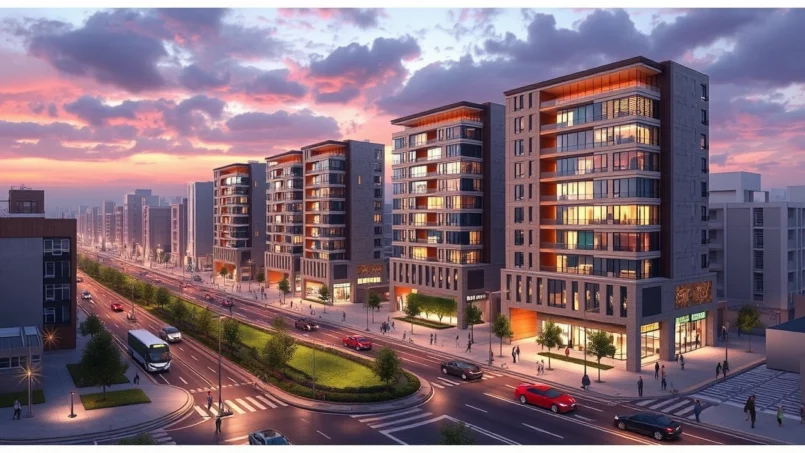
The accelerated urbanization of Uzbekistan is redrawing the country’s map. Between new cities, modernization of transport networks, upgrades to historical centers, and a deliberate shift toward “green” construction, the territory is transforming at high speed. This transformation is not limited to the capital: secondary cities like Khiva, Namangan, Andijan, Djizzak, and Bukhara are becoming open-air laboratories for the new urban policy.
The transformation of Uzbek cities aims to make them engines of economic growth. They must absorb a rapidly increasing population while remaining livable, attractive to investors, and aligned with the country’s climate commitments.
A National Turn Toward the City, Tourism, and the “Green Economy”
The national strategy sets the framework: Uzbekistan aims to simultaneously increase the share of the urban population, make services a pillar of the economy, and reduce the carbon footprint of its growth. The population, already up from about 30.7 million in 2015 to 36.3 million in mid-2024, could reach 41 million inhabitants by 2030. The government plans for 60% of residents to live in cities by that time.
This transition is playing out on several fronts simultaneously: tourism, urban services, energy efficiency, but also the development of new centralities to prevent Tashkent from becoming completely saturated.
To measure the ambition, one only needs to look at a few key structuring objectives.
Aggressive Economic and Tourism Targets
The state wants to raise tourism service revenues to $20 billion by 2030, while increasing the overall value of the services sector to $100 billion by 2026 (compared to $82 billion in the reference year mentioned in the data). The country plans to double the number of foreign visitors in five years and launch 3,500 new service projects for a total investment of $4 billion.
Amount in billions of soums of public credit mobilized to support the development of the tourism sector.
Some major national targets can be summarized as follows:
| National Objective | Value / Horizon | Sector Concerned |
|---|---|---|
| Annual tourism revenue | $20 billion by 2030 | Tourism |
| Value of the services sector | $100 billion in 2026 | Urban services / Economy |
| Number of new service projects | 3,500 projects for $4 billion | Services, tourism, commerce |
| Credit dedicated to services | 85 trillion soums | Financing |
| Land for tourism projects | 5,000 hectares by 2028 | Development / Tourism |
Tourism, far from being limited to a few classic monuments or circuits, now permeates urban planning itself: entire neighborhoods are being redesigned around hotel complexes, convention centers, ethnographic parks, or heritage corridors integrated into the contemporary fabric.
A Decidedly Green Urban Strategy
In parallel, Uzbekistan has adopted a “Green Economy Strategy” for 2019‑2030. It notably plans to double energy efficiency and reduce the carbon intensity of GDP by 10% compared to 2010, with a broader commitment to a 35% reduction in greenhouse gas emissions per unit of GDP by 2030 under the Paris Agreement.
Percentage increase in urban green spaces targeted by the ‘Yashil Makon’ initiative by 2030.
This ecological shift is taking very concrete form in urban projects in Tashkent, in new residential neighborhoods in the regions, and also in major tourism operations like those in Samarkand or Bukhara.
Tashkent and “New Tashkent”: A Giant Laboratory for the New Uzbek City
At the center of this restructuring is the capital. Tashkent is undergoing a dual movement: controlled densification and modernization within the existing urban area, and the construction, to the east, of a true twin new city: New Tashkent.
A Master Plan Through 2045 to Manage the Capital’s Growth
The Tashkent master plan, finally approved in late 2024 after years of delays, sets the city’s development trajectory through 2045. It is based on a simple idea: organizing expansion rather than enduring it.
The city, already home to over 3 million inhabitants, could reach 7.5 million by 2045. To absorb this demographic shock, a framework of three main types of zones has been adopted: conservation, reconstruction, and renovation.
In conservation zones, all new construction is prohibited to preserve built and natural heritage. Reconstruction sectors allow for densification subject to compliance with urban planning parameters. Renovation zones, covering old neighborhoods or brownfields, are intended for profound transformation with new constructions and infrastructure.
Over 300 renovation sites have been identified, with 65 to be prioritized in a first phase covering 2025‑2026. The idea is not only to increase the housing supply but also to green the city, as the average temperature in Tashkent has already risen by one degree over the last ten years.
The greening effort is massive: the city and its surroundings must go from about 7,100 hectares of green spaces to 25,000 hectares, with a 15,000-hectare “green ring” surrounding the urban area and five major landscaped arteries developed along the canals. Green space per capita is to double, going from 3 m² to between 6 and 8 m².
Transportation: Metro, Rail, and Buses at the Heart of Tomorrow’s City
Another pillar of the plan: transportation. The number of cars in Tashkent has doubled in ten years (from 250,000 to over 500,000 vehicles), while only one-third of the population currently uses public transportation. To avoid suffocation, the city is betting on rail and rapid buses.
The Tashkent metro has expanded from 38 km in 2017 to over 71 km in 2024, nearly doubling its size.
These extensions add to the ongoing work on the elevated circular line (52.1 km and 35 stations planned) and the extension of the Sergeli branch. Headways are gradually tightening on existing lines, while the train fleet is being renewed at a forced pace.
Beyond the metro, a new electrified railway line will connect Baytkurgan to Parkent over nearly 24 km, with bridges, viaducts, a tunnel, and modernized level crossings. It is expected to carry up to 275,000 passengers per day and fits into the logic of developing a residential “eco-city” along the Parkentsoy waterway.
Action plan to improve public transport and urban mobility, aiming to achieve 60% public transport usage.
Creation of 100 km of lanes dedicated to rapid buses and trams to ease traffic flow.
Construction of 28 hubs facilitating transfers between different modes of transport.
Installation of 27 parking lots at city entrances to encourage intermodality.
Implementation of paid parking in the city center to regulate traffic.
Studies show the potential of these reorganizations: the optimization of 24 major intersections could, by itself, reduce the number of stops by 71%, stop time by 48%, congestion by 64%, and fuel consumption by 34% on these axes.
Tashkent is Also Becoming a Smart City
In terms of flow management, Tashkent is projecting itself decisively into the era of the smart city. A memorandum signed with Huawei provides for the deployment of an intelligent transportation system: cameras, video analytics, image recognition, real-time data collection to adjust frequencies, monitor infractions, or optimize routes. The goal is to move from an operation based on simple scheduling to data-driven management.
In the same spirit, the “Digital Uzbekistan – 2030” project and the creation of an international center for digital technologies “Enterprise Uzbekistan” under English law indicate the desire to attract global tech players. The sustainable data centers of Data Volt (over €4.6 billion in investment planned between Tashkent, Bukhara, and New Tashkent) complement this direction, with infrastructure sized for AI-related computing loads, powered by a solar-wind-battery mix.
New Tashkent: A New Green and Connected Administrative Capital
The emblematic project of the new Uzbek urban phase remains, however, New Tashkent, also referred to as “Yangi Toshkent.” This is not just a new neighborhood, but a true twin city destined to eventually house most ministries and major administrations.
A 20,000-Hectare City Between Two Rivers
New Tashkent spans some 20,000 hectares of agricultural land located east of the current capital, between the Chirchiq and Korasuv rivers. This territory, detached from the Yukorichirchik and Urtachirchik districts, has become the capital’s 13th administrative district.
The demographic ambition varies according to official sources: some mention one million inhabitants, others up to two million eventually. The first phase, with land leveling work already underway on 6,000 hectares, is designed for 600,000 residents. In the long term, the city could accommodate an additional 2.5 million people compared to the current metropolis.
The plan, developed by Cross Works with expertise from Buro Happold, aims to transform Tashkent into a coherent, polycentric urban area by 2045. It envisions the integration of the old and new city around several attraction hubs: a government quarter, a business center, a commercial district, an airport area, as well as university and cultural poles.
A Streamlined Administrative Capital, an Old Center Turned Toward Tourism
President Shavkat Mirziyoyev has announced his intention to relocate all executive bodies – ministries and major agencies – to New Tashkent. A Coordination Council headed by Prime Minister Abdulla Aripov is tasked with managing this relocation, with a schedule extending until around 2050 for the complete move.
The government buildings of the old capital will not be abandoned, however: they are to be converted into hotels, shopping centers, offices, and service facilities. The goal is clear: to transform the historic heart of Tashkent into a tourism and business hub, while the new city becomes a more orderly administrative and technological capital.
The auction of 24 commercial lots in New Tashkent generated investment contracts worth €1.72 billion.
A “15-Minute City”: Green, Smart, and Highly Connected
On the ground, New Tashkent is conceived as a showcase for the sustainable city. The plan adopts the “15-minute city” model, where most services (schools, shops, healthcare, leisure) should be accessible on foot or by bicycle within a quarter of an hour. The layout prioritizes pedestrian and cyclist corridors over major road arteries, with priority given to soft mobility and public transport.
At least 20% of the new city’s surface area will be devoted to green spaces, with a huge 420-hectare central park, artificial canals and lakes, and a major planting program (about 200,000 trees). The Chirchiq River, which currently irrigates agricultural land, is to become a true landscape asset, developed with accessible banks and integrated into the public space.
Construction projects follow international standards (LEED, BREEAM, EDGE) and integrate green roofs, stormwater management, energy efficiency, and low-carbon materials. Urban planning is regulated by a specific “Tashkent Code,” and a digital twin platform allows for real-time simulation and optimization of the city’s functioning.
For energy, the city relies on a portfolio centered on solar power plants (including a 400 MW farm under construction, complemented by an additional 100 MW within the city), the development of wind power, and a tri‑generation unit using waste to produce heat and electricity. Improving the energy efficiency of buildings by 20% could, by itself, save over 900 million kWh per year.
The integrated transport network includes a new 21-km metro line connecting New Tashkent to the capital, complemented by the return of tram lines on dedicated right-of-way and eight multimodal hubs to coordinate metro, bus, taxi, and soft mobility. A large “cultural island” at the intersection of canals is to serve as a vibrant central plaza, surrounded by a major residential neighborhood, “Sharq Bahori,” planned for about 15,000 households on 95 hectares.
The city will also host the “New Uzbekistan University” (10,000 students), a 55,000-seat FIFA-standard stadium for the 2027 U20 World Cup (co‑hosted with Azerbaijan), and a large‑scale international cultural center entrusted to Zaha Hadid Architects.
Samarkand, Bukhara, Khiva: The Post‑Soviet City Reinvents Itself Through Heritage
While Tashkent and New Tashkent write the score of modernity, other historical cities like Samarkand, Bukhara, and Khiva explore another facet of the new Uzbek urbanity: making heritage a driver of development, while trying not to distort it.
Samarkand: Conference Tourism as a Lever for Urban Planning
Samarkand is already at the forefront with the ” Silk Road Samarkand” complex, which has established itself as a major business tourism (MICE) center in Central Asia. The site, which groups eight hotels, a convention center, exhibition spaces, and an ethnographic park called “Eternal City,” welcomed over 150,000 visitors in a recent reference year, including 80,000 hotel overnight stays, a strong increase.
The complex has served as the setting for high‑profile events – FIA General Assembly, COP14 of the Convention on Migratory Species, sports championships – and aims to further strengthen this vocation, notably by hosting a UNESCO session and modernizing several existing hotels. A solar power plant, photovoltaic panels, and intelligent energy management systems attest to the desire to frame this development within a sustainable logic, with international ISO certifications as a goal.
But beyond this mega‑project, it is the entire city that is reconfiguring itself. A “Samarkand Heritage Trail” of 6.6 km is being established to connect the main historical sites on foot (Registan, Bibi‑Khanym Mosque, Shah‑i‑Zinda necropolis, Ulugh Beg Observatory, Afrosiab Museum). Modern footbridges and pedestrian pathways are to streamline flows, relieve automobile congestion around monuments, and offer visitors a more coherent experience.
This is the number of hotels planned to offer 22,000 beds in the region by 2026.
In this scheme, the historic city finds itself at the center of a network of thematic tourist routes (gastronomy, pilgrimage, ecotourism), supported by a mesh of renovated infrastructure: roads (42 km redone in a recent year), restored sites, modernized technical networks. The creation of the “Silk Road” International University of Tourism, a “smart” campus, and a research institute on Silk Road civilization shows that Samarkand also sees itself as a knowledge hub dedicated to tourism.
Bukhara: Reconciling Ethnographic Park, Administrative Center, and World Heritage
In Bukhara, another gem listed as a UNESCO World Heritage site, the tension between urban development and cultural preservation is particularly strong. The historic center, inscribed in 1993, has been the subject of a series of critical reports from UNESCO on restoration management, the use of unsuitable materials, the degradation of traditional houses, and risks linked to certain large projects.
The authorities’ response has been twofold. On one hand, a much stricter regulatory framework has been put in place: a moratorium on construction within the inscribed perimeter and its buffer zone, suspension and revision of a detailed planning project (PDP), development of an integrated management plan in line with the UNESCO recommendation on the historic urban landscape, strengthening of administrative structures (creation of a Cultural Heritage Agency, a Protection Inspectorate, a local scientific advisory committee, etc.).
The ‘Boqiy Bukhoro’ project is a 32.6‑hectare cultural‑ethnographic park located in the buffer zone near Bukhara’s old center. It plans for the demolition of 29 public buildings (stadium, administrations, schools, etc.) to create a ‘museified city’ with a large ethnographic museum, recreated typical neighborhoods of the oasis, teahouses, restaurants, traditional hydraulic systems, artisan workshops, and four five‑star hotels.
The cost is estimated at $470 million, partly financed by a Singaporean investor (Enter Engineering Pte. Ltd.), with implementation spread over three years. Demolition work began in early 2024, despite local protests and repeated calls from UNESCO to freeze the construction site until heritage impact assessments are validated.
Simultaneously, Bukhara is acquiring a new 46‑hectare administrative center on the outskirts, meant to house regional and municipal administrations, the judiciary, banks, a shopping center, a media library, sports facilities, a school, parks, and cafes. This relocation aims to relieve the old center of traffic and better control rehabilitations in the historic part.
At the same time, several major restoration projects – Kalon Mosque, madrasas of Abdulaziz Khan, Mir Arab, Ulugh Bek, Rashid, Amir Olimkhan, the Ark citadel, Khoja Kalon basin – are subject to ICOMOS technical reviews. Extra‑budgetary funds from UNESCO and international assistance (about $130,000 in direct aid and nearly $74,000 in extra‑budgetary funds) support certain emblematic sites, such as the Abdullakhan madrasa or the Chor Minor monument.
At the micro‑urban scale, a two‑year pilot project led by the World Monuments Fund and the International Institute for Central Asian Studies is trying to reduce the risk of degradation of traditional houses in the mahallas, by working on solutions adapted to salinity, high water tables, and the limited financial capacity of residents.
A masterplan led by the Uzbekistan Art and Culture Foundation and the waiwai firm aims to redevelop a 2.6‑hectare area around the Magok‑i‑Attari Mosque. The project proposes creating pedestrian paths, restoring courtyards and squares, installing paving inspired by 10th‑century motifs, and introducing, in a controlled manner, contemporary furniture, vegetation, and lighting using traditional materials like brick, plaster, and terracotta.
Khiva: A Small Town with Big Tourism Ambitions
At the other end of the country, Khiva presents a different case. The city, with about 40,000 inhabitants, houses within its inner walls – Itchan Kala – an extraordinary ensemble of mosques, madrasas, minarets, and palaces, surrounded by 2.2 km of rammed earth walls. This ancient core, which as early as 1967 was an “open‑air museum” in Soviet times, has been a World Heritage site since 1990.
Rather than multiplying major works in the heart of the old city, the authorities have chosen a managed tourism strategy with the support of UNESCO and the European Union. A destination management plan and a sustainable tourism strategy for Itchan Kala and the city of Khiva have been developed, with the objective of coordinating public and private investment, organizing flows, and professionalizing destination marketing. One project thus focused on creating a destination management organization (DMO), a brand, a website, and a promotion program.
At the same time, access infrastructure is undergoing a major upheaval. The launch, starting in 2026, of a service by Afrosiab high‑speed train directly connecting Khiva to Bukhara and Samarkand, and reducing travel time from Tashkent from 15 hours to about 7 hours 40 minutes, will change the scale of mobility in the country. The new Urgench international airport, located 37 km away, is being renovated, with a targeted capacity of three million passengers per year.
In the city, a new train station has been built less than a kilometer from the walls, accompanied by a commercial zone. High‑end hotels (including a five‑star Mercure), leisure complexes like Arda Khiva – with a navigable canal, a 3,000‑seat amphitheater, a water park, a shopping center – or new panoramic dining establishments complete the picture.
For a small city, this touristic intensification raises serious questions of capacity and authenticity, but it also illustrates a deliberate choice: to make Khiva a “smart city‑museum” where digital tools, heritage interpretation, and next‑generation tourism services are grafted onto a remarkably well‑preserved historic urban fabric.
Andijan, Namangan, and the Fergana Valley: Urbanization Under Pressure
The other major urban front in Uzbekistan is in the Fergana Valley, a fertile but landlocked region, densely populated and politically sensitive, shared between Uzbekistan, Kyrgyzstan, and Tajikistan.
Andijan: Dense Industrial City Searching for Air
Andijan, the most densely populated city in the country (about 10,000 inhabitants per km², for an area of 74 km² and nearly 750,000 inhabitants), well illustrates the challenges of urbanization under constraints. Built largely in the Soviet era after a devastating earthquake in 1902, it has become a major industrial center, notably in automobiles and spare parts (several companies produce parts for GM Uzbekistan), supported by very intensive irrigated agriculture (75% of the region’s irrigated land is devoted to cotton, in the country’s first oil basin).
Urban analyses reveal a lack of quality green and public spaces in Andijan, a city with an agricultural/industrial dual identity but designed for cars. A 70‑hectare planning project proposes the creation of a business district structured around a large urban park, serving both as a gathering place and a seismic emergency assembly area.
In this context, the generalization of compact city approaches, the rehabilitation of canal banks (Andijonsoy, Kara Darya), and the creation of parks at the neighborhood scale are urban issues just as important as the continuation of industrialization.
Namangan: Future Regional Capital for Real Estate and Services
Still in the Fergana Valley, Namangan confirms its status as a rising star. A city of about 900,000 inhabitants, with a solid industrial base in textiles, chemicals, and manufacturing, it fully benefits from decentralization policies and the “re‑centering” of development on regional cities.
The region benefits from modern infrastructure (airport, roads, water, energy) and a dynamic special economic zone. A very young population (over 60% are under 30) stimulates demand. New real estate projects favor the “integrated living” concept, combining housing, commerce, schools, and services to meet the needs of extended families.
National authorities encourage this movement, by supporting subsidized housing projects, mortgage programs favorable to the middle and working classes, and an explicit strategy of strengthening “secondary cities” to avoid a hyper‑concentration of opportunities in Tashkent.
Ferghana, Djizzak, Khiva, Yangiyer: Urban Integration as Seen by the Asian Development Bank
Beyond these flagship cases, lesser‑known mid‑size cities also benefit from structural investments. An “Integrated Urban Development” project by the Asian Development Bank (ADB), endowed with a $59 million concessional loan and a $500,000 technical assistance grant, targets Djizzak, Havast, Khiva, and Yangiyer.
The project aims to improve quality of life by strengthening access to basic services (water, sanitation, waste), supporting a green and inclusive economic recovery, accelerating digital transformation, and enhancing climate resilience. This is crucial in a context where drinking water is available only 4 to 8 hours a day, with aging networks (40‑50 years old), losses exceeding 40%, and very limited sanitation coverage (13 to 37%).
The situation regarding solid waste – with collection coverage ranging from 41 to 91%, and no formal recycling system – and the lack of green public spaces make this program a crucial lever for modernization. The first construction contracts were awarded in late 2024, notably for community parks in Havast, a multifunctional center, the rehabilitation of water pipes in Djizzak, or the establishment of a visitor center in Khiva.
Toward a Polycentric and Resilient Urban System
Running through all these projects, a common logic is emerging: to bring forth, alongside Tashkent and New Tashkent, a network of strong cities – Samarkand, Bukhara, Namangan, Andijan, Khiva, and others – linked by modern transport corridors (highways, fast railway lines, regional airports).
The Sustainable Urban Development Strategy to 2030 clearly mentions the desire to build a polycentric system where territorial competition remains framed, thanks to tools for managing growth (urban growth zones, densification around public transport) and quotas intended to reserve at least 10% of housing production for affordable options. Projections of the cost of uncontrolled urban sprawl – a $1.2 billion overrun in infrastructure costs in the ten main cities over thirty years – reinforce the authorities’ determination to encourage more compact urban forms.
Percentage of the population that could be affected by a 100‑year flood according to studies.
The main indicators of this reorientation can be summarized as follows:
| Urban Challenge | Current Situation (approximate) | Target / Desired Evolution |
|---|---|---|
| Share of urban population | ≈ 51% (19.3 M out of 36 M) | 60% by 2030 |
| Green spaces in Tashkent | 7,120.9 ha | 25,000 ha (including green belt) |
| Share of trips by public transport (Tashkent) | ≈ 33% | 60% (master plan target) |
| Water consumption per capita | 280 L/day (2018) → 389 L/day (2022) | Reduction via WSD and efficiency |
| Certified green buildings | A few flagship projects (Parkent Plaza, IT Park, NUR, Trilliant, museums) | Dissemination of LEED/BREEAM/EDGE standards |
Urbanism in Constant Tension
Nevertheless, the implementation of these ambitions takes place in a sometimes conflictual context. In Bukhara, the “Eternal Bukhara” park comes at the cost of massive destruction of 1960s‑1980s architecture, despite alerts from UNESCO and collectives like “Heritage Alert.” In Khiva, the proliferation of hotels and leisure complexes on the outskirts of Itchan Kala questions the city’s ability to absorb a rapidly growing tourist flow without losing its soul.
In Tashkent, the renovation of old neighborhoods, ‘smart city’ projects with foreign partners, and the conversion of peripheral agricultural land raise questions about reconciling food security, social justice, and adaptation to climate change.
This is precisely where the heart of the Uzbek urban experience lies today: succeeding in articulating an economic upgrade, catching up on long‑under‑invested infrastructure, booming tourism, and increasingly strong demands for environmental and heritage sustainability. The trajectory taken by future urban development projects in Uzbekistan will tell if this bet can be won.
Disclaimer: The information provided on this website is for informational purposes only and does not constitute financial, legal, or professional advice. We encourage you to consult qualified experts before making any investment, real estate, or expatriation decisions. Although we strive to maintain up-to-date and accurate information, we do not guarantee the completeness, accuracy, or timeliness of the proposed content. As investment and expatriation involve risks, we disclaim any liability for potential losses or damages arising from the use of this site. Your use of this site confirms your acceptance of these terms and your understanding of the associated risks.

Cyril Jarnias is an independent expert in international wealth management with over 20 years of experience. As an expatriate himself, he is dedicated to helping individuals and business leaders build, protect, and pass on their wealth with complete peace of mind.
On his website, cyriljarnias.com, he shares his expertise on international real estate, offshore company formation, and expatriation.
Thanks to his expertise, he offers sound advice to optimize his clients' wealth management. Cyril Jarnias is also recognized for his appearances in many prestigious media outlets such as BFM Business, les Français de l’étranger, Le Figaro, Les Echos, and Mieux vivre votre argent, where he shares his knowledge and know-how in wealth management.





