
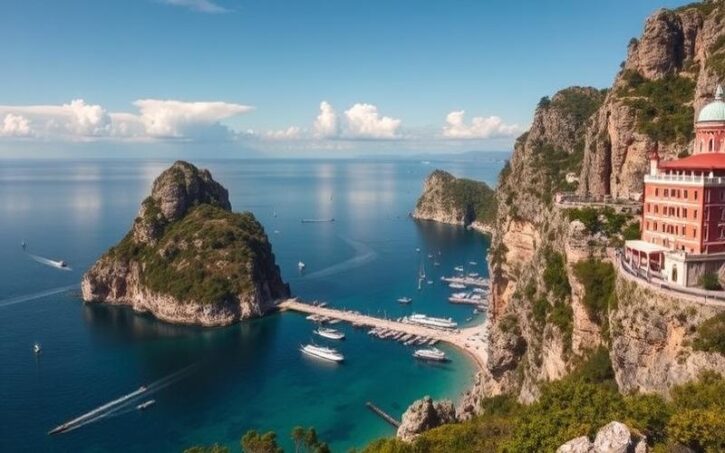
 Published on and written by Cyril Jarnias
The rise of digital nomads in Mauritius is transforming the socio-economic landscape of this tropical oasis. Attracted by the enchanting climate, enticing tax benefits, and improved internet connectivity, these remote workers are not only savoring the sweetness of island life but are also redefining the local rental market.
As the demand for housing, particularly in areas once less sought-after, skyrockets, prices are soaring, disrupting traditional trends and creating new opportunities and challenges for residents and investors alike.
This dynamic raises several questions about the country’s socio-economic evolution, making Mauritius a fascinating case study for understanding the global implications of remote work in an island setting.
Digital Nomads and the Rise of Coliving in Mauritius
Mauritius is attracting a growing number of digital nomads thanks to a combination of factors: a favorable visa policy, advanced telecom infrastructure, and an exceptional living environment. The Premium Travel Visa, launched by the Mauritian government, allows remote workers and their families to stay for up to one year (renewable), with no application fees and a fast online procedure. This visa does not require strict medical tests or heavy background checks; a valid passport, return ticket, proof of accommodation, health and travel insurance, and proof of a minimum monthly income (1,500 USD) suffice. Furthermore, the tax system remains advantageous for stays under 183 days.
High-speed connectivity on the island is ensured by modern fiber-optic networks in main urban and tourist areas. This stable digital infrastructure perfectly meets the requirements of nomadic professions.
Coliving has quickly established itself as the preferred solution for digital nomads settling in Mauritius. This lifestyle enables them to:
- Instantly join a dynamic international community
- Share certain costs (shared housing, equipped common spaces)
- Easily access flexible contracts suited to the mobile worker’s rhythm
- Directly use shared offices or integrated coworking spaces
Main Advantages of Coliving for Digital Nomads
| Advantage | Description |
|---|---|
| Social Network | Facilitates professional & friendly encounters |
| Cost Reduction | Shared rent/utilities & included services |
| Rental Flexibility | Short or adjustable contracts based on desired duration |
| Integrated Services | Immediate access to high-speed wifi, equipped common rooms |
Local initiatives have emerged to capitalize on this trend: several hybrid residences combining coliving and coworking have been developed in sought-after regions such as Grand Baie or Tamarin. These real estate projects offer private studios with shared access to ultra-connected professional spaces as well as sports or cultural facilities.
Mauritian authorities are actively encouraging these innovative real estate investments to attract more of this lucrative segment. Developers are adapting their offerings by specifically targeting the international mobile clientele: simplified property management in English/French/Creole; administrative assistance; regular organization of community events.
The impact on the rental market is already being felt:
- Notable increase in the average price in certain sought-after neighborhoods
- Increased pressure on seasonal availability for short/medium-term rentals
- Progressive urban transformation with the emergence of new mixed residential concepts (residential + business)
In summary, this dynamic is injecting new economic vitality while profoundly reshaping the Mauritian real estate landscape around the “live & work anywhere” concept.
Good to Know:
Mauritius is attracting more and more digital nomads thanks to its favorable visa policy, such as the “Premium Visa” which allows stays of up to one year, and its advanced telecommunication infrastructure ensuring a fast and reliable internet connection. Coliving has become very popular there, offering a dynamic social network and the possibility to share costs, which appeals to these mobile workers seeking rental flexibility. Local initiatives, such as coworking spaces integrated into recent real estate projects, meet this growing demand. This trend is fueling an increase in rental prices and influencing urban development, for example with the redevelopment of neighborhoods to accommodate these new communities of international workers.
The Importance of High-Speed Wifi for Attracting Nomadic Workers
High-speed wifi is a determining factor for digital nomads when choosing a rental in Mauritius. The ability to stay connected, whether via fiber, 4G, or 5G, directly conditions their productivity and professional satisfaction.
List of Reasons Why High-Speed Wifi is Essential:
- Real-time work (video conferences, sharing large files)
- Meeting deadlines and coordinating with international teams
- Constant access to cloud tools and professional platforms
- Enhanced security during connections through the use of VPNs on public networks
Table: Impact of High-Speed Wifi on a Digital Nomad’s Life in Mauritius
| Aspect | Poor Quality Internet | Reliable High-Speed |
|---|---|---|
| Productivity | Decrease (latency, interruptions) | Optimal (continuous flow) |
| Satisfaction | Frequent frustration | Positive experience |
| Collaboration | Difficulties during video calls | Fluid exchanges |
| Local Attractiveness | Lack of interest | High rental demand |
This requirement strongly influences the Mauritian rental market: owners and managers are now investing in improving internet infrastructure to attract this demanding international clientele. Access to fast wifi is systematically among the first criteria mentioned in listings aimed at nomadic workers.
Some Observed Trends:
- Proliferation of coworking spaces offering very high-speed internet.
- Systematic installation of fiber optics or high-performance routers in premium rentals.
- Explicit communication about the actual available network speed.
Studies confirm that Mauritius now benefits from extensive coverage in both public and private wifi: hotels, cafes, airports, coworking spaces, and even beaches offer a fast connection allowing digital nomads to work effectively anywhere on the island. The availability of 5G adds an additional argument in favor of the territory for this mobile community.
The requirement for reliable internet has become a key driver shaping not only the demand but also the real estate supply dedicated to nomadic workers in Mauritius.
This factor is now an integral part of the local strategic positioning in the face of international competition among attractive destinations for global remote workers.
Good to Know:
In Mauritius, high-speed wifi is a determining factor for digital nomads, who depend on a reliable internet connection to work effectively. A study revealed that over 75% of nomadic workers consider wifi quality an essential factor in their choice of housing, which directly influences the competitiveness of properties on the rental market. To attract these tenants, many owners are investing in improving their internet infrastructure, thereby guaranteeing a smooth and stimulating work experience for digital nomads. This trend has also led to an increase in rents in well-connected areas, highlighting the economic impact of the growing demand for quality internet.
The Impact of Short-Term Rental Contracts on the Mauritian Rental Market
The rise of remote work and the massive arrival of digital nomads in Mauritius since 2023 have profoundly transformed the local rental market, notably with the growing prominence of short-term rental contracts (Airbnb type). This phenomenon has accelerated in tourist regions such as Grand Baie, Flic-en-Flac, and Rivière Noire, where the profitability of seasonal rentals now surpasses that of traditional long-term leases.
Main Observed Effects:
- Decreased availability of long-term housing for local residents, as a growing share of the housing stock is reserved for short stays.
- Significant increase in rental prices in areas attractive to foreigners and digital nomads.
- Increased fluctuation in the real estate market between the highly demanded coastal regions and the island’s interior.
Comparative Table: Average Price per m² by Region (2025)
| Region | Price/m² Apartment | Price/m² House | Trend |
|---|---|---|---|
| Grand Baie | 150,000–250,000 MUR | – | Strong increase |
| Tamarin/Rivière Noire | approx. 223,000 MUR | approx. 236,000 MUR | High demand |
| Moka/Highlands | – | approx. 237,000 MUR (+33%) | Rapid increase |
| Center (Quatre Bornes) | 80,000–140,000 MUR | – | Stable/moderate |
| South | 70,000–120,000 MUR | – | Slow expansion |
Concrete Examples:
- In Port Louis in June-May 2025, there are about twenty active Airbnb listings; a high-performing property can generate up to $1,237/month with an average annual occupancy rate of around 36%. Monthly revenues fluctuate strongly depending on the tourist seasonality, peaking in August.
- The annual growth of real estate acquisitions by foreigners has exceeded +27% for the past two years; this trend contributes to strengthening the high-end segment and increases pressure on residential land.
Adaptability of Local Infrastructure:
Urban centers like Grand Baie or Flic-en-Flac are multiplying modern residential projects to meet this growing demand: secure residences, integrated coworkings, and connected services are developing rapidly. However, some less urbanized sectors still struggle to adjust their infrastructure (limited public transport outside tourist areas).
Recent Regulatory Measures:
To limit the negative impact on housing accessible to Mauritians:
- Authorities are gradually strengthening control over Airbnb-type platforms in certain coastal municipalities.
- Quotas are being considered to preserve a minimum supply dedicated to permanent residents.
Associated Economic Trends:
Advantages
- Revitalization of key sectors: new construction, services related to premium tourism (fine dining, coworking…).
- Creation of indirect jobs via the collaborative economy around short-term rentals.
Disadvantages
- Increased risk of residential exclusion in certain areas where rents are exploding faster than the local median income.
- Increased vulnerability to tourist cycles or unfavorable external contexts.
In summary, while the massive influx of digital nomads strongly stimulates certain sectors of the Mauritian economy—notably in the high-end tertiary sector—it also poses a major challenge in terms of territorial social balance and requires constant adaptation both at the regulatory and infrastructure levels.
Good to Know:
The rise of short-term rental contracts in Mauritius, driven by the arrival of digital nomads, has a marked impact on the local rental market. With growing demand for short-term housing, availability for local residents is decreasing, leading to an increase in rental prices, particularly in sought-after regions like Grand Baie and Tamarin. This situation causes prices to fluctuate, sometimes to the detriment of permanent residents. Local infrastructure, although adaptable, struggles to keep up with this rapid influx, which has led authorities to strengthen regulations to balance the market. According to a recent study, 30% of vacant housing in tourist areas is dedicated to short-term rentals, directly impacting the supply for inhabitants. Despite economic benefits such as increased spending in local businesses, some communities feel growing pressure due to the cost of living.
Disclaimer: The information provided on this website is for informational purposes only and does not constitute financial, legal, or professional advice. We encourage you to consult qualified experts before making any investment, real estate, or expatriation decisions. Although we strive to maintain up-to-date and accurate information, we do not guarantee the completeness, accuracy, or timeliness of the proposed content. As investment and expatriation involve risks, we disclaim any liability for potential losses or damages arising from the use of this site. Your use of this site confirms your acceptance of these terms and your understanding of the associated risks.

Cyril Jarnias is an independent expert in international wealth management with over 20 years of experience. As an expatriate himself, he is dedicated to helping individuals and business leaders build, protect, and pass on their wealth with complete peace of mind.
On his website, cyriljarnias.com, he shares his expertise on international real estate, offshore company formation, and expatriation.
Thanks to his expertise, he offers sound advice to optimize his clients' wealth management. Cyril Jarnias is also recognized for his appearances in many prestigious media outlets such as BFM Business, les Français de l’étranger, Le Figaro, Les Echos, and Mieux vivre votre argent, where he shares his knowledge and know-how in wealth management.





