
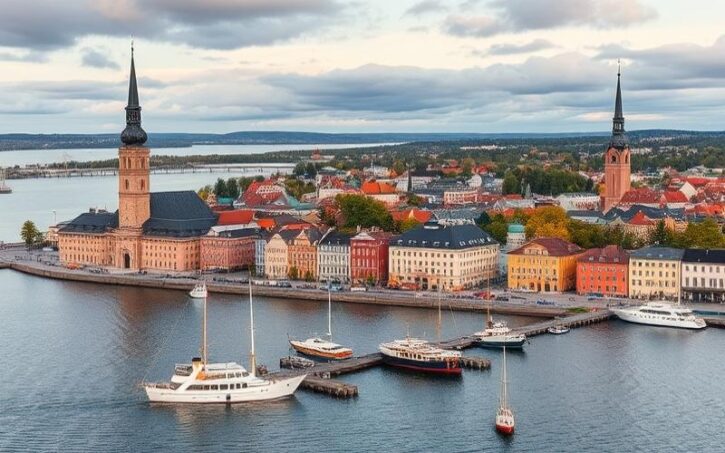
 Published on and written by Cyril Jarnias
At the dawn of 2025, Finland offers exceptional opportunities for investors seeking authentic and sustainable projects. Beneath its vast landscapes of forests and lakes lie charming villages, true gems where tradition and modernity meet harmoniously.
As the global trend increasingly shifts toward local and environmentally friendly experiences, these picturesque communities emerge as ideal destinations for long-term investments.
Favorable government policies, aimed at revitalizing rural areas while preserving their unique character, are boosting the potential for growth and innovation in these regions. Discover how the timeless charm of rural Finland can open a door to a promising and prosperous future for those who embark on this path.
Highlighting Investment in Finnish Villages
Investment Opportunities in Finnish Villages
Finnish villages, rich in strong cultural identity and preserved natural environments, offer a range of investment opportunities focused on high-potential sectors, aligned with national priorities and the expectations of local communities.
Promising Sectors
| Sector | Local Specificities and Prospects |
|---|---|
| Sustainable Tourism | Development of ecotourism (responsible accommodations, nature activities, promotion of Sami culture and local traditions), high demand for authentic and environmentally respectful experiences. |
| Green Technologies | Decarbonized energy projects (wind, hydrogen, solar, biomass), solutions for sustainable forest management, innovations in green construction and energy efficiency. |
| Organic Agriculture | Growing domestic and European demand for organic products, support for short supply chains and promotion of traditional know-how, development of certified farms and local cooperatives. |
Incentive Policies and Government Support
- Investment subsidies in rural areas, especially for innovative SMEs and projects contributing to carbon neutrality.
- Tax reductions for companies engaging in sustainable activities or promoting local employment.
- Facilitated access to European financing via the European Investment Bank, which supported 1,800 SMEs and maintained 40,000 jobs in 2024, with priority given to green projects and innovation.
- Support programs for renovating old buildings to preserve heritage while improving energy efficiency.
Cultural and Economic Factors to Consider
- Respect for Cultural Authenticity: Strong expectation from communities to preserve identity, language, and local traditions in any project.
- Local Cooperation: Importance of partnerships with municipalities, cooperatives, and village associations.
- Skilled Workforce: Presence of specific know-how (craftsmanship, food processing, sustainable forest management).
Testimonials and Feedback
- Investors who bet on ecotourism report high occupancy rates in summer and winter, thanks to the popularity of the Northern Lights and outdoor activities.
- Local communities that have welcomed green energy production projects report an increase in employment, a strengthening of the associative fabric, and modernization of infrastructure (internet access, mobility).
- Organic farmers have developed direct markets with gourmet restaurants, creating a new economic dynamic and promoting local products.
Challenges to Anticipate
- Geographic Remoteness: Increased logistics costs, need to optimize distribution and strengthen digital connectivity.
- Preserving Cultural Authenticity: Risk of “folklorization” or dilution of traditions if investments are not rooted in the local fabric.
- Aging Buildings: Obligation to invest in renovation, with regular maintenance cycles every 40-50 years for dwellings.
- Variability of Tourist Flows: High seasonality, need to diversify activities to ensure year-round economic viability.
Key Takeaways
Finnish villages represent fertile ground for responsible and innovative investments, provided the unique cultural and environmental framework of these territories is respected. The involvement of local stakeholders, understanding of identity issues, and the ability to meet the specific needs of communities are major success factors.
Good to Know:
Investing in Finnish villages offers exciting opportunities in sustainable tourism, green technologies, and organic agriculture, supported by the Finnish government’s incentive policies such as subsidies and tax reductions. These actions aim to revitalize rural regions while preserving their cultural authenticity, attracting more and more investors drawn by the potential for growth and positive impact. Testimonials from investors and success stories from local communities reveal how these initiatives are economically transforming these villages while maintaining their traditional charm. However, challenges such as geographic remoteness require strategic planning, especially for logistics networks and skilled labor. For example, in the village of Fiskars, where community initiatives have fostered cultural tourism, the importance of combining respect for traditions with modernization is evident.
The Advantages of Rural Real Estate in Finland
The Main Advantages of Rural Real Estate in Finland
- Attractive Prices Compared to Urban Areas: In 2025, the average price per square meter in northern rural villages is around €1,313, while it reaches up to €4,775 in Helsinki and frequently exceeds €3,700 in the metropolitan region. This difference allows for the acquisition of spacious properties for a much lower budget.
- Quality of Life and Preserved Natural Environment: Finnish villages offer a peaceful life in the heart of untouched nature (forests, lakes, clean air), conducive to relaxation and outdoor activities. The authenticity of rural communities fosters a sense of belonging and conviviality.
- Spacious Properties & Access to Essential Infrastructure:
- Large plots allowing for gardening, agriculture, or additional construction.
- Easy connection thanks to the modern road network and improved broadband in rural areas.
- Quick access to essential services (primary schools, local healthcare) through recent public policies.
- Long-Term Appreciation Potential:
- Upward trend forecast (+1.5% national average in 2025), driven by lower mortgage rates and growing demand for second homes or telecommuting.
- Several rural regions have already shown sustained growth since early 2024.
| Region | Average Price €/m² (Houses) | Annual Change (%) |
|---|---|---|
| Northern Finland | 1,313 | +2 |
| Ostrobothnia | 1,508 | +3 |
| Kymi Valley | 1,113 | –5 |
| Greater Helsinki | >3,700 | — |
Government Initiatives Fostering Rural Development
- Extension of the maximum term for real estate loans to 35 years, increase in the LTV (loan-to-value) ceiling up to 95%, making purchasing more accessible even with a small initial down payment.
- National programs to support the establishment of local entrepreneurs (specific subsidies, tax relief).
- Public investments in digital infrastructure (rural fiber optics) and rapid regional transport.
- Incentives for sustainable development: financial aid for energy renovation or ecological transition in old buildings.
Current Trends & Forecasts for 2025
- Moderate but stable increase in rural prices (+1–2% expected across several segments)
- Strong growth in demand related to permanent telecommuting and the search for a better environmental quality
- Increased dynamism in the seasonal/vacation rental market
- Steady strengthening of pro-rural national policies
Finnish rural real estate appeals with its affordable prices compared to big cities, exceptional environmental quality, positive long-term prospects, and growing institutional support.
Good to Know:
Investing in rural real estate in Finland offers many advantages, including much more attractive prices than urban areas and a superior quality of life in authentic villages. These growing regions have long-term appreciation potential, reinforced by government initiatives aimed at stimulating rural development and entrepreneurship. The natural environment is preserved, allowing for the acquisition of spacious properties while enjoying easy access to essential infrastructure. Trends for 2025 indicate an increase in demand for these rural properties, supported by studies showing a growing preference for more sustainable and peaceful lifestyles. A concrete example is the Kera initiative, where the government supports local infrastructure and encourages new work models, thus attracting new residents and investors.
Preserving the Authenticity and Heritage of Villages
Protecting the authenticity and heritage of Finnish villages in the face of economic development relies on a combination of regulatory actions, community engagement, and targeted investments. Current measures include promoting traditional know-how, restoring historical sites, and regularly organizing events focused on sustainable heritage. These approaches help transmit cultural values to future generations while integrating sustainable development into every initiative.
Main Preservation Measures Currently Implemented:
- Transmission of local artisanal knowledge.
- Architectural restoration using traditional materials and techniques.
- Guided presentation of historical sites to raise awareness among the local population and visitors.
- Landscaping actions promoting biodiversity by local authorities.
Examples of Villages That Have Successfully Combined Tradition and Investment:
| Village/Municipality | Measures Taken | Results Achieved |
|---|---|---|
| Finnish Archipelago | European support (structural funds), economic diversification | Maintained rural charm, local dynamism |
| Turku (historic city) | Conservation of the old center, modern urban integration | Increased cultural influence |
Government Policies Play a Central Role Through:
- Legal recognition of real estate heritage, which imposes strict standards on owners and investors regarding architectural integrity.
- Joint involvement of central, regional, and local administration to define obligations related to any intervention on buildings or protected natural spaces.
- Regular dissemination of information to residents about heritage issues before any urban or tourism project.
Additional Local Initiatives:
- Creation of public-private partnerships to finance renovation without altering the village’s visual identity.
- Community mobilization during European Heritage Days, where each village presents its cultural specificities through events or open workshops.
Systematic Integration in Any Project:
- Of typical architecture, for example, the continued use of traditional wood in houses;
- Of cultural practices, such as folk festivals or the active maintenance of minority languages like Swedish;
- Of rural lifestyles like organic farming or artisanal fishing, is essential so that modernization does not mean homogenization.
Major Challenges Related to Modernization:
- Risk of architectural homogenization under real estate pressure
- Gradual loss of traditional crafts
- Demographic decline that could weaken cultural transmission
To Overcome These Challenges:
- Implementation of adapted legislation protecting not only the object but also its social use (e.g., obligation for new tourist businesses to employ local residents).
- Concerted strategy between public authorities, heritage associations, and investing companies aiming for joint valorization rather than isolated exploitation.
- Controlled development focused on a “small scale” where each transformation is subject to prior citizen consultation.
Preserving living history therefore requires that each investment be designed as a lever serving not only economic progress but also – and above all – the identity-based influence specific to these Finnish villages.
Good to Know:
To preserve the authenticity of Finnish villages while stimulating economic development, it is crucial to strike a balance between tradition and modernization. Examples like the village of Fiskars demonstrate that integrating local architecture, such as traditional wooden houses, and maintaining cultural practices can attract investors without compromising historical charm. Government policies play an essential role by providing subsidies for the renovation of historical buildings and promoting local initiatives that value cultural heritage. Furthermore, adopting protected zones and strict construction regulations helps minimize the negative impact of modernization. Major challenges include the need to modernize infrastructure while respecting traditions, which can be overcome through community involvement and consultation with heritage experts.
Economic Opportunities in Finland’s Rural Regions
Main Industries in Finland’s Rural Regions:
| Sector | Key Characteristics | Innovations and Investment Opportunities 2025 | Examples of Projects/Villages |
|---|---|---|---|
| Agriculture | Dominant cereal production, major dairy farming, nearly half of arable land devoted to cereals. | Precision agriculture, automation, development of organic sectors. | Innovative family farms in Ostrobothnia |
| Forestry | 75% of the territory covered by forests, highly developed wood and biomass sector. | Bioeconomy, innovative wood-based materials, sustainable forest management. | Bioeconomy projects in Äänekoski |
| Tourism | Appeal of nature (lakes, forests, Northern Lights), development of sustainable and experiential tourism. | Digitalization of offerings, “slow” tourism and ecotourism, green accommodations. | Networks of tourist villages in Lapland |
| Renewable Energy | Strong growth in wind, solar, wood energy, and hydropower. Significant part in the green transition. | Wind and solar projects, smart infrastructure, green hydrogen. | Wind farms in Ii and Kalajoki |
Investment Opportunities for 2025:
- Smart agricultural technologies (robots, IoT, precision agriculture).
- Digital transformation of the agri-food chain (traceability, digitalized export).
- Sustainable and circular forest management solutions.
- Tourism accommodation infrastructure based on sustainability and immersive experience.
- Deployment of solar and wind farms in villages with high wind/sun potential.
- Valorization of agricultural and forestry waste into bioenergy and bioproducts.
Role of Government Policies and Local Initiatives:
Finland promotes the green transition through subsidies, low-interest loans, and tax incentives for renewable energy, sustainable agriculture, and bioeconomy projects.
Regional rural development plans fund pilot projects in villages (energy cooperatives, local logistics platforms).
Specific policies support the digitalization of farms and sustainable tourism (labels, aid for digital transition).
Public-private partnerships favor the establishment of green industries in rural areas, for example, the construction of data centers powered by renewable energy.
Concrete Examples:
The village of Ii: a pioneer in carbon neutrality thanks to investment in renewable energy and the circular economy.
Äänekoski: development of a next-generation biorefinery, a driver of the regional bioeconomy.
Networks of microbreweries and educational farms in central Finland, promoting short supply chains and experiential tourism.
Future Development Potential:
Expected growth in agricultural exports, especially for quality dairy products and oats.
Strong increase in private investments in renewable energy, supported by the stability of the electricity grid and competitive prices.
Deployment of technological solutions for automation, resource management, and personalized tourist experiences.
Focus on the circular economy and local resource valorization, with the involvement of rural communities in innovative value chains.
Innovation, sustainability, and technology are the major strategic axes for the attractiveness and economic dynamism of Finnish rural villages by 2025.
Good to Know:
Finland’s rural regions offer promising economic opportunities through key sectors such as organic agriculture, sustainable forestry, rural tourism, and renewable energy. By 2025, innovation and technology will play a crucial role in enabling more efficient agricultural practices and optimizing forest management. Government initiatives, such as subsidies for solar and wind energy, and local development programs, support these sectors, providing a favorable framework for investors. For example, villages like Sodankylä have thrived by adopting renewable energy projects, and ecological tourism attracts new visitors there. Policies encouraging sustainability and rural innovations position these regions as strategic destinations for investors seeking long-term impact.
Disclaimer: The information provided on this website is for informational purposes only and does not constitute financial, legal, or professional advice. We encourage you to consult qualified experts before making any investment, real estate, or expatriation decisions. Although we strive to maintain up-to-date and accurate information, we do not guarantee the completeness, accuracy, or timeliness of the proposed content. As investment and expatriation involve risks, we disclaim any liability for potential losses or damages arising from the use of this site. Your use of this site confirms your acceptance of these terms and your understanding of the associated risks.

Cyril Jarnias is an independent expert in international wealth management with over 20 years of experience. As an expatriate himself, he is dedicated to helping individuals and business leaders build, protect, and pass on their wealth with complete peace of mind.
On his website, cyriljarnias.com, he shares his expertise on international real estate, offshore company formation, and expatriation.
Thanks to his expertise, he offers sound advice to optimize his clients' wealth management. Cyril Jarnias is also recognized for his appearances in many prestigious media outlets such as BFM Business, les Français de l’étranger, Le Figaro, Les Echos, and Mieux vivre votre argent, where he shares his knowledge and know-how in wealth management.





