
 Published on and written by Cyril Jarnias
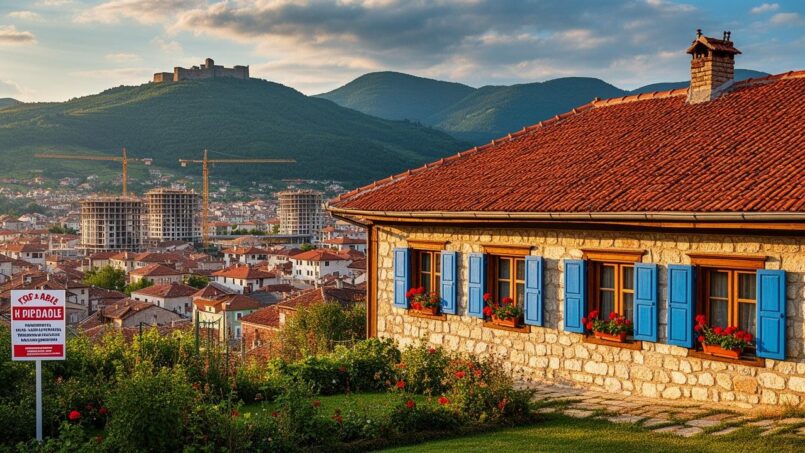
Located in southeastern Serbia, very close to the Bulgarian border, Pirot ticks boxes you rarely see all together in one city: a strong industrial base driven by Michelin, a free trade zone among the most recognized in Central Europe, a planned intermodal logistics center connected to major pan-European corridors, and, just a few kilometers away, the Stara Planina mountain transforming into a ski and leisure resort.
For an investor, this region presents a unique profile: property prices still lower than in Serbia’s major cities, rental demand supported by industrial employment and infrastructure projects, as well as a niche market for tourist rentals focused on green tourism and rurality rather than mass tourism.
In this article, everything is based on detailed market data for Serbia and Pirot provided in the research report. The goal is simple: to understand whether investing in real estate in Pirot makes sense, for which investor profile, with which strategy (classic residential, Airbnb, logistics, industrial, mountain, etc.) and with what risks.
Pirot in Serbia’s Real Estate Landscape
The Serbian real estate market experienced a sharp price increase in 2021 and 2022, before stabilizing on a path of moderate growth. National figures set the tone: prices still rose by about 5 to 6% between 2024 and the first half of 2025, and experts anticipate annual growth of around 3 to 7% until the end of the decade.
The majority of transaction value is now concentrated in Belgrade (54% for apartments alone), with average prices flirting with €3,000/m² and far exceeding this level in prestigious neighborhoods or on the riverfront (Belgrade Waterfront goes up to nearly €10,000/m² for some penthouses).
This is the purchase price, in euros, for a small, old apartment of about 35 m² in a secondary Serbian city like Vranje.
Pirot falls into this second category: a medium-sized, industrial city, right in the Niš–Pirot–Sofia logistics corridor, with moderate local purchasing power, but a very ambitious agenda of public and private investments. It is precisely this gap between economic fundamentals, major projects, and still-reasonable prices that creates interesting investment potential.
Declining Demographics… But a Solid Economic Core
Like many Serbian territories outside Belgrade, Pirot faces a depopulation problem. The municipality now has around 48,700 inhabitants across an area of 1,232 km², with a density of only 40 inhabitants per km². Demographic projections forecast about 32,000 inhabitants by 2052 (median scenario), and the indicators speak for themselves: a birth rate of 8‰, a death rate of 17‰, and an aging population (average age 46, 26% aged 65 and over).
Although this type of profile may seem discouraging for speculative investors, it is crucial not to overlook two key elements that change its perception.
– Pirot is a regional industrial center with major employers (Michelin, Tigar, AHA Mura).
– The city has embarked on a development strategy massively focused on infrastructure, logistics, energy, and tourism.
Employment figures testify to this role as an economic hub: about 14,600 registered employees in the work territory, nearly 16,700 employed residents, and a significant weight of manufacturing. The main players, all based in Pirot, report hundreds or even thousands of jobs:
| Company / Sector | Number of Employees (approx.) | Observations |
|---|---|---|
| Tigar Tyres (Michelin) – rubber | 2,300 | Major foreign investment |
| Tigar AD – rubber | 2,000 | Historical industrial pillar |
| AHA Mura – Prvi maj – textiles | 1,500 | Export-oriented textiles |
| Other SMEs and entrepreneurs | > 1,700 companies (SMEs + sole proprietors) | Diversified economic fabric |
The result is a residential market locally driven by industrial employment, more than by population growth. This changes the investment logic: you bet more on the strength of rental demand linked to jobs, logistics, and niche tourism than on a price explosion driven by an influx of new residents.
A Very Pro-Business Investment Environment
Institutionally, the Pirot municipality has clearly positioned itself as a “pro-investor” city. It has obtained a “Business Friendly Environment” certificate and has a Local Economic Development Office to support projects, as well as a unified municipal desk for all administrative procedures.
Amount in millions of euros of the city’s 2024-2028 investment plan under the national initiative ‘Leap into the Future – Serbia 2027’.
Concretely, this translates into:
– a project for a major intermodal logistics center in the free zone;
– the expansion and equipping of industrial zones;
– the modernization of transport infrastructure (numerous road, bridge, modern bus station projects);
– public facility projects (emergency medical center, schools, renovated gymnasium, heating network, sewage treatment plants…);
– a package of tax and administrative facilities for companies and investors.
For a real estate investor, this kind of dynamic is strategic: major infrastructure shortens commute times, improves quality of life, and supports real estate value in the medium and long term, even in a context of stagnant or declining population.
Industrial Zones, Free Zone, and Future Logistics Center: The Engine of Professional Demand
Pirot was one of the first Serbian municipalities to create a free zone and an industrial zone. Today, there are three pillars:
– the Free Zone Pirot, 18 hectares, recognized several times by the Financial Times as one of the best free zones in the world;
– existing industrial zones like Beg Bašča or a 100,000 m² zone with 45% public land and 55% private land;
– a project for a 25-hectare industrial and technology park, linked to the future intermodal logistics center.
The infrastructure for these zones is already in place or under development: water, sanitation, high-voltage electricity, roads, telecommunications, direct connection to the international E-80 road and railway corridors.
For an investor, several types of operations become feasible:
Foreign investors in Serbia can consider several types of industrial real estate operations. This includes buying industrial or logistics land, often through a Serbian company for raw land, to build warehouses, hangars, or small factories. Another possibility is buying and renovating existing buildings (brownfields), as illustrated by the conversion project of the former “Kobos” textile factory. Finally, acquiring offices or mixed-use spaces in town to rent to SMEs providing services to industrial companies (logistics, maintenance, subcontracting) also constitutes a relevant investment strategy.
The Free Zone Pirot additionally offers the national advantages of free zones: VAT exemptions or deferrals, reduced or exempted customs duties, simplified procedures, and sometimes, depending on the project, land facilitation (even up to providing land without full payment of its value).
The Intermodal Logistics Center Project: A Game Changer
At the heart of this strategy is the Logistics Center Pirot project, located in the free zone, immediately adjacent to the Niš–Bulgarian border railway line and 500 meters from the new Corridor X interchange. This center is designed as a rail-road exchange platform, capable of handling 12,000 TEU per year.
The main components are:
Main facilities and equipment available for complete logistics and industrial activity.
Terminal equipped with multiple tracks of 304 to 650–680 meters for receiving and shipping goods.
Platform dedicated to loading, unloading, and transshipment of goods.
38 hectares of developed and equipped land for the establishment of warehouses, factories, and offices.
About 3.2 km of internal roads and technical infrastructure for circulation and services.
The total investment will exceed €12 million and feasibility studies mention around 4,200 induced jobs. The goal: to connect Pirot to the ports of Varna and Burgas (Bulgaria), Thessaloniki (Greece), Smederevo, and Constanța, and to integrate into the supply chain of pan-European corridors IV, VIII, and X.
For real estate, this type of facility is doubly structuring:
– it enhances the attractiveness of industrial and logistics zones (expected increase in demand for warehouses, workshops, offices);
– it supports demand for rental housing for logistics workers and managers, often more mobile than the traditional local population.
In a city where, at the beginning of 2026, no offices are listed for sale on major platforms, the arrival of new companies could quickly create tension on commercial and service spaces.
Residential in Pirot: Price Levels and Potential Profitability
Specific data on sale prices in Pirot remains quite scarce and fragmented, but several elements allow for orientation.
On one hand, national statistics indicate a median price of €1,744/m² for older apartments, and an average of €1,856/m², across all markets. On the other hand, portals aggregating local listings give price ranges for Pirot that are clearly below Belgrade’s, but with a level already significant for a small town.
For an apartment in Pirot, the reported orders of magnitude are as follows:
| Indicator | Pirot City Center | Pirot Outskirts |
|---|---|---|
| Purchase price, €/m² (observed range) | ~1,575 – 2,100 | ~1,238 – 2,105 |
| Purchase price, €/m² (typical value indicated) | ~1,890 | ~1,585 |
| Monthly rent for 1-bedroom, center (range, €) | ~128 – 183 / 242 – 401* | ~86 – 137 / 203 – 355* |
| Monthly rent for 1-bedroom, center (typical value, €) | ~156 or ~242 depending on source | ~112 or ~260 depending on source |
*The two ranges reflect two different data sources (one in RSD, one in dollars converted).
A 50 m² apartment in the city center, at a price of about €1,800–1,900/m², represents an investment of €90,000–95,000. Rented for between €250 and €260 per month, it generates a gross annual yield of 3.2 to 3.5%, before deducting expenses and vacancy periods. This yield is lower than the 5–7% observed in the best neighborhoods of Niš or certain sectors of Belgrade, an important nuance to consider.
– the cost of living in Pirot is significantly lower (rents, utilities, services, food);
– rents can be optimized with a mixed strategy (long-term lease + seasonal Airbnb for some properties);
– future price progression could be more dynamic than expected if the logistics center and major tourism projects gain momentum.
Cost of Living and Local Purchasing Power
The average net salary in Pirot is around 76,500 RSD, or about $750 or €700 monthly. On the expense side, the estimated monthly cost of living for a single person, excluding rent, is around $694, and around $1,210 including rent.
To ensure housing viability and accessibility, it is essential that the rent amount remains proportional and consistent with the income level of tenants. This helps maintain financial balance and reduce the risk of unpaid rent.
– a 1-bedroom in the city center typically rents for roughly €200–260;
– a 3-bedroom in the city center climbs towards €400–550;
– on the outskirts, prices drop a bit lower.
Utilities for a 70–85 m² unit (heating, electricity, water, waste) commonly range between €100 and €200 per month, which remains reasonable but weighs on local household budgets.
For an investor, this means three things:
1. rental “ceilings” are constrained by local purchasing power; 2. the selling point for quality housing lies in energy performance and controlled utility costs; 3. the potential for higher yield comes mainly from tourism (mountain, nature, rural) and renting to better-paid expatriate employees or logistics managers.
Pirot, a Niche Airbnb Market: Only 17 Listings, but Telling Figures
The short-term rental market in Pirot is currently microscopic on the scale of a country like Serbia. The AirROI analysis from April 2024 to March 2025 identifies only 17 active listings, and all are entire homes/apartments (100% “Entire Home/Apartment”), with nearly 90% being apartments/condos.
The most frequent configurations are:
– 1 bedroom (41.2% of listings);
– 1–2 bedrooms (82.4% combined);
– capacity for 4 people (41.2% of listings), 4–5 people representing over 70% of the market.
In other words, it is a small market, dominated by small apartments intended for couples, families, or small groups, with very few fragmented offerings (single rooms) and no structured shared housing.
Performance: Revenue, Occupancy Rate, Seasonality
Performance figures show a niche market, but not uninteresting.
For the studied period, the average indicators are as follows:
| Indicator (monthly) | Top 10% (best) | Top 25% | Median | Bottom 25% |
|---|---|---|---|---|
| Gross Revenue ($/month) | ≥ 1,160 | ≥ 666 | 406 | ~210 |
| Occupancy Rate (%) | ≥ 59 | ≥ 41 | 26 | 14 |
| Average Daily Rate (ADR, $) | ≥ 67 | ≥ 51 | 39 | ~32 |
Seasonality is clear:
– revenue peak in May, occupancy peak in June;
– highest ADR in July;
– marked lows in March (occupancy and revenue) and November (lowest ADR).
Seasonal summary:
| Season | Average Revenue ($/month) | Average Occupancy (%) | Average ADR ($) |
|---|---|---|---|
| High Season (April–May–June) | 805 | 35.2 | 45 |
| Mid-Season | 481 | 32.8 | 45 |
| Low Season (March, Nov., Dec.) | 350 | 23.2 | 43 |
The best months can reach up to $857 in revenue with 58% occupancy for high-performing properties, while the lowest month falls to around $311, with about 20.5% occupancy.
For an investor, these figures suggest that:
– a well-managed, well-positioned property (city center, close to tourist sites or the free zone) can generate $700–900 gross in some good months, but not year-round;
– the median (around $400 monthly) remains modest; one must control costs (utilities, management, cleaning);
– the growth of tourism (Stara Planina, Lake Zavoj, surrounding villages) and international demand can improve these performances, as 86% of visitors are already foreigners, young, speaking English or German.
Regulation and Host Profile: An Unsaturated Terrain
Most of the Airbnb market in Pirot operates in a context of weak regulation: no listing appears as officially licensed in the study, and the vast majority of listings are available for more than 181 days per year (94.1%), with 64.7% open almost year-round (271–366 days).
Percentage of properties booked for short stays of 1 to 30 days per year on Airbnb.
For an investor wanting to position themselves early in this market, the interest is twofold:
– the low number of competitors (17 listings) leaves room for better-positioned products: upmarket apartments, impeccable wifi, modern decoration, offerings targeted at remote workers or groups coming for the mountains;
– the possibility of operating a hybrid strategy: annual long-term lease to secure minimum income, with a switch to short-term during tourist peaks (spring, summer) or local events.
Tourism and Mountains: Stara Planina, Lake Zavoj, and Surrounding Villages
The tourism potential of Pirot is often underestimated. The municipality is surrounded by mountains, with the emblematic Stara Planina (2,169 m altitude) developing into a four-season ski and leisure resort.
Several projects are already underway or planned:
Recreational and hotel infrastructure projects underway and planned in the Stara Planina region and Pirot.
Construction of a new center dedicated to skiing and recreational sports on the Stara Planina massif.
Finalization of the hotel at Jabučko Ravnište, offering 147 rooms, 454 beds, restaurants, conference rooms, spa, and indoor pool.
Finalized urban plans for the construction of six additional hotels on the Stara Planina site.
Project for a swimming pool and sports infrastructure in Pirot, including a modern aquatic complex.
Creation of parks and bicycle paths in Pirot to improve recreational spaces in the city.
Development of an adventure park in Sarlah (Pirot) for outdoor activities and family recreation.
The surroundings also offer very attractive natural spots for weekend or outdoor tourism:
– Lake Zavoj (swimming, fishing, walks);
– mountain villages like Temska, Dropče, Ražanj, Vrelo (a 52 m² brvnara on Stara Planina recently sold for €79,000);
– picnic spots at Planinarski Dom, Vrelo, Temac;
– heritage (Kale fortress in Pirot, monasteries, the Ponišavlje museum with its traditional rugs).
From a real estate perspective, this opens up a specific segment:
We are interested in several categories of properties for developing the tourism and accommodation offering.
Located in the mountains, particularly in the Stara Planina, Vrelo, and Kosmovac regions.
Located in villages, with the objective of converting them into tourist cottages.
Small hotels, bed & breakfasts, and mountain villas.
Recent listing examples show still affordable prices for properties with strong character:
| Property Type | Location | Area / Land | Asking Price |
|---|---|---|---|
| Brvnara (wooden chalet) | Vrelo, Stara Planina | 52 m² + 3.3 ares (330 m²) | 79,000 € |
| Field / recreational land | Kosmovac (Čuka) | 40 ares (4,000 m²) | 24,000 € |
These amounts remain very reasonable compared to urban apartment prices per m² in Serbia, even though this type of property can interest:
– Serbian families looking for natural second homes;
– foreigners attracted by a rural lifestyle, at rock-bottom prices compared to Western Europe;
– touristic investors aiming for cottages or mini-lodges for short-term rental.
Areas and Micro-Locations: How to Position Yourself in Pirot and Its Region
Investing in real estate in Pirot is not just about choosing between “city center” and “the rest of the city.” The region’s geography and its projects rather lead to thinking in terms of micro-markets.
Pirot City Center: Classic Residential Rentals and Urban Airbnb
The center concentrates the main services (municipal administration, museum, fortress, old bazaar, Saint George church, market, shops). This is where the few referenced rental data points are found (1-bedroom around 25,000 RSD/month according to some tables, with higher ranges in other sources).
This market primarily targets:
– local employees wanting to live close to services;
– students (if the higher education institution project materializes);
– passing tourists, via a few well-located Airbnbs.
For an investor, the assets here lie in:
– liquidity upon resale (more demand than in villages);
– the possibility of continuous renting, without relying solely on the tourist season.
Outskirts and Residential Neighborhoods Fueled by Infrastructure Projects
The multiple road projects, district heating, sidewalks, bicycle paths, and redevelopment of the Nišava riverbanks will benefit specific streets and neighborhoods: Senjak (sports and aquatic complex), areas near Kale and the quay, Kozaračka, Srpskih vladara, Nišavski odred streets, etc.
A home located near a future facility (like a swimming pool, a renovated school, or a bicycle path connected to the city center) will generally have a better sale and rental value. This added value is particularly notable over a 5 to 10-year horizon, compared to a property isolated from such amenities.
Industrial and Logistics Zones: Commercial Real Estate, Land, Warehouses
Zones like Beg Bašča, Bozurato, Srdorek, Barje, the so-called FAS zone in the free zone, or the Industrijska zona 2, are at the heart of the industrial strategy. You will find or will find there:
– serviced building plots (lots from 730 to 1,700 m² in some cases, sold at auction);
– existing factory or logistics buildings for conversion or renovation;
– infrastructure projects (road-pedestrian bridge over the Lepenica to serve FAS, heavily used by 17 companies and 4,000 workers).
For a foreign investor, acquiring raw or agricultural land in Serbia requires creating a Serbian company. Professional guidance is essential to manage common risks: fragmented property titles, unresolved successions, ambiguous agricultural zoning, and cadastral errors.
Specialized companies, like VelesClub International, are positioning themselves precisely in this niche: cadastral clean-up, title regularization, registration with the Geodetic Authority (RGZ), structuring to benefit from Free Zone advantages, etc.
Mountain Villages and Lake Zavoj Area: Leisure and Ecotourism Real Estate
Finally, villages like Temska, Dropče, Ražanj, Vrelo, or land with views of Trem, Devojački grob, Sokolov kamen, form a separate market. Lands of 3 to 40 ares at prices from €24,000 to €80,000 allow for the development of:
– weekend houses;
– ecotourism micro-lodges;
– mountain chalets for rental.
The key, in these areas, is the combination of three factors:
– accessibility (road conditions, distance to Pirot and the E-80);
– legality and urban planning designation of the land (agricultural, mixed, buildable);
– real touristic attractiveness (proximity to trails, viewpoints, the lake, etc.).
Legal and Tax Framework: What a Foreign Investor Must Know
The Serbian framework is rather open to foreigners, but has a few important subtleties.
What a Foreign Individual Can Buy Directly
Subject to reciprocity between Serbia and the country of citizenship, a foreign individual can buy:
– apartments (full ownership, no restrictions);
– houses with the land they are built on;
– commercial premises (offices, shops, warehouses, mixed-use spaces).
However, an individual cannot acquire directly:
– agricultural land;
– undeveloped, unbuilt land (outside of specific structures);
– forests or land in military zones.
To circumvent these restrictions, the common practice is to establish a Serbian limited liability company (DOO). It is considered a domestic entity and can acquire agricultural or raw land, for example, to develop a logistics, industrial, or tourism project.
Purchase Process: Typical Timeline
The standard process, for a classic residential or commercial property, typically lasts 30 to 60 days between the offer and registration in the cadastre. The main steps are:
Real estate purchase in Serbia follows a structured process: 1. Search via agencies, portals, or direct prospecting. 2. Mandatory legal due diligence (verification of property title, debts, permits, and cadastral consistency). 3. Possible signing of a preliminary contract (Predugovor) with a deposit. 4. Final contract before a Serbian notary, including the “clausula intabulandi”. 5. Payment via a Serbian bank and settlement of applicable taxes. 6. Registration at the cadastre (RGZ) to finalize ownership.
The whole process can be managed remotely via a notarized and apostilled power of attorney, translated into Serbian, given to a lawyer or local representative.
Costs and Taxation upon Investment
Total transaction costs are in the range of 7.6 to 10% of the property price, including:
Rate of the transfer tax applicable to the sale of an older property in Greece.
Regarding income, rental income is taxed at the flat rate of 20% for individuals, but on a base after a 25% standard deduction for expenses (or actual expenses with receipts). The net yield after taxes therefore runs a notch below gross profitability.
Upon resale, the capital gain is taxed at 15% for individuals, except:
Capital gains tax on real estate can be fully exempt in several cases: if the property was held for more than 10 years (for residents), if the sale proceeds are reinvested in buying a home for oneself or one’s family within specific timeframes, or during certain intra-family transfers like inheritance in the direct line or between spouses.
The annual property tax, managed by municipalities, remains moderate (base rate up to 0.4%, progressive beyond that, with reductions for primary residence or small areas occupied by elderly people without renting it out).
Residence in Serbia via Real Estate
Owning a property (including a building, not land alone) gives the right to apply for a temporary residence permit. There is no minimum investment threshold: a modest apartment is sufficient in theory, as long as you can prove:
– ownership,
– health insurance,
– sufficient means of support,
– a clean criminal record from the country of origin.
After five years of renewed temporary residence, one can apply for permanent residence; five additional years allow for applying for naturalization, under conditions.
For an investor who wants to settle or spend several months a year in Pirot (for example, to supervise a tourism or industrial project), this combination property + residence is a non-negligible advantage.
Opportunities and Risks: Who is Pirot Really For?
Investing in real estate in Pirot will not suit all profiles. The city is not Belgrade, nor Novi Sad: you are not playing the same tune.
What Pirot Offers More Than Other Serbian Cities
First, a still favorable price/potential ratio:
– prices per m² well below Belgrade’s, and often close to the national average for secondary cities;
– a solid industrial base, highly integrated into European production chains (Michelin tires, textiles, rubber, agri-food);
– a structuring logistics project connected to several pan-European corridors, likely to create several thousand jobs;
– a free zone already operational, well-rated internationally;
– a first-class natural environment (Stara Planina, Lake Zavoj) with concrete hotel and leisure projects.
Second, a low cost of living and labor, which interests industrial investors, but also digital nomads or remote workers looking for an affordable base with nature nearby.
The municipality is very proactive in developing essential infrastructure (water, heating, roads, bicycle paths, schools, hospital, sewage treatment plant, regional waste center) and in supporting investors through mechanisms like a free zone, a local development office, a service center, and cooperation with the EU and donors such as the EBRD.
Risks and Limits Not to Underestimate
On the other side, several structural risks deserve to be explicitly integrated into any business plan:
The market presents several specificities: declining demographics affecting demand, a shallow rental market, land legal security to be scrupulously verified, an embryonic Airbnb market (17 listings), and an almost non-existent office/commercial segment, which increases investment risks.
Investment Strategies Adapted to Pirot
Based on the report data, several strategies coherent with the city’s profile can be distinguished:
– 1. Long-Term Residential Rental in the City Center Purchase of 1–2 bedroom apartments in central neighborhoods or near major arteries, targeting:
– young employees of major industrial companies;
– civil servants, local households;
– possibly, dynamic furnished rental for managers or specialists on temporary assignment (industrial or logistics projects).
Moderate gross yield (3–4%) but limited vacancy risk if the property is well-located and maintained.
– 2. Leisure Real Estate and Airbnb in the Mountains Purchase of chalets, brvnara, village houses in Stara Planina, Vrelo, Temska, etc., to convert into cottages and seasonal rentals:
– niche market, but already frequented by a young international clientele (50% Gen Z/Alpha) and 86% foreign visitors;
– probable growth if the hotel offering in the mountains increases and if the resort gains notoriety.
Seasonal rental yields are variable. They depend mainly on three key factors: the quality and condition of the rented property, the quality of its marketing (notably professional photos, services offered, and number of languages spoken to welcome an international clientele), and finally, the seasonality of the destination.
– 3. Land and Corporate Real Estate Linked to Logistics Via a Serbian company (DOO), acquisition of land or buildings in industrial zones, especially near the future logistics center:
– warehouses, storage platforms, production or subcontracting workshops;
– leasing to industrial or logistics companies.
More technical strategy, requiring a fine understanding of contracts, the needs of industrial companies, and professional management, but potentially more profitable over time than simple residential, as the logistics center gains momentum.
– 4. Mixed Approach: Residence + Investment Purchase of an apartment or house in Pirot to settle there or spend part of the year there, while also:
– operating part of it for short- or long-term rental;
– taking advantage of the property owner status to apply for temporary residence.
Typical profile: an entrepreneur or freelancer attracted to mountain life, seeking a low cost of living and a foothold in Europe, or an investor who wants to oversee a local tourism project.
Conclusion: Pirot, a City for Patient and Strategic Investors
Investing in real estate in Pirot is not a speculative “flip” like some purchases in Belgrade’s trendiest neighborhoods. It’s a more subtle, long-term bet on a city:
– that remains industrial in its economic structure;
– that methodically positions itself as a regional logistics hub;
– that strongly values its natural and touristic resources;
– that benefits from powerful public levers (Serbia 2027, European funding, EBRD) to modernize its infrastructure.
For an investor, the equation includes: still reasonable prices, a limited but employment and nascent tourism-supported rental market, a proactive administrative environment, and a land legal context requiring rigor and professional guidance.
If one accepts these constraints, equips oneself with a good lawyer, an experienced notary and, ideally, specialized structuring advice (to best use the free zone, tax benefits, and the appropriate corporate form), Pirot can become an interesting position in a diversified Serbian real estate portfolio.
This is not the market that will triple prices in a few years, but it is potentially the one that will offer, to those who see further, a coherent stability/yield couple in a territory at the crossroads of industry, logistics, and the mountains.
A wealth management project or a question? Contact us now to speak with a wealth management expert.
Disclaimer: The information provided on this website is for informational purposes only and does not constitute financial, legal, or professional advice. We encourage you to consult qualified experts before making any investment, real estate, or expatriation decisions. Although we strive to maintain up-to-date and accurate information, we do not guarantee the completeness, accuracy, or timeliness of the proposed content. As investment and expatriation involve risks, we disclaim any liability for potential losses or damages arising from the use of this site. Your use of this site confirms your acceptance of these terms and your understanding of the associated risks.

Cyril Jarnias is an independent expert in international wealth management with over 20 years of experience. As an expatriate himself, he is dedicated to helping individuals and business leaders build, protect, and pass on their wealth with complete peace of mind.
On his website, cyriljarnias.com, he shares his expertise on international real estate, offshore company formation, and expatriation.
Thanks to his expertise, he offers sound advice to optimize his clients' wealth management. Cyril Jarnias is also recognized for his appearances in many prestigious media outlets such as BFM Business, les Français de l’étranger, Le Figaro, Les Echos, and Mieux vivre votre argent, where he shares his knowledge and know-how in wealth management.





