
 Published on and written by Cyril Jarnias
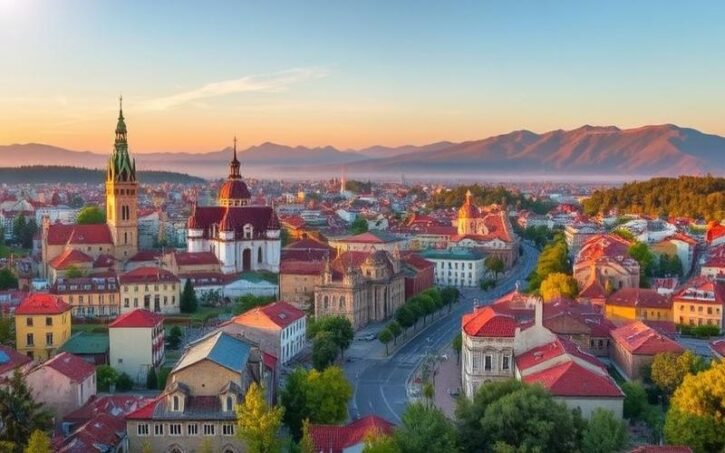
With a growing economy and increasing appeal for its picturesque landscapes and vibrant cities, the Romanian real estate market is experiencing fascinating developments that are capturing the attention of international investors. The rise of digital technologies and rapid urbanization are reshaping buyer expectations, while government policies seek to stabilize this evolving sector. Between the emergence of new residential hubs and the strengthening of infrastructure, Romania is strategically positioning itself as a market of choice in Eastern Europe, promising to attract both investors and local buyers alike.
Growth Sectors in the Romanian Real Estate Market
The Romanian real estate market in 2025 is experiencing notable growth in several sectors: residential (especially new complexes and second homes), office spaces, and shopping centers. This dynamic is driven by economic, social, and political factors specific to the country.
| Sector | Recent Growth | Key Development Factors |
| Residential | +16% sales H1 2024 | Urbanization, rising wages, remote work |
| Offices | Stability after strong demand | Foreign investments, relocations |
| Shopping Centers | Dynamism in major cities | Increased consumption, urban modernization |
Recent Statistics
- National Real Estate Price Index: 161.75 points (Q1 2025), +4.9% annually.
- Over 77,200 homes/apartments sold in H1 2024 (+16% vs H1 2023).
- Record increase in Iași: +71% residential sales year-over-year.
- Bucharest/Ilfov: +25.4% real estate transactions in one year.
- High homeownership rate: >94%.
Particularly Dynamic Regions
- Bucharest / Ilfov: Traditional market driver with a high concentration of foreign investments and large residential or commercial projects.
- Cluj-Napoca: Attractive university center with some of the highest prices in the country; technological dynamism and an influx of young professionals.
- Iași: Recent explosion in the residential market (+71%) due to local economic modernization and the return of part of the diaspora.
Factors Explaining the Growth
- List of main drivers:
- Foreign direct investments supporting the tertiary sector (offices/logistics).
- Rapid urbanization and internal migration towards major university or industrial cities.
- Rise of remote work favoring the purchase of second homes or peri-urban properties among the affluent post-pandemic urban population.
- Massive return of part of the Romanian diaspora investing in local real estate.
- Local economic policies:
- State maintenance of a favorable tax environment for real estate investors until 2025, despite an uncertain international context.
- Municipal plans encouraging urban renovation (renovated large housing estates) and sustainable development around university/technology hubs.
Good to know:
In Romania, the real estate market is experiencing notable growth in several sectors, including residential complexes, office spaces, and shopping centers, mainly in Bucharest and Cluj-Napoca. This evolution is supported by an influx of foreign investments as well as increasing urbanization. Remote work has also stimulated the purchase of second homes, meeting new consumer demands. In 2022, for example, the surface area of new office space delivered in Bucharest increased by 20%, indicating sustained interest in this space. The development of shopping centers is booming, with a strong focus on suburban areas to adapt to new consumption habits. Local economic policies, favorable to investment, also contribute to this positive dynamic, making Romania an attractive market in Eastern Europe.
Key takeaways:
The major trends are driven by accelerated urbanization around regional metropolises like Bucharest, Cluj-Napoca, or Iași; they cater to both growing local needs and new expectations induced by remote work. Despite the anticipated macroeconomic slowdown for late 2025 (+1.3%), the real estate sector remains robust thanks to these solid fundamentals.
Price Fluctuation: An Analysis of the Romanian Market
Real estate prices in Romania evolve under the combined influence of macroeconomic, political, and structural factors, whose effects differ by segment (residential, commercial, industrial) and region.
Major Economic Factors Influencing Prices:
- Economic Growth: The rise in living standards and wages has supported real estate demand since 2020.
- Inflation: Persistent inflation (reaching 14.6% at the end of 2022 then falling to 4.7% at the end of 2024) stimulated the search for safe-haven assets like real estate but also increased the cost of materials.
- Interest Rates:
- High mortgage rates in 2024–2025 limit purchasing power.
- Restrictive monetary policy to counter inflation; more selective access to credit.
| Year | Average Annual Change (%) | Main Comment |
|---|---|---|
| 2020 | +8.3 | Post-pandemic peak |
| 2021 | +7 to +8 | Sustained growth |
| 2022 | +8.5 | Inflation effect |
| 2023 | +4 to +7 | Gradual slowdown |
| Q1-2025 | +5.2 | Moderate growth |
Government Policies and Regulation:
- Maintenance of high key interest rates by the National Bank to control inflation.
- Targeted incentive schemes for social or affordable housing in certain urban centers.
Impact by Real Estate Segment:
Residential
- Sharp price increase (+19% in Bucharest between April 2024 and April 2025).
- Limited supply due to a decrease in the number of permits issued over the past two years.
- Strong pressure on new builds in major cities (average prices higher than the existing market).
Commercial
Dynamism in certain metropolises thanks to regional economic development.
Industrial
Relative stability thanks to logistics investments linked to recent or planned road/rail infrastructure.
Recent Regional Data
| City | Average Price (€/m²) | Recent Annual Change |
|---|---|---|
| Cluj | ~2700 | +11% |
| Bucharest | ~2040 | +19% (particularly dynamic new homes) |
| Brașov | ~1870 | Moderate increase |
Cluj remains the most expensive city with rapid growth. Constanța shows remarkable stability.
Local and International Demand
List of recent drivers:
- Massive return of the Romanian diaspora after the pandemic
- Significant arrival of Ukrainian refugees
- Foreign investors attracted by an attractive yield/price ratio compared to Western Europe
Demand is particularly strong in well-connected central neighborhoods or those close to new infrastructure.
New Constructions & Infrastructure Projects
New supply is constrained by:
- The increase in urban land costs
- Administrative slowdown on permits
However,
- New high-end residential projects remain popular,
- Logistics/industrial investments are being driven upward by several priority highway projects.
Good to know:
Price fluctuation in the Romanian real estate market is strongly influenced by various factors, including economic trends such as moderate GDP growth and relatively stable inflation. Government policies, like tax incentives for first-time homebuyers, and variations in interest rates also play a crucial role in price dynamics.
Forecasts & Outlook
- Expected moderation (+4–6% annually), remaining under pressure if new supply is limited;
- Possible slowdown if further credit tightening occurs;
- Sustained attractiveness compared to other CEE markets thanks to a price/m² still lower than Prague or Warsaw;
- Institutional rental segments expanding rapidly, especially around major university centers;
Summary List – Current Main Upward/Downward Factors:
- Rising wages/dynamic local demand
- High interest rates = partial brake for first-time buyers
- Widespread inflation = increased construction costs/upward transmission to final price
- Slowed new supply = increased pressure on the secondary market/resales
Summary Table – Recent vs. Forecasted Evolution:
| Segment | Recent Evolution | Next Period Forecast |
|---|---|---|
| Residential | – Strong increase in major cities – Rare new supply – Slowing transactions Q1–Q2/25 | – Growth moderation – Sustained pressure if few new deliveries – Solid demand in university/peri-urban areas |
| Commercial | – Dynamism in main regional hubs – Post-Covid office segment adaptations | – Continued modernization of surfaces/logistics – Retail opportunities in urban periphery |
| Industrial | – Revival via infrastructure investments – Stable rents/prices outside key port/logistics zones | – Appreciation potential around new transport corridor axes |
The Romanian real estate market remains broadly oriented towards moderate but resilient growth until the end of 2025 — driven by robust demand despite a restrictive macro-financial context; however, its evolution will heavily depend on the future pace of construction starts and the national/European monetary trajectory.
Strategic Investment: Choosing the Right Property in Romania
Evaluating a good real estate investment opportunity in Romania relies on a cross-analysis of economic, regional, legal, and fiscal criteria, in light of local market trends.
| Evaluation Criterion | Explanations and Points of Vigilance |
|---|---|
| Appreciation Potential | Favor areas with strong demographic growth, economic development, or major infrastructure projects. |
| Rental Yield | Yields vary between 2.6% and 15% depending on location, property type, and segment (residential, commercial, tourist). |
| Price per Square Meter | Still attractive compared to Western Europe, but with significant differences depending on the city and neighborhood. |
| Access to Financing | Local banks offer solutions for non-residents, with credit rates around 9%, subject to solid guarantees. |
| Taxation and Charges | Consider notary fees (1-3%), local taxes, and occasional tax incentives depending on the region or project type. |
| Legal Security | Verify the clarity of the property title, urban planning compliance, and the presence of any mortgages or disputes. |
| Market Dynamics | Analyze demand (housing, offices, tourism), available supply, and the evolution of prices and rents. |
Most Promising Regions for Real Estate Investment
- Bucharest: Capital, strong residential and commercial demand, prices from 5,000 to 10,000 RON/m².
- Cluj-Napoca: University and technology center, prices up to 12,000 RON/m², dynamic market.
- Timișoara, Brașov, Oradea, Iași, Constanța: Rapid growth, tourist or industrial appeal, niche markets (premium residences, tourism).
- Secondary and Tertiary Cities: Emerging opportunities, lower prices, medium-term appreciation potential.
Economic and Political Factors Influencing the Sector
- GDP growth (1.3 to 2.5% in 2025).
- Massive investments in infrastructure (European funds, recovery plan).
- Relative political stability, strengthened European integration.
- Rising purchasing power and growing demand for modern and secure housing.
Growth Opportunities
- Second homes and premium housing for expatriates.
- Tourism sector (seasonal rentals, mountain and coastal areas).
- Development of business districts and logistics in major urban areas.
- New projects benefiting from local incentives.
Legal and Tax Framework to Consider
- Acquisition open to foreigners, but vigilance required on the validity of titles and the absence of mortgages.
- Possible to create a company to optimize taxation and asset management.
- Moderate acquisition costs (1-3%).
- Favorable taxation on capital gains and rental income, sometimes reinforced by local incentives.
Practical Tips for Identifying and Securing the Best Properties
- Engage a local notary and lawyer to verify titles, property compliance, and any potential disputes.
- Compare prices and rents in several neighborhoods or cities.
- Analyze the liquidity of the local market (ease of resale).
- Favor properties close to transport routes, universities, economic or tourist hubs.
- Prepare a solid financial file to facilitate obtaining local bank credit.
- Consider maintenance costs, condominium fees, and any necessary renovations.
Key takeaways:
Romania offers an attractive framework for real estate investment, with potentially high yields and a transforming market, but requires a rigorous approach to secure the investment and capitalize on the best opportunities.
Good to know:
In Romania, choosing the right property for a strategic investment requires considering several key criteria, including location, regional economic growth, and local market trends. Regions like Bucharest, Cluj-Napoca, and Timisoara are currently very promising due to their rapid economic development and appeal to foreign investors. Economic and political factors, such as interest rates set by banks and government policies favorable to investors, play a crucial role. The legal and tax framework is relatively favorable, with competitive property taxes, but it is essential to familiarize yourself with local procedures to avoid legal complications. To identify a good opportunity, it is advisable to collaborate with well-established local real estate agents and conduct a thorough analysis of potential profitability, taking into account local rents and occupancy rates.
Disclaimer: The information provided on this website is for informational purposes only and does not constitute financial, legal, or professional advice. We encourage you to consult qualified experts before making any investment, real estate, or expatriation decisions. Although we strive to maintain up-to-date and accurate information, we do not guarantee the completeness, accuracy, or timeliness of the proposed content. As investment and expatriation involve risks, we disclaim any liability for potential losses or damages arising from the use of this site. Your use of this site confirms your acceptance of these terms and your understanding of the associated risks.

Cyril Jarnias is an independent expert in international wealth management with over 20 years of experience. As an expatriate himself, he is dedicated to helping individuals and business leaders build, protect, and pass on their wealth with complete peace of mind.
On his website, cyriljarnias.com, he shares his expertise on international real estate, offshore company formation, and expatriation.
Thanks to his expertise, he offers sound advice to optimize his clients' wealth management. Cyril Jarnias is also recognized for his appearances in many prestigious media outlets such as BFM Business, les Français de l’étranger, Le Figaro, Les Echos, and Mieux vivre votre argent, where he shares his knowledge and know-how in wealth management.





