
 Published on and written by Cyril Jarnias
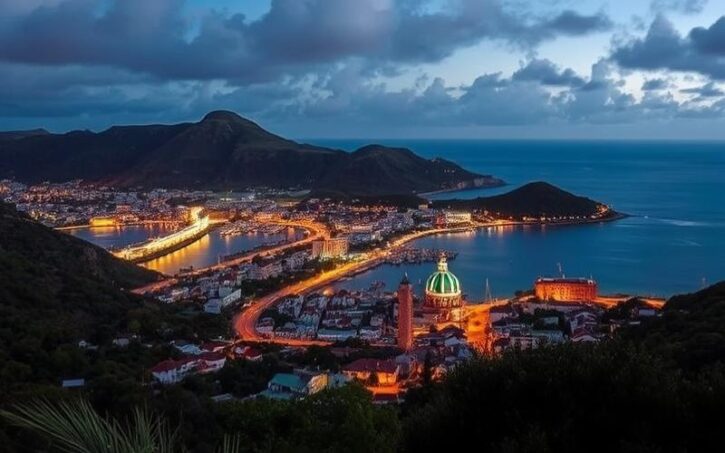
Saint Barthélemy condenses on a mere 21 to 25 km² almost all the ingredients of an economic case study: a tiny island, ultra-luxury tourism, a rare real estate supply, and prices that have been soaring for over a decade. In this territory of some 12,000 inhabitants, tourism is not just one economic engine among others; it profoundly shapes the real estate market, social structure, and even the political choices of the community.
Good to know:
Luxury tourism is a key driver of Saint Barthélemy’s real estate market. The influx of wealthy vacationers leads to a constant increase in price per square meter, a growing conversion of villas into vacation rentals, and increased pressure on housing for permanent residents. These two markets are closely linked.
A Microcosm Island Shaped by Luxury Tourism
Saint Barthélemy, a French overseas collectivity in the Caribbean, boasts barely 24 km² of rugged terrain, beaches that have become legendary – Saint-Jean, Saline, Flamands, Gouverneur, Colombier, Shell Beach – and a harbor, Gustavia, where luxury boutiques and mega-yachts mingle. The permanent population slightly exceeds 10,000 to 12,000 inhabitants, but the island welcomes, in some years, nearly 300,000 visitors.
300000
In 2022, approximately 300,000 tourists visited Saint Barthélemy, an ultra-premium destination frequented primarily by an American clientele.
This very high-end tourism directly fuels the local economy. Based on an estimated GDP of around one billion euros in 2024, tourism contributes about 68% of GDP, while construction accounts for around 24%. The rest is shared between real estate, financial services, and duty-free trade. In other words, hotels, villas, seasonal rentals, renovation projects, and real estate transactions form the beating heart of the economy.
This massive dependence on tourism creates a powerful cycle: the more the island attracts wealthy visitors, the more demand for high-end real estate grows; the higher the prices rise, the more Saint Barthélemy reinforces its image as an exclusive stronghold for the ultra-wealthy, fueling the high-end tourist flow once again.
When Tourism Pushes Prices to New Heights
One of the most visible effects of tourism on real estate is the explosion of land values and sale prices for villas and apartments. The dynamic is impressive.
A Decade of Uninterrupted Growth
Over the last ten years, the price per square meter in Saint Barthélemy is estimated to have increased by approximately 70%. The rise is not only explained by inflation but by growing international demand for second homes or investment properties in a secure, rare, and highly publicized setting.
20
Average percentage increase in real estate values following post-Hurricane Irma reconstructions and the Covid-19 crisis.
Result: the cumulative increase since 2017 is spectacular. The most telling example is the evolution of the average villa price.
| Key Indicator | 2017 | Recent Years |
|---|---|---|
| Average villa sale price | ~€3M | ~€6M |
| Change over the period | – | x2 |
| Increase in price per m² over 10 years | – | ≈ +70% |
This dynamic is part of a longer-term trend: the Saint Barthélemy market has not experienced a true correction, not during the 2008 financial crisis, nor during the pandemic. It is often described as a “micro-climate” real estate market, largely disconnected from global turbulence thanks to a solvent clientele, limited land, and an extremely differentiated tourism product.
A Price Scale That Defies Norms
Luxury tourism has created demand for real estate assets that clearly fall into the ultra-prime category. A few examples illustrate the level reached:
| Property Type / Segment | Indicative Price Range |
|---|---|
| Studio or small apartment | starting from ~€1M |
| 2-room apartment, 56 m² (Gustavia, off-plan) | €3.15M |
| “Entry-level” villa | approx. €2.8M to €5M |
| Family villa 3–4 bedrooms | “single-digit high” millions of euros |
| Luxury villas in prime areas (St-Jean, Flamands, Pointe Milou, etc.) | > €7M very frequently |
| Large ultra-contemporary villas (6 bedrooms) | up to €60M |
| Ultra-prime estate (e.g., Rockefeller estate in Colombier) | €120M to €135M according to sources |
In some emblematic neighborhoods, the levels reached rival the world’s most expensive destinations. On Rue de la République, in the heart of Gustavia, average prices hover around €42,300/m², with peaks around €58,700/m² for historic villas. Comparisons are made with Monaco, but it’s noted that Saint Barthélemy today reaches levels observed on the Rock several years ago.
Example:
The surge in real estate prices in Saint Barthélemy is directly linked to its visitor profile. Affluent tourists, arriving by boat or via Gustaf III airport (often after a stopover in Saint Martin), discover the island as a vacation destination. Seduced by the scarcity of land, security, preserved and controlled environment, and prospects for seasonal rental income, some later return as potential buyers, fueling demand and price increases.
Seasonal Rentals: The Silent Engine of Valuation
In Saint Barthélemy, the influence of tourism on real estate operates as much through the sales market as through the seasonal rental market. On this point, the island has shifted into an economy almost entirely geared toward high-end short stays.
An Island of Villas Rather Than Hotels
Unlike other Caribbean destinations where large resorts concentrate tourist beds, Saint Barthélemy has bet on a model of villas and small boutique hotels. There are barely twenty to thirty hotels for about 500 rooms, over half of which are in the five-star category. Alongside this, the villa supply is exploding.
The most recurrent figures mention around 800 to 1,000 villas available for rent, with a clearly identified segment of 650 luxury villas managed by about 70 specialized agencies, and approximately 300 more modest villas managed directly or through platforms like Airbnb. Other, more recent sources, focusing solely on Airbnb-type tourist furnished rentals, list 562 active listings, of which 94.5% are entire homes.
The profile of this rental stock is typical of a market driven by demanding tourism:
| Characteristics of Tourist Furnished Rentals (Airbnb & similar) | Key Data |
|---|---|
| Active listings (2025) | 562 |
| Share of entire homes | 94.5% |
| Share of houses in the supply | 75.1% |
| Share of 1-bedroom listings | 32% of listings |
| 1–2 bedrooms total | 60.5% |
| Average hosting capacity | 4.3 people |
| Most frequent capacity | 2 people (29.7% of listings) |
Again, the tourist DNA – affluent couples, families, or small groups with high purchasing power – is reflected in the size of properties and their positioning. The villa with a pool, sea view, housekeeping, and concierge service becomes the standard.
Stratospheric Weekly Rents
This villa-tourism model has a direct impact on real estate valuation, as potential rental income serves as a benchmark for sellers, agents, and investors. In Saint Barthélemy, seasonal rentals are almost exclusively weekly, at rates among the highest in the Caribbean.
Tip:
For luxury villas, the usual rate scales are as follows:
| Villa Segment | Weekly Rent in High Season |
|---|---|
| “Classic” luxury villas | $10,000 to $50,000 USD / week |
| Very exclusive villas | Up to $350,000 USD / week |
| New Year’s Eve week, ultra-prime villas | $100,000 USD / week and more |
These levels allow an owner to cover a very large part of annual costs (maintenance, staff salaries, insurance, indirect taxes) with about twenty weeks rented per year. Local studies mention an average of about 20 weeks of rental per year for a villa, with gross yields often estimated between 2% and 4%, which is high for such an expensive market.
Aggregated data from the tourist furnished rental market confirm the profitability of the high season:
| Period | Average Monthly Revenue | Average Occupancy Rate | Average Daily Rate (ADR) |
|---|---|---|---|
| High Season (January–March) | ≈ $15,573 USD | 56.2% | $1,129 USD |
| Low Season (June, September, October) | ≈ $6,246 USD | 31.1% | $978 USD |
| Strongest Month (peak) | $16,215 USD | 59.9% | $1,344 USD |
| Weakest Month | $5,727 USD | 27.1% | $964 USD |
For the “top of the class” – the top 10% of listings – the numbers climb much higher: over $23,000 USD in monthly revenue, 80% occupancy, and a daily rate above $2,250 USD. At this level, the investment logic imposes itself: buying an expensive property, but a Darwinian one in terms of rental, in a destination where high-end demand shows no sign of weakening.
Regulations Favoring Seasonal Rentals
Another major difference from some large European cities: local regulations do not hinder seasonal rentals, on the contrary, they oversee them without restraining them. There is no cap like “120 days per year” as in Paris. The main obligation is the online declaration of tourist furnished rentals via the “Déclaloc” platform and obtaining a registration number.
91
Approximately 91% of furnished rental listings are believed to be licensed in a highly regulated environment, securing rental income.
Agencies typically handle the collection of the tourist tax – in this case 5% on hotel and villa nightly stays – as well as ancillary services (daily housekeeping, maintenance, 24/7 concierge). In exchange, they charge between 20% and 25% of the rental price, which is high but consistent with the market positioning.
For an investor, this environment is a powerful incentive: not only is resale potentially very lucrative, but holding the property is supported by a relatively predictable stream of rental income, directly backed by tourist vigor.
From Beach to Plot: How Tourism Makes Land Scarce
If luxury tourism supports prices through demand, the island’s geography and urban planning choices further reinforce this effect through a structurally limited supply.
A Tiny and Strictly Regulated Territory
With an area between 21 and 25 km² depending on the source and very hilly terrain, Saint Barthélemy simply does not have much developable land. A large part of the island – about 66% according to some documents – is designated as non-buildable, notably natural areas and the steepest slopes. On the remaining plots, occupancy coefficients are low: in some areas, the built-up area cannot exceed 15% of the land.
Attention:
Local authorities apply a very protective urban planning policy, making building permits difficult to obtain, especially for large projects. A $170M hotel project was suspended for environmental reasons. Furthermore, a temporary freeze on permits for luxury villas is in place to preserve the quality of life and prioritize housing for residents.
The result is a market where transactions mainly involve existing villas rather than empty land. The value of raw land has also skyrocketed: it is estimated that an acre (just over 4,000 m²) traded for about $125,000 USD in the early 1980s, compared to $1.3 million today, more than ten times higher.
Concentration of Demand on a Few Key Areas
This land scarcity is accentuated by the fact that tourist demand – and thus real estate demand – concentrates on a few very precise sectors, identified as the island’s “prime locations”: Gustavia, Saint-Jean, Flamands, Colombier, Pointe Milou, Grand Cul-de-Sac, Lorient, Gouverneur, Marigot, Toiny, or Lurin.
Good to know:

Cyril Jarnias is an independent expert in international wealth management with over 20 years of experience. As an expatriate himself, he is dedicated to helping individuals and business leaders build, protect, and pass on their wealth with complete peace of mind.
On his website, cyriljarnias.com, he shares his expertise on international real estate, offshore company formation, and expatriation.
Thanks to his expertise, he offers sound advice to optimize his clients' wealth management. Cyril Jarnias is also recognized for his appearances in many prestigious media outlets such as BFM Business, les Français de l’étranger, Le Figaro, Les Echos, and Mieux vivre votre argent, where he shares his knowledge and know-how in wealth management.





