
 Published on and written by Cyril Jarnias
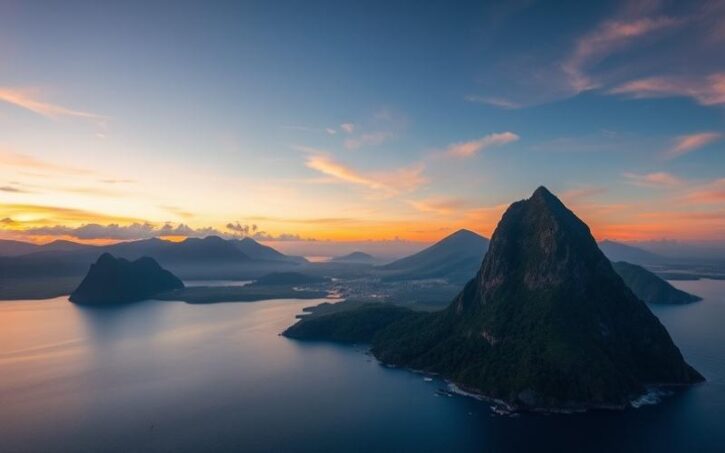
Bali, nicknamed the Island of the Gods, is a fascinating island located in the heart of the Indonesian archipelago. Its strategic position and varied landscapes make it a sought-after destination for travelers from around the world. Let’s dive into the unique geography of this paradise island.
Geographical Location
Bali is an Indonesian island located between Java to the west and Lombok to the east. It is part of the Lesser Sunda Islands archipelago and lies in the Indian Ocean, approximately 8 degrees south of the equator. The island stretches about 140 km from east to west and 80 km from north to south, with a total area of 5,780 km².
Bali occupies a central position within Indonesia, the world’s largest archipelago composed of over 17,000 islands. This privileged location makes it a natural crossroads between Asia and Australia, as well as a gateway between the Indian and Pacific Oceans.
Main Regions and Landscapes
Despite its relatively modest size, Bali offers a great diversity of landscapes and can be divided into several distinct regions:
The South
- Famous white sand beaches like Kuta, Seminyak, and Nusa Dua
- The Bukit Peninsula with its spectacular cliffs
- The famous Uluwatu Temple perched on a cliff
The Center
- The town of Ubud, the artistic and spiritual center of the island
- Magnificent terraced rice fields like those in Tegalalang
- Numerous traditional Hindu temples
The East
- The majestic Mount Agung volcano, the island’s highest point at 3,142 meters
- The black sand beaches of Amed, a diver’s paradise
- The Tirta Gangga water palace
The North
- The tranquil beaches of Lovina
- The Banjar hot springs
- The Bali Barat National Park
The West
- Mid-mountain landscapes
- The famous Tanah Lot Temple on its sea rock
- The Jatiluwih terraced rice fields, a UNESCO World Heritage Site
Main Cities
Denpasar is the capital and largest city of Bali, with about 725,000 inhabitants. Located in the south of the island, it is the administrative and economic center of the province.
- Kuta: A very lively beach resort, popular with young travelers
- Ubud: The island’s cultural and artistic center, renowned for its galleries and traditional performances
- Singaraja: The former colonial capital located on the north coast
- Gianyar: Known for its handicrafts and archaeological sites
- Tabanan: Surrounded by magnificent terraced rice fields
Neighboring Countries and Islands
- Malaysia to the north
- Singapore to the northwest
- The Philippines to the northeast
- Papua New Guinea to the east
- East Timor to the southeast
- Australia to the south
- Java to the west, separated by the Bali Strait
- Lombok to the east, separated by the Lombok Strait
- The small islands of Nusa Penida, Nusa Lembongan, and Nusa Ceningan to the southeast
Good to know:
Bali’s unique geographical position, at the heart of Indonesia and at the crossroads of Asian and Australian influences, greatly contributes to its exceptional cultural and natural richness.
Climate and Terrain
- The dry season from May to October
- The rainy season from November to April
Average temperatures range between 26°C and 28°C throughout the year, with little seasonal variation.
The island’s terrain is dominated by a central mountain range of volcanic origin, which stretches from east to west. This range includes several peaks exceeding 2,000 meters in altitude, including Mount Agung, the sacred volcano and highest point on the island.
This varied topography strongly influences the local climate, creating distinct microclimates between the coastal regions and the cooler mountainous areas.
Good to know:
The geographical diversity of Bali, combining mountains, fertile plains, and varied coastlines, allows visitors to experience very different adventures within the same relatively small island.
Disclaimer: The information provided on this website is for informational purposes only and does not constitute financial, legal, or professional advice. We encourage you to consult qualified experts before making any investment, real estate, or expatriation decisions. Although we strive to maintain up-to-date and accurate information, we do not guarantee the completeness, accuracy, or timeliness of the proposed content. As investment and expatriation involve risks, we disclaim any liability for potential losses or damages arising from the use of this site. Your use of this site confirms your acceptance of these terms and your understanding of the associated risks.

Cyril Jarnias is an independent expert in international wealth management with over 20 years of experience. As an expatriate himself, he is dedicated to helping individuals and business leaders build, protect, and pass on their wealth with complete peace of mind.
On his website, cyriljarnias.com, he shares his expertise on international real estate, offshore company formation, and expatriation.
Thanks to his expertise, he offers sound advice to optimize his clients' wealth management. Cyril Jarnias is also recognized for his appearances in many prestigious media outlets such as BFM Business, les Français de l’étranger, Le Figaro, Les Echos, and Mieux vivre votre argent, where he shares his knowledge and know-how in wealth management.





