
 Published on and written by Cyril Jarnias
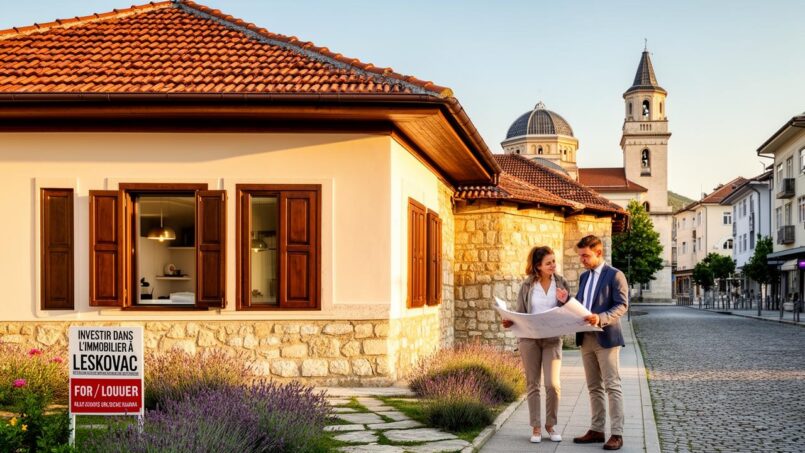
Located in southern Serbia, connected to the Pan-European Corridor X and driven by a very proactive local policy, the city of Leskovac is starting to move beyond the radar of industrialists alone to also interest real estate investors. Low purchase prices, decent rental yields, strong infrastructure momentum, status as the “Serbian Capital of Culture” in 2026, and rapidly developing industrial zones: on paper, the cocktail is enticing.
The Leskovac real estate market is more fragile and the region is less developed than Belgrade or Novi Sad. The Serbian legal framework, which is highly codified, requires particular rigor. Detailed and quantified analysis is essential before investing there.
Leskovac: An Ultra-Competitively Priced Small Industrial City
With 144,206 inhabitants in its urban area, Leskovac is one of the main centers of southern Serbia. The city has historically been marked by light industry, particularly textiles. It was even long nicknamed the “Serbian Manchester,” a legacy now showcased through the Textile Museum, dedicated to the beginnings of this industry in Serbia.
A Geostrategic and Logistical Positioning
Leskovac is not an isolated city. It is situated on the Pan-European Corridor X (E75 highway), connected to the international rail network and about 45 km from Niš Airport. This position makes it an interesting base for logistics, export-oriented industry, and agri-food related activities. The local authorities highlight:
Area in square meters of the city’s new ecological industrial zone, located 4 km from the center and close to the highway.
This is complemented by a rich base of natural resources (water, land, forests, mineral deposits like the “Leskovac Lece” lead and zinc mine) and a solid energy network (220/110 kV, 110/10 kV, 35/10 kV transformer stations).
A “Business Friendly” Certified City
For a real estate investor, the quality of local governance and the attitude towards investors play a key role. On this front, Leskovac shows positive signals. The city has obtained the BFC SEE (Business Friendly Certification in South East Europe) certification four times, with a compliance rate exceeding 96% of the criteria, the best score in the entire region, tied with the municipality of Gradiška in Bosnia and Herzegovina.
This label certifies notably: quality certification, compliance with standards, and environmental commitment.
The key elements that structure the environment conducive to development and investment in a territory.
Existence of a formalized local development strategy, providing a clear framework and a shared vision for the territory’s future.
Presence of an operational economic development service to support project leaders and businesses.
Facilitation of an Economic Council bringing together public and private actors to foster dialogue and co-construction.
Implementation of building permit procedures deemed efficient, streamlining administrative processes.
Availability of infrastructure adapted to welcoming investments, meeting business needs.
Concretely, for the investor, this translates into a more responsive local administration, more structured support, and some visibility on development priorities.
Operating Costs and Economic Incentives
Leskovac has built part of its attractiveness on its highly competitive costs, both for industrialists and residents. The public utility tariffs illustrate this positioning:
| Service | Indicative Rate in Leskovac |
|---|---|
| Electricity | €0.06/kWh |
| Gas | €0.42/m³ |
| Water | €0.94/m³ |
| Sewage | €0.23/m³ |
These levels, combined with a moderate cost of living, indirectly support the residential market: households can more easily absorb housing-related expenses.
The incentives for business establishment are also significant:
| Type of Incentive | Amount / Condition |
|---|---|
| Reduction in industrial land price | Up to 100% for productive activities |
| Job creation aid (20–50 employees) | €2,500 per employee |
| Job creation aid (50–200 employees) | €5,000 per employee |
| Job creation aid (>200 employees) | €7,000 per employee |
| Corporate tax (Serbia, national) | 15% |
| Standard / reduced VAT | 20% / 10% |
| Personal income tax | 10% |
| Property tax (maximum legal rate) | 0.4% of value |
These mechanisms encourage the arrival of new employers and, in the long run, support demand for residential housing, particularly rentals.
A Still Affordable Real Estate Market, with Decent Yields
Compared to Serbia’s major cities, Leskovac remains very affordable. Available statistics provide a clear idea of price and rent levels.
Purchase Price Levels
Local indicators show average prices significantly lower than the national average for large cities:
| Apartment Location | Average Price per m² (RSD) | Estimated Range (RSD/m²) |
|---|---|---|
| City Center | 139,393 | 141,000 – 235,000 |
| Outskirts (outside center) | 116,161 | 115,600 – 196,600 |
Converted to euros (based on the indicative rate of approximately 117 RSD for €1 mentioned in official documents), these levels remain very low. Other sources mention per-square-meter prices around $800 to $1,400, confirming a “low cost” positioning on a European and even regional scale.
Property listings in Leskovac illustrate the range of supply:
| Property Type | Area (m²) | Indicative Price (USD) |
|---|---|---|
| 2-room apartment | 50–62 | $54,000 – $67,000 |
| 3-room apartment | 75–83 | $87,000 – $107,000 |
| Small studio | 24 | $34,290 |
| Large apartment (3 bedrooms) | 89–91 | $127,000 – $130,000 |
| House 75–120 m² | 75–120 | $55,000 – $96,000 |
| Large house 200–400 m² | 200–400 | $101,000 – $203,000 |
This is a far cry from Belgrade prices, where a 44 m² apartment can exceed €120,000, and where the per square meter price easily reaches €3,000 to €4,000 in central neighborhoods.
Rents and Rental Yields
Rents remain in line with local purchasing power, which limits speculative excesses but allows for considering an interesting yield.
| Housing Type | Average Monthly Rent (RSD) |
|---|---|
| 1 bedroom – center | 35,000 |
| 1 bedroom – outside center | 30,000 |
| 3 bedrooms – center | 48,000 |
| 3 bedrooms – outside center | 42,000 |
Comparing these rents to purchase prices yields gross yields close to the Serbian average:
| Indicator | Value in Leskovac |
|---|---|
| Price/Rent (center) | 20.63 |
| Price/Rent (outside center) | 19.90 |
| Gross rental yield (center) | 4.85 – 4.89 % |
| Gross rental yield (outside center) | 5.03 – 5.07 % |
| Price/Income ratio | ~19.4 – 19.5 |
On a Serbian scale, the average gross profitability is estimated around 5.3% for residential, with a typical range of 4.3 to 6.8%. Leskovac therefore sits slightly below the “very good deal” bar (6% and above), but in a perfectly acceptable zone for a cautious investor, given the low entry cost.
Incomes, Cost of Living, and Tenant Solvency
Average net salaries in Leskovac revolve around 32,700 to 33,025 RSD per month, with some estimates citing 45,211 RSD (approximately $452) depending on the exchange rate used. With a rent of 30,000 to 35,000 RSD for a 1-bedroom apartment, the burden ratio easily exceeds 50% for a household with only one average income.
For an investor, this implies two main considerations: on one hand, the precise assessment of the risk associated with the asset, and on the other hand, determining the portfolio diversification strategy to mitigate this risk.
1. the solvent local clientele for “standard” housing is more composed of dual-income households, civil servants, or well-paid employees of foreign companies; 2. more moderately priced rental products (smaller units outside the center, older buildings) may find tenants more easily, especially if associated costs remain limited.
The cost of living, however, remains attractive.
| Expense Item | Indicative Cost (USD / RSD) |
|---|---|
| Simple meal at a restaurant | $5.13 |
| Full meal for 2 (mid-range restaurant) | $20.53 |
| Utilities (85 m², electricity, heating…) | ~$110.6 per month |
| High-speed Internet | ~$23.1 per month |
| Private preschool, monthly | $77 |
| One-way city bus ticket | $1.03 |
These levels support the city’s attractiveness for digital nomads or remote workers looking for a cheap base, even though Leskovac, unlike Belgrade or Novi Sad, is not yet a major hub for remote workers.
A Transforming Local Economy: From Textile Tradition to Batteries and Data
To grasp the potential of a real estate investment, one must look beyond the simple housing supply. What determines medium-term demand are jobs, infrastructure, cultural dynamism, and quality of life.
A Diversified Industrial Fabric
Leskovac stands out for its varied industrial base. Beyond textiles, which remain a strong marker, several key sectors are established here:
– agri-food (processing of fruits, vegetables, meat) with 189 identified companies and entrepreneurs;
– wood and chemicals;
– automotive, through groups like Yura, Delphi/Aptiv, Autostop;
– construction (Terastil, IGM Mladost, etc.).
The largest active investors in the city include Yura, Delphi/Aptiv Contract Services, Fush, Falke, RIM Group. New arrivals continue to occur, notably from Turkey, China, and the United States.
The GridFlex project, with an investment of 17 million euros, is installing a 125 MWh battery storage facility near Leskovac. It aims to stabilize the grid, integrate renewable energy, create local jobs, and generate tax revenue.
Industrial Zones and “Green Zone”
Leskovac has structured its territory into several industrial zones:
| Industrial Zone | Area (ha) | Occupancy Rate | Ownership Type |
|---|---|---|---|
| North Zone | 59.6 | 70 % | Mixed public/private |
| East Zone | 247.1 | 60 % | Mixed |
| South Zone | 110.5 | 25 % | Mostly private |
| Green Zone (new) | 97.15 (approx.) | Beginning to fill | 100% city-owned |
The “Green Zone Leskovac” is the subject of specific infrastructure investments: 1,240 m of main lit roads, 1,200 m of sewer lines, 3,270 m of water supply lines. The project has a value of €173,114, of which €145,416 is program funds and €27,698 is co-financing.
Simultaneously, another green zone “New 2” extends over more than 500 hectares. It has water, sewer, asphalted roads, with the scheduled installation of 110/10 kV and 10/0.4 kV electrical transformer stations at the plot level.
Prices there remain very low:
| Type of Land | Indicative Price |
|---|---|
| Industrial land (New 2) | €20–25/m² |
| Buildable land (excluding network costs) | €8–10/m² |
| Municipal infrastructure | €34.33/m² |
For a real estate investor focused on activities (logistics, production, warehouses), these entry costs are almost impossible to find in Western Europe.
A Supported Entrepreneurial Environment
Leskovac is part of broader regional development programs. For example, there is a “Green Wave – Greening Small Businesses” project to strengthen the resilience of 150 SMEs in the agri-food, wood, metal, textile, leather, footwear, and chemical sectors. A startup accelerator program is also planned, with a budget of approximately €30,000, to support innovative young companies in Leskovac and the neighboring town of Vladičin Han.
Multiple microprojects illustrate this dynamism, often with a corporate social responsibility (CSR) dimension.
CSR-focused Microprojects
– Lena Fruits, which is investing in a dryer for organic fruit and creating jobs;
– Start agrar, an artisanal bakery modernizing its oven and supporting schools;
– carpentry, metallurgy, or IT companies (TangledHub) that are expanding their capacity and proposing actions for hospitals, schools, or vulnerable groups.
For the residential investor, these examples reflect a vibrant economic ecosystem, beyond just a few large employers.
Focus on Culture and Tourism: A Lever for Real Estate Value Appreciation
Leskovac is not just a city of factories. It is also betting on nature tourism and heritage to diversify its image and attract new visitor flows.
Serbian Capital of Culture and Major Urban Projects
Leskovac has obtained the status of “Serbian Capital of Culture” for 2026. The program includes over 300 cultural events and, most importantly, a significant component of investments in buildings:
– rehabilitation and transformation of the House of the Army (Dom vojske) into a multifunctional cultural hall / concert hall;
– adaptation of the National Museum building into an exhibition and conference space;
– construction of a new music school;
– creation of a monument to King Milan Obrenović.
A budget of 400 million dinars (approximately €3.4M at a rate of €1 for 117 dinars) is planned, financed with 300 million from the state and 100 million from the city. For the House of the Army, a loan of about €2.5M from the Council of Europe Development Bank will complete the investment, with the city injecting an additional 10 million dinars.
These projects are not anecdotal for real estate: creating quality cultural venues in the center contributes to the redevelopment of entire sectors, boosts commerce, increases residential attractiveness, and, in the long run, pushes rents and resale values upward.
Tourism Development and Accommodations
On the tourism front, Leskovac capitalizes on several natural and heritage assets:
– Mount Kukavica and the Vučjanka River canyon, offering hiking and ecotourism potential;
– the site of Skobaljić Grad, a medieval fortress whose detailed development plan includes pedestrian trails, viewpoints, and tourism installations;
– the historic Vučje hydroelectric plant, the Teokarević house, and the Textile Museum, integrated into the canyon’s enhancement.
That’s the number of tourist accommodation beds planned for Skobaljić Grad within five years, compared to 130 currently.
In parallel, a project for a regional GIS portal for Leskovac and the neighboring municipality of Bojnik aims to identify and promote all cultural and natural sites in order to structure the tourist offer and facilitate promotion.
For an investor, these developments open the door to targeted projects:
– apartments or houses convertible into short-term accommodations near the center or tourist areas;
– small hotel units or guesthouses on the outskirts or in villages near natural sites.
All with an eye towards seasonal or medium-term rentals, complementing the classic rental market.
Legal Framework: What Foreigners Buying in Leskovac Must Know
Serbian real estate law is highly regulated, technical, and the rules for foreigners are specific. A successful investment in Leskovac involves understanding these main principles before signing anything.
Principle of Reciprocity and Types of Accessible Properties
The central principle is reciprocity: a foreigner can only directly purchase a property in Serbia if a Serbian citizen theoretically enjoys similar rights in that foreigner’s country of origin. Serbia has confirmed reciprocity with a broad bloc of Western countries (United States, Canada, United Kingdom, Australia, majority of the EU, Japan, Switzerland, Norway, United Arab Emirates…).
For these nationalities, it is generally possible to acquire:
– apartments;
– houses;
– commercial premises (offices, shops, warehouses).
However, the law prohibits a foreign individual from directly purchasing:
– agricultural land;
– undeveloped land (vacant land);
– forests.
Only exception: the land directly adjoining a house or building (courtyard, garden) can be included in the transaction.
Starting in 2027, a specific mechanism could allow EU citizens to purchase a maximum of 2 hectares of agricultural land under strict conditions.
To legally circumvent the prohibition on purchasing agricultural land or undeveloped land, a commonly used solution is to create a Serbian limited liability company (DOO). Even if 100% owned by non-residents, this structure is considered a local entity and can acquire such properties, subject to zonal restrictions (military zones, a 10-km border strip for agricultural land, national parks, protected areas, etc.).
Transaction Process in Serbia
The classic real estate purchase procedure in Serbia, Leskovac included, follows several steps:
1. property search; 2. legal due diligence on ownership: title, cadastral status, absence of tax debts, mortgages, easements, compliance of building and occupancy permits; 3. potential signing of a preliminary contract, often accompanied by a deposit of 10 to 20% of the price; 4. signing of the final sales deed before a Serbian notary (javni beležnik), who authenticates it; 5. payment through the Serbian banking system, in compliance with anti-money laundering regulations; 6. final registration with the cadastre: legal ownership is only acquired at this point.
The use of a power of attorney is possible if the buyer cannot be physically present. It is imperative that the document is precisely drafted and legally certified to be valid.
Acquisition Costs and Taxation
In addition to the property price, the buyer must anticipate several cost items:
| Type of Cost | Indicative Level |
|---|---|
| Agency commission (buyer) | 2% of price (often the same for seller) |
| Notary fees | Approx. 0.1 to 0.5% of price, sometimes more |
| Lawyer fees | 1 to 3% of price depending on complexity |
| Transfer tax (resale of existing property) | 2.5 to 3% of price or market value |
| VAT (new property, first sale) | 10% for residential, 20% for commercial/garages |
| Cadastral registration fees | Flat fee around €50 |
In total, the acquisition costs for the buyer are around 5.6 to 8% of the property value, or even more including certain fees and VAT on new builds. Over a complete purchase-sale cycle, the round-trip costs can reach 7.6 to 10%.
Regarding current taxation:
– the annual property tax is capped at 0.4% of market value, with progressive brackets based on value;
– rental income is taxed at 20%, after a standard 25% deduction for expenses, resulting in an effective levy of about 15% of gross rent;
– capital gains on sale are taxed at 15%, but a full exemption is granted if the property is held for more than 10 years; primary residences also benefit from favorable regimes;
– inheritance and gifts are very lightly taxed, or even exempt for first-line heirs (spouses, children, parents).
That’s the annual net rental yield for a non-resident renting out an apartment in Leskovac, after taxation and ongoing expenses.
Specific Risks of the Serbian Market
Serbia still bears the traces of its post-socialist transition: usage rights not converted into full ownership, buildings constructed without proper permits, nationalizations and partial restitutions, complex inheritances with poorly identified heirs. Some properties or extensions (enclosed balconies, additional floors, annexes) are not correctly registered in the cadastre.
The main pitfalls to avoid:
– buying a property where a part is not legally registered, which can block a resale or lead to demolition orders for extensions;
– failing to verify mortgages, seizures, court decisions, or tax debts attached to the property;
– relying on unlicensed or unscrupulous intermediaries who minimize legal issues and encourage cash payments “outside the system.”
The central recommendation is therefore clear: to invest in Leskovac as a foreigner, using a local lawyer specialized in real estate and a reputable notary is not an option, it’s a necessity.
Urban Policies, Quality of Services, and Quality of Life
A medium- or long-term real estate investment cannot ignore the trajectory of urban planning and the quality of municipal services.
Waste Management, Networks, and Public Spaces
Leskovac is participating in an integrated project to improve waste management “PRO WASTE INNOVATIVE SOLUTIONS”, with several local partners (public urban planning and construction company, Academy of Professional Studies Southern Serbia, NGO Connector). The program includes:
– installation of 22 underground containers;
– acquisition of a dedicated eco-friendly vehicle;
– integration of sensors and a GIS to optimize collection;
– purchase of a portable XRF analyzer to characterize waste;
– an awareness campaign with a “zero waste” app and training for over 3,600 pupils and agents.
The goal is to improve urban hygiene and sustainability, all factors that, in the long run, influence the residential appeal of a neighborhood.
For 2026, local authorities also announce major work on:
– rehabilitation of drinking water networks;
– improvement of roads;
– development of public and green spaces;
– renovation of the children’s clinic.
These investments help reduce the risk of depreciation in certain neighborhoods due to lack of maintenance or obsolete infrastructure.
Residential Development: The Example of “Sajam Residence”
An emblematic project of the new housing supply is the “Sajam Residence” residential complex, under construction near the modern “Sajam Shopping Center”. Led by “Leskovački sajam doo”, a major distributor in southern Serbia, the complex includes:
– two levels of underground parking (143 spaces);
– a commercial ground floor;
– six residential floors with 146 apartments;
– areas ranging from 45 to 141 m²;
– quality materials and insulation (20 cm concrete blocks, 15 cm insulation, ventilated facades with fiber-cement panels, etc.).
The location is very attractive for urban families, being in immediate proximity to a municipal park, the National Theater, and several schools and kindergartens. For an investor, this new-build project can offer better liquidity upon resale and controlled maintenance costs, although the price per m² is generally higher than for older properties.
Green Spaces, Leisure, and Education
Leskovac is also investing in facilities for children and early childhood. New kindergartens are being financed, notably a 780 m² facility for the “Vukica Mitrović” preschool, adding 120 places, with an investment exceeding 102 million dinars. Another project in Ćićevac, signed under the same framework, demonstrates a national dynamic of strengthening the preschool network.
The development of sports infrastructure (new stadium), renovation of hospitals and schools, as well as the enhancement of cultural facilities, contribute to quality of life. In a medium-sized city like Leskovac, these parameters have a direct impact on the attractiveness of neighborhoods for young families, and thus on property values.
Should You Invest in Leskovac? Risk Profile and Strategy
At the end of this overview, how should one position Leskovac in an international or even regional real estate investment strategy?
The Advantages for the Investor
The main positive points are clear:
Leskovac offers very low purchase prices, gross yields around 4.8 to 5% with reasonable taxation, and a protective legal framework. Its economy is diversified (textiles, agri-food, automotive, etc.) and supported by incentives. Major infrastructure operations (industrial zones, distribution centers, retail parks) stimulate employment and housing demand. The city also places strong emphasis on culture, tourism, and the environment, benefiting from the Capital of Culture label. Its local administration is certified ‘business friendly’ at the highest regional level.
For an investor focused on fundamentals (jobs, infrastructure, governance), these are encouraging signals.
The Limitations and Risks to Measure Carefully
Leskovac remains, however, a city in southern Serbia, with the following characteristics:
– a historically less developed region, with low average incomes and a structurally higher unemployment rate;
– a more fragile local real estate demand than in major metropolitan areas: the risk of rental vacancy is higher, especially for properties poorly positioned in price or location;
– a still illiquid market: selling quickly at the desired price can prove difficult in case of an economic downturn;
– a technically demanding Serbian legal environment, requiring professional support to avoid mistakes.
In practice, Leskovac is not the ideal destination for an investor primarily seeking maximum security, rapid appreciation, and high liquidity, as can be found in the best neighborhoods of Belgrade.
For What Type of Investor?
Leskovac can, however, make sense for:
Several investor profiles are relevant: those seeking a very low entry ticket on small apartments or older houses to renovate; those accepting a long holding horizon (10 years and more) to combine rental income and capital gains exemption; those already familiar with the Serbian market, wanting to diversify outside the saturated markets of Belgrade or Novi Sad; and finally, entrepreneurs considering mixed projects (housing/commerce, tourism, small industrial units) in low-cost zones like ‘New 2’ or the ‘Green Zone’.
In this case, the challenge is to select carefully:
– location (proximity to the center, main roads, employment zones, or tourist sites);
– property type (small units easy to rent, or even divisible buildings);
– legal quality of the file (clear titles, absence of legal disputes);
– ability to manage remotely (or via a reliable local manager);
In Summary
Leskovac today offers a low-priced real estate market in a medium-sized city in a phase of massive investment in its infrastructure, culture, and productive fabric. Rental yields are decent without being spectacular, but the “risk-return” pairing can appeal to a patient investor, ready to commit for the long term and work with experienced local partners.
For a foreigner, the main challenge is not the availability of low-priced properties, but mastering the Serbian legal process. This involves securing every step: reciprocity verification, due diligence, notarial authentication, cadastral registration, and management of tax obligations.
For those looking for a measured bet on the rise of southern Serbia, investing in real estate in Leskovac can become an interesting piece in a diversified portfolio, provided one accepts its specificities and does not confuse this emerging market with the safe havens represented by the best neighborhoods of Belgrade or Novi Sad in the country.
A wealth management project or a question? Contact us now to discuss with a wealth management expert.
Disclaimer: The information provided on this website is for informational purposes only and does not constitute financial, legal, or professional advice. We encourage you to consult qualified experts before making any investment, real estate, or expatriation decisions. Although we strive to maintain up-to-date and accurate information, we do not guarantee the completeness, accuracy, or timeliness of the proposed content. As investment and expatriation involve risks, we disclaim any liability for potential losses or damages arising from the use of this site. Your use of this site confirms your acceptance of these terms and your understanding of the associated risks.

Cyril Jarnias is an independent expert in international wealth management with over 20 years of experience. As an expatriate himself, he is dedicated to helping individuals and business leaders build, protect, and pass on their wealth with complete peace of mind.
On his website, cyriljarnias.com, he shares his expertise on international real estate, offshore company formation, and expatriation.
Thanks to his expertise, he offers sound advice to optimize his clients' wealth management. Cyril Jarnias is also recognized for his appearances in many prestigious media outlets such as BFM Business, les Français de l’étranger, Le Figaro, Les Echos, and Mieux vivre votre argent, where he shares his knowledge and know-how in wealth management.





