
 Published on and written by Cyril Jarnias
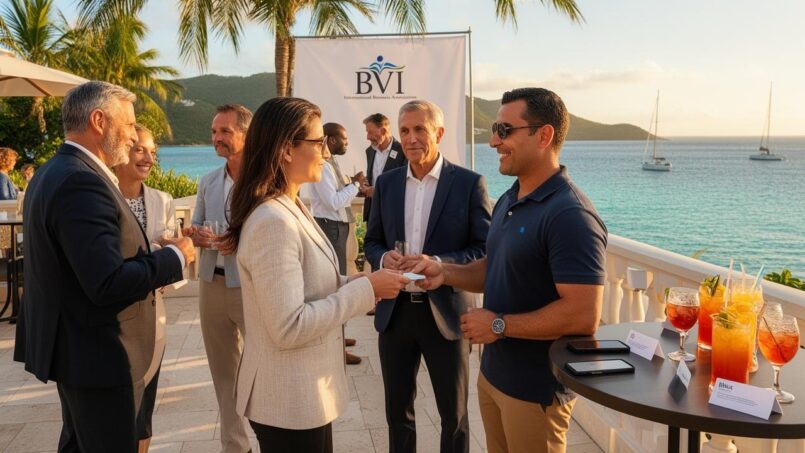
Building a strong network in the British Virgin Islands is far from a minor detail for an expatriate: in this small Caribbean territory with a very open economy, personal relationships often count as much as business cards. Behind the image of a yachting and offshore finance paradise lies a sophisticated, highly regulated business environment where trust is built over time, around faces you see and see again at the same conferences, events, associations, and social venues.
To integrate into the local professional microcosm, it is essential to understand how it works. This includes the financial services, tourism, real estate, tech, and consulting sectors.
A Unique Business Ecosystem: Caribbean, Global… and Highly Relational
The professional culture in the British Virgin Islands blends Caribbean social warmth with international standards of seriousness, especially in finance. The territory is a leading financial center, with a legal system inspired by English common law, a specialized commercial court, and an international arbitration center. Major audit, corporate law, and fiduciary services firms are present, alongside local players in tourism, yachting, trade, real estate, and services.
In a modest-sized economy where players (companies, regulators, professional organizations) constantly interact and circles overlap, reputation builds very quickly. This explains the central place given to relational elements like trust, politeness, formal greetings, and respect for hierarchies, which form the foundation of sophisticated interactions.
For an expatriate, this means that an impeccable CV and a well-filled LinkedIn profile are not enough. You need to learn the local codes, develop your intercultural intelligence, and invest time in relationships, both at the office and outside.
Communication and Negotiation Codes: The Foundation of Any Network
The British Virgin Islands share with many Caribbean cultures a highly relational approach to work: the quality of the connection is valued before the content of the file. The tone is often cordial, conversations begin with personal exchanges, and form matters as much as substance.
In professional interactions, communication combines a certain frankness with a concern for preserving harmony. During a first meeting, one tends to be rather indirect; sensitive topics are addressed progressively as the relationship develops. Titles and last names are used until you are invited to move to first names. Punctuality is expected for business meetings, even if social life allows for a bit more flexibility.
Negotiations should not be rushed. They require a thorough pace, with internal consultations and successive exchanges. Moving too fast is often counterproductive. It is better to present clear, well-argued proposals and then give your counterparts time to respond, sometimes after the formal meeting. The social dimension—a lunch, cocktail, or outing—plays an important role in extending and solidifying the exchanges that have begun.
For an expatriate, mastering these nuances is a decisive advantage in building your network. This means learning to read nonverbal cues, accepting a tempo that is sometimes slower than in other financial hubs, and deliberately investing in the quality of the relationship, not just in the content of the deals.
Leveraging the Power of Local Organizations
In the British Virgin Islands, the density of professional associations and economic promotion bodies offers an exceptional playground for networking. These organizations host conferences, training sessions, sector-specific forums, breakfast debates, and cocktail events that attract public decision-makers, private executives, and experts alike.
The Chamber of Commerce: An Essential Hub
The BVI Chamber of Commerce and Hotel Association has played a central role in economic life for over fifty years. It brings together businesses from all sectors, from small local outfits to international players, and has a dual mission: to be the proactive voice of business and to create the conditions for their collective success.
Its services go far beyond a simple directory. It offers advocacy efforts with the government, online visibility, training programs, networking events, and member-exclusive business offers. For an expatriate entrepreneur or senior executive, joining provides immediate credibility and access to a structured network.
Summary of the main contributions that this type of organization can provide, presented in a clear, visual manner.
Provides a structured framework and proven methodologies to guide projects and processes.
Provides specialized skills and in-depth expertise in targeted areas.
Offers access to material, software, or intellectual resources and dedicated tools.
Facilitates connections and partnerships through an established network of contacts and collaborators.
Provides operational support and personalized guidance for development.
Helps enhance the visibility, credibility, and legitimacy of initiatives or entities.
| Area | Value for the Expatriate |
|---|---|
| Visibility | Listing in the online directory, coverage on the website and social media |
| Networking | Business AfterHours events, expositions, sector-specific conferences |
| Training | Workshops, Lunch and Learn sessions, programs for start-ups and small businesses |
| Influence | Participation in working groups, surveys, and roundtables with authorities |
| Practical Benefits | Discounts on services (insurance, marketing, logistics, etc., through partnerships) |
For a newcomer, this is a doorway to prioritize: membership not only allows you to meet other economic players, but also to quickly understand who does what, the weight of different sectors, and what partnerships are possible.
Sector-Specific Associations: Targeting Your Network
In financial services, several associations structure the professions and represent highly active communities of interest: the accountants’ association, the bar association, the local STEP chapter for trusts and estates, the investment fund association, the compliance officers’ association, the registered agents’ association, the network of restructuring and insolvency specialists, etc.
These organizations are run by recognized leaders (presidents, chairs, officials) and regularly organize conferences, breakfasts, continuing education sessions, and informal gatherings. For an expatriate in these fields, joining your profession’s association and attending events is a powerful network accelerator.
The primary value of events lies not only in the conference content, but especially in the informal interactions (hallway conversations, coffee breaks, afterworks). These moments allow you to meet various key players (regulators, lawyers, auditors, bankers, compliance officers, executives) and are often the opportunity to build the essential trust needed to advance complex cases later on.
BVI Finance and the International Financial Milieu
BVI Finance, for its part, promotes the territory as an international financial center. Its teams organize tours, roadshows, networking receptions, and interventions at specialized congresses (funds, fintech, international taxation, arbitration, etc.). They work hand in hand with authorities (Financial Services Commission, International Tax Authority) and professional associations to project an image of a serious, regulated, innovative hub.
Participating in these events, even just as an attendee, allows an expatriate to: stay informed about market trends, make contacts with professionals, and gain a better understanding of the local culture.
– understand the major regulatory and market trends that will impact your business ;
– be seen in the circles that matter ;
– meet key contacts (regulators, fund promoters, family offices, international legal advisors, etc.).
In a place where over 360,000 companies are registered, where nearly 3,000 funds manage more than $100 billion in assets, these meetings can lead to significant opportunities.
Conferences, Forums, and Events: Where Networks Are Built
Beyond structured associations, the British Virgin Islands host a whole calendar of events that are prime opportunities for active networking. Some are highly specialized, others more cross-sectoral, but all share the common goal of bringing together, for a few hours or days, the territory’s decision-makers and their international partners.
Major Business and Innovation Conferences
Several key events deserve a place on the calendar of any expatriate looking to grow their network.
The BVI Business Outlook Conference, for example, is a day dedicated to analyzing the local economic situation, with a focus on financial services, tourism, real estate, and infrastructure. You’ll encounter CEOs, managing directors, investors, as well as the Premier, the Governor, and senior civil servants. For a newcomer, it’s a condensed set of high-potential contacts: in one day, you can identify the key players in each sector, hear their priorities, and approach them in an informal setting.
Another illustration, much more innovation-focused: the BVI Ideas Fest. This ideas and innovation conference aims to be a crossroads of creativity, bringing together entrepreneurs, artists, finance experts, tourism players, digital and philanthropy actors. Topics span the future of tourism, the transformation of financial services, the emergence of new industries for island territories, creative economies, quality of life, and regenerative philanthropic approaches.
For an expatriate, this type of event has a dual benefit: understanding how the territory sees its future, and identifying potential partners for cross-sector projects (start-ups, cultural projects, environmental initiatives, etc.). It’s also the kind of place where you meet less institutional profiles: creatives, innovators, people carrying unconventional projects.
The range of these events can be visualized in a summary table:
| Event | Participant Profile | Networking Value for Expat |
|---|---|---|
| BVI Business Outlook | Executives, investors, public officials | Direct access to economic and political decision-makers |
| BVI Ideas Fest | Entrepreneurs, creatives, experts, philanthropists | Innovative partnerships, cross-sector projects |
| Buy BVI Trade Expo | Local SMEs, merchants, artisans, service providers | Discover local players, sourcing, practical B2B |
| SHRM VI HR & Business Conf. | HR directors, managers, HR and management consultants | Understand job market, make local HR contacts |
The Buy BVI Trade Expo illustrates another side of the network: that of the local entrepreneurial fabric. This fair brings together businesses from all backgrounds to showcase their products and services. As an expatriate, spending time talking to exhibitors gives you a concrete sense of the diversity of Tortola’s economic landscape, identifies suppliers, logistics partners, marketing providers, and helps you gauge local demand.
Focus on Arbitration and Financial Services
Some sector-specific gatherings are more technical but are goldmines for the professionals involved. BVI Arbitration Week, for example, brings together international arbitration practitioners every two years around a theme highlighting the Caribbean’s role in resolving global disputes.
Number of sectors and dispute resolution mechanisms covered during the event, including construction, oil and gas, renewable energy, fintech, sports, governance, and Dispute Boards.
For an expatriate in law, project finance, infrastructure, or tech, this is a hyper-targeted networking ground: every coffee break can turn into a collaboration opportunity on a concrete file. And the training itself, by bringing motivated professionals together over two days, creates bonds that often go beyond the single session.
More broadly, the Financial Services Week or the “Meet the Regulator” forums organized by the Financial Services Commission allow you to quickly meet the key contacts in regulation, compliance, international taxation, or anti-money laundering. Provided you arrive prepared (questions, business cards, updated LinkedIn profile), an expatriate can forge high-value contacts there.
Leveraging the Local Economic Fabric for Daily Networking
As an expatriate, you sometimes tend to stick to major events or international circles. Yet, in the British Virgin Islands, a large part of the network is built in much more ordinary places: marinas, cafes, restaurants, specialized shops, cultural venues, training centers.
A quick glance at a local business directory reveals the diversity of potential meeting points: bookstores like The Bookshelf, dining spots like The Watering Hole, a Mexican grill, creative studios, a security firm, yacht charter providers, professional service firms, etc. Every business is a potential network node, with a clientele mixing residents, expatriate workers, tourists, sailors, and investors.
Two examples show how an open, curious approach can change the game:
A media company broadcasting local and international content, like 284 Media, helps you understand societal debates and identify opinion leaders (political, economic, associative). A wine and spirits distributor like TICO, very present in hospitality and catering, gives you indirect access to the entire community of restaurateurs, hoteliers, event organizers, and luxury property managers.
For the expatriate, the challenge is to adopt a mindset of integration: frequent these places not as a passing consumer, but as a regular, a neighbor, a potential partner. Chatting with owners, exchanging a few words with other customers, offering your help or skills when an opportunity arises: all of this builds an invisibly valuable social capital.
The LinkedIn Lever: Extending the Local Network into the Global Sphere
Even in a human-scale territory, networking also happens online. LinkedIn has become an essential tool for professionals in the British Virgin Islands, especially in financial services, law, compliance, tech, and consulting. Used well, it allows you to prepare for face-to-face meetings, extend them, and maintain ties with contacts scattered between Tortola, London, Hong Kong, Panama, or New York.
For an expatriate, a few best practices are particularly relevant in this context:
To develop your professional network on LinkedIn, it’s essential to polish your profile with a professional photo, a clear summary, detailed experiences, and well-filled skills to inspire confidence. Always personalize your invitations by recalling the context of the meeting and proposing a concrete angle for discussion. Prioritize short, targeted messages to start a conversation, rather than a direct sales pitch. Publish quality content regularly (analyses, experience reports) to gain visibility. Finally, leave thoughtful comments on posts by influential local players to get on their radar in a non-intrusive way.
A simple but effective strategy is to treat every physical event as a source of new connections. After a conference or workshop, taking a few minutes to send a LinkedIn invitation to each person you met, with a personalized message, turns a one-off conversation into a lasting relationship.
The key points of this practice can be summarized in a table:
| LinkedIn Step | Objective in the BVI Context |
|---|---|
| Optimized profile | Reassure partners and regulators about your professionalism |
| Personalized invitations | Anchor yourself in the memory of people you’ve met in person |
| Regular content | Position yourself as an expert on local or sector-specific topics |
| Targeted interactions | Make yourself visible to institutional and association players |
| Post-event follow-up | Turn an ephemeral contact into a long-term connection |
Volunteering and Civic Engagement: Networking by Doing Something Useful
In Caribbean financial hubs, community engagement is taking on growing importance. Corporate social responsibility is no longer just about signing checks at the end of the year: many companies encourage their teams to participate in concrete projects, whether for environmental protection, education, culture, or post-natural disaster support.
For an expatriate, volunteering is a very effective form of networking. Working alongside colleagues, associations, or locals allows you to build authentic connections, different from those in a traditional professional setting. It’s an opportunity to reveal your values, reliability, and collaborative skills in action.
Examples in the region are numerous: beach cleanups, environmental awareness programs, post-hurricane support, educational projects, activities with nature parks. Even if some initiatives mentioned are from neighboring islands, the same logic applies in the British Virgin Islands: participating in these actions lets you join a network of committed people, often well-connected in business circles.
Moreover, because the Caribbean environment is particularly exposed to climate issues, topics of sustainability, resilience, and coastal ecosystem protection are at the heart of long-term conversations. For an expatriate, being active on these subjects can open unexpected doors, especially with tourism, sustainable finance, and NGO players.
Mentoring: A Discreet Yet Powerful Networking Accelerator
Research on expatriates in multinational companies shows how mentoring can transform an overseas experience. Studies conducted on European cases indicate that the combination of a formal mentor (assigned by the organization) and informal mentors (met on the ground) increases expatriate satisfaction, enriches their network, and facilitates their cultural and professional integration.
In the British Virgin Islands, although not all companies offer a structured mentoring program, it is relevant to actively seek out a local mentor. This could be a senior colleague, a partner, the head of a professional association, or a former regulator. Such mentoring allows you to save years in understanding the cultural codes, unspoken rules, and specific decision-making circuits of the archipelago.
A local mentor provides several things:
– decoding professional practices (what is done, what is not, who really decides on a file);
– insights into social culture (how to approach older people, how to talk about sensitive topics, which holidays or commemorations are important to respect);
– a leveraging effect on your network, through targeted and credible introductions.
Some international mentoring initiatives reverse traditional roles: expatriate leaders mentor local talent. The expat brings sector expertise and a global network, while the mentee shares local connections and knowledge. This reciprocity creates strong, lasting relationships, mutually enriching professional networks.
Mentoring can be thought of along two axes, summarized in the following table:
| Type of Mentoring | Main Value for the Expat in the BVI |
|---|---|
| Local senior mentor | Access to implicit codes, introductions to key circles |
| Expat mentoring locals | Rootedness in the community, fine understanding of field-level issues |
In both cases, the important thing is to formalize the relationship a bit: agree on a meeting rhythm, the topics to cover, and the approximate length of this support. Without bureaucratizing it, a clear framework avoids misunderstandings and encourages genuine commitment from both sides.
Developing Your Intercultural Competence: The Invisible Foundation of Your Network
You don’t build the same kind of network in London, New York, or the British Virgin Islands. The intercultural dimension is omnipresent: the archipelago attracts professionals from all horizons, but remains rooted in a Caribbean culture, with its own values, relationship to time, hierarchy, conflict, and humor.
Developing your intercultural competence means accepting that your own reflexes are not the universal norm. It means learning that you can be very professional while devoting significant time to friendliness; that hierarchy may be more visible, but also plays a protective role; that silence can mean reflection rather than disagreement.
Some concrete attitudes greatly facilitate networking:
For effective exchanges, practice active listening by giving your interlocutor time to express themselves. Avoid local idioms and ambiguous humor during initial contacts. Ask precise questions about procedures, timelines, and decision-makers rather than making assumptions. If communicating in English, use international language, without jargon or overly specific cultural references. Finally, take into account local holidays and celebrations to adapt your schedule and expectations.
Studies on intercultural communication show that these adjustments, even modest ones, strengthen trust, reduce misunderstandings, and improve the quality of relationships. In the long term, they project an image of reliability and respect that naturally attracts opportunities.
Personal Strategy: How an Expat Can Structure Their Approach
Building on this very rich environment, an expatriate can craft a networking strategy along several complementary rather than competing axes.
In the first few months, the goal is mainly to understand and observe. Attending a few major events (economic conference, trade expo, sector forum), joining a relevant professional association, frequenting some informal meeting places, and starting to appear on LinkedIn form a solid foundation.
Later, it becomes relevant to:
To develop your network and impact in French Polynesia, several concrete actions are possible: actively get involved in a body like a Chamber of Commerce committee or an association working group; launch or join a cross-sector collaborative project, for example between sustainable tourism and finance; formalize a mentoring relationship, as a mentor, mentee, or both; or commit to a volunteer initiative aligned with your values, to connect your professional capital to the social and natural environment of the archipelago.
Throughout this journey, keeping a record of your meetings, noting your contacts’ interests, and occasionally following up with a message or relevant article are simple gestures that turn a latent network into a living network.
A Network That Matches the Territory’s International Ambitions
The British Virgin Islands are not just a postcard setting: this small island territory is highly connected to the global economy, whether through its international companies, investment funds, arbitration center, or high-end tourism. The figures on the volume of investment mediated by local entities and the number of jobs supported abroad testify to this scale.
For an expatriate, the professional and institutional network extends well beyond the local archipelago. It is also built and maintained through forums with international partners, conferences broadcast on global platforms, and the participation of local authorities and businesses in major events in world hubs like London, Hong Kong, or Toronto.
To take advantage of this, the expatriate must articulate three dimensions:
– a strong local foothold, based on understanding Caribbean culture, civic involvement, and knowledge of local economic players;
– active involvement in structured professional circles (associations, chambers, promotion and regulatory bodies);
– smart use of digital tools and international networks to extend and amplify what you build on the ground.
It is this combination that makes a network truly “global from the British Virgin Islands”. And it is this that allows you, beyond the duration of an expatriation assignment, to maintain strong ties with a territory that, for many professionals, becomes more than just a place of transit: a real anchor point in their international career.
Disclaimer: The information provided on this website is for informational purposes only and does not constitute financial, legal, or professional advice. We encourage you to consult qualified experts before making any investment, real estate, or expatriation decisions. Although we strive to maintain up-to-date and accurate information, we do not guarantee the completeness, accuracy, or timeliness of the proposed content. As investment and expatriation involve risks, we disclaim any liability for potential losses or damages arising from the use of this site. Your use of this site confirms your acceptance of these terms and your understanding of the associated risks.

Cyril Jarnias is an independent expert in international wealth management with over 20 years of experience. As an expatriate himself, he is dedicated to helping individuals and business leaders build, protect, and pass on their wealth with complete peace of mind.
On his website, cyriljarnias.com, he shares his expertise on international real estate, offshore company formation, and expatriation.
Thanks to his expertise, he offers sound advice to optimize his clients' wealth management. Cyril Jarnias is also recognized for his appearances in many prestigious media outlets such as BFM Business, les Français de l’étranger, Le Figaro, Les Echos, and Mieux vivre votre argent, where he shares his knowledge and know-how in wealth management.





