
 Published on and written by Cyril Jarnias
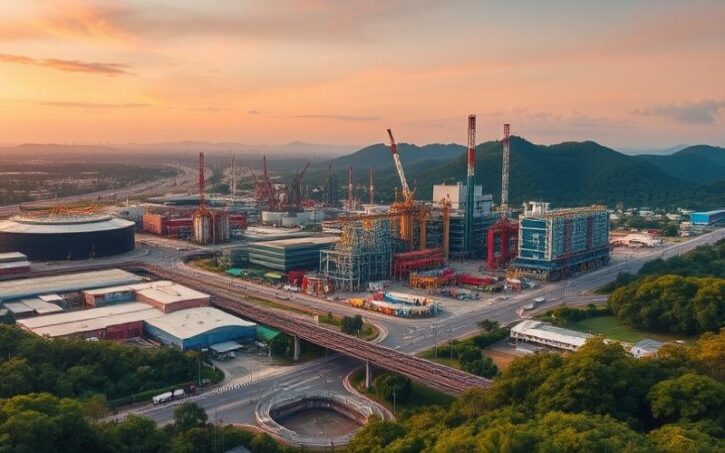
As the Philippines transforms into a manufacturing and logistics hub in Southeast Asia, the industrial real estate sector is experiencing exponential growth, offering countless opportunities for investors and businesses seeking new horizons.
Among the many options available, certain free trade zones stand out for their modern infrastructure, attractive tax incentives, and strategic locations, making them essential gateways to access this dynamic market.
Free Trade Zones Not to Be Missed
Get to know these free trade zones not to be missed that combine operational efficiency and growth potential, establishing the Philippines as a prime destination for global industry players.
Overview of Industrial Real Estate in the Philippines
Industrial real estate in the Philippines is characterized by sustained growth, driven by the dynamics of e-commerce, industrialization, and foreign investment. Rental demand for modern warehouses and logistics spaces is accelerating in major urban centers (Metro Manila, Cebu, Davao), with an average annual net yield exceeding 7% for the logistics segment.
Historical Evolution
- Since the 2000s, the sector has seen a steady increase in industrial construction costs.
- The real estate index rose from an average of 4,889 PHP/m² in 2002 to over 14,276 PHP/m² in early 2025.
- This evolution reflects the upgrading of infrastructure and adaptation to international standards (LEED certifications for some spaces).
Current Trends
- High demand for logistics spaces linked to e-commerce.
- Gradual transformation of traditional industrial zones into multi-use parks integrating production, storage, and distribution.
- Yields remain attractive despite possible volatility related to economic or health cycles.
| Segment | Average Annual Net Yield | Strengths | Specific Risks |
|---|---|---|---|
| Logistics | >7% | High e-commerce demand | Strategic location |
| Offices | 6–9% | Relative stability | Post-pandemic vacancy |
| Retail | 6–9% | Potential value appreciation | E-commerce competition |
Specific Factors Influencing Development
- Rapid population growth and increased urbanization.
- Relative economic stability attracting foreign capital.
- Government policies favorable to international investment (transparent bidding process).
Impact of Free Trade Zones
Industrial free trade zones play a central role:
- They offer tax and regulatory advantages that appeal to both local and international investors;
- Facilitate the rapid setup of industrial sites through turnkey infrastructure;
- Mainly host export-oriented manufacturing industries (electronics, textiles), but also international logistics.
Attractiveness for Investments
Approximately 53% of incoming FDI flows are directed to manufacturing, followed by real estate (13%), demonstrating the weight of the industrial sector in the national capital attraction strategy.
Summary list – main sectors established:
- Electronics / semiconductors
- Textiles / apparel
- Food and beverage
- Logistics / warehousing
Key market players:
- Ayala Land Logistics Holdings Corp.
- Filinvest Land Inc.
- Robinsons Land Corporation
- SM Prime Holdings
These groups develop or manage several “industrial parks” hosting local/international tenants specializing in light manufacturing/assembly/export.
Challenges Encountered
- Pressure on land/construction costs;
- Growing need for a skilled workforce adapted to new industrial technologies;
- High natural risks: floods/earthquakes requiring enhanced standards;
Major Opportunities
- Continued expansion of e-commerce driving demand for advanced logistics platforms;
- Accelerated development of regional industrial corridors outside Metro Manila offering geographic diversification;
- Proactive government policy on economic liberalization & sectoral privatizations facilitating access to the industrial real estate market.
Future expansion will therefore depend as much on national structural factors as on the country’s ability to continue its international integration efforts through its attractive free trade zones.
Good to Know:
The industrial real estate market in the Philippines is booming, supported by trends such as increased foreign investment, especially in free trade zones like Subic, Clark, and Cavite, which offer attractive tax incentives. Historically oriented towards logistics and manufacturing, the sector has evolved with the rise of e-commerce and technology industries. Free trade zones are major catalysts, attracting manufacturing giants, such as those in the electronics and apparel sectors, thereby increasing demand for modern industrial spaces. Key players like Ayala Land, Filinvest Land, and Jones Lang LaSalle see opportunities to expand their portfolios. However, challenges such as aging infrastructure and fluctuating regulations remain. Nevertheless, continuous improvement in transport infrastructure and simplification of administrative procedures could offer new growth opportunities.
Advantages of Free Trade Zones for Investors
The tax structure of free trade zones in the Philippines offers a favorable framework for industrial real estate investors. These zones, overseen by agencies such as the Philippine Economic Zone Authority (PEZA), are distinguished by reduced taxation and incentives designed to optimize operating and investment costs.
Tax Optimization in Free Trade Zones:
- Registered enterprises generally benefit from a corporate income tax holiday for 4 to 6 years, followed by a reduced preferential rate applied to gross or net income.
- Exemption from value-added tax (VAT) for certain imports of capital equipment and raw materials used in production for export.
- Reduction or elimination of customs duties on imports necessary for industrial activity.
| Tax Mechanism | Description |
|---|---|
| CIT Exemption | 4 to 6 years |
| VAT | Partial/total exemption depending on activity |
| Customs Duties | Reduction or even elimination |
Complementary Financial Incentives:
- Facilitated repatriation of profits and invested capital without major restrictions.
- Dedicated administrative assistance via the PEZA one-stop shop simplifying tax procedures, permits, and licenses.
- Occasional grants or priority access to developed industrial land.
Summary List:
- Multi-year tax exemptions
- Reduced import/export duties
- Free repatriation of profits
- Expedited procedures
Infrastructure Available in Free Trade Zones:
Investors generally benefit from:
- Direct access to a modernized road network facilitating intra-zone transport;
- Immediate proximity to deep-water seaports (e.g., Port of Manila, Subic Bay Port);
- High-speed internet connections suitable for industrial needs;
- Reliable supply of electricity, industrial water, and integrated logistics solutions.
Example:
| Key Infrastructure | Operational Advantage |
|---|---|
| Roads & Highways | Fast intra/inter-zone transport |
| Ports & Airports | Facilitated export/import |
| Fiber Internet Connection | Advanced digital management |
Regional Competitive Advantage:
The Philippines is located at the heart of the Southeast Asian market:
- Quick access to ASEAN markets, China, South Korea, and Japan
- Skilled workforce with strong technical skills, particularly in industrial engineering
- Lower wage costs compared to neighboring economies
Concrete Examples:
Texas Instruments, established for several decades in a Philippine free trade zone, cites “regulatory stability” and “local logistics quality” as determining factors for its major investments.
Procter & Gamble Philippines, located at the PEZA Laguna Technopark, reports having reduced its logistics lead times thanks to the immediate proximity of port infrastructure.
Simplified Regulations and Reduced Administrative Procedures:
Establishment in a free trade zone is facilitated by:
- Centralized procedure through the PEZA one-stop shop,
- Shortened timelines for environmental/construction permits,
- Regular documentary relief,
- Personalized support throughout the administrative process.
Summary List:
- PEZA one-stop shop
- Permits issued quickly (often less than a month)
- Fewer bureaucratic requirements than outside the zone
Additional Logistics Advantages:
Thanks to their strategic location near major ports (Manila North/South Harbor, Batangas Port) or international airports (NAIA Manila), these zones offer:
- Substantial reductions in total export/import costs,
- Shorter lead times between local production/international shipping,
- Optimized multimodal platforms enabling smooth supply chain/export management.
Visual Summary:
| Asset | Impact on Industrial Investor |
|---|---|
| Reduced Taxation | Better yield |
| Financial Incentives | Initial investment amortized quickly |
| Infrastructure | Facilitated production/transport |
| Geographic Position | Exports to all of Asia facilitated |
| Simple Regulations | Quick entry/exit in the local market |
Philippine free trade zones thus combine direct tax optimization, targeted financial incentives, and comprehensive operational support to maximize the national industrial real estate attractiveness for international investors.
Good to Know:
Free trade zones in the Philippines offer investors numerous tax advantages, including exemptions on import taxes and tariff reductions, allowing for substantial cost optimization. Financial incentives such as facilitated profit repatriation and modern infrastructure, including roads, ports, and reliable internet connections, facilitate industrial operations. The Philippines’ strategic geographic position in Southeast Asia, combined with a skilled and affordable workforce, provides a crucial competitive advantage. Simplified regulations and reduced administrative procedures encourage the rapid and efficient establishment of businesses. Testimonials from companies, such as XYZ Corp., attest to the success of establishments in these zones, which also benefit from their proximity to major ports and airports for efficient logistics and exports.
Logistics Warehouses: Engines of Growth
Logistics warehouses play a decisive role in the Philippine economy by optimizing the supply chain, supporting industrial growth, and accelerating the expansion of the manufacturing and export sectors. Their rapid development is part of a national strategy for logistics modernization and revitalizing free trade zones.
Major Economic Impacts
- Supply Chain Optimization: Modern warehouses enable more efficient inventory management, reduce delivery times, and minimize operational costs for industrial and export companies.
- Support for Industrial Efficiency: The integration of advanced infrastructure (cold storage warehouses, automation) meets the growing demand from e-commerce, the food and beverage sector, and pharmaceuticals.
- Contribution to National Growth: The Philippine logistics market is valued at USD 55.65 billion in 2024 with an estimated average annual growth rate of 6% until 2030.
Current Trends in Free Trade Zones
| Free Trade Zone | Key Characteristics | Economic Impact |
|---|---|---|
| Clark Freeport | Massive development of multi-temperature warehouses | Attracts foreign investors; stimulates the agro-export sector |
| Subic Bay | Modernization of port/logistics facilities | Increases export-import traffic; creates local jobs |
| Cavite Economic | Projects dedicated to industrial storage for subcontractors | Strengthens electronics/automotive manufacturing chains |
- These zones benefit from major public investments (over USD 25 billion allocated to road/port infrastructure).
- The growing share of e-commerce is driving the rapid development of urban warehouses around Metro Manila, Cebu, and Davao.
Recent Concrete Examples
Port Cold Chain Network Project
→ A national initiative led by the Department of Transportation (DOTr), with a projected budget exceeding PHP 30 billion. Objective: deploy a national “cold chain” network at major ports to reduce agricultural waste, improve food security, and support agricultural export sectors.
Automated Warehouse at Calamba Premier International Park
→ A new-generation warehouse dedicated to electronics/export industries. Recent implementation with integrated robotics enabling faster processing of international orders while creating several hundred local technical jobs.
Direct Creation of Local Opportunities
- Direct jobs: specialized handlers, maintenance/logistics IT technicians
- Indirect jobs: road/maritime carriers located near hubs
- Increased professional training in supply chain management fields
Tax Advantages & Policy Incentives Offered by Free Trade Zones
- Tax exemption on income for several years;
- Exempt or preferentially taxed imports for equipment/infrastructure;
- Simplified administrative procedures for foreign establishment;
- Priority access to industrial electricity/water/internet networks;
- Possible partial subsidies via public/private partnerships on strategic projects (“cold chain”, digitalization…).
Philippine logistics warehouses thus constitute one of the essential pillars of national industrial strengthening – catalyzing operational innovation, massive creation of skilled jobs, and regional dynamism around modern manufacturing/export hubs.
Good to Know:
Logistics warehouses play a key role in the Philippine economy by optimizing the supply chain and improving industrial efficiency. The country’s free trade zones, benefiting from attractive tax incentives, encourage the rapid development of modern logistics infrastructure. For example, the recently completed Cavite warehouse project illustrates this dynamic by supporting the manufacturing and export sectors while creating new local jobs. Government policies also favor these investments, providing vital support for industrial growth and the economic attractiveness of the Philippines.
Optimizing Real Estate Yield by Targeting the Right Zones
Promising free trade zones in the Philippines are distinguished by several essential criteria: quality infrastructure (reliable access to energy, logistics, telecommunications), regulations favorable to foreign investors, and attractive tax incentives. The presence of a skilled workforce and ease of import-export procedures also enhance their appeal.
Key Criteria for Identifying Attractive Free Trade Zones:
- Robust infrastructure: integrated logistics networks, stable energy, quick access to ports/airports.
- Clear and stable regulatory framework: equal treatment of local and foreign investors (except in reserved sectors), limitation of foreign ownership ceilings only in certain areas.
- Tax incentives: corporate income tax holiday for up to 6–8 years depending on conditions; subsequently a reduced tax rate of 5% on gross income; exemptions from customs duties on strategic imports.
- Administrative simplification for hiring international experts and facilitation of immigration procedures.
Comparative Table – Concrete Examples of Recent Free Trade Zones That Attracted Investment:
| Free Trade Zone | Location | Major Strengths | Recent Investments |
|---|---|---|---|
| Clark Freeport Zone | Central Luzon | Proximity to international airport, modern logistics hub | New electronics factories & BPO centers |
| Subic Bay Freeport | West Luzon | Deep-water port, renovated port infrastructure | Automotive & manufacturing companies |
| Cavite Economic Zone | South Manila | Quick highway access to Manila/ports | Textile & electronics factories |
Strategic Targeting to Optimize Industrial Real Estate Yield:
- Establishment in these zones offers a dual lever: substantial reduction in operational costs thanks to tax/customs advantages as well as increased valuation of industrial land due to the concentration of international companies.
- Modern infrastructure limits risks related to the supply chain or energy supply.
- Targeting is done according to the target sector (e.g., electronics towards Clark or textiles/assembly towards Cavite).
Current Trends in the Philippine Industrial Real Estate Sector:
- High demand linked to the development of e-commerce/regional logistics
- Technological upgrading with increasing automation
- Increased valuation around multimodal hubs near major cities
These trends favor investments in sites offering structural flexibility (modular spaces), proximity to a skilled urban workforce, and optimal connectivity.
Practical Tips for Evaluating Specific Risks/Opportunities:
List to consider during analysis:
- Verify local regulatory stability (possible periodic review).
- Evaluate the total cost of accessing the site versus other regional alternatives.
- Analyze the real potential of the underlying local rental market – avoid speculative bubbles around “new” underdeveloped zones.
- Consider intra-zone competition (possible saturation).
- Inquire about the actual level of administrative autonomy granted to each free trade zone – variations depending on public/private managers.
To maximize your chances, it is recommended:
- To prioritize thorough due diligence with already established players,
- To demand contractual transparency on all potential future taxes/fees,
- To include an early exit clause if local economic indicators deteriorate.
This structured approach allows industrial real estate investors not only to optimize their yield but also to significantly limit their specific risks in this dynamic Philippine context.
Good to Know:
To optimize real estate yield in free trade zones in the Philippines, it is crucial to target zones offering robust infrastructure and regulations favorable to foreign investment, such as the Subic Bay Freeport Zone and the Clark Freeport Zone. These locations have attracted significant investments due to their strategic location, tax advantages, and improved access to port and road networks. Current trends show strong demand from logistics and manufacturing, prompting companies to choose zones where connectivity and expansion facilities are of high quality. To evaluate opportunities, investors should study the region’s economic stability, available tax incentives, and potential environmental impacts, considering the growth potential of target industrial sectors, while assessing risks such as market saturation or fluctuations in local policy.
Disclaimer: The information provided on this website is for informational purposes only and does not constitute financial, legal, or professional advice. We encourage you to consult qualified experts before making any investment, real estate, or expatriation decisions. Although we strive to maintain up-to-date and accurate information, we do not guarantee the completeness, accuracy, or timeliness of the proposed content. As investment and expatriation involve risks, we disclaim any liability for potential losses or damages arising from the use of this site. Your use of this site confirms your acceptance of these terms and your understanding of the associated risks.

Cyril Jarnias is an independent expert in international wealth management with over 20 years of experience. As an expatriate himself, he is dedicated to helping individuals and business leaders build, protect, and pass on their wealth with complete peace of mind.
On his website, cyriljarnias.com, he shares his expertise on international real estate, offshore company formation, and expatriation.
Thanks to his expertise, he offers sound advice to optimize his clients' wealth management. Cyril Jarnias is also recognized for his appearances in many prestigious media outlets such as BFM Business, les Français de l’étranger, Le Figaro, Les Echos, and Mieux vivre votre argent, where he shares his knowledge and know-how in wealth management.





