
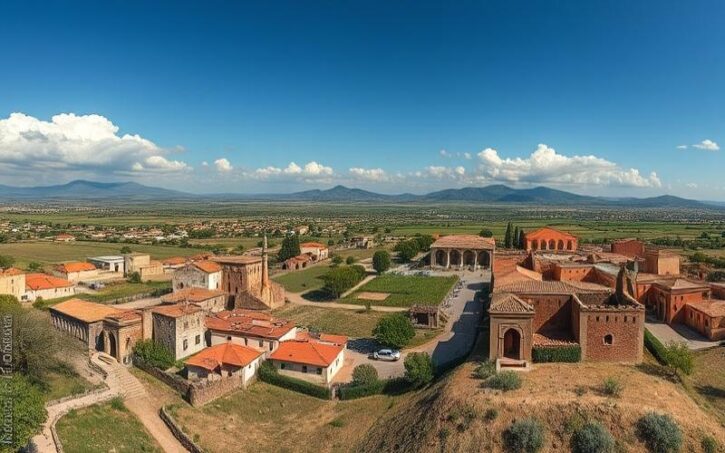
 Published on and written by Cyril Jarnias
Purchasing Agricultural Land in Romania: Opportunities and Legal Framework
Purchasing agricultural land in Romania presents an attractive opportunity for investors and farmers looking to take advantage of the country’s fertile and vast lands, but it is crucial to navigate the complex legal framework governing this process.
While Romanian agricultural land prices are generally lower than those in other European countries, various restrictions and legal requirements must be considered to avoid potential complications.
Key Points to Consider
- Purchase process and legal restrictions
- Available financing options
- Acquisition conditions for foreigners
- Recent agrarian reforms
Good to Know:
Romania has implemented agrarian reforms in recent years to modernize its agricultural sector, which can influence purchase conditions and investment opportunities.
Overview of Laws on Purchasing Agricultural Land in Romania
Main Laws Governing the Purchase of Agricultural Land in Romania
The purchase of agricultural land in Romania is primarily governed by Law No. 17/2014, which regulates the conditions, restrictions, and procedures applicable to these transactions. This law aims to protect national interests while respecting the country’s European commitments.
Authorized Buyers and Restrictions for Foreigners
- Citizens of European Union (EU) member states, the European Economic Area (EEA), and Switzerland have been able to directly acquire agricultural land in Romania since January 1, 2014.
- Foreign nationals from outside the EU/EEA/Switzerland can purchase agricultural land under much more restrictive conditions, often by establishing a Romanian company.
- Local residents, as well as certain categories of buyers, benefit from a pre-emption right on agricultural land sales.
Priority Order for Purchase (Pre-emption Right)
The law defines a priority order for the sale of agricultural land:
- Co-owners
- Holders of an operating lease
- Owners of neighboring land
- Romanian state
- Relatives up to the third degree
- Owners of agricultural investments
- Young farmers (under 40 years old)
- Individual residents of the commune or neighboring communes
- Academy of Agricultural Sciences and research units
Specifics on Parcel Size and Required Permits
- There is no precise legal limit on the maximum area that can be acquired by an individual, but the acquisition of large areas may be subject to a thorough review by the authorities.
- For purchases of significant areas, specific authorizations or an analysis of the agricultural project may be required.
Tax Implications
- The purchase of agricultural land is subject to local taxes and registration fees.
- An 80% tax on capital gains may apply if the resale occurs within 8 years of purchase, except for certain exceptions (inheritance, family donations, etc.).
Administrative Steps to Secure and Register the Purchase
- Verification of the legal status of the land (cadastre, absence of mortgage, etc.).
- Notification of pre-emption right holders and compliance with the legal response period.
- Signing a preliminary contract, followed by the deed of sale before a notary.
- Payment of registration fees and applicable taxes.
- Registration of the transaction with the Cadastre and Real Estate Advertising Office.
Legal Resources and Useful Links
- https://legislatie.just.ro/Public/DetaliiDocument/157279
- https://www.madr.ro/
- https://www.gruiadufaut.com/posts/achat-de-terres-agricoles-en-roumanie-nouvelles-modifications
Key Takeaways
The acquisition of agricultural land in Romania by foreigners is possible but heavily regulated by law, with priority given to local stakeholders and numerous administrative procedures to follow.
Summary Table of Purchase Rights by Nationality
| Buyer Category | Direct Access | Additional Conditions |
|---|---|---|
| Romanian citizen | Yes | Compliance with pre-emption right |
| EU/EEA/Swiss citizen | Yes | Compliance with pre-emption right |
| Non-EU/EEA/Swiss foreigner | No (except via company) | Purchase through a Romanian company required |
List of Frequently Required Documents
- Identity document or articles of association of the purchasing company
- Seller’s title deed
- Updated cadastral extract
- Proof of notification of pre-emption holders
- Tax certificate
- Certificate of no debts and mortgages
To Consult Before Any Purchase:
- Law No. 17/2014 on regulating agricultural land transactions
- Information from the Romanian notary public
- Advice from a lawyer specialized in Romanian real estate law
Good to Know:
In Romania, the purchase of agricultural land is primarily governed by Law No. 17/2014, which imposes significant restrictions on non-resident foreigners, although EU citizens benefit from similar rights to Romanians thanks to the European Directive on property rights. While plots under 5 hectares can be purchased without special formalities, larger land requires obtaining specific permits from the Ministry of Agriculture. Buyers must also be mindful of tax obligations, particularly the agricultural land tax. The legal acquisition process involves registration with the National Agency for Cadastre and Real Estate Advertising, accompanied by all necessary documentation to validate the transaction. It is advisable to consult reliable sources such as the official website of the Romanian Ministry of Agriculture and resources like analyses from specialized law firms for detailed and up-to-date advice.
Risks Associated with Non-Buildable Land and How to Avoid Them
Land is categorized as non-buildable in Romania when it does not meet the criteria defined by national and local regulations allowing the construction of permanent buildings. These lands are primarily subject to legal, environmental, and urban planning restrictions.
Specific Characteristics of Non-Buildable Land:
- Land classified as agricultural, forest, protected, or flood-prone area according to the local urban plan (PUZ/PUUG).
- Lack of change in the cadastral status of the land to “intravilan” (buildable zone), thus keeping it as “extravilan” (outside the urbanized area).
- Presence of public or private easements preventing construction.
- Land located in an area protected by strict environmental regulations, notably Natura 2000 or protected natural areas.
- Identified high risk: floods, landslides, soil pollution.
| Type of Restriction | Legal/Regulatory Basis | Concrete Example |
| Agricultural status | Land Law No. 18/1991; Law No. 246/2020 | Land reserved for agriculture outside built-up areas |
| Protected natural area | EU Natura 2000 Directives | Total ban/construction subject to special authorization |
| Public easement | Romanian Civil Code | Electricity/gas/water networks crossing the land |
| Ecological risk | Local development plans | Flood-prone/unstable area |
Legal and Environmental Reasons Preventing Construction:
– Local plans require that certain agricultural land be used exclusively for agricultural purposes — any attempt to change this requires a complex administrative procedure with official publication.
– The law prohibits the automatic conversion of agricultural land located outside built-up areas; any derogation must be justified and obtain prior approval.
– Land in natural areas benefits from enhanced protection prohibiting any project without a favorable environmental impact assessment.
Potential Legal and Financial Impacts When Purchasing:
Main Risks for the Buyer
- Legal impossibility of obtaining a building permit despite purchasing the property.
- Significant fines of up to 200,000 lei for non-compliance with legal conditions on permitted uses.
- Prolonged administrative blockage if the cadastral situation does not comply with local or national requirements.
Financial Consequences
Warning: Speculative acquisition without verification can lead to:
- Long-term capital immobilization
- Additional costs related to legal proceedings
- High capital gains tax if resold before eight years for certain types of agricultural land
Solutions to Avoid These Risks:
- Enhanced due diligence before any commitment: Thorough analysis with the local cadastre office (OCPI) and systematic consultation of applicable urban plans.
- Consultation with a locally specialized lawyer: Check all hidden legal constraints as well as the cadastral history of the target property.
- Systematic verification of necessary authorizations: Ensure a favorable urban planning certificate has been issued by the relevant town hall before final signing.
Concrete Examples Encountered by Buyers:
– A foreign investor who acquired several hectares thought they could develop a residential project but was denied the permit because their land was classified exclusively as arable land outside the built-up area — thus impossible for at least eight years even after acquisition.
– A case where the lack of a prior geotechnical study later revealed a major risk (flooding), making any future real estate development impossible despite a high purchase price.
Key Points to Remember When Purchasing Land in Romania:
- Always request the current urban planning certificate
- Systematically consult a lawyer well-versed in Romanian land law
- Check with the cadastre for any recent changes or specific restrictions attached to the property
Never sign or pay any deposit without having obtained all these official documents
Good to Know:
In Romania, land is often considered non-buildable due to specific characteristics such as its classification as a protected, forest, or intensive agricultural area under local laws. Strict environmental regulations and compliance with ecological standards thus prevent any construction to preserve sensitive ecosystems. For buyers, this can lead to frustrating legal implications and significant financial losses, especially in cases where the land cannot be used as initially intended. Exercising due diligence is crucial to avoid these risks; this involves consulting local land law experts, ensuring all permits are in place, and thoroughly understanding relevant Romanian legislation, such as the law on agricultural land and biodiversity conservation. For example, some buyers have encountered difficulties after failing to check these aspects, ending up with land they cannot legally develop.
Understanding Rural Zoning and Building Permits in Romania
Rural zoning in Romania is governed by several laws and regulations that determine the use, protection, and conservation of agricultural land. The main text is Law No. 246/2020 on the use, conservation, and protection of soil, which strictly regulates the sale, purchase, and change of use of agricultural land. This legislation is supplemented by the Romanian Civil Code, urban planning legislation, as well as European regulations under the Rural Development Program (RDP) funded by the EAFRD.
Main Laws and Regulations:
- Law No. 246/2020 on the use, conservation, and protection of soil.
- Urban and spatial planning legislation (local and national laws).
- Rural Development Program (RDP), in connection with European policies.
Types of Rural Zoning in Romania and Implications for Purchasing Agricultural Land:
| Type of Zoning | Description | Implications for Purchase |
|---|---|---|
| Agricultural zone (extra muros) | Intended for agricultural production, little or no construction possible without change of use | Purchase subject to pre-emption right and restrictions for foreigners |
| Buildable rural zone | Areas open to rural housing or agritourism | More flexible purchase, building permit possible |
| Protected zone | Natural territories, significant restrictions | Very limited purchase, changes of use difficult |
For the purchase of agricultural land, the law provides a pre-emption right for several priority categories: neighbors, young farmers, research institutions, local residents, and then the state. Foreign buyers must meet strict criteria (residence or registered office in Romania for at least 5 years).
Process for Obtaining a Building Permit on Agricultural Land:
1. Change of Land Use (if applicable):
- If the land is strictly agricultural, you must first obtain authorization for a change of use (from agricultural land to buildable land).
- File to be submitted to the town hall and the departmental directorate of agriculture.
2. Submission of the Building Permit Application:
Commonly required documents:
- Title deed
- Urban planning certificate
- Geotechnical study
- Architectural project approved by a licensed architect
- Environmental, health, and utility network opinions (water, electricity, etc.)
- Proof of change of use if applicable
3. Administrative Steps:
- Request for an urban planning certificate (determines if construction is possible)
- Obtaining approval for change of use if necessary
- Submission of the building permit application with all required documents
- Review of the file by local authorities and technical services
- Issuance of the building permit
| Step | Typical Timeline |
|---|---|
| Urban planning certificate | 30 days |
| Change of use | 30 to 90 days (depending on complexity) |
| Permit processing | 30 to 60 days |
Concrete Example:
A foreign investor wishing to build a house on agricultural land must first check if the land is buildable. If it is not, they will need to obtain a change of use, often conditional on justifying an agricultural or agritourism project, and then submit a compliant building permit application. The entire process can take several months.
Common Challenges for Foreign Buyers:
- Purchase restrictions for non-residents or recently established foreign companies
- Administrative complexity and multiplicity of required authorizations
- Timelines sometimes extended depending on the area and nature of the project
- Obligation to respect the purchase priority of neighbors, young farmers, local institutions, or the state
- Risk of refusal for change of use, especially in areas of high agricultural value or protected areas
Recommendations:
- Systematically consult a local lawyer specialized in land and urban planning law before any action.
- Engage a notary and a licensed architect for preparing administrative files.
- Verify the land’s designation and project feasibility in advance with the relevant town hall.
- Allow sufficient time for file processing and anticipate potential requests for additional documents.
Important: Navigating Romanian land and urban planning regulations requires local expertise. Consulting professionals (lawyers, notaries, architects) is essential to secure the purchase and execution of a construction project on agricultural land.
Good to Know:
In Romania, rural zoning is primarily governed by Law No. 350/2001 on spatial planning and urbanism, which defines different zoning categories, such as protected agricultural areas or perimeters intended for intensive agriculture. To acquire agricultural land, it is crucial to verify its land use designation, as this will influence the nature of permitted activities. Obtaining a building permit on agricultural land can be a lengthy process, requiring the submission of detailed plans, an impact study, and environmental compliance certificates, with approval timelines potentially ranging from three to six months. A telling example is that of Italian investors who encountered obstacles due to bureaucratic complexity and the need to obtain exceptions for atypical projects. It is highly recommended to consult a lawyer specialized in land law to navigate these procedures effectively, particularly to master the administrative language and anticipate potential legal complications.
Disclaimer: The information provided on this website is for informational purposes only and does not constitute financial, legal, or professional advice. We encourage you to consult qualified experts before making any investment, real estate, or expatriation decisions. Although we strive to maintain up-to-date and accurate information, we do not guarantee the completeness, accuracy, or timeliness of the proposed content. As investment and expatriation involve risks, we disclaim any liability for potential losses or damages arising from the use of this site. Your use of this site confirms your acceptance of these terms and your understanding of the associated risks.

Cyril Jarnias is an independent expert in international wealth management with over 20 years of experience. As an expatriate himself, he is dedicated to helping individuals and business leaders build, protect, and pass on their wealth with complete peace of mind.
On his website, cyriljarnias.com, he shares his expertise on international real estate, offshore company formation, and expatriation.
Thanks to his expertise, he offers sound advice to optimize his clients' wealth management. Cyril Jarnias is also recognized for his appearances in many prestigious media outlets such as BFM Business, les Français de l’étranger, Le Figaro, Les Echos, and Mieux vivre votre argent, where he shares his knowledge and know-how in wealth management.





