
 Published on and written by Cyril Jarnias
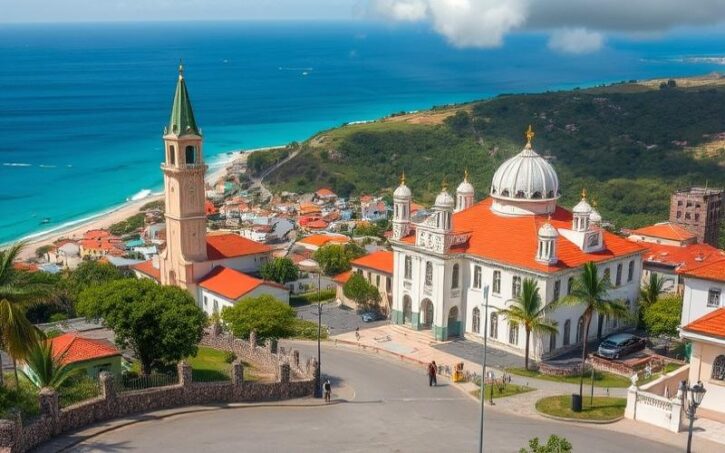
Settling in Cape Verde means entering a world where faith, African traditions, and Portuguese heritage intersect daily. For an expat, religion is not just an abstract “spiritual” topic: it structures the calendar, inspires neighborhood festivals, shapes certain dress codes, and often influences social behavior. Without understanding it, true integration is difficult.
This guide deciphers local religious practices to help expats respect the codes, enjoy the festivals, and build relationships without awkwardness.
A Very Christian Religious Landscape… But More Nuanced Than It Appears
At first glance, the religious setting in Cape Verde seems simple: a predominantly Christian nation, with a Catholic majority. In reality, the picture is more nuanced, both in numbers and practices.
Different statistical sources don’t all converge, but they paint a clear order of magnitude: the vast majority of the population identifies as Christian, with a predominance of Catholicism.
Here is a summary of the main estimates:
| Indicator | Approximate Value |
|---|---|
| Share of Christian population | Over 84% to over 94% |
| Share of Catholics | 77% to ~90% depending on sources |
| Share of Protestants / Evangelicals | ~5% to 10% |
| Share of Muslims | ~1.8% (another estimate: ~80,000 people) |
| Atheism / Agnosticism | Up to ~10.8% |
| Other beliefs (Bahá’í, etc.) | Approximately 1–2% |
Beyond the numbers, it’s important to understand the symbolic hierarchy: Catholicism is the clear majority and holds a reference position in public life, even though the state is officially secular. Protestant churches – notably the Church of the Nazarene, Adventists, Assemblies of God, and other evangelical groups – are gaining importance, especially among young people and in some urban centers. A small Muslim community, mostly from West African immigration (Senegal, Guinea-Bissau, etc.), is growing discreetly, especially in Praia.
For an expat, it’s important to know that Catholic culture influences many default social codes. However, the country is characterized by a great diversity of both Christian and non-Christian movements, coexisting in a general climate of very high tolerance.
A Protective Legal Framework and a Tolerant Society
One of the key points that reassures many expats: in Cape Verde, freedom of religion is guaranteed by the Constitution. The fundamental text provides for the separation of Church and State and prohibits the state from imposing beliefs or religious practices. There is no official religion.
The Penal Code punishes violations of religious freedom with prison sentences of three months to three years. Furthermore, religious associations must register with the Ministry of Justice to obtain legal personality and access loans or aid. Lack of registration does not prohibit the practice of faith but restricts the group’s administrative capabilities.
The important thing for an expat to grasp is this dual dynamic: on one side, a secular state protective of all faiths; on the other, a Catholicism endowed with a certain “historical privilege.” The government, for example, grants free airtime to the Catholic Church for broadcasting Mass on television. Several national holidays are directly linked to the Catholic calendar: Ash Wednesday, Good Friday, Easter, All Saints’ Day, Christmas. Each municipality also has a local holiday to celebrate its patron saint.
Despite the central place of Catholicism, Cape Verde receives the highest score in international reports on religious freedom, with no systematic discrimination or violence reported. Society is described as open, spiritual, and broadly tolerant. An expat of another faith, or without religion, is not perceived as a threat, provided basic codes of decency are respected.
The Main Religious Families in the Archipelago
To better navigate, it’s useful to distinguish the main religious families present in Cape Verde and their role in society.
Catholicism, the Historical Backbone
Catholicism was introduced by the Portuguese in the 15th century, via the first Franciscan missionaries, then the Jesuits and Capuchins. Slaves arriving in the archipelago were systematically baptized, sometimes for economic reasons (a Christian slave was considered more valuable). For several centuries, the Catholic Church held the legal monopoly on religion. It wasn’t until the early 20th century that other denominations could establish themselves.
Institutionally, the Catholic Church is structured into two dioceses:
| Diocese | Islands Covered |
|---|---|
| Diocese of Santiago de Cabo Verde | Santiago, Fogo, Brava, Maio |
| Diocese of Mindelo | Santo Antão, São Vicente, São Nicolau, Sal, Boa Vista |
The priests are mostly nationals, trained at the São José seminary. The Catholic Church has played a major role in education, health, birth registration, and even political and cultural life. Even today, its imprint can be found in Catholic schools, charitable works, and local social actions.
For an expat, this notably means that:
In many contexts, the visibility of Catholicism is striking: most large churches and cathedrals are Catholic, and its processions animate public spaces. Its cultural influence is profound, with major saint and Virgin Mary festivals often structuring the local calendar more than some civic holidays. Finally, its social engagement is concrete, with many charitable associations and grassroots social projects being run by parishes or religious congregations.
Protestant and Evangelical Churches, Very Dynamic
From the end of the 19th century, then in the 20th century, various Protestant churches were established, often through American missions and Cape Verdeans returning from the diaspora. The Church of the Nazarene, very present, actually arrived via emigrants returning from Brava after a stay in the United States. It is today the most important Protestant denomination in the archipelago.
One also finds: study results, participant testimonials, and expert analyses.
Overview of the main Christian churches and movements present, outside the Roman Catholic Church.
Includes Assemblies of God and various Pentecostal and evangelical churches, characterized by an emphasis on the Holy Spirit.
Very active, notably in the fields of education and health, with Sabbath observance on Saturday.
A Baptist stream not affiliated with a national union, emphasizing the autonomy of each local congregation.
Movement of Brazilian origin, known for its media proselytism and large gatherings.
The Church of Jesus Christ of Latter-day Saints, with a distinct theology and a highly structured missionary organization.
A millenarian movement known for its door-to-door evangelism and its rejection of certain traditional Christian doctrines.
These Protestant churches often have a more “modern” liturgical style, with lots of music, gospel, songs in Creole, a more direct tone in sermons, and strong youth mobilization. The Church of the Nazarene is known for its joyful singing and cosmopolitan atmosphere, which resonates with urban youth.
In practice for the expat:
– it is fairly easy to find Protestant services in the city, sometimes with translations or adapted language focuses (Portuguese, Creole, and sometimes English or Spanish, depending on the parish);
– these communities often offer music classes, English lessons, tutoring, health projects, or humanitarian actions, open to newcomers.
Islam, Bahá’í, Other Minorities, and “Discreet” Believers
The Muslim presence is modest but growing. It has been reinforced by the arrival of traders and workers from ECOWAS member countries (Senegal, Guinea-Bissau, etc.). A mosque was built in Praia in 1990, marking a visible turning point for this community.
According to some estimates, nearly 11% of the population declares itself without religion, atheist, or agnostic.
Finally, there is a little-known Jewish history in Cape Verde: forcibly converted Jews (conversos) in the Iberian era, then Moroccan traders in the 19th century. Today, almost no one openly practices Judaism, but some families retain traces of this memory in their surnames, funeral practices, or particular customs.
A Special Case: The Rabelados
On the island of Santiago, a singular group called the Rabelados lives in relative isolation, deeply attached to older forms of Catholic piety centered on the Bible and the life of Jesus. They had opposed, in their time, contemporary liturgical reforms, preferring to preserve older rites. For an expat, it’s unlikely to encounter them in daily life, but their existence reminds us of the variety of religious expressions even within Catholicism.
Syncretism: When Catholicism, Africa, and the Diaspora Blend
One of the keys to not misinterpreting what one sees in Cape Verde is to accept that the categories “Catholic,” “traditional,” “African,” “Brazilian,” or even “Jewish” are not watertight. Many Cape Verdeans navigate between several symbolic universes.
Concretely, this means for example that a person defining themselves as a practicing Catholic might:
– attend Mass on Sunday,
– participate in African protection rituals or consult a curandeiro (healer) for a health or jealousy problem,
– attend a ceremony of the Brazilian movement Racionalismo Cristão to “chase away evil” or lay down worries,
– respect funeral practices or family customs whose origins date back to African rites or concealed Jewish traditions.
Among the most visible forms of this syncretism, one can mention:
Saint processions incorporate drums, masks, dances, and costumes of African inspiration, notably on the island of Santiago. Specific funeral rituals exist for children, where other children accompany the coffin, aiming to break the influence of a malevolent spirit. To protect infants, the talisman *conta d’odju* (black bead with white dots) is used before baptism. Finally, some customs resemble Jewish practices: naming the child around the eighth day (*sétima noite*), a structured mourning period of 7, 30 days, and a year, and throwing food into the sea at the start of the year, reminiscent of the *Tashlich* ritual.
For an expat, this syncretism can sometimes sow confusion: a festival with a strong carnivalesque dimension, with alcohol, sensual dances, and drums, can nonetheless be perceived locally as an act of devotion to a saint or the Holy Spirit. It is therefore useful to suspend judgments based on overly strict religious categories and rather observe how people give meaning to these practices.
Religion and Social Life: What an Expat Needs to Know
Religion in Cape Verde extends far beyond places of worship. It permeates daily life, neighborhood relations, the way of celebrating, codes of respect. This doesn’t mean everyone is “very observant,” but that religious references are omnipresent.
The values often highlighted – hospitality (morabeza), respect for elders, neighborhood solidarity, importance of the extended family – are linked to both African traditions, Catholic heritage, and the historical experience of the archipelago. Shared meals (like cachupa, the national dish) during festivals or after funerals almost always have both a social and spiritual dimension.
A concrete example is the *Nodjadu* period, a structured mourning period that can last a week. It is marked by intense family visits, where the grieving family does not work, receives condolences, and is brought food. This practice blends Christianity and older traditions, like covering mirrors, wearing black clothes, or abstaining from shaving. For an expat, participating requires respecting this solemn atmosphere and subdued dress codes.
In professional and associative life, it’s not uncommon for some meetings to begin or end with a prayer, even informally. Far from being perceived as proselytizing, this gesture fits into a natural relationship with the religious. Refusing to participate actively won’t make you an outcast, but listening silently with respect is expected.
Dress Codes and Attitude in Places of Worship
In a country with a hot climate and relaxed atmosphere, one might think anything goes in terms of attire. That’s true on beaches or in certain festive contexts, but false as soon as you cross the threshold of a church or go to a rural village. One of the most frequent misunderstandings for expats and tourists concerns precisely the appropriate attire for Mass or processions.
In churches, the local norm is on the contrary rather formal:
To attend Mass, women generally wear dresses or long skirts, sometimes pantsuits, with closed shoes or neat sandals. Men choose long pants and a shirt; a full suit is common, though a tie is not mandatory. Children are often dressed carefully, in Sunday best.
The implicit expectations are clear: no shorts for women, nor tank tops or very low-cut or transparent clothing; no beach t-shirts or sportswear. In practice, entering a church in a swimsuit, very short shorts, a tank top, or dirty flip-flops is considered disrespectful, even if some tourists still do it. In some places, it is explicitly signaled that shoulders must be covered.
In a summary:
| Situation | Attire Recommended to Respect Local Customs |
|---|---|
| Sunday Mass in the city | Dress or skirt to the knee or longer / long pants, covered shoulders, closed shoes or proper sandals |
| Mass or patron saint festival in a village | Even more modest and covering attire, avoid overly bright colors or tight clothing |
| Tourist visit to a church | Shoulders and knees covered, no visible swimwear, no caps inside |
| Street procession | Decent attire, avoid very short shorts, very low-cut tops, provocative slogans on t-shirts |
Unlike some regions of the world, there is no strict rule imposing the wearing of a veil for women, nor an obligation to remove shoes in churches. On the other hand, keeping a moderate tone of voice, avoiding phone calls, filming praying faithful up close, or moving around constantly during Mass are part of the unwritten rules.
For the Muslim community, dress codes are similar to those in other West African countries: modest attire is expected, especially for prayer. Women often wear a headscarf and men wear boubous or loose clothing. If invited to a mosque, it is essential to remove your shoes before entering the prayer space and to wear covering attire (shoulders and legs) as a basic mark of respect.
Participating in Major Festivals: Understand Before Diving In
One of the best ways to understand the religious dimension of Cape Verde remains to participate – tactfully – in the major patron saint festivals, processions, pilgrimages, and festivals. But here again, it’s better to know what you’re getting into: what the foreigner perceives as a “cultural” festival may be primarily a religious event for the inhabitants.
On practically every island, each municipality has its patron saint festival, with a Mass, a procession, and a whole series of activities: neighborhood meals, raffles, sports tournaments, concerts, popular dances.
A few examples well illustrate this interweaving of the religious and the festive:
Cape Verdean festivities are diverse and rooted in local history and culture. In Boa Vista, the municipal festival of Sal Rei honors Nha Santa Isabel with a procession, a community meal, football tournaments, fairs, and concerts. On the island of Santiago, Tabanka, a festival linked to the liberation of slaves, combines processions, worship, music, dances, costumes inspired by African royal courts, and reminders of the history of slavery. The Festa de São João, on June 24th, is celebrated on several islands with bonfires, dances, processions, and sometimes “purification” rituals like jumping over flames. Finally, the Festa do Espírito Santo, especially on Brava and Fogo, combines a strong devotional dimension (processions, prayer, symbolic crown) with large collective meals.
In these contexts, an expat wishing to participate would do well to:
To participate in a local religious festival, it’s advisable to ask those around you about the schedule and the sacred moments. Adapt your attire, especially for the Mass and procession, before relaxing during the festive part. It is essential to avoid any disrespectful behavior, such as visible drunkenness during rites, mocking beliefs, or causing disruptions during prayers.
Daily Practices: Prayer, Healers, Superstitions
Beyond the major manifestations, Cape Verdean religiosity manifests in a multitude of small gestures and beliefs integrated into everyday life.
Many families begin or end the day with a prayer, bless the meal, invoke God or a saint in the face of difficulty. This constant reference to God, Nossa Senhora (Our Lady), or a particular saint is frequent in conversations: thanking God for good news, asking for protection before a trip, entrusting a sick person to a saint’s intercession.
Alongside, surviving alongside Christianity, one finds a whole universe of beliefs:
In some communities, it is common to resort to *curandeiros* or *jacabouces* (healers, diviners) for issues of health, fertility, conflicts, or jealousy. Fears related to the “evil eye” are widespread, with the use of protective amulets like the *conta d’odju*. Superstitions also govern certain daily gestures: whistling at night is considered to bring bad luck, and throwing banana peels in the street is seen as a sign of slipping, a metaphor for instability in life. To ward off the misfortune associated with the latter gesture, a symbolic practice is to retrace your steps and rub your hands together after stepping on a banana peel.
For an expat, there is obviously no obligation to adhere to these beliefs. The essential thing is not to ridicule them. In a society where the memory of slavery, poverty, and emigration is still vivid, these symbolic protections have an important reassurance function.
Funerals and Mourning: A Key Moment to Approach Well
The rites around death in Cape Verde blend Catholicism, African traditions, and sometimes Jewish reminiscences. They are a decisive moment for understanding the community dimension of faith.
Upon a death, the family generally enters a period of Nodjadu:
– For seven days, close relatives stay at home, do not work, receive condolence visits;
– visitors bring food, stay for a while, pray or share memories;
– mirrors may be covered or turned around, a sign of withdrawal from the world and contemplation;
– close family members often wear black clothes, sometimes tear a garment or wear a black ribbon, a practice reminiscent of the Jewish Kriah (tearing of a garment as a sign of mourning).
This first period is followed by an extended period:
| Relationship to the deceased | Typical duration of mourning attire |
|---|---|
| Extended family | Approximately 30 days |
| Children, parents, spouse | Up to 6 months, sometimes a year |
| Widowers / widows (in some cases) | Sometimes longer |
At the end of the year, a Mass and a gathering at the grave mark the official end of mourning, sometimes with the installation of a tombstone if not already done.
For an expat invited to a funeral or a condolence visit, it is advised to:
– wear dark, sober attire,
– maintain a calm attitude, avoid loud voices, loud laughter, or ostentatious use of the phone,
– follow the lead (for example, stand during prayers, remove your headwear if wearing a cap),
– not photograph participants without explicit permission.
These simple gestures will be perceived as a strong sign of respect and integration.
How to Integrate Without Denying Your Own Faith (or Lack Thereof)?
Many expats wonder: do you need to “appear religious” to be accepted in Cape Verde? The answer is no, but it is essential to respect the religiosity of others and know how to navigate an environment strongly marked by faith.
A few useful guidelines:
It is acceptable to have another religion or to not be a believer, while avoiding aggressive proselytism or direct criticism of Catholicism. Participating in religious events (Mass, procession) for cultural reasons is well-regarded. In conversations about faith, it’s advisable to listen and express your viewpoint delicately, without trying to convince.
If you belong to another faith (Islam, Protestantism, etc.), it is often possible to find places of worship or informal groups corresponding to your tradition, especially in Praia and Mindelo. Coexistence between communities is peaceful. Informing those close to you and colleagues about certain obligations (fasting, specific holidays, particular days) is generally well accepted, as long as it’s done through dialogue.
Concrete Tips for Expats: Avoiding Faux Pas
All these elements can seem dense. To summarize what really matters in daily life, we can highlight a few key attitudes:
During your stay, it’s important to accept the strong presence of religion in language, festivals, and habits, even among non-regular practitioners. Adapt your dress code, especially in churches and villages, as beachwear can be deemed inappropriate. Always ask for permission before photographing a procession, ritual, or group in prayer. Avoid any disparaging remarks regarding healers, superstitions, or religious practices, as tone is as important as content. Finally, take advantage of religious festivals to discover the local culture (music, dance, gastronomy), while keeping in mind their sacred dimension for the inhabitants.
Finally, keep in mind that Cape Verdean time (hora cabo-verdiana), more flexible and less rushed, also permeates religious practice. Processions may start late, services may last longer than expected, discussions after Mass may linger in the sun. Accepting this tempo is an integral part of the experience.
By Way of Conclusion: A Spirituality at the Heart of Cape Verdean Identity
Understanding local religious practices in Cape Verde is not just ticking a “general culture” box. It’s grasping one of the guiding threads of daily life, human relationships, the way of celebrating and facing trials.
Between Catholic churches, Protestant temples, discreet mosques, neighborhood healers, saint processions with African drum rhythms, memories of Jewish traditions, and popular festivals like Tabanka or Festa de São João, the archipelago offers a spiritual landscape of rare richness.
For an expat, listening, observing, and respecting Cape Verdean religious practices facilitates integration. Immersing yourself occasionally in this world of beliefs and rituals allows you to understand what binds communities together: faith, a shared memory, resilience, and a hospitality rooted in this multiple spirituality.
In return, bringing your own sensitivity – believer or not – with humility and openness contributes to maintaining this climate of tolerance and religious peace that is Cape Verde’s reputation. For many expats, this spiritual dimension ends up becoming, more than mere background, one of the deep reasons for loving life on these islands.
Disclaimer: The information provided on this website is for informational purposes only and does not constitute financial, legal, or professional advice. We encourage you to consult qualified experts before making any investment, real estate, or expatriation decisions. Although we strive to maintain up-to-date and accurate information, we do not guarantee the completeness, accuracy, or timeliness of the proposed content. As investment and expatriation involve risks, we disclaim any liability for potential losses or damages arising from the use of this site. Your use of this site confirms your acceptance of these terms and your understanding of the associated risks.

Cyril Jarnias is an independent expert in international wealth management with over 20 years of experience. As an expatriate himself, he is dedicated to helping individuals and business leaders build, protect, and pass on their wealth with complete peace of mind.
On his website, cyriljarnias.com, he shares his expertise on international real estate, offshore company formation, and expatriation.
Thanks to his expertise, he offers sound advice to optimize his clients' wealth management. Cyril Jarnias is also recognized for his appearances in many prestigious media outlets such as BFM Business, les Français de l’étranger, Le Figaro, Les Echos, and Mieux vivre votre argent, where he shares his knowledge and know-how in wealth management.





