
 Published on and written by Cyril Jarnias
Moving to Latvia as an expatriate means betting on a still affordable cost of living within the European Union, enjoying a very safe environment, and discovering a country that has long remained discreet between the Baltic Sea, forests, and cities with surprisingly varied architecture. But as everywhere, a successful move requires preparation: visas, housing, healthcare, taxation, schooling, language, bank account… everything is interconnected.
This structured guide brings together the main factual elements to assess if Latvia matches your project and to concretely prepare for your arrival in this Baltic country.
Understanding Latvia Today
Latvia is a country in Northern Europe, on the Baltic Sea, located just below Estonia. A former Soviet territory that became independent in the early 1990s, it has since joined the European Union, adopted the euro, and integrated into the Schengen Area and NATO. The country has about 1.8 to 1.86 million inhabitants, over a third of whom live in the capital, Riga.
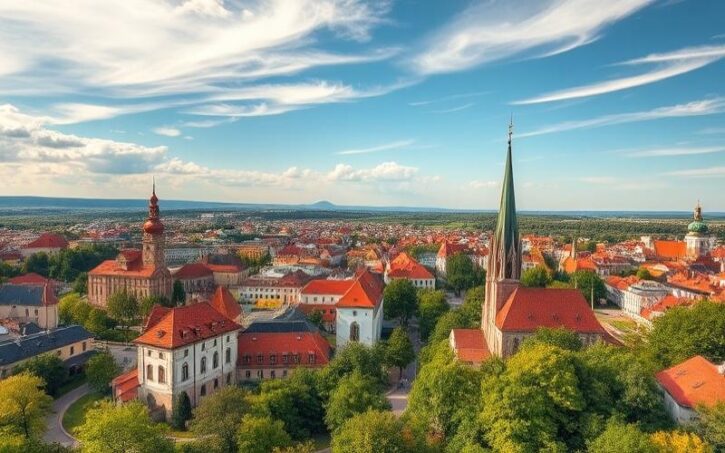
Latvia is perceived by expatriates as a country spared from mass tourism, characterized by omnipresent nature (forests cover over 50% of the territory, lakes, rivers, and a long sandy coastline lined with pines). While Riga concentrates economic and cultural activity, cities like Jūrmala (a seaside resort), Liepāja, Daugavpils, Jelgava, Cēsis, or Sigulda offer quieter and often more affordable alternatives.
The state is a secular democracy, the level of safety is high, crime is still considered low on a European scale, and the quality of life is deemed good, even though the wealth level remains lower than in Western Europe. Life expectancy is around 75.7 years, and GDP per capita ranges between approximately $14,000 and $23,000 depending on sources.
Cost of Living: What You’ll Really Spend
The overall cost of living is slightly above the global average (index around 49.1), but Latvia remains one of the most affordable countries in the European Union, especially when compared to France, Benelux, or the Nordic countries.
In Riga, the cost of living index is around 49.8, with a rent index of about 11.9. In concrete terms, most expatriates estimate that a single person needs about €1,100 to €1,400 per month to live comfortably, excluding extravagances.
The estimated monthly cost of living for a single person in Riga, excluding rent.
| Expense Category | Indicative Monthly Range |
|---|---|
| Rent 1-bedroom apt. city center | ~€400 – 520 |
| Rent 1-bedroom apt. outside center | ~€270 – 370 |
| Utilities (85 m², incl. heating) | ~€170 – 320 (or €270–295) |
| Groceries | ~€200 – 300 |
| Public transport pass | ~€30 |
| Mobile phone + internet | ~€32 – 40 |
| Gym membership | ~€30 – 45 |
| Entertainment (movies, restaurants, cafes) | Variable, often moderate |
The average net salary is around €1,080–1,130 per month, a bit more in Riga (€1,190–1,300). The average salary would cover about 1.1 months of standard expenses. The minimum wage is lower (around €435), offering only very limited purchasing power, hence the benefit of coming with a skilled job, an international income, or an investment project.
For digital nomads, several estimates place the comfortable living budget around $2,800 to $2,900 per month, including coworking costs, a nice apartment, and regular outings.
Housing: Rent or Buy, Where and at What Price?
Housing is one of the country’s major strengths compared to Western Europe, but there are significant disparities between Riga, the coast, and provincial towns.
The Rental Market
Riga concentrates most professional and university opportunities, but it’s also where rents are highest. Prices, however, remain well below those of major Western European capitals.
| Type of rental in Riga | City Center (€/month) | Periphery (€/month) |
|---|---|---|
| 1-bedroom apartment | ~€393 – 523 | ~€273 – 364 |
| 3-bedroom apartment | ~€740 – 960 | ~€491 – 645 |
In other cities, the differences are marked. In Jūrmala, an upscale seaside resort, a simple one-bedroom apartment in the center can reach or exceed €900–1,000 in monthly rent. Conversely, in Liepāja, a 1-room apartment in the center can rent for around €250–260 per month.
The rental market offers furnished apartments, often for short or medium stays, and unfurnished apartments, usually more suitable and sometimes more economical for long-term rentals. Expect agency fees equivalent to one month’s rent, paid by the tenant, as well as a security deposit, typically between one and three months’ rent.
Signing a written lease is the norm, and this document may be required to open a bank account, register with authorities, or obtain a residence permit. For an expatriate, starting with a rental allows you to discover different neighborhoods and avoid rushing into a purchase.
Buying Property
Foreigners can freely purchase apartments and houses. Buying land is more regulated, particularly for agricultural land, forestry land, border zones, dunes, and certain coastal areas (specific permits required, sometimes systematic refusals).
In Riga, the average price per square meter hovers around this value.
| Location in Riga | Average Purchase Price (€/m²) |
|---|---|
| City Center | ~€1,870 – 2,600 |
| Outside Center | ~€1,200 – 1,600 |
| New high-end developments | ~€2,000 – 3,000 |
The median price for a house in Riga is around $189,000. In some provincial towns like Daugavpils or Liepāja, prices can drop to €500–1,000 per square meter, or even less in older buildings.
Purchasing a property worth at least €250,000 can serve as a basis for a residence permit application under the investment residence program (often referred to as the Latvian “Golden Visa“). Mortgage interest rates for a 20-year loan vary around 4.2–4.7% per year. Home insurance is not always legally mandatory, but banks require it for a loan.
Daily Life: Food, Entertainment, Transportation
Latvia remains generally affordable for daily life. Food, leisure, and transportation prices are moderate, provided you don’t frequent gourmet restaurants and taxis excessively.
Overview of average prices for various food products and meals in Latvia, to help you budget.
A simple meal at an inexpensive restaurant: €10–15. A fast-food combo meal: €7–8. A three-course meal for two at a mid-range restaurant: €40–60.
A bottle of local beer: €1–1.5. A loaf of bread: €1.20–1.60. A liter of milk: €1.1–1.2. A dozen eggs: €2.6–2.8.
For entertainment, a movie ticket costs about €7–10, a gym membership is €30–45 monthly, while a single public transport ticket is around €1.15–1.50, and a monthly pass in Riga is about €30.
The public transport network adequately covers major cities, although some consider it a bit expensive relative to the service. The most used taxi, especially via app, is Bolt (formerly Taxify). Fuel prices remain within the European average (around €1.6–1.8 per liter of gasoline).
Understanding Visas and Residence Permits
The installation procedures differ depending on whether you are a citizen of the EU/EEA/Switzerland or a third-country national.
Citizens of the EU, EEA, and Switzerland
For nationals of the European Union, the EEA, and Switzerland, Latvia is part of the free movement area. You can enter, live, and work in the country without a visa. However, it is mandatory to register with the Office of Citizenship and Migration Affairs (OCMA) after 90 days to obtain a certificate of residence. This registration generally requires a passport or ID card, proof of accommodation, proof of sufficient means of subsistence (employment, income, savings), and health insurance.
Short-Stay Visas (Schengen C)
For stays of less than 90 days within a 180-day period, nationals of many third countries must apply for a short-stay Schengen visa. The conditions are standard: a recent passport valid for several months after the intended departure, medical insurance covering the entire Schengen Area, proof of sufficient funds (at least €14 per day, with a minimum of €780 for longer stays), proof of accommodation and return, and sometimes specific supporting documents. Applications are made through Latvian consulates or authorized centers (e.g., VFS Global in some countries).
Long-Stay Visas and Residence Permits
For an expatriation project, it’s the combination of a national long-stay visa (D) + temporary residence permit that matters. Several categories exist depending on the purpose of the stay:
Grounds for obtaining a residence permit in Latvia include salaried work (with an offer from a local employer), higher education studies, family reunification, establishing a business or startup, investment (via a Golden Visa-type program), or remote work (digital nomad visa).
The procedures generally include a valid passport, ID photos, an application form, health insurance, a clean criminal record, an employment contract or company documents, proof of accommodation, and sufficient financial means (often at least the equivalent of the monthly minimum wage or more, depending on the permit type).
Digital Nomad Visa and Remote Work
Latvia offers a specific long-stay visa for remote workers, often referred to as a digital nomad visa. It is aimed at non-EU/EEA nationals who work remotely for an employer or clients based outside Latvia, provided that entity is registered in an OECD member country.
The visa is valid for one year and is renewable once, for a total of two years. After this period, it is possible to apply for permanent residence, and later for Latvian citizenship after several years of residence and passing a language exam. It is important to note that this visa generally does not authorize working for a Latvian employer or engaging in business with local clients, to avoid creating a ‘taxable presence’ in Latvia.
The required income thresholds vary depending on sources (between approximately €2,800 and over €4,000 monthly), which requires checking the updated requirements with the consular authorities or the OCMA. International health insurance covering at least €30,000 to €42,600 in expenses is required, as well as proof of accommodation, bank statements, and contracts.
Residence by Investment: The “Golden Visa”
Latvia has implemented an investment residence program allowing for a temporary residence permit in exchange for a qualified investment. This permit grants the right to live in the country, travel freely within the Schengen Area, and eventually aim for permanent residence and then citizenship under conditions (including language proficiency).
The main investment options include: shares, bonds, real estate, mutual funds, and cryptocurrencies.
| Investment Option | Minimum Investment Amount | Approximate State Fees |
|---|---|---|
| Real Estate | €250,000 | ~5% in duties/gov’t fees |
| Participation in a Company | €50,000 (small company) or €100,000 (larger) | ~€10,000 |
| Government Bonds | €250,000 | ~€38,000 |
| Bank Deposit | €280,000 (5-year term) | ~€25,000 |
Conditions include legal origin of funds, a clean criminal record, health insurance, and often a minimum monthly income (e.g., €2,220 for the main applicant, €740 for the spouse, €222 per minor child in some configurations). The permit is generally valid for up to five years, renewable, with the possibility of permanent residence after five years.
Taxation: What Changes for Your Taxes
Moving to Latvia isn’t just a change of climate. Local taxation can significantly impact your situation, especially if you retain international income.
Tax Residency Status
You generally become a tax resident of Latvia if your declared residence is in Latvia or if you stay there for at least 183 days within a rolling 12-month period. A tax resident is taxed on worldwide income, while a non-resident is taxed only on Latvian-sourced income.
The personal income tax system is progressive. Recent figures indicate:
The Latvian tax system applies a tax rate of approximately 20% on income up to a threshold of around €20,000 per year. For income exceeding this threshold, the rate rises to 31.4%. Additionally, a solidarity tax of 25% may apply to the portion of annual income exceeding €78,100. This solidarity tax is calculated at the time of the annual income declaration.
A monthly non-taxable minimum (approx. €510) and allowances for dependents (approx. €250 per month per person) exist.
Social Contributions and Other Taxes
Social contributions are substantial: approximately 10.5% paid by the employee and 23.6% for the employer, totaling over 34% on the gross salary, with an annual cap beyond which a specific “solidarity” tax applies.
The standard VAT rate in Latvia is 21%.
Double Taxation Agreements
Latvia has a network of about 60 bilateral tax treaties, including most EU countries, the United States, Canada, Australia, Japan, etc. These treaties aim to avoid the same income being taxed twice and organize the allocation of taxing rights (using the credit method or exemption method depending on the case).
For U.S. citizens, tax obligations to the United States remain even when residing abroad, but it is possible, through the foreign tax credit or income exclusion mechanisms, to avoid double taxation in practice, subject to proper structuring.
Healthcare System: Public, Private, and Insurance
The Latvian healthcare system is based on a mixed public/private model organized by the Ministry of Health and the National Health Service (NVD). Access to the public system primarily depends on residency status.
Annual cap on patient co-payments (cost-sharing) for healthcare services for citizens and permanent residents in Latvia.
For foreigners, the rule is more restrictive: holders of temporary permits often must rely on private insurance, unless they are employed or covered under specific schemes. Foreign students and some permit holders for studies must mandatorily take out private health insurance to obtain or renew their residence permit.
Many expatriates turn to the private sector, which offers modern facilities in Riga (like Capital Clinic Riga or AIWA Clinic) with English-speaking doctors. Wait times are much shorter there, especially for specialists. Private health insurance costs on average between €50 and €150 per month, with international plans available from insurers like Cigna Global, AXA, or April.
Emergency services (112, and 113 for ambulance) are accessible to all, including visitors, without selection by residency status. However, it is recommended to inquire in advance about referral hospitals and keep your insurance policy number on you.
Education and Schooling: A Key Issue for Families
For expatriate families, the question of schools is central. Latvia has a network of public schools in Latvian, free for EU citizens, but the language barrier can be significant, especially for older children.
Public System
School is compulsory from ages 5 to 16. The system is structured into two years of preschool, nine years of primary/lower secondary, and upper secondary general or vocational education. Almost all teaching is in Latvian, although there are institutions with streams partially in Russian or other languages. Diplomas are recognized at the European level, and enrollment rates are high.
For an expatriate child with no Latvian background, integration into a public school can be difficult, especially during adolescence. Intensive language courses can facilitate this transition. Some institutions offer adapted conditions for welcoming international students.
International Schools
Most long-term expatriate families opt for an international school, mainly in Riga and its greater suburbs. These institutions offer curricula in English, French, or German, often with internationally recognized programs (IB, British Curriculum, accredited French program, etc.).
Examples of school profiles:
| International School (Riga and surroundings) | Ages Covered | Main Language & Curriculum | Approx. Annual Fee Range |
|---|---|---|---|
| International School of Latvia (Piņķi) | 2–18/19 years | Full IB (PYP, MYP, DP) in English | ~€8,800 – 22,300 |
| Exupery International School | 2–18 years | British + IB in English, boarding possible | ~€12,800 – 21,800 |
| King’s College, The British School of Latvia | 2–18 years | British Curriculum + IB in English | ~€12,100 – 22,950 |
| International School of Riga | 2–18 years | IB + International Middle Years in English | ~€12,500 – 20,400 |
| Lycée Français Jules Verne / Lycée Français de Riga | ~2–18 years | Accredited French program in French | ~€6,500 – 8,300 (depending on cycle) |
| Deutsche Internationale Schule Riga | 2–12 years | German program in German | ~€8,400 – 10,400 |
| International Montessori School of Latvia | 3–12 years | Montessori + IB PYP in English | ~€9,300 – 10,200 |
Annual fees generally range from €6,500 to over €22,000 depending on the level, institution, and included services (cafeteria, transport, extracurricular activities, boarding options…). Class sizes remain limited, favoring individualized follow-up.
Higher Education
Latvia has 29 higher education institutions, and several universities host a growing number of international students. The University of Latvia, Riga Technical University (RTU), and Riga Stradiņš University (RSU) are particularly well-known. Programs in English exist in many disciplines, especially in medicine, engineering, sciences, and management, with tuition fees generally well below those of Anglo-Saxon countries.
Language and Integration: Latvian, Russian, English
The official language is Latvian, a Baltic language related to Lithuanian but not mutually intelligible. It is omnipresent in administration, education, media, and daily life. In major cities, a significant Russian-speaking minority remains, especially in the east of the country and some districts of Riga. English is widely understood in the business world, among younger generations, and in tourist areas.
For long-term settlement and aiming for permanent residence or even citizenship, learning Latvian is highly recommended, especially since passing an official language exam is required for some procedures (naturalization, sometimes certain residence statuses). The language may seem difficult at first (many grammatical cases, diacritics, pronunciation) but it remains consistent and regular.
Learning opportunities are varied:
Different methods and resources to start or deepen your learning of the Latvian language.
Private or small group lessons with specialized teachers, available in person or online.
Language centers like Nordisk or university institutions (e.g., UCL SSEES distance Latvian courses).
Free or low-cost resources like e-Laipa, Loecsen, LingoHut, and other public platforms.
Subsidized Latvian language courses, especially for refugees and certain residents, sometimes with a small daily stipend.
Several platforms emphasize the importance of practicing a little every day, focusing first on oral comprehension and full sentences to manage basic situations (shopping, transportation, administrative procedures).
Even if English allows you to function daily in Riga, learning Latvian remains a strong sign of integration appreciated by locals, and a professional asset in certain sectors.
Culture, Society, and Social Life for Expatriates
Latvia is not known for its exuberance. Latvians can seem reserved, even cold, at first. Social interactions are often more formal (handshakes, use of surnames and titles, sober dress), and raising one’s voice or boasting is avoided. But once trust is established, relationships can become warm and lasting.
Riga offers a rich cultural life with its medieval old town, a UNESCO World Heritage site, Art Nouveau architecture, Baroque palaces like Rundāle, and large markets including the Central Market, one of the largest in Europe. The city also has many theaters, concert halls, and museums. Latvia maintains a strong musical tradition, hosting one of the world’s oldest song and dance festivals.
To break out of the expatriate bubble, book clubs, language exchange meetups, local cultural events, and sports associations (running, beach volleyball, disc golf, etc.) are good avenues. Several structured expatriate communities also exist:
Discover different communities and platforms to meet other expatriates, exchange information, and integrate in Riga and Latvia.
The world’s largest expatriate community, offering regular events, activity groups, and an online forum for international residents in Latvia.
Find groups dedicated to expatriates, nomads, language exchanges, board games, and many other shared interests.
Clubs specifically designed for expatriate women, offering a support network, social activities, and connection opportunities.
Join Facebook groups dedicated to expatriates living in Latvia or specifically in Riga for advice, announcements, and meetups.
Experience reports mention both a strong sense of safety (very clean city, low crime, good acceptance of women traveling alone and LGBTQ+ individuals) and some drawbacks: some streets in poor condition, long and cold winters, some urban areas a bit depopulated, latent tensions between linguistic communities.
Finally, note: tap water is officially drinkable according to European standards, but some expatriates report it’s rarely drunk straight and prefer filtered or bottled water, mainly due to taste.
Opening a Bank Account and Managing Your Money
The Latvian banking system is modern, highly digitized, and fully integrated into the eurozone and SEPA. Opening an account by a foreigner is in principle possible, even for non-residents, but banks apply enhanced controls (anti-money laundering, verification of fund origin).
Major banks present include Swedbank (market leader), SEB, Luminor, Citadele, Rietumu, as well as more specialized players and online banks. Services are generally available in Latvian, Russian, and English.
To open a personal account, the following are often required:
To open a bank account in Latvia, several documents are necessary: an ID (passport or ID card), proof of address (Latvian or foreign), possibly a residence permit or long-stay visa, proof of income or source of funds (such as an employment contract or bank statements), and a tax identification number (from the country of origin or Latvian).
Opening fees for non-residents can range from €100 to €250, with modest account maintenance fees (€1–3 per month, sometimes free). ATMs are plentiful and standard SEPA transfers are low-cost, but international transfers outside SEPA remain expensive, hence the benefit of using fintechs like Wise for transfers outside the eurozone.
A local bank account is often necessary to receive a salary, pay rent, or subscribe to certain services (phone plan, electricity, etc.).
Health, Safety, and Environment
Latvia ranks among the safest countries in Europe. Violent crimes are rare, although, as everywhere, basic precautions are necessary in crowded tourist areas (possible pickpockets in the old town or Riga Central Market).
Minimum perceived temperature that can be reached in winter in the Baltic climate.
Customs regarding alcohol are quite pronounced: consumption is high, and Riga’s nightlife can be very lively. Conversely, legislation on drugs is strict: cannabis remains illegal.
How to Choose Your City and Prepare Your Project
Most expatriates start with Riga, which concentrates over half of the national GDP, most skilled jobs, major universities, and almost all international schools. The most sought-after neighborhoods include the historic center, the Art Nouveau district, Mežaparks (near a large park), and some well-connected areas.
Jūrmala offers a chic seaside setting but at a high cost of living. Provincial towns like Liepāja, Daugavpils, Jelgava, or Cēsis offer a more rural and peaceful environment with a much lower cost of living, but with a more limited local job market and sometimes restricted access to private healthcare and international schools.
To prepare your move serenely:
– clearly define your project (duration, type of visa, professional or income strategy)
– compare housing costs in several cities and neighborhoods
– secure temporary accommodation for the first weeks (apartment hotels, furnished rentals)
– start visa and residence permit procedures early enough (considering processing times)
– anticipate health coverage (international or local insurance)
– plan an installation budget including security deposit, agency fees, furniture, visa and registration fees
– initiate procedures for schools as early as possible if you have children.
In Summary
Moving to Latvia as an expatriate means choosing an EU country that is both safe, relatively affordable, well-connected digitally, and still on a human scale. The contrast is sharp with saturated major capitals: here, nature remains omnipresent, rents, even in Riga, are often lower than in Western Europe, and it’s possible to access international education and a modern healthcare system, provided finances and insurance are well-organized.
Expatriation in Latvia comes with challenges to consider: a rigorous winter climate, a demanding official language to master, a certain reserve in social relations, and potentially complex administrative procedures. For third-country nationals, these procedures notably involve managing visas, residence permits, meeting income requirements, and taking out mandatory insurance.
By informing yourself precisely about visa types, real cost of living, taxation, schooling and healthcare options, and integrating the language dimension very early, you maximize your chances of turning a simple Baltic expatriation into a truly sustainable new chapter of life in Latvia.
Disclaimer: The information provided on this website is for informational purposes only and does not constitute financial, legal, or professional advice. We encourage you to consult qualified experts before making any investment, real estate, or expatriation decisions. Although we strive to maintain up-to-date and accurate information, we do not guarantee the completeness, accuracy, or timeliness of the proposed content. As investment and expatriation involve risks, we disclaim any liability for potential losses or damages arising from the use of this site. Your use of this site confirms your acceptance of these terms and your understanding of the associated risks.

Cyril Jarnias is an independent expert in international wealth management with over 20 years of experience. As an expatriate himself, he is dedicated to helping individuals and business leaders build, protect, and pass on their wealth with complete peace of mind.
On his website, cyriljarnias.com, he shares his expertise on international real estate, offshore company formation, and expatriation.
Thanks to his expertise, he offers sound advice to optimize his clients' wealth management. Cyril Jarnias is also recognized for his appearances in many prestigious media outlets such as BFM Business, les Français de l’étranger, Le Figaro, Les Echos, and Mieux vivre votre argent, where he shares his knowledge and know-how in wealth management.





