
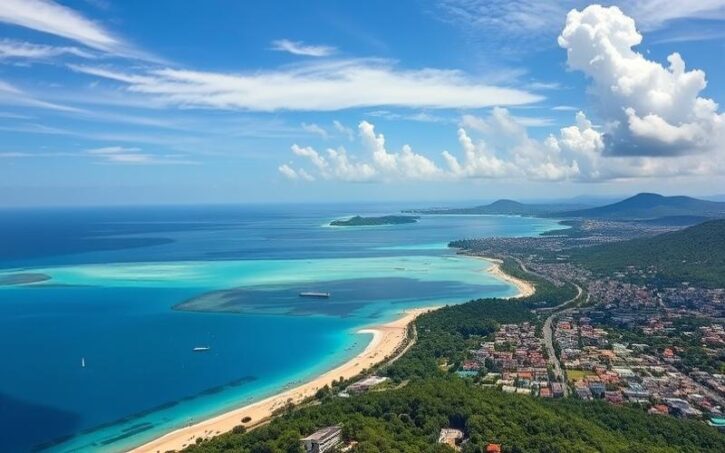
 Published on and written by Cyril Jarnias
Finding housing in the Dominican Republic, with its idyllic beaches and exotic ambiance, is an adventure that attracts more and more people seeking a new home under the Caribbean sun. However, this dream requires careful preparation and a good understanding of local specifics to avoid common pitfalls. Whether it’s navigating the real estate market, understanding legal subtleties, or adapting to cultural particularities, each step is crucial to ensure a successful move. In this article, we reveal practical tips and valuable tricks to simplify your housing search and make your move to the Dominican Republic as enjoyable as the country itself.
Finding the Ideal Housing in the Dominican Republic: A Practical Guide
Essential Criteria for Choosing the Ideal Housing in the Dominican Republic:
- Location: Proximity to the beach, downtown, safe neighborhoods, or tourist hubs.
- Budget: Wide range of prices depending on the region and type of housing. Studios or micro-apartments offer affordable solutions in urban centers, while luxury villas are located in upscale tourist areas.
- Proximity to Amenities: Access to drinking water, stable electricity, internet, shops, schools, and healthcare services. The availability and quality of infrastructure vary by region.
- Types of Available Housing:
- Apartments (often beachfront or in the city)
- Townhouses (ideal for families or expats)
- Villas (often luxurious, with pool and sea view)
- Buildable Land (for custom projects)
- Resorts (hotel complexes, mainly for temporary stays)
- Micro-apartments (for small budgets or short-term rentals)
Comparative Table of Housing Types and Their Primary Target:
| Type of Housing | Primary Target | Indicative Budget (USD) | Common Location |
|---|---|---|---|
| Apartment | Renters, young professionals, expats | 80,000 – 400,000 | Cities, beachfronts |
| Townhouse | Families, expats | 150,000 – 300,000 | Large cities (SD, Santiago) |
| Luxury Villa | Investors, wealthy families | 1,000,000 and up | Tourist areas |
| Micro-apartment | Small budgets, young people, short stays | 50,000 – 120,000 | Urban centers |
| Buildable Land | Developers, individuals | 30,000 – 500,000+ | Urban, tourist, rural |
| Resort | Tourists | Variable, depending on season | Beach areas |
Regional Differences and Their Influence on Housing Choice:
- Santo Domingo: Capital, dynamic urban life, high demand for townhouses and family apartments. Proximity to services, good infrastructure but dense traffic.
- Punta Cana: Major tourist area, strong presence of villas, beachfront apartments, and resorts. Ideal for rental investments or second homes.
- Puerto Plata: Historic beach destination, diversified market between apartments, villas, and houses. More affordable prices than Punta Cana, but services are sometimes less modern.
Administrative Steps for Renting or Buying:
- Foreigners can freely purchase real estate.
- Verify the regularity of property titles with a notary.
- Plan for additional fees: transfer tax, agency and notary fees.
- Sign a reservation contract, then a purchase/sale contract or lease agreement.
- For renting, require a written contract detailing the duration, rent amount, charges, deposit, and termination conditions.
- For buying, prioritize assistance from a local lawyer to avoid any disputes.
Particularities of the Dominican Real Estate Market:
- Specific taxation: local tax on rental income (27%), advantages for certain investments under the CONFOTUR regime.
- Variation in infrastructure quality (water, electricity, internet) depending on the region.
- Attractive market for expats and investors, but caution is needed regarding document regularity and the reliability of intermediaries.
Search Platforms and Networks:
- Local and international real estate agencies
- Specialized online platforms (e.g., Dominican real estate listing sites)
- Social networks, expat groups
- Word-of-mouth, local contacts
Tips to Avoid Scams and Secure the Transaction:
- Always visit the property in person or mandate a trusted representative.
- Prioritize reputable or recommended agencies.
- Verify the authenticity of documents and the owner’s identity.
- Never pay a deposit without a written contract.
- Demand an official receipt for each payment.
Tips for Negotiation and Understanding Contracts:
- Compare several properties to better negotiate the price.
- Analyze the contract clauses (duration, indexation, charges, condition report).
- Arrange for a certified translation of the contract if written in Spanish.
- Negotiate additional fees (deposit, maintenance, furniture).
- Have the list of included equipment and the property’s condition specified.
Practical Summary:
- Choose the location carefully based on your needs (work, school, leisure, safety).
- Evaluate the total budget, including additional fees.
- Check access to essential services.
- Take the time to visit or mandate an independent professional.
- Get assistance from a lawyer or a recognized agency to secure the transaction.
- Read contracts carefully and ask all questions before signing.
Good to know:
Choose the location carefully, taking into account regional differences: Santo Domingo is lively and urban, Punta Cana offers paradise beaches, and Puerto Plata combines colonial charm with modernity; using reliable real estate agencies is crucial to avoid scams and negotiate prices effectively.
Calculating the Housing Budget in the Dominican Republic: What You Need to Know
Estimated Current Costs for Different Types of Housing
In the Dominican Republic, real estate prices vary greatly depending on the type of housing (apartment, house, condo) and location. Here is an overview of average prices observed in 2025:
| Type of Property | Average Price per m² (in €) | Average Price per m² (in DOP) |
|---|---|---|
| Apartment (city) | 1,367 – 1,498 | 136,588 |
| Apartment (suburbs) | 1,042 | 74,397 |
| House | 74,397 (Santo Domingo) to 133,472 (Las Terrenas) | see regional table |
| Condo | Similar to apartment | — |
Note: condos are often located in tourist areas and may come at a premium.
Price Variations by Main Region
| City / Region | City Center Price (€/m²) | Suburb Price (€/m²) | Price/m² (DOP) – Apartments | Price/m² (DOP) – Houses |
|---|---|---|---|---|
| Punta Cana | 2,695 | n/a | 140,768 | 105,389 |
| Las Terrenas | 1,694 | n/a | 139,547 | 133,472 |
| Santo Domingo | 1,368 | ~1,042 | 136,588 | 74,397 |
| Sosúa | 1,247 | n/a | €1,247.38 | n/a |
| Puerto Plata | 1,111 | n/a | €1,110.57 | n/a |
| Cabarete | 1,179 | n/a | 145,986 | 115,345 |
| Boca Chica | — | — | 315,803 | 79,032 |
Rental: Estimated Monthly Rents
- 3-room apartment in the suburbs:
- Average price: €438 (28,360 DOP)
- Range: €231 to €1,004
- In the city or tourist areas, rents are generally higher.
Additional Expenses to Plan For
- HOA Fees: vary depending on the residence, services, and security (from €50 to €300/month depending on the standard).
- Property Tax (IPI): exemption up to 9,500,000 DOP (approx. €150,000) of cadastral value; beyond that, 1% annually.
- Home Insurance: 0.15 to 0.5% of the property value/year (basic coverage).
- Purchase Fees: notary, registration, transfer tax (approx. 3 to 5% of the purchase price).
Local Financing Options
- Local mortgage loans accessible to foreigners (down payment often required, rates from 7 to 10%/year).
- Developer payment plan for new programs, often interest-free during construction.
- Short-term loans for rental investments, subject to solvency conditions.
Short-Term and Long-Term Rental Opportunities
- Short-term rental: very developed in Punta Cana, Las Terrenas, beach areas; gross rental yields of 6 to 10%.
- Long-term rental: more stable in large cities (Santo Domingo, Santiago), rents in DOP, better predictability.
- Seasonal occupancy: high occupancy rate during peak tourist season, significant fluctuations off-season.
Tips for Establishing a Realistic Housing Budget
- Take into account the exchange rate: the Dominican peso can fluctuate against the euro/dollar, impacting the real cost for expats.
- Consider recurring charges (water, electricity, internet, security), often not included in rents.
- Prioritize a safety margin to cover unforeseen events (repairs, charge increases, exchange rate variation).
- Stay informed about the local economic situation (inflation, growth, fiscal policy).
- Compare several regions and types of properties based on your needs (proximity to the sea, schools, hospitals, shops).
Key Takeaways
The housing budget in the Dominican Republic heavily depends on the region, type of property, and additional fees. It is essential to include charges, taxes, insurance, and monitor the exchange rate to avoid unpleasant surprises.
Good to know:
Rental prices vary greatly between major cities: in Santo Domingo, expect about 500 USD per month for an apartment, while in Punta Cana, prices can reach 800 USD. Remember to add 100 to 150 USD for utilities and check short-term rental options, especially in tourist areas.
Popular Expat Neighborhoods in the Dominican Republic
The most popular neighborhoods for expats in the Dominican Republic stand out for their atmosphere, safety, quality of life, and variety of available services. Here is an overview of the favorite areas for different expat profiles:
| Neighborhood / City | Type of Atmosphere | Main Strengths | Average Housing Cost (Monthly) |
|---|---|---|---|
| Piantini (Santo Domingo) | Chic urban | High security, modern apartments, proximity to offices & shopping centers | $1,500 to $3,000 USD (3-bedroom apartment) |
| Naco (Santo Domingo) | Dynamic urban | Lively nightlife, many restaurants and shops | $1,200 to $2,500 USD |
| Bella Vista / Los Cacicazgos | Quiet residential | Green spaces, international schools, private hospitals | $900 to $2,000 USD |
| Casa de Campo (La Romana) | Ultra-luxury resort | Spacious villas, world-renowned golf, absolute private security | From $4,000-$5,000 USD |
| Punta Cana – Cap Cana/Bávaro/Cortecito | Tourist beachfront | Paradise beaches, active nightlife or family-friendly areas depending on the zone | Studios from $800 USD; villa >$2,500 USD |
| Sosua/Playa Alicia/Montescristi | Small coastal town | Large English-speaking expat community; clubs/restaurants/bars; accessible beaches | Studios from $700-$800 USD |
Main Reasons for Popularity
- Quality of life: tropical climate year-round; warm welcome from Dominicans.
- Safety: strong police presence in upscale neighborhoods and private resorts.
- Amenities: easy access to international schools and private medical facilities in major cities.
- Services: modern shopping centers (especially in Santo Domingo), beachfront leisure activities.
- Proximity to tourist/professional sites: well-served international airports from Punta Cana/Santo Domingo.
Main Differences Between These Neighborhoods
Urban neighborhoods (Piantini/Naco/Bella Vista/Los Cacicazgos):
Ideal for families or professionals seeking modern infrastructure and urban amenities. Rents are higher but offset by immediate access to international offices or private schools.
Beach areas (Punta Cana/Sosua):
Perfect for those who prioritize the beach daily or work in the tourism/hospitality sector. The atmosphere is more relaxed, but some specialized services may be less accessible off-season.
Gated communities/extreme luxury (Casa de Campo/Cap Cana):
Reserved for a very wealthy clientele seeking absolute privacy and high-end services. Ideal for wealthy investors/families wanting maximum security.
Practical Tips for Settling in These Areas
- Prioritize a furnished rental initially to explore several neighborhoods before a final purchase.
- Verify that the chosen neighborhood has the desired infrastructure (international supermarket, suitable school…).
- Consider proximity to the airport if frequent travel is necessary.
- Inquire about the local expat association in the target neighborhood to facilitate social integration.
To successfully settle in the Dominican Republic, it is recommended to do a preliminary on-site reconnaissance, exchange with foreign residents already established, and prioritize written contracts for any real estate transaction.
Each neighborhood thus meets different needs – from exclusive luxury to cosmopolitan urban atmospheres, to the relaxed conviviality of beach resorts – allowing everyone to find a suitable setting according to their desired lifestyle.
Good to know:
Punta Cana attracts with its quality of life and beaches, while Santo Domingo appeals with its amenities and professional opportunities; the average housing cost ranges from 800 to 1500 dollars per month, always check the neighborhood’s safety and explore roommate options.
Disclaimer: The information provided on this website is for informational purposes only and does not constitute financial, legal, or professional advice. We encourage you to consult qualified experts before making any investment, real estate, or expatriation decisions. Although we strive to maintain up-to-date and accurate information, we do not guarantee the completeness, accuracy, or timeliness of the proposed content. As investment and expatriation involve risks, we disclaim any liability for potential losses or damages arising from the use of this site. Your use of this site confirms your acceptance of these terms and your understanding of the associated risks.

Cyril Jarnias is an independent expert in international wealth management with over 20 years of experience. As an expatriate himself, he is dedicated to helping individuals and business leaders build, protect, and pass on their wealth with complete peace of mind.
On his website, cyriljarnias.com, he shares his expertise on international real estate, offshore company formation, and expatriation.
Thanks to his expertise, he offers sound advice to optimize his clients' wealth management. Cyril Jarnias is also recognized for his appearances in many prestigious media outlets such as BFM Business, les Français de l’étranger, Le Figaro, Les Echos, and Mieux vivre votre argent, where he shares his knowledge and know-how in wealth management.





