
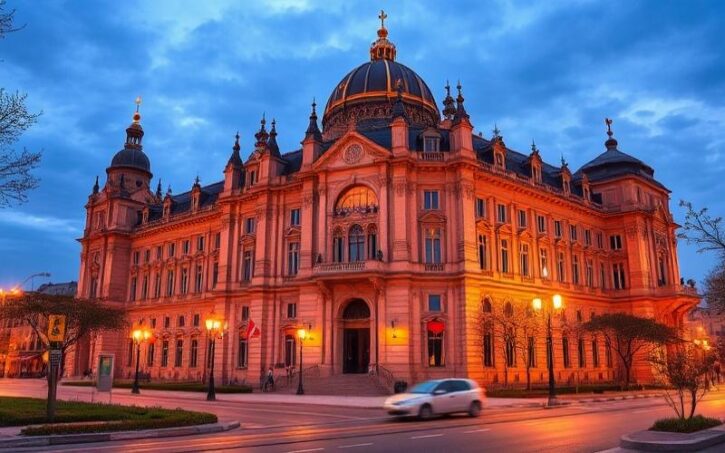
 Published on and written by Cyril Jarnias
As we approach the year 2030, attention is increasingly turning to certain Romanian cities where a price explosion could reshape the country’s economic and social landscape. With sustained economic growth and booming urban development, cities such as Cluj-Napoca, Iași, and Timișoara are positioning themselves as major hubs for foreign investment and new technologies.
However, this dynamic is also driving a surge in real estate prices and the cost of living, creating both opportunities and challenges for residents and policymakers. Fueled by growing demand and an ever-stronger appeal for these dynamic urban centers, this phenomenon raises questions about economic accessibility for future generations in this rapidly transforming country.
Economic Forecasts for Romanian Cities in 2030
The main economic factors likely to influence the growth of Romanian cities by 2030 include foreign investments, major infrastructure projects, and government policies aimed at sustainable urban development.
Key Drivers of Urban Growth
| Economic Factor | Potential Impact on Urban Growth |
|---|---|
| Foreign Investments | Support industrialization, the tech sector, and real estate |
| Infrastructure Projects | Improve mobility, attractiveness, and quality of life |
| Public Policies | Guide the allocation of European/multilateral funds and regulate the market |
- Foreign Direct Investment (FDI): Romania benefits from significant FDI inflows (€118 billion in 2023), particularly supporting major cities like Bucharest, Cluj-Napoca, Timișoara, and Iași. These investments are crucial for financing high-value-added sectors such as technology and industry.
- Infrastructure Projects: The country leverages massive European funding (€30.6 billion) dedicated to urban public transport, building energy rehabilitation, and the modernization of heating/water networks. The focus is on sustainable development.
- Government Policies: National strategies emphasize “sustainable cities” with a growing prioritization of digitalization (“smart cities”), although their deployment sometimes remains slow due to administrative constraints.
Current Economic Trends in Major Metropolises
- Bucharest: National financial and tech hub; hosts a growing number of regional headquarters.
- Cluj-Napoca: Recognized center for IT innovation; pioneer of the 5G network.
- Timișoara & Iași: Rising prominence due to university and industrial development; hubs for tech startups.
List of major trends:
- Rapid growth of the tech sector (“smart cities,” connected devices)
- Accelerated development of the residential/commercial real estate sector
- Continued expansion of urban tourism
Promising Sectors Through 2030
| Sector | Expected Dynamic |
|---|---|
| Technology | Massive adoption of “smart city” solutions |
| Real Estate | Continuous rise in prices/housing demand |
| Tourism | Post-COVID recovery + local valorization |
Urban demographic expansion strongly stimulates these markets. “Smart city” initiatives, already present in over 140 Romanian cities (+16% between 2022–2023), make these hubs increasingly attractive to international investors and local talent alike.
Anticipated Challenges
- Rapid urbanization → Increased pressure on existing infrastructure
- Urban mobility → Urgent need to modernize public transport
- Necessary regulatory adaptation in the face of frequent legislative changes
Expected Effects on the Urban Real Estate Market
Growing demand linked to accelerated urbanization is expected to continue pushing real estate prices upward until 2030:
City Upward Factors Associated Risks Bucharest High FDI, major infrastructure projects Housing affordability Cluj-Napoca Tech/startup growth Land speculation Timișoara/Iași University/industrial dynamic Rental supply saturation
In the medium term, these developments could increase tensions on the affordability of new or renovated housing in all these dynamic areas. Structural improvement remains conditional on a sustained pace of public/private investments and regulatory stability favoring urban innovation.
Good to Know:
Economic forecasts for Romanian cities by 2030 reveal dynamic growth, fueled by significant foreign investments, ambitious infrastructure projects, and favorable government policies. Bucharest, Cluj-Napoca, Timișoara, and Iași are expected to experience significant expansion, driven by booming sectors like technology, real estate, and tourism. Currently, rapid urbanization and transport improvements are major challenges, but also opportunities for these metropolises. Consequently, housing demand is rising, leading to a potential surge in real estate prices. In Cluj-Napoca, for example, the tech sector attracts young professionals, increasing pressure on the rental market. These trends underscore the importance of robust urban planning to manage sustained growth.
Romania’s Promising Cities: A Real Estate Opportunity
Romanian Cities with High Potential for Economic Growth and Urban Development
The following cities stand out for their economic dynamism, attractive real estate market, and positive long-term prospects:
| City | Strengths | Average Real Estate Price (€/m²) | Recent Annual Change |
| Bucharest | Capital, major economic center, strong appeal for foreign investors, significant urban infrastructure projects | ~1700 | Moderate increase |
| Cluj | University city, IT hub, strong demographic growth, modern infrastructure | 2704 | +11% |
| Brașov | Tourist appeal, economic diversification, development of urban projects | 1870 | +3% in one month |
| Iași | Academic and tech center, sustainable urban mobility, European projects | Not specified | Increase reported |
| Constanța | Major port, market stability, tourism | Not specified | Stable since February |
Attractiveness Factors for Real Estate Investors
- Infrastructure Improvements
- Bucharest: massive investments in the digitalization of public services and modernization of urban infrastructure.
- Iași: €43 million European project dedicated to sustainable urban mobility.
- Brașov and Cluj: development of modern urban spaces and transport infrastructure.
- Increase in Employment Opportunities
- Cluj: tech center, strong development of the IT sector and startups.
- Bucharest: employment hub in finance, administration, and services.
- Iași: rise of the tertiary sector and digital services.
- Population Growth
- Cluj and Iași: demographic growth supported by university appeal and quality of life.
- Bucharest: over half of Romania’s foreign direct investment, boosting employment and residential demand.
Long-Term Economic Outlook
– Romania maintains GDP growth supported by private consumption and investments, despite a slight slowdown in 2025.
– Secondary cities like Cluj, Brașov, and Iași benefit from a decentralization of economic opportunities, fostering the emergence of new urban hubs.
– The real estate market remains dynamic, with an annual price index increase of 4.9% in the first quarter of 2025. Cluj stands out for the strongest growth and the highest prices in the country.
Government and Commercial Initiatives Stimulating the Real Estate Market
- Launch of urban infrastructure and sustainable mobility projects (e.g., Iași, Bucharest).
- Promotion of digitalization of public services and smart city management.
- Support for innovation and entrepreneurship, particularly in the tech and creative sectors.
- Incentives for sustainable housing construction and energy efficiency.
Testimonials and Sector Analysis
– “Bucharest continues to be the main pillar of the national economy and the most attractive city for foreign investors,” according to the Chamber of Commerce and Industry.
– “Cluj shows the highest increase and the highest prices in the country,” highlighting sustained enthusiasm for this university and tech city.
– Real estate experts note that access to credit remains favorable despite tighter monetary policies, and that real estate remains a safe haven against inflation.
Recent Statistics on Real Estate Price Trends
- Annual progression of the real estate price index in Romania: +4.9% in Q1 2025.
- Cluj: +11% year-over-year, average price at €2,704/m².
- Brașov: +3% in one month.
- Bucharest: moderate increase, average price around €1,700/m².
- Constanța: price stability since February.
Summary of Prospects
– The cities of Bucharest, Cluj, Brașov, Iași, and Constanța offer strong potential for real estate investors, driven by infrastructure modernization, economic innovation, and demographic growth.
– Public policies and local initiatives foster an environment conducive to urban development and the appreciation of real estate assets.
Good to Know:
Cluj-Napoca, Timișoara, and Iași stand out as Romanian cities with attractive prospects for real estate investment, thanks to a booming economy and constantly improving infrastructure. The increase in employment opportunities, particularly in the technology and services sectors, attracts a growing population, thereby strengthening real estate demand. Initiatives like the government program for urban development and improved infrastructure, including better transport connectivity, further amplify this appeal. According to experts, real estate prices in these cities have increased by an average of 5 to 7% in recent years, with forecasts of continued growth by 2030. These dynamics, supported by expert testimonials, illustrate the strong potential of these markets for investors looking to capitalize on rising residential demand.
Long-Term Investment in Romania: Which Areas to Choose?
Key Criteria for Selecting Long-Term Investment Zones in Romania
- Regional economic growth rate
- Level and pace of urbanization
- Government policies supporting development (e.g., tax incentives, public investments)
- Development and modernization of infrastructure (transport, logistics, digital)
- Presence of dynamic or emerging industries
- Demographic growth and attractiveness for skilled labor
- Local political stability and regulatory predictability
Comparative Analysis of High-Potential Cities by 2030
| City | Main Assets | Planned Infrastructure | Promising Sectors | Demographic Outlook |
|---|---|---|---|---|
| Cluj-Napoca | Major IT/tech hub; renowned universities; strong startup dynamic | Airport modernization, digital hubs | Tech, professional services | Continuous increase (+ young professionals) |
| Timișoara | EU logistics crossroads; automotive/aerospace industry; university hub | Road/rail network expansion | Manufacturing/logistics, IT | Stable growth |
| Iași | Major academic center; proximity to Moldova/Ukraine (cross-border exchanges) | New industrial zones & technology parks | Health/pharma, IT | Strong increase in students |
List of Reasons Making These Cities Attractive for Investors
- Economic diversification outside Bucharest with industrial and tertiary upscaling
- Available skilled workforce through major university hubs
- Increased support from local authorities for innovative projects
- European convergence effect: access to European funds/foreign investments
- Growing demand for residential and commercial real estate due to urbanization
Concrete Examples of Major Expected Infrastructures
- Construction or expansion of modern regional logistics centers
- Deployment of high-speed digital networks in all major urban centers
- Expansion or modernization of regional airports (notably Cluj-Napoca/Timișoara)
- Creation of new industrial parks to facilitate the reception of foreign investors
Developing or Emerging Industries
- Digital technologies / IT / outsourced services
- Advanced logistics & pan-European e-commerce distribution
- Green manufacturing industry (electric automotive/aerospace/defense)
- Biotechnologies & health/pharmaceuticals
Anticipated Demographic Growth
Projections indicate a notable increase in the number of residents in these three regional metropolises due to university/professional attractiveness and the partial return of diasporas.
Main Advantages for the Investor
- High potential for real estate appreciation (residential/commercial/logistics)
- Superior returns compared to more mature/Western markets
- Easy access to qualified local talent through universities/international networks
- Leverage effect linked to pro-investment/infrastructure public policies
Potential Risks
- National political volatility/election periods that could delay certain structuring projects.
- Cyclical slowdowns depending on export sectors reliant on the European/global context.
- Pressure on some already saturated infrastructures if growth is not accompanied quickly enough.
- Moderate risk on the regulatory/local framework depending on regional administrative maturity.
Visual Summary
✔️ Areas like Cluj-Napoca, Timișoara, and Iași combine technological innovation, sustained industrial development, strong urban growth, and favorable public strategies — making them prime targets for long-term investment oriented towards 2030.
Good to Know:
Long-term investment in Romania requires choosing rapidly expanding areas, notably Cluj-Napoca, Timisoara, and Iasi, which stand out for their promising economic growth. Cluj-Napoca is a booming tech center, attracting talent and companies, while Timisoara benefits from a strategic position near western borders and modernized infrastructure. Iasi, meanwhile, is becoming an educational and cultural hub, stimulating its demographic growth. These cities benefit from government policies aimed at fostering regional development, particularly through investments in road and digital infrastructure. However, it is essential to consider the risks related to economic volatility and the challenges of rapid urbanization, especially pressure on housing and public services, in order to maximize benefits while minimizing the risks associated with these investments.
The Impact of Urban Growth on the Romanian Real Estate Market
Drivers of Rapid Urban Growth in Romania (Last Decade)
- Sustained economic development, particularly in services, IT, commerce, and tourism
- Improvement of transport and communication infrastructure
- Post-communist industrialization and economic restructuring
- Increase in education levels and attractiveness of university centers
- Concentration of employment opportunities and investments in large cities
- Internal migration from rural areas to urban centers
- Development of urban tourism and valorization of historical and cultural heritage
Examples of Romanian Cities with High Urban Growth
| City | Main Dynamic | Specifics |
|---|---|---|
| Bucharest | Capital, economic and IT hub | Marked increase in real estate prices, population influx, vertical development (buildings) |
| Cluj-Napoca | University center, IT, services | Strong rental demand, rapid urban population growth, Romanian “Silicon Valley” |
| Timișoara | Industry, IT, logistics | Rapid modernization, growing foreign investments |
| Iași | University and cultural hub | Appeal for students and young professionals, real estate market boom |
| Brașov | Tourism, industry, services | Heritage valorization, price increase linked to tourism |
Influence of Urban Growth on the Real Estate Market
- Significant increase in demand for new and existing housing
- Rapid rise in real estate prices in large cities, sometimes exceeding the national average
- Development of new residential neighborhoods and peri-urban areas
- Tension in the rental market, with rising rents, especially in university and tourist centers
- Increase in domestic and foreign real estate investments
Urban Demographic Growth Forecasts Until 2030
- The share of the urban population in Romania is expected to continue increasing, exceeding 55% by 2030
- Projections indicate an increase in the number of inhabitants in major agglomerations, despite the overall national demographic decline
- Metropolitanization phenomenon, with concentration in large cities and relative decline of small rural localities
Expected Effects on Real Estate Demand and Prices
- Continuous increase in housing demand in large cities
- Risk of a real estate price explosion, especially in central and well-served neighborhoods
- Gradual shift of demand towards the urban periphery and satellite towns
- Emergence of social tensions related to housing affordability for young people and low-income households
Impact on the Local Economy: Advantages and Challenges
Advantages
- Revitalization of the urban economy through job creation and innovation
- Valorization of urban heritage and tourism development
- Increase in local tax revenues due to real estate and commercial activity
Challenges
- Pressure on urban infrastructure (transport, networks, public services)
- Increase in socio-spatial inequalities and the cost of living
- Risks of gentrification and exclusion of certain population categories
- Need to adapt the supply of affordable housing and control urban sprawl
Current or Planned Government Policies
- Development of social and subsidized housing programs
- Tax incentives for new housing construction and urban renovation
- Increased regulation of building permits and integrated urban planning
- Support for densification and functional mix of neighborhoods
- Investments in public transport infrastructure and sustainable mobility
- Promotion of public-private partnerships for urban development
- National and local strategies for improving housing affordability and sustainable management of urbanization
Key Takeaways
The rapid urban growth of major Romanian cities is profoundly transforming the real estate market, generating both economic opportunities and major challenges in terms of affordability and social cohesion. Public policies will need to balance urban attractiveness with inclusion, while anticipating demographic and economic developments by 2030.
Good to Know:
Rapid urban growth in Romania, catalyzed by infrastructure improvements, increased employment opportunities, and demographic shifts, has significantly influenced the real estate market over the past decade, particularly in cities like Bucharest, Cluj-Napoca, and Timișoara. This accelerated urbanization has already caused an increase in real estate prices, exerting growing pressure on housing demand. By 2030, the urban population is expected to continue growing, fueling price surges in major agglomerations. This situation brings economic benefits, such as stimulating local investments, but also poses challenges like the need for affordable housing solutions. Current government policies, which include market regulation and support for social housing development, seek to mitigate the effects of this urbanization on the real estate market, although their effectiveness is viewed with varying degrees of success.
Disclaimer: The information provided on this website is for informational purposes only and does not constitute financial, legal, or professional advice. We encourage you to consult qualified experts before making any investment, real estate, or expatriation decisions. Although we strive to maintain up-to-date and accurate information, we do not guarantee the completeness, accuracy, or timeliness of the proposed content. As investment and expatriation involve risks, we disclaim any liability for potential losses or damages arising from the use of this site. Your use of this site confirms your acceptance of these terms and your understanding of the associated risks.

Cyril Jarnias is an independent expert in international wealth management with over 20 years of experience. As an expatriate himself, he is dedicated to helping individuals and business leaders build, protect, and pass on their wealth with complete peace of mind.
On his website, cyriljarnias.com, he shares his expertise on international real estate, offshore company formation, and expatriation.
Thanks to his expertise, he offers sound advice to optimize his clients' wealth management. Cyril Jarnias is also recognized for his appearances in many prestigious media outlets such as BFM Business, les Français de l’étranger, Le Figaro, Les Echos, and Mieux vivre votre argent, where he shares his knowledge and know-how in wealth management.





