
 Published on and written by Cyril Jarnias
Settling in Latvia, and especially in its capital Riga, is no longer an exotic prospect for many executives, remote workers, and international families. Controlled cost of living, green living environment, high safety, fast internet, proximity to the sea and vast forests: the country checks many boxes for those seeking a new base in Europe. But once the destination is chosen, one question consistently arises: which neighborhoods to live in day-to-day?
In Latvia, the majority of expats reside in Riga and Jurmala, with some communities in cities like Cēsis, Liepāja, or Daugavpils. The choice of neighborhood or city is crucial, as each has a distinct identity influencing the atmosphere, type of housing, budget, access to nature, and proximity to international schools.
This article provides a detailed overview of the most popular neighborhoods for expats in Latvia, based on market data, real estate prices, and feedback from foreigners already living there.
Riga, the heart of expat life in Latvia
Riga is the main landing point for new arrivals. The capital concentrates more than half of the country’s GDP, hosts nearly all major companies, tech startups and international institutions, and houses most of the international schools. About one third of Latvia’s population lives in this metropolitan area.
Riga illustrates balanced urbanization: its hypercenter is pedestrian, its transportation relies on a dense network of trams, buses and trolleybuses, and nature is omnipresent, whether along the Daugava River, in the parks of the center, or in the forests of the Mežaparks district.
Expats represent a significant share of rental demand in central neighborhoods, between 15% and 20% of the market depending on the area, with peaks in the most premium zones where embassies, multinational headquarters, and international schools are located.
Klusais centrs and Centrs: the expat “golden triangle”
For many foreigners, especially diplomats, senior executives, and consultants on assignment, the first instinct is to look for housing in the heart of the capital. Two areas stand out: Centrs (the city center) and Klusais centrs, the “quiet center” adjacent to the immediate city center.
These neighborhoods offer remarkable Art Nouveau architecture, excellent proximity to offices, shops and transport, as well as an abundant supply of renovated apartments in historic buildings. They also stand out for the density of services available in English, the highest in the country.
Rents are logically higher than the Riga average, with a premium estimated between 20% and 30% over less central areas. The table below provides a broad overview of the price range in the neighborhoods most sought after by expats in Riga.
Table 1 – Purchase price ranges by neighborhood in Riga (€/m²)
| Neighborhood | Estimated low price | Estimated high price |
|---|---|---|
| Vecrīga (Old Town) | 2,500 € | 3,500 € |
| Mežaparks | 2,000 € | 3,000 € |
| Centrs | 1,500 € | 2,500 € |
| Ķīpsala | 1,800 € | 2,800 € |
| Teika | 1,200 € | 1,800 € |
| Āgenskalns | 1,000 € | 1,500 € |
| Zolitūde | 900 € | 1,200 € |
| Imanta | 700 € | 1,000 € |
| Bolderāja | 600 € | 900 € |
These orders of magnitude clearly illustrate the market hierarchy: Centrs and Klusais centrs clearly belong to the high segment, without however reaching the prices of the Old Town, where you mainly pay for tourist and heritage prestige.
The monthly rent for a furnished room or studio in Riga’s Quiet Center can reach this amount.
Expats generally accept these price levels in exchange for maximum proximity to offices, institutions, restaurants, and cultural venues. Walking becomes the primary mode of transportation, which reduces the need to own a car.
Vecrīga, the Old Town: postcard… and trade-offs
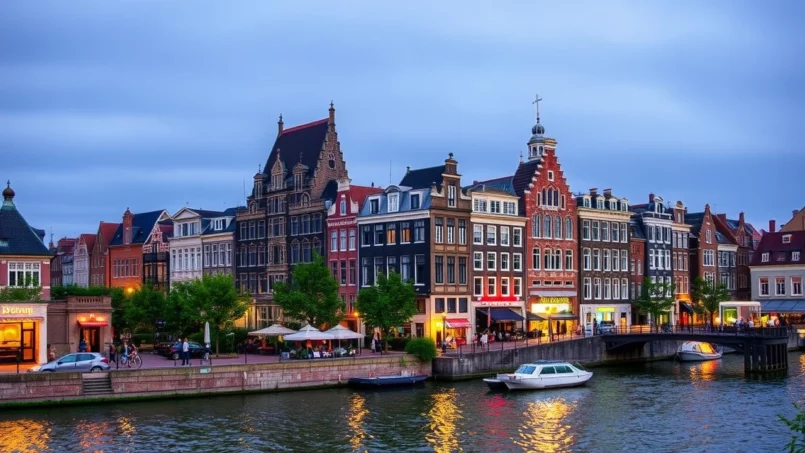
The Old Town, Vecrīga, is the most well-known image of the capital: cobblestone alleys, Gothic spires, colorful facades, lively squares, cafés and bars on every corner. A UNESCO World Heritage site, this area attracts both tourists and short-term expats.
Although charming, a tourist district has several drawbacks for permanent residents: nighttime noise, especially in high season, continuous flows of tourist groups, scarcity and high cost of parking, as well as rents significantly above average (e.g., between €1,400 and €2,000 per month for a well-located two-bedroom apartment).
Many long-term expats therefore prefer to live a few blocks from Vecrīga, in Centrs or Klusais centrs, to enjoy a more residential atmosphere while remaining a ten-minute walk from the historic heart. The Old Town, however, remains very interesting for short stays, seasonal rentals, or very urban profiles who accept more limited comfort in favor of an intense social life.
Skanste and the new business districts
On the edge of Centrs, the Skanste district embodies contemporary Riga: wide avenues, recent office buildings, headquarters of large companies, modern shopping centers, and newly delivered residential complexes. Many startups and service companies set up their offices here, attracting a population of young professionals, often international.
A modern and well-connected neighborhood, ideal for expats working in Riga’s dynamic sectors.
Drastic reduction in commute time for expats working in digital, finance, or shared services.
Perceived as a very safe and clean neighborhood, with recent, well-insulated housing and modern amenities.
Apartments with underground parking and contemporary amenities, suitable for couples and families.
In exchange, some regret a “somewhat sterile” environment, with less historical charm than in Centrs. Prices, meanwhile, are in the high end of the market, at levels comparable to nice city center buildings, especially for the newest residences.
Āgenskalns and Pārdaugava: the other rising bank
Crossing the Daugava River to the left bank reveals another facet of the capital. Several neighborhoods there are gaining popularity among expats, foremost among them Āgenskalns.
This area mixes wooden houses, small old apartment buildings, a renovated market hall, independent cafés, and a very “local” vibe. Artists, creatives, young families, and foreign students find a more authentic atmosphere and a slightly lower cost of living than on the right bank. Rents are estimated to be 15% to 20% lower than in the city center while remaining relatively close geographically.
More broadly, the Pārdaugava area, which includes Āgenskalns but also areas like Torņakalns, offers an interesting compromise between neighborhood life, green spaces, and access to the city. You’ll find markets, schools, parks, and direct tram or bus connections to Centrs and Vecrīga, all in a decidedly residential atmosphere.
For expats who want to integrate more into the local fabric, or those with a tighter budget but who don’t want to move away from the capital, Āgenskalns is often presented as an option worth a close look.
Mežaparks: the green family refuge
A few kilometers north of the center, Mežaparks radically changes the scenery. Here, forest surrounds the villas, streets are quiet, birds dominate the soundscape, and the large nearby lake completes this picture of very green suburbs. The neighborhood is considered one of the most prestigious and the most family-oriented.
The neighborhood offers spacious housing, houses with gardens or large apartments. It is appreciated for its proximity to parks, Riga Zoo, and reputed schools. The atmosphere is safe and quiet, making it a preferred choice for expats with young children.
This setting comes at a price: Mežaparks ranks high in Riga’s price per square meter, just behind the Old Town, with values ranging from €2,000 to €3,000 per square meter for purchases. Rents follow suit, placing large family homes above €1,500 per month in many cases.
The trade-off is a certain distance from the center, even if commute times remain reasonable by car or public transport, between 20 and 30 minutes depending on the route. For those who work mainly remotely or in the north of the city, this compromise often makes sense.
Teika, Brasa, Jugla, Purvciems: the sought-after residential belt
Around the historic and administrative heart of the capital, several residential neighborhoods offer a good balance between price, services, and accessibility. They host a growing number of expats, especially young households and families.
Teika, for example, stands out for its good transport links, shops, schools, and mixed buildings blending renovated Soviet-era constructions and more recent developments. The neighborhood is particularly popular with tech professionals and young professionals, with a price level intermediate between the center and more peripheral areas.
The Brasa neighborhood, especially around Miera iela, is renowned for its alternative vibe. It attracts a creative population thanks to its trendy cafés, craft beer bars, vegetarian restaurants, and small boutiques. For many expats, this microcosm offers a dynamic living environment while remaining close to the city center.
Jugla and Purvciems, on the other hand, are more aimed at families looking for large apartments at still affordable rates, with a good choice of schools, including many public and private preschools. These neighborhoods remain well connected to Centrs, even if the commute time is longer.
Overall, this “residential belt” offers a major advantage: more digestible rents, often between €350 and €700 for a two-room apartment depending on the condition and year of construction, with the possibility of reaching the city center in about twenty minutes.
Ķīpsala: student island and chic enclave
Situated in the middle of the Daugava, Ķīpsala combines several faces. On one side, typical wooden houses and modern residences offering direct views of the Old Town; on the other, a major university campus, notably that of Riga Technical University.
This dual nature attracts both international students and young professionals, especially those working in the center who appreciate being able to walk or bike there via the bridges. The island-like character of Ķīpsala gives the neighborhood the impression of a small independent village, calm and green, while being ten minutes from the heart of Riga.
Characteristics of the Ķīpsala district
Prices reflect this special character and this proximity: for purchases, they are in a range higher than Teika or Āgenskalns, between €1,800 and €2,800 per square meter. For rentals, apartments with direct views of the river or the Old Town often go for over a thousand euros per month.
Imanta, Zolitūde, Bolderāja: the more affordable options
For expats more sensitive to their budget or looking for a first real estate purchase, several more outlying neighborhoods attract attention.
Imanta, to the west, is increasingly appealing to young families thanks to a mix of urban infrastructure (shopping centers, schools, bus lines) and proximity to nature. New real estate projects are emerging there, with prices per square meter still reasonable, around €700 to €1,000. For rentals, a two-room apartment can be found in the €350–600 range.
The price per square meter in the Zolitūde district, lower than in the city center.
Further out, Bolderāja illustrates the type of neighborhood long neglected, but increasingly interesting for investors seeking returns. The cost per square meter is among the lowest in the capital, between €600 and €900, allowing for high gross rental yields on rents that are admittedly modest but regular. A few very low-budget expats or some students settle there, accepting a greater distance from the city center.
Maskavas Forštate: a neighborhood in transition
The so-called “Moscow” district, or Maskavas Forštate, long suffered from a difficult reputation, especially in the 1990s when crime was higher. This image is largely outdated, although the area remains socially contrasted.
In the Dansaert district of Brussels, public authorities and private players are multiplying rehabilitation projects, taking advantage of the heritage potential such as its many churches, proximity to the big Central Market, and its old buildings to renovate. This dynamic attracts young entrepreneurs who open coworking spaces, cafés, and new businesses.
For expats looking for a neighborhood in transition, with more affordable rents and a grittier spirit than the polished center of Riga, Maskavas Forštate represents an option. Nevertheless, caution is still advised regarding safety and specific street choices, making it more of a playground for seasoned investors than for a newly arrived family.
Jūrmala: the highly sought-after seaside resort
About thirty minutes from Riga by road or train, Jūrmala is the most obvious alternative for expats who dream of living by the sea. This linear town, stretching over nearly 30 km of coastline, is the only officially classified “seaside resort” in the country, a member of the European Association of Spa Towns and recognized as a “healthy city” by the WHO.
The landscape is dominated by a long blonde sandy beach, pine forests stretching to the dunes, remarkable wooden architecture from the 19th and 20th centuries, and wellness infrastructure (spas, rehabilitation centers, hotels). Historically, Jūrmala was the vacation destination for Soviet elites, and this chic resort aura persists.
In Jurmala, the most prestigious neighborhoods are Bulduri and Dzintari, nicknamed the “Golden Mile” by real estate agents. This waterfront or immediate vicinity area concentrates villas, luxury residences, and high-end developments. Prices are the highest on the Latvian market, primarily targeting an affluent local or international clientele.
Majori, with its pedestrian street Jomas iela and large beach, represents the tourist heart of Jūrmala. Those who live there year-round enjoy the lively summer atmosphere but must accept sometimes excessive quiet in winter and pronounced tourist influx in high season.
The areas of Asari, Melluži, or Pumpuri, west of Jūrmala, offer an excellent quality of life to price ratio. They combine proximity to the sea, local shops, and good rail connections, while remaining more affordable. These zones are actually popular with many year-round residents, Latvians and expats alike, who often reserve the ultra-central neighborhoods for second homes or seasonal rentals.
More distant neighborhoods, like Sloka, Kauguri, or Ķemeri, remain less popular with newcomers. They still have many Soviet-era buildings and few new projects, although some see long-term potential there. On the other hand, rents and purchase prices are significantly lower, providing an entry point for those who absolutely want to live in Jūrmala without a very high budget.
In terms of cost of living, an expat can estimate monthly expenses around $1,500 living in Jūrmala, with rents around $500 for a one-bedroom and $700 for a two-bedroom, depending on location and condition. This is generally more expensive than many Latvian cities, but still reasonable by Western European standards.
Other popular cities: Cēsis, Liepāja, Daugavpils…
While Riga and Jūrmala concentrate most of the foreign population, a growing number of expats deliberately choose to settle in medium-sized cities, for an even lower cost of living and a privileged relationship with nature.
Cēsis, for example, a small historic town next to the Gauja National Park, attracts families and remote workers seeking a slower pace, softer rents, and a very green environment. Some expats report a noticeable decrease in their monthly expenses compared to Riga, while maintaining good quality of services and schools.
Discover why this Latvian coastal city attracts an international community of music, arts, and sports enthusiasts, offering an alternative to Jūrmala.
Vibrate to the rhythm of a dynamic cultural scene, particularly appealing to music and art lovers.
Enjoy long beaches and a seaside park for a coastal experience different from Jūrmala.
Practice your favorite sports in an inspiring natural setting, within an international community.
Often benefit from more affordable prices than in other popular seaside resorts.
Daugavpils, the country’s second city, more industrial and very multicultural, offers particularly low rents and an accessible real estate market, even if the availability of English-language services is more limited. Some expats settle there for professional reasons or by lifestyle choice, accepting a more demanding linguistic integration.
Other cities like Jelgava, Valmiera, Ventspils, or Kuldīga also appear on the radar of some foreigners, especially remote workers and retirees, thanks to even lower rents, a solid internet connection, and a peaceful local life.
Budget: what to plan per neighborhood
Housing cost is one of the main expense lines for an expat in Latvia. Overall, the capital remains significantly cheaper than major Western European metropolises, even if some areas are becoming tight, with rent increases of around 6% to 8% per year in central neighborhoods.
For an overall view, it is useful to compare average rents by type of property and geographical location.
Table 2 – Rent ranges in Riga (per month)
| Type of housing | Central zone (Centrs, Klusais centrs, Vecrīga) | Residential neighborhoods (Teika, Āgenskalns, Brasa) | More peripheral zone (Imanta, Zolitūde, Bolderāja) |
|---|---|---|---|
| Studio | €500–750 | €350–550 | €280–450 |
| 1-bedroom apartment | €1,000–1,500 | €650–950 | €350–650 |
| 2-bedroom apartment | €1,300–1,800 | €800–1,300 | €450–800 |
| 3-bedroom/family apartment | €1,500–2,200 | €1,000–1,500 | €650–1,000 |
These ranges remain indicative, but they clearly reflect market gaps: the same floor area can cost twice as much in Klusais centrs as in Imanta or Bolderāja.
Maximum monthly bill for utilities (electricity, heating, water, garbage) for an apartment of about 85 m² in winter.
At the national level, cost of living estimates show that a single person living in Riga can get by, including housing, with a budget of about €1,300–1,500 per month, while a family of four is closer to €2,900 per month. With the average net salary around €1,100–1,300, expats with an international income or above-average salary benefit from comfortable purchasing power, especially in non-premium neighborhoods.
Families, young professionals, retirees: which neighborhood for which profile?
Not all expats are looking for the same thing, and the map of “ideal” neighborhoods is completely redrawn depending on whether you arrive with young children, as a couple without children, solo, or at retirement age.
Families often favor areas offering maximum green spaces, a quiet environment, and relatively easy access to schools – especially international schools around Riga. Mežaparks, Teika, Āgenskalns, or some parts of the residential ring like Jugla or Purvciems then emerge, not to mention Jūrmala for those who accept being a bit further from the center.
Young professionals favor central neighborhoods that are well-served and lively, with amenities (cafés, restaurants, gyms) within walking distance. The most popular areas are Centrs, Klusais centrs, Skanste, and the Miera iela–Brasa axis. The Āgenskalns and Ķīpsala districts also attract a portion of expats, for their laid-back vibe while remaining close to the city center.
Retirees and remote workers looking for a slower pace can turn to Cēsis, Kuldīga, Jūrmala outside high season, or small towns like Valmiera or Ogre, where the cost of living drops another notch, at the price of less systematic English-language services.
The impact of expats on the rental market
The rise of the foreign community in certain sectors of Riga is not neutral for the market. In the most sought-after neighborhoods (Centrs, Klusais centrs, Skanste, Vecrīga), expats represent up to a fifth of rental demand, sometimes more in the premium segment.
A solvent clientele seeking furnished housing encourages owners to renovate old apartments and offer premium services (professional management, bilingual lease, modern amenities). This dynamic contributes to rising rents in these micro-markets, where vacancy rates are very low (2% to 4% in the best locations) and a correctly priced property finds a tenant within one to two weeks.
Conversely, more popular neighborhoods like Bolderāja, Zolitude, or parts of Purvciems continue to be dominated by local demand, even if investors and budget-conscious expats are beginning to consider them as credible alternatives.
Choosing your neighborhood: some benchmarks to decide
Faced with this mosaic of neighborhoods, it can be difficult to decide remotely. Several criteria consistently come up in the decisions of expats already settled: budget, commute time, environment (urban or green), proximity to schools, neighborhood atmosphere, language spoken in shops.
A simple way to reason is to ask yourself a few practical questions. Do you intend to live without a car or almost? In that case, targeting Centrs, Klusais centrs, Vecrīga, Skanste, or Ķīpsala makes daily life easier. On the contrary, are you looking for large spaces and a garden for children? Better to look at Mežaparks, certain areas of Pārdaugava, or Jūrmala.
Your choice of residence in Latvia essentially depends on your work mode. If you work remotely, you can opt for cities like Cēsis, Liepāja, or Kuldīga, while maintaining an occasional link with Riga. On the other hand, if your daily presence in the office is required, it is better to prioritize housing close to your workplace to minimize commute times.
Language also plays a role. In central Riga neighborhoods, English is widely understood, especially by younger people and in the service sector. In secondary cities or more popular neighborhoods, the use of Latvian or Russian quickly becomes essential for daily errands.
Finally, tolerance for climate and seasonality matters. Resorts like Jūrmala are very lively in summer but become very quiet in winter. Conversely, some Riga neighborhoods maintain a steady urban life all year round, even when December days have only a few hours of light.
In conclusion: a map of neighborhoods in constant evolution
The neighborhoods most popular with expats in Latvia reflect the major underlying trends of the country: economic and cultural concentration in Riga, the rise of the seaside resort of Jūrmala, the rediscovery of small historic towns like Cēsis and Kuldīga, and the ongoing reshaping of certain urban neighborhoods with high potential like Maskavas Forštate or Bolderāja.
Klusais centrs, Centrs, Skanste, Vecrīga, Mežaparks, Āgenskalns, Teika, Ķīpsala, Imanta, and Jūrmala are currently the most sought-after destinations for the international community. Each neighborhood has its own character. This map will likely evolve with the expansion of the community, the generalization of remote work, and the emergence of new real estate projects.
For future expats, the challenge is less about finding “the best” neighborhood than identifying the one that matches their priorities: urban dynamism or residential calm, tight budget or premium comfort, immersion in Latvian society or a very international environment. In Latvia, the choice is broader than it seems on the map, and that may be one of its main assets.
Disclaimer: The information provided on this website is for informational purposes only and does not constitute financial, legal, or professional advice. We encourage you to consult qualified experts before making any investment, real estate, or expatriation decisions. Although we strive to maintain up-to-date and accurate information, we do not guarantee the completeness, accuracy, or timeliness of the proposed content. As investment and expatriation involve risks, we disclaim any liability for potential losses or damages arising from the use of this site. Your use of this site confirms your acceptance of these terms and your understanding of the associated risks.

Cyril Jarnias is an independent expert in international wealth management with over 20 years of experience. As an expatriate himself, he is dedicated to helping individuals and business leaders build, protect, and pass on their wealth with complete peace of mind.
On his website, cyriljarnias.com, he shares his expertise on international real estate, offshore company formation, and expatriation.
Thanks to his expertise, he offers sound advice to optimize his clients' wealth management. Cyril Jarnias is also recognized for his appearances in many prestigious media outlets such as BFM Business, les Français de l’étranger, Le Figaro, Les Echos, and Mieux vivre votre argent, where he shares his knowledge and know-how in wealth management.





