
 Published on and written by Cyril Jarnias
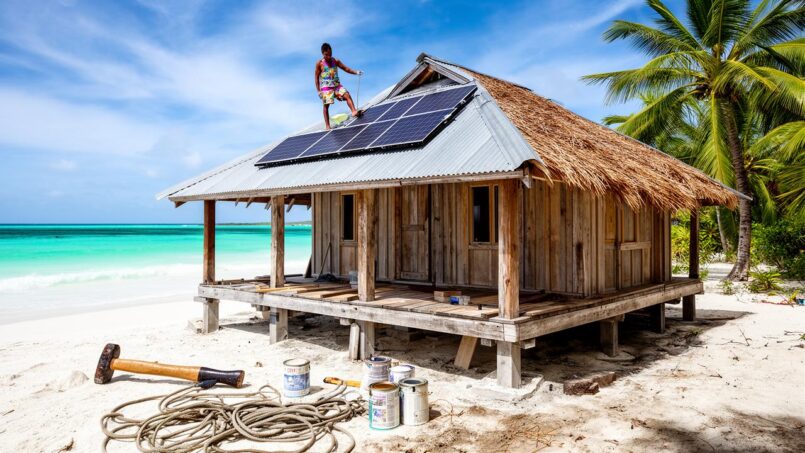
Renovating to Rent in Tuvalu is unlike a classic European project or a simple real estate “flip” in a major metropolis. Between a tightly regulated land system, extreme climate risks, the absence of property tax, and a still shallow rental market capable of delivering very high gross returns, the equation is unique. Yet for a patient investor, able to navigate local law and on-the-ground realities, rental renovation can become a powerful tool for generating income… and for adapting to climate change.
Understanding the Playing Field: Rental Market and General Framework
Before even discussing construction, materials, or financing, it is essential to grasp what investing to rent in Tuvalu truly means.
Economically, the country has a cost of living roughly 1.6 times lower than the global average, but wages remain modest. The average income after taxes is around $353 per month, which covers only about half of typical monthly expenses. Rents, however, are far from negligible in this context.
The gross rental yield for a unit outside the city center exceeds 20% thanks to very low purchase prices and attractive rents.
The table below summarizes some useful orders of magnitude.
| Indicator | Indicative Value |
|---|---|
| 1-bedroom rent, city center | €300 / month |
| 1-bedroom rent, outside center | €200 / month |
| 3-bedroom rent, outside center | €300 / month |
| Purchase price, city center (€/m²) | €92.90 |
| Purchase price, outside center (€/m²) | €18.58 |
| Price-to-rent, outside center | 4.95 |
| Gross yield, outside center | 20.18% |
Even if these figures should be handled with caution — small volumes, significant heterogeneity, a few properties can skew the averages — they set the tone: the key lies not so much in the rent level but in mastering land tenure, regulations, and physical risks.
Ownership, Leases, and Customs: What Every Investor Must Understand
Tuvalu is not a market where one “buys an off-plan apartment” with a few signatures. The land system, deeply shaped by customary law and statutes inspired by British common law, requires a long-term implantation strategy.
A Land System Dominated by Custom
Most land is termed “customary”: it belongs to extended families or communities (kaitasi), and its use is governed by local practices rather than simple individual titles. These plots cannot be freely sold, especially not to foreigners. The law actually prohibits the outright sale of land or graves for money: they may be exchanged or leased, but not permanently alienated.
Alongside this majority block, there are three main regimes:
– Freehold, full ownership, but on limited areas;
– Leasehold (leases of 30 to 99 years), widely used for residential or commercial projects;
– State land and trust lands, managed by the government for public, cultural, or community purposes.
Foreign investors cannot hold freehold ownership. Only long-term leases are permitted, subject to approval from traditional authorities and the state.
Tight Lease Controls… Which Also Secure Renovation
The land law, the Native Lands Act and its regulations, impose strict formalities: any lease or sublease on “native” land must be drafted on official forms, signed by all parties, accompanied by a plan, and approved by the relevant bodies, notably the Lands Court and the minister for significant durations or areas.
This system, highly procedural, has two major implications for a rental renovation strategy:
– it lengthens and complicates the project’s early stages (community negotiations, plans, approvals);
– but in return it offers strong legal security once the lease is registered, as customary land titles are considered “indefeasible” after recording.
Even leases under 21 years and 5 acres (native leases) require registration and scrutiny. Subleases, common when a primary lessee transfers part of their land, need ministerial authorization.
Implied Obligations That Affect Profitability
Land regulations go so far as to incorporate, into any lease or sublease, implied obligations for the lessee: pay rent and any taxes, maintain the property and return it in good condition (except for force majeure and normal wear and tear), and not sublet without written consent.
For an investor renovating to rent, these clauses are useful: they facilitate management and asset appreciation over a long horizon. Conversely, rent control is not structural, but the land judge may intervene if the use of a property jeopardizes the livelihoods of a customary owner’s descendants.
Finally, a key point: Tuvalu does not levy a recurring property tax. There are administrative and registry fees (symbolic units for preparing leases, setting boundaries, etc.), but no annual holding tax. This mechanically improves the net profitability of a rental project provided other risks are controlled.
Climate Risks, Adaptation, and Impact on Renovation Strategy
Renovating to rent in Tuvalu without factoring in the climate would be an economic misstep. The country is on the front line of sea-level rise and storms: Cyclone Pam, for example, displaced 45% of the population in 2015. The risks of flooding, coastal erosion, salinization of aquifers, and prolonged droughts are central to public policy.
National Plans Reshaping the Investment Map
The Government is developing a National Adaptation Plan (NAP) and a long-term adaptation plan called Te Lafiga o Tuvalu (“The Refuge of Tuvalu”). This roadmap envisions, on a very distant horizon, the creation of approximately 3.6 km² of raised land, intended to gradually accommodate population and infrastructure.
The TCAP, funded with $36 million from the Green Climate Fund and $2.9 million in national co-financing, aims to protect nearly 2.8 km of coastline on three islands (Funafuti, Nanumea, Nanumaga) by combining rock revetments, beach nourishment, geotextile structures, and nature-based solutions.
The following chart illustrates the financial orders of magnitude of this coastal policy.
| Element | Approximate Value |
|---|---|
| Length of protected coastline | 2,780 m |
| GCF grant | $36 M USD |
| Tuvalu co-financing | $2.9 M USD |
| Direct beneficiary population | 3,100 people |
| Annual losses avoided (40 years) | Up to $667,000 USD / year |
For a private landlord, this data is not theoretical. It directly determines: the profitability of the investment, the asset’s valuation, management and development strategy directions, as well as tenant quality and solvency.
– the areas where the state will concentrate its heavy protections;
– the sectors where projects will be encouraged (raised land, neighborhoods to be relocated);
– the residential zones that, conversely, are destined to be gradually abandoned.
Integrating Cost-Benefit Logic into Your Trade-offs
The studies conducted to size the national dykes rely on sophisticated economic analyses, combining Expected Annual Damage (EAD) estimation, investment cost, maintenance cost, climate scenarios (RCP 4.5 and 8.5), and various adaptation objectives (“constant absolute risk,” “optimization” of investments, etc.).
Without delving into the equations, one lesson stands out: in highly exposed environments, the most expensive physical investments can be the most profitable in the long run, by avoiding repeated damage and stabilizing the use value of assets.
In a rental renovation project, this logic translates concretely:
On a poorly protected plot, a low-cost light renovation with a short profitability horizon can make sense. Conversely, on a site likely to remain habitable long-term — for instance, created or raised land, or near a major TCAP protection structure — investing in a more robust renovation (reinforced foundations, materials resistant to salt corrosion, elevated living floor) is worthwhile.
A “life cycle” analysis costs more in studies and construction, but it maximizes the return on investment over 20, 30, or 40 years, especially in a country with no property tax.
Water, Drought, and Rental Comfort: A Profitable Angle
Another structural constraint: Tuvalu has no surface water sources. The majority of supply relies on rainwater, stored in tanks, supplemented by desalination and a small amount of groundwater, compromised by salinity.
Rainwater tanks of households in Lofeagai, Funafuti, run dry four to five months per year.
A cost-benefit analysis conducted on building a large community tank highlighted several economic effects:
– direct savings for households, who buy less desalinated or bottled water;
– savings for the state, which provides less subsidized water;
– time gains and reduced travel costs for fetching water;
– improved resilience during drought, whose frequency increases with ENSO events.
For a renovation project intended for rental, integrating this dimension is doubly rewarding:
– a dwelling with a sufficiently sized tank, connected to a well-designed roof, provides decisive comfort for tenants;
– it reduces their water bill, thereby improving their ability to pay rent and remain in place.
The tank, even if it increases the initial budget, clearly qualifies as a profitable adaptation investment.
Financing Renovation: Balancing Equity, Debt, and Alternative Structures
Available data on financing mechanisms in Tuvalu is limited, but two realities combine.
Local Credit: Constraints and Opportunities
The National Bank of Tuvalu has reduced opening hours and strict criteria for certain loans, especially those backed by retirement savings. To access a specific credit facility, one must be an active contributor and have at least 400 AUD in their retirement account. This is modest but enough to exclude part of the informal workforce.
The absence of a sophisticated mortgage market, combined with the customary nature of land, makes classic long-term credit models harder to replicate than in developed countries.
In this context, an investor wishing to renovate to rent in Tuvalu must think in multiple layers:
Strategies to navigate restrictions on customary land leases, using personal equity, credit lines, or adapted legal structures
Favor a substantial or full personal contribution, especially for foreigners who cannot easily mortgage a lease on customary land.
Use credit lines or refinancing based on other assets, such as real estate held in a third country.
Leverage partnerships with local families or co-owned companies, ensuring the legal security of each arrangement.
Innovative Financing: International Inspiration, Local Adaptation
The research report mentions many financing instruments for renovation elsewhere in the world: renovation mortgages like HomeStyle or CHOICERenovation, “fix and flip” loans based on ARV, hard money loans, cash-flow based loans (DSCR loans), crowdfunding, or P2P lending.
Most are not directly transferable to Tuvalu, due to the lack of a secondary market, securitization, or financial depth. However, some principles can be adapted at a small scale:
To optimize a renovation project, use After-Repair Value (ARV) analysis to size the renovation budget without harming returns. Structure disbursements in stages, like an escrow account, to limit cost overrun risks. Consider landlord-tenant partnerships where the future occupant contributes to improvements (gardening, finishes, solar) in exchange for reduced rent or a longer lease, thereby lowering the initial investment.
Alongside this, national adaptation strategies provide for the establishment of sustainable financing mechanisms for resilience infrastructure. “Adaptation” type funds or small grants (up to $0.1 million under the Tuvalu Survival Fund, for example) can sometimes be mobilized for local projects combining rehabilitation and hazard protection. Incorporating a visible adaptation component (elevation, water management, energy efficiency) into your project increases the chances of benefiting from these schemes.
Choosing Your Target: Which Properties to Renovate for Rent in Tuvalu?
Unlike capital cities where you scrape a yield point by changing districts, the question in Tuvalu is much more structural: which island, which type of right, and what level of climate exposure?
Funafuti: Administrative Hub, Land Tensions, and Potential Returns
Funafuti concentrates most formal employment, administration, services, and small-scale tourism (fewer than 1,000 tourists per year on average). Housing is scarce, many families live on dense customary land, and the airport or coastal infrastructure occupies a large portion of the area.
In this context, renovating existing buildings, ideally on land that benefits or is expected to benefit from TCAP protections, can target several segments:
– long-term rental for civil servants, international aid project staff, NGOs;
– medium-term furnished rental for consultants, technicians, or volunteers;
– limited short-term rental (a few units) for visitors, using platforms like Airbnb or Booking, already present in the country.
Cost-of-living data shows that Funafuti is more expensive than some European cities in housing and transportation, reflecting supply tension. This reinforces the appeal of a well-targeted renovation strategy.
Outer Islands: Betting on Coastal Protection and New Land
The islands of Nanumea and Nanumaga, targeted for coastal works, or those slated to host reclaimed land, may offer other project profiles: sturdy family homes for long-term rentals to local households, small rental complexes for public servants or teachers.
In these areas, the landlord must work closely with communities and the Falekaupule (traditional assembly). In return, they can bet on the fact that coastal protection funded by international sources will stabilize the use value of their properties for several decades.
Landlord
Customary Land vs. State Land: Two Different Games
On state land, leases will often be more “administrative”, with a single interlocutor: the government or an agency. On customary land, you will have to manage family and community dynamics, and ensure that decisions are validated by the Lands Court and registered to avoid disputes.
In all cases, the key criterion remains the remaining lease term: a lease with 10 years left will not support the same level of work as a lease of 50 or 99 years. The renovation cost must be calibrated to this horizon to preserve profitability.
Calculating Profitability: A Nuanced but Promising Exercise
Tuvalu’s raw indicators — yields above 20% outside the center, extremely low price-to-rent ratios — hint at rare opportunities. But the on-the-ground reality, import costs for materials, regulatory constraints, and climate risks require refinement.
Simple Approach: Gross and Net Rental Yield
In theory, an apartment purchased for €20,000 and rented for €2,400 per year (€200/month) shows a gross yield of 12%. If the initial investment is more about a renovated lease than buying a property right, you need to reconstruct the “tied-up capital”: lease right, works, fees, etc.
In a country with no property tax, the main expense items will be:
– routine maintenance and repairs;
– climate-related enhanced maintenance (corrosion, salinity, extreme events);
– insurance (if available);
– possible property management fees.
Financing costs are added if the investor refinances abroad.
Integrating Adaptation as a Cost… and a Source of Value
The economic analysis methods used for large adaptation infrastructure (dykes, berms, coastal defenses) — such as cost-benefit analysis over 40 or 80 years, with net present value and rate of return calculations — can inspire a microeconomic approach.
For example, raising a house, strengthening its structure, installing storm-resistant frames, and a tank sized for drought:
– increases the initial renovation cost;
– but reduces the risk of severe damage during each major event, hence future expenses;
– and allows rent to be maintained over time, whereas a vulnerable dwelling will quickly become uninhabitable or unoccupied.
These adaptation expenses can be seen as an “insurance investment”: they reduce the flow of future expenses and the risk of total asset loss, something macro cost-benefit models already show at the level of national dykes.
Macroeconomic analysis
Effect of No Property Tax and Light Taxation on Rents
The absence of an annual property tax is a powerful factor for net profitability. Where an investor in a developed country must subtract 1 to 2% of the property’s value each year in local taxes, the landlord in Tuvalu avoids this levy.
Rental income may be taxed as business or investment income, but the system lacks the gravity of some mature markets, and the low sophistication of the formal sector also means many small rentals remain informal.
This reality should not encourage opacity — long-term, fiscal regularity is an asset when dealing with authorities – but it improves the net return profile if the project is structured properly.
Building a Renovation-Rental Strategy Adapted to the Tuvaluan Context
At this point, how to transform these scattered elements — land law, climate, rental market, financing — into an operational strategy?
Betting on the “Housing + Adaptation” Complementarity
Examples of national water and coastal protection policies show that hybrid investments, both productive and adaptive, have good cost-benefit profiles. A rental renovation project in Tuvalu can follow the same logic:
– systematically integrate a rainwater storage solution of good capacity;
– plan for natural ventilation and solar protection devices, to limit air conditioning use;
– use materials and techniques tolerant of humidity, salinity, and strong wind;
– if the site is near the coast, consider micro-protection works (low walls, coastal vegetation, grading) compatible with local plans and the environment.
This enhances the desirability of the housing for rational tenants, and aligns the project with authorities’ priorities.
Stay Modest and Progressive
The real estate and rental market in Tuvalu is too narrow to absorb massive speculative operations. It is more relevant to think in terms of:
A phased approach focused on sustainability and risk adaptation
A few units in Funafuti, with the possibility of a small project on a protected outer island, for controlled impact.
Phased renovations rather than total transformation, allowing flexible management of costs and risks.
Regular exchanges with customary communities and authorities to align the project with urban plans and evolving risks.
Draw Inspiration from Tourist Markets… Without Copying Them
Elsewhere in the world, the short-stay trend and platforms like Airbnb have fueled high returns, at the cost of social tensions and increasing regulation. Tuvalu already has a few short-term furnished rentals, but tourist flow (fewer than 1,000 visitors per year) remains low.
It would be unrealistic to build a renovation strategy solely on this clientele. However, one can:
Build flexibility into the use by designing units for long-term rentals, but adaptable to occasionally accommodate short-term missions (experts, volunteers, technicians). Ensure the units meet comfort and safety standards suited to these profiles (connectivity, bedding, water, ventilation).
Anticipate the Long Term: Relocation and Raised Land
The Te Lafiga o Tuvalu plan projects a gradual relocation trajectory of population and activities toward safer, created or raised land. The first reclamation operations have already materialized in Funafuti, where the government is gaining hectares of land on the lagoon, dimensioned to remain above projected sea levels in 2100.
For an investor aiming for a horizon beyond 15-20 years, it is relevant to identify, with authorities, the sectors expected to benefit from these works. Renovating existing buildings today in a high area (or one slated for raising) is a way to position yourself along the country’s future “refuge” trajectory.
Conclusion: Renovating to Rent in Tuvalu, a Niche Strategy at the Heart of Adaptation
Renovating to rent in Tuvalu is neither an instant El Dorado nor a reckless bet. It is a refined exercise, at the intersection of three logics:
Investing in Senegal requires mastering legal and land aspects (community land, stable negotiated leases), climate and infrastructure issues (adaptation to risks, national projects like TCAP), as well as economic and social factors (strong demand for decent housing, absence of property tax, sustainable net returns).
In this framework, the most relevant strategies combine:
– functional but robust renovation, oriented toward resilience (water, structure, ventilation);
– patient financing, primarily using equity or debt secured outside the country;
– strong community anchoring, essential for working on customary land and managing assets over time.
By embracing these constraints and turning them into levers, renovating to rent in Tuvalu becomes much more than a wealth management operation: it is a concrete, small-scale contribution to the collective project of survival and reinvention of an archipelago facing the full force of climate change, while building a long-term income stream.
Have a wealth project or a question? Contact us now to speak with a wealth management expert.
Disclaimer: The information provided on this website is for informational purposes only and does not constitute financial, legal, or professional advice. We encourage you to consult qualified experts before making any investment, real estate, or expatriation decisions. Although we strive to maintain up-to-date and accurate information, we do not guarantee the completeness, accuracy, or timeliness of the proposed content. As investment and expatriation involve risks, we disclaim any liability for potential losses or damages arising from the use of this site. Your use of this site confirms your acceptance of these terms and your understanding of the associated risks.

Cyril Jarnias is an independent expert in international wealth management with over 20 years of experience. As an expatriate himself, he is dedicated to helping individuals and business leaders build, protect, and pass on their wealth with complete peace of mind.
On his website, cyriljarnias.com, he shares his expertise on international real estate, offshore company formation, and expatriation.
Thanks to his expertise, he offers sound advice to optimize his clients' wealth management. Cyril Jarnias is also recognized for his appearances in many prestigious media outlets such as BFM Business, les Français de l’étranger, Le Figaro, Les Echos, and Mieux vivre votre argent, where he shares his knowledge and know-how in wealth management.





