
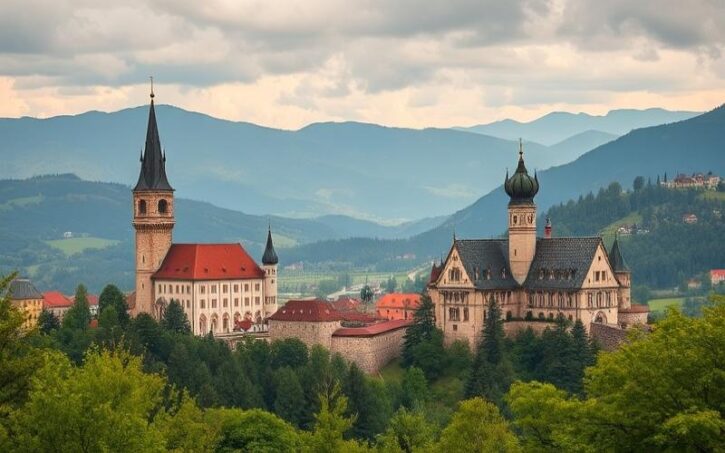
 Published on and written by Cyril Jarnias
In a world where the quest for a change of scenery and authenticity is stronger than ever, investing in the traditional villages of Romania represents a unique opportunity for investors in 2025.
These villages, nestled in the heart of the picturesque landscapes of the Carpathians, offer not only attractive returns on investment thanks to a still affordable real estate market, but also the chance to become rooted in a rich and preserved cultural heritage.
With the rise of sustainable tourism and conservation initiatives, these hidden gems of Romania are attracting the attention of an international clientele eager for authentic experiences away from traditional tourist circuits.
Highlighting Romania’s Underestimated Rural Regions
Romania’s underestimated rural regions stand out for their rich heritage, abundant natural resources, and a fabric of vibrant traditions that constitute unique assets for investment and sustainable development.
Cultural Heritage, Local Traditions, and Craftsmanship
- Romanian villages preserve exceptional architectural heritage: wooden churches of Maramureș, Saxon fortresses of Transylvania (UNESCO-listed), traditional houses with specific motifs.
- Local craftsmanship – weaving, black pottery from Marginea, wood carving in Bucovina – attracts authenticity enthusiasts and investors in creative industries.
- Rural festivals (traditional dances, local gastronomy) enhance tourist appeal.
Natural Resources
- Varied landscapes: wooded Carpathians rich in biodiversity, wine-growing hills in Moldavia, or fertile agricultural plains in Wallachia.
- Potential for renewable energy (forest/agricultural biomass) and the valorization of local organic products.
| Region | Cultural Specificities | Key Resources |
| Maramureș | Wooden churches | Forests, craftsmanship |
| Bucovina | Painted monasteries | Agricultural land |
| Apuseni | Isolated mountain villages | Abandoned mines |
| Danube Delta | Lipovan communities | Fishing/ecosystems |
Promising Sectors
Agritourism & Ecotourism: Marked growth thanks to the demand for authentic experiences. Notable examples:
- Viscri: Saxon village revitalized by rural tourism; restored accommodations with European funds.
- Saschiz: Development of an organic cooperative around honey and jams supported by Prince Charles.
- Cisnădioara (Transylvania): Investments in agrotourism with local culinary circuits.
Organic Agriculture:
- The share of certified organic farms has increased (+20% between 2018–2023).
- Structuring sectors: berries in central Transylvania; extensive cattle/sheep farming in the southern Carpathians.
Key Statistics:
| Indicator | Value / Recent Trend |
| Rural population (% of total population) | 45% (2024) |
| Farms | 15% over five years |
Development of a local sector around exported organic apple juice
Summary List — Attractive Factors for Investors:
- Moderate land costs
- Skilled labor from local traditions
- Easy access to European funds dedicated to rural areas
- Growing international demand for green tourism/traditional craftsmanship
“A sustainable economic future inevitably involves the reasoned valorization of rural resources: investing here is not only economically profitable but also socially essential,” emphasizes Dragoș C., Romanian rural development expert.
“The exceptional cultural diversity is already giving rise to a new economic model based on authenticity,” states Anca I., regional coordinator in central Transylvania.
All of this highlights that these territories offer not only untapped potential but also remarkable resilience in the face of contemporary challenges.
Good to Know:
Romania’s underestimated rural regions are full of hidden treasures, ready to attract investors thanks to their incredible cultural and natural wealth. Agritourism and ecotourism are experiencing particular growth, attracting visitors with picturesque landscapes and living ancestral traditions, as in the villages of Viscri and Sâmbăta de Sus. The rise of organic agriculture is notable, with successful initiatives supported by European funds, positively influencing the local economy. Experts like Ionel Blănculescu emphasize that investment opportunities in these places are promising, particularly due to the preservation of traditional craftsmanship and abundant natural resources. A recent study reveals that investments in these villages have led to a 30% increase in local income over three years.
Investment Opportunities in Romanian Rural Real Estate
Romania’s rural areas are experiencing an investment dynamic driven by infrastructure modernization, European integration, and the growing appeal of country living. The regions with the highest growth potential by 2025 include the outskirts of major cities (especially around Cluj-Napoca, Brașov, Sibiu, and Iași), localities near tourist routes (Transylvania, Maramureș), as well as certain agricultural plains in the south and east.
Economic Factors Favoring the Rural Market:
- Accelerated development of national and regional roads.
- European programs supporting energy renovation and agrotourism.
- Local tax incentives targeting investments in areas needing revitalization.
- Growth of remote work encouraging city dwellers and expats to settle outside urban centers.
Current Prices (2025) in the Romanian Countryside:
| Property Type | Average Price per m² (€) | Low Range (€) | High Range (€) |
|---|---|---|---|
| Agricultural land | 1,100 | 900 | 1,500 |
| Old house | 1,200 | 900 | 2,000 |
| Renovated property | >1,800 | – | – |
Preserving the Authenticity and Heritage of Romanian Villages
The cultural and historical preservation of Romanian villages is a central lever for attracting investments, particularly in the experiential tourism and heritage real estate sectors. Architectural authenticity – painted houses, fortified churches, Neo-Romanian or Art Nouveau details – as well as folk heritage (craftsmanship, living traditions) represent significant added value for investors seeking unique and differentiated experiences.
| Key Attractiveness Factors | Added Value for Investment |
|---|---|
| Architectural authenticity | Differentiation in the tourism market; sustainable real estate appreciation |
| Folk heritage | Development of exclusive cultural offerings (workshops, festivals) |
| Community ecosystem | Social stability; transmission of know-how |
The active involvement of local communities in conservation projects is crucial. This participatory model not only fosters the intergenerational transmission of heritage but also ensures environmentally respectful development: ecological renovation of old buildings, maintenance of traditional rural landscapes, and promotion of short supply chains.
List of Positive Impacts Related to This Involvement:
- Creation of local jobs (artisans, guides, catering)
- Strengthening of the social fabric
- Raising awareness of ecology and local resources
Public policies support these approaches: subsidies for the restoration of classified or non-classified rural heritage; UNESCO World Heritage listing of emblematic sites; tax incentives for investors engaged in cultural preservation. These initiatives boost the local economy through increased tourist traffic while consolidating national identity.
Notable Examples:
- Viscri: Saxon village with a UNESCO-listed fortified church; a recognized model where residents collectively restore traditional houses while developing authentic tourist accommodations.
- Rimetea: Hungarian village renowned for its restored white facades thanks to an exemplary community program.
- Artist villages in Transylvania and the Carpathians: creation of artist residencies in renovated traditional buildings that attract international creators while economically revitalizing these territories.
Preserving this heritage is not just a cultural issue: it also guarantees investors a rare offering driven by a strong identity, durably anchored in its natural and human environment.
Good to Know:
Preserving the authenticity and heritage of Romanian villages is crucial for attracting investments, as these elements bring undeniable added value. The architectural authenticity and rich folk heritage of these villages constitute a unique appeal for investors seeking sustainable and environmentally respectful development projects. The involvement of local communities in conservation projects is essential, as it fosters harmonious development while preserving ancestral customs and traditions. Furthermore, government policies and initiatives, such as subsidies for restoring historic buildings and promoting traditional festivals, play a decisive role in protecting cultural heritage. These actions have a positive impact on the local and national economy, increasing the appeal for investments. Examples of villages like Viscri and Sibiel, which combine preservation of authenticity with investment opportunities, prove that this approach can lead to thriving projects while honoring Romania’s cultural riches.
Disclaimer: The information provided on this website is for informational purposes only and does not constitute financial, legal, or professional advice. We encourage you to consult qualified experts before making any investment, real estate, or expatriation decisions. Although we strive to maintain up-to-date and accurate information, we do not guarantee the completeness, accuracy, or timeliness of the proposed content. As investment and expatriation involve risks, we disclaim any liability for potential losses or damages arising from the use of this site. Your use of this site confirms your acceptance of these terms and your understanding of the associated risks.

Cyril Jarnias is an independent expert in international wealth management with over 20 years of experience. As an expatriate himself, he is dedicated to helping individuals and business leaders build, protect, and pass on their wealth with complete peace of mind.
On his website, cyriljarnias.com, he shares his expertise on international real estate, offshore company formation, and expatriation.
Thanks to his expertise, he offers sound advice to optimize his clients' wealth management. Cyril Jarnias is also recognized for his appearances in many prestigious media outlets such as BFM Business, les Français de l’étranger, Le Figaro, Les Echos, and Mieux vivre votre argent, where he shares his knowledge and know-how in wealth management.





