
 Published on and written by Cyril Jarnias
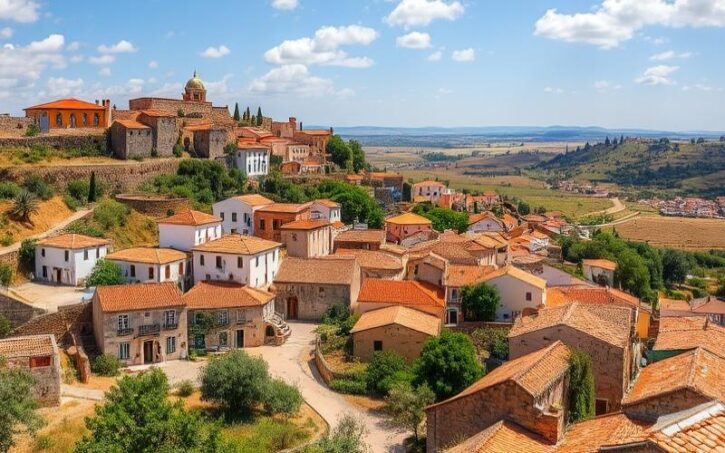
Portugal, with its picturesque landscapes and rich cultural heritage, now offers a unique opportunity for savvy investors looking to tap into the potential of authentic villages. As the country continues its trajectory of economic development, these villages represent not only hidden treasures but also lucrative opportunities for those seeking to invest in charming properties and local businesses.
As 2025 approaches, many factors, such as government initiatives promoting rural tourism and the growing interest of expatriates in a superior quality of life, are converging to create a favorable environment for those wishing to engage in this promising sector.
The Allure of Portuguese Villages for Investors
Portuguese villages are increasingly attracting investors thanks to a unique combination of natural resources, incentive policies, and emerging economic dynamics.
Natural Resources and Picturesque Landscapes
- Lush valleys, terraced vineyards (Douro Valley), wild beaches (Costa Vicentina), and ancient forests provide an exceptional setting for developing hotels, rural guesthouses, and restaurants.
- The Alentejo stands out for its wooded plains, agricultural hills, and preserved coastline conducive to ecotourism. Local projects focus on solar energy, organic production, and unique accommodations (wooden cabins or tents under the stars).
- The richness of the fauna and flora attracts thousands of visitors each year for ecological activities: hiking, wildlife observation, or culinary stays.
Government Policy & Subsidies
The Portuguese government actively encourages investments in rural areas through:
- Subsidies for organic farming.
- Aid for sustainable tourism development.
- Support for renewable energy projects under the national “Portugal 2030” plan.
Emerging Economic Dynamism
Organic farming: certified farms locally producing over 300 processed foods distributed via short supply chains. Example: Herdade do Freixo do Meio in Alentejo with university partnerships for innovative agronomic research.
Sustainable tourism: accelerators like TUI Futureshapers support young local entrepreneurs towards responsible solutions that boost the village economy.
Renewable energy: widespread adoption of solar power in rural accommodations; some villages are pilots for autonomous energy management.
Increased Accessibility & Infrastructure
List of recent improvements:
- Modernization of the regional road network, facilitating access from Lisbon or Porto to remote villages.
- Development of an efficient railway network connecting rural areas to major cities.
- Strengthening of inter-village bus lines, increasing local mobility.
Concrete Examples & Testimonials
| Village/Project | Sector | Observed Return | Testimonial |
|---|---|---|---|
| Herdade do Freixo do Meio (Alentejo) | Organic farming / educational tourism | Annual visitor growth >15%; diversification of local products | “Investing here allowed us to combine profitability with a positive environmental impact.” |
| Paula & Alexandre Ecolodge Project (Alentejo) | Ecotourism | High occupancy rate all season; international clientele | “We benefited from public aid that secured our investment from the start.” |
| Porto – Futureshapers Program | Sustainable tourism / social entrepreneurship | Rapid creation of attractive local startups | “The mentorship we received accelerated our growth while strengthening our ties with the local community.” |
Tax & Administrative Advantages for Foreign Investors
Summary list:
- Temporary tax exemptions on locally generated income depending on the type/area of investment
- Simplified procedures via the InvestPortugal one-stop shop
- Facilitated access to Golden Visas allowing long-term residency
These measures strongly influence the investment decision by notably reducing the initial cost and providing increased legal security.
New Technologies & Remote Work as Economic Levers
List of major impacts:
- Accelerated deployment of fiber optics even in isolated villages
- Coworking spaces set up within hamlets, facilitating digital nomad settlement
- Growing attractiveness for international remote workers seeking environmental quality without sacrificing connectivity
The massive return to rural areas is also explained by this ability to combine a healthy life, solid economic returns, and technological innovation.
Good to Know:
Portuguese villages charming investors offer a range of opportunities thanks to their rich natural resources and picturesque landscapes, attracting a steady flow of tourists that fuels the hospitality and restaurant sector. The Portuguese government actively supports rural development through incentive subsidies, conducive to the growth of organic farming, sustainable tourism, and renewable energy. Improved transport infrastructure increasing accessibility, combined with attractive tax advantages for foreign investors, further enhances the appeal of these regions. Relevant examples include successful projects in villages like Monsanto, where promising returns have been reported by investors. Finally, the integration of new technologies and the progress of remote work are revitalizing the economy of these rural areas, offering a unique opportunity for investors to capitalize on this growing dynamism.
Why Rural Real Estate in Portugal Is Becoming Profitable
Rural real estate in Portugal is experiencing a positive dynamic, driven by increased demand both locally and internationally, as well as incentive public policies. This trend is explained by the search for a more serene lifestyle, the opportunity for rental investment, and the prospects offered by rural tourism.
Average Prices and Recent Trends
| Geographic Area | Average Price €/m² (Q1 2025) | Estimated Annual Growth |
| National | 1,615 | +7% |
| Rural Regions | 800–1,400 | +10 to +12% |
| Algarve | 2,350 | +6% |
| Premium Coastal Areas | 3,000–5,000+ | +4 to +5% |
- Rural regions (Alentejo, Center) show price growth higher than that of major cities.
- Sales times remain longer in rural areas (~150–180 days), but renovated or eco-friendly properties sell quickly.
Rental Yields and Profitability
- Gross rental yield in some rural areas now exceeds 6 to 8%, a level higher than saturated urban centers.
- The influx of tourists seeking authentic experiences supports seasonal profitability.
Economic Factors Favoring Increased Profitability
The main levers identified:
- National economic expansion
- Relative decline in interest rates
- Growing international investment, directed towards less explored areas thanks to schemes like the Golden Visa
- Improved access to mortgage credit
Tax Incentives and Government Subsidies
Non-exhaustive list:
- Partial or total exemption from IMT (Property Transfer Tax) for certain rural renovation projects.
- Reduced rates or temporary exemptions from IMI (Municipal Property Tax) for renovated primary residences in classified villages.
- Direct subsidies granted for energy and heritage renovation under the “Casa Eficiente” program or through European funds dedicated to rural development.
Non-habitual residents also benefit from reduced taxation on their income for ten years.
Growing Attractiveness of Authentic Villages
Key points:
- Strong demand from:
- International investors seeking appreciable assets
- Locals wishing to leave urban hustle and bustle
- Added value:
- Preserved natural setting
- Traditional architectural quality
- Dynamic communities
Rural Tourism: Opportunities & Emerging Trends
Tourism potential has become a central driver of the rural market:
- Marked rise in eco-tourism, with a preference for:
- Sustainable restored stone houses
- Rural guesthouses offering cultural authenticity
- Continuous growth in the number of short stays in natural settings, boosting high-end seasonal rentals
The combination of public support, enthusiasm for a peaceful lifestyle, and tourism diversification makes the Portuguese rural real estate market a lucrative opportunity today — for both long-term and seasonal rentals.
Good to Know:
The rural real estate market in Portugal is experiencing significant growth, with property prices in authentic villages increasing by 6% in 2023 compared to stagnant urban areas. Economic factors such as tax incentives, including tax reductions and subsidies for renovating rural properties, make these investments particularly profitable. The Portuguese government encourages this development through specific programs to revitalize rural regions, thus attracting investors drawn by rental yields 2% higher than in major cities. Authentic villages are increasingly appealing thanks to their peaceful lifestyle, sought after by both locals and expatriates, and are prized for tourism, particularly through eco-tourism and cultural experiences. This trend, responding to a growing demand for more authentic vacations, gives rural properties strong return on investment potential.
Authentic Heritage: An Asset for Investment
The authentic heritage of Portuguese villages exerts a strong attraction on investors due to their traditional charm and unique character. Heritage elements – historical architecture, age-old customs, and vibrant local culture – contribute not only to preserving the identity of these villages but also to increasing property values and attracting tourists and new residents.
Key Factors That Enhance Portuguese Villages for Investors:
- Historical Architecture: schist houses, medieval fortresses, remarkably preserved ramparts and castles.
- Cultural Authenticity: local festivals, regional gastronomy, artisanal traditions, and Portuguese hospitality.
- Preserved Environment: natural landscapes, vineyards, rivers, and absence of mass tourism.
Concrete Examples of Remarkable Villages:
| Village | Heritage Features | Investment Advantages |
|---|---|---|
| Monsanto | Houses integrated into granite boulders, cobbled streets, unique panorama | Unique architecture, unusual tourism |
| Marvão | Perched medieval village, ramparts, panoramic views | Strong tourism potential, exceptional setting |
| Piódão | Schist houses, winding streets, mountainous setting | Authenticity, strong tourist appeal |
| Linhares da Beira | Well-preserved medieval castle, rural heritage | Property appreciation, heritage tourism |
| Comporta | Traditional architecture, chic atmosphere, wild beaches | High-end investment, beach tourism |
| Douro Valley | Wine estates (Quintas), UNESCO-classified terraced landscapes | Wine tourism, prestige properties |
Impact on Property Value and Attractiveness:
- Villages that preserve their authenticity see increased real estate demand, especially for second homes, boutique hotels, and agritourism projects.
- The development of sustainable tourism and wine tourism in regions like the Douro Valley stimulates the renovation of traditional properties and the creation of quality infrastructure.
- Property prices in these villages often remain lower than in major cities, while offering significant appreciation potential.
Initiatives and Policies for Heritage Preservation and Promotion:
- Best Tourism Villages by UN Tourism Program: distinguishes exemplary villages for their authenticity, commitment to sustainable development, and heritage preservation.
- Support and Training: workshops, masterclasses, and sharing of best practices among labeled villages, fostering innovation and the adoption of sustainable strategies.
- UNESCO Classification: protection of certain sites and landscapes, such as the Douro Valley, which benefit from preservation policies and increased international visibility.
- Tax Incentives and Renovation Support: schemes to encourage the restoration of historic buildings and the development of rural tourism.
Implications for Investors in 2025:
- Access to a real estate market with high appreciation potential, particularly in rural and wine-growing regions.
- Possibility to develop tourist accommodation, agritourism, or prestige residence projects in an authentic and sought-after setting.
- Securing investments through national and international heritage protection policies, guaranteeing the long-term preservation of the villages’ attractiveness.
The authentic heritage of Portuguese villages constitutes a powerful driver of attractiveness for real estate investment, combining economic appreciation, cultural preservation, and sustainable tourism development.
Good to Know:
Investing in the authentic heritage of Portuguese villages offers a unique opportunity thanks to their traditional charm, which attracts both tourists and new residents. Villages such as Monsanto or Sortelha, with their preserved medieval architecture and local customs, see their attractiveness and therefore property values grow. These heritage elements, protected and promoted by government initiatives such as the “Programa de Revitalização de Aldeias,” ensure that the unique characteristics of these villages are not only preserved but also enhanced, amplifying their investment potential. In 2025, investors will benefit from these conservation efforts that drive growing demand for authentic cultural experiences, redefining these villages as sought-after destinations for getaways.
Strategies and Tips for Investing in Portuguese Villages
Tax Advantages for Foreign Investors
Full tax exemption on foreign-source income (dividends, interest, rental income, capital gains) for 10 years under the IFICI regime, if you are a new resident and meet the eligibility criteria.
Flat tax rate of 20% on certain Portuguese income for qualified new residents.
Harmonized and simplified taxation of real estate capital gains: taxation on 50% of the gain at the progressive rate (up to 48%) for non-residents.
Rental income taxed at a flat rate of 28%.
| Type of Tax Advantage | New Resident | Non-Resident |
| IFICI (10 years) | Yes | No |
| Capital Gains Taxation | Progressive rate up to 48% | Flat rate/Progressive depending on case |
| Rental Income | Flat rate or progressive | Flat rate at 28% |
Current Trends in the Rural Real Estate Market
- Growing demand in villages due to the rise of remote work and tourist interest.
- Gradual appreciation of rural properties despite the general rise in borrowing rates (+12% on average since the Euribor increase), offset by strong seasonal rental demand.
- Prices still attractive compared to major urban centers; possibility of using leverage thanks to favorable banking conditions.
Types of Properties Sought in Portuguese Villages
- Renovated traditional houses or those with strong heritage potential
- Quintas with agricultural land or outdoor space
- Small typical stone houses intended for tourist rental
- Modular or eco-designed homes suitable for rural tourism
Key Considerations for Investing in a Less Urbanized Area
Access to Infrastructure:
- Check proximity to hospitals, schools, and public transport.
- High-speed internet connection is essential to attract remote workers.
Population Growth Linked to Tourism:
- Villages near the coast or with natural attractions see their population increase during tourist seasons.
Local Sustainable Development Initiatives:
- Municipal support for energy renovation and subsidies for green projects.
- Possible partnerships with local associations promoting cultural heritage.
Concrete Examples / Recent Case Studies
A French investor acquired several old houses in a village near the Douro; after an ecological renovation supported by a local program, he developed an offer combining responsible tourist accommodation and craft workshops. Profitability higher than that obtained in an equivalent urban area thanks to the “eco-tourism” positioning.
A German family settled in the historic center of an Alentejo village where they run a quinta renovated according to regional environmental standards. Close collaboration with the town hall, which values their community engagement through cultural events open to tourists.
Cultural/Legal Specificities Related to These Investments
Some rural areas are subject to strict rules regarding architectural preservation (facades, materials).
It is often necessary to obtain a special permit before any major transformation; it is advisable to consult a local lawyer familiar with these legal specificities.
High value placed by local inhabitants on respect for agricultural traditions and seasonal festivities – integrating these elements can facilitate the social acceptance of the real estate project.
Practical Tips for Effective Integration & Local Collaboration
- Actively participate in village community initiatives upon arrival (patron saint festivals, local markets).
- Favor local employment during construction or ancillary activities (regional artisans).
- Inquire with the municipal council about all available aid/subsidies dedicated to sustainable rural development.
- Learn some basic rural/local Portuguese
- Scrupulously respect the traditional festive calendar
- Regularly attend citizen/village meetings
- Prioritize products/services directly from the territory
Investing in a Portuguese village requires as much a heritage strategy as a human approach: financial success often rhymes with real integration – prioritize local listening & cultural adaptation!
Good to Know:
Investing in Portuguese villages presents attractive opportunities, notably thanks to the tax advantages granted to foreign investors, such as the non-habitual resident tax regime. The real estate market in rural areas shows growing demand for renovated traditional properties, while agricultural estates and village houses are particularly sought after. However, investing in these regions requires careful assessment of access to infrastructure and available resources, with particular attention to local sustainable development initiatives.
Disclaimer: The information provided on this website is for informational purposes only and does not constitute financial, legal, or professional advice. We encourage you to consult qualified experts before making any investment, real estate, or expatriation decisions. Although we strive to maintain up-to-date and accurate information, we do not guarantee the completeness, accuracy, or timeliness of the proposed content. As investment and expatriation involve risks, we disclaim any liability for potential losses or damages arising from the use of this site. Your use of this site confirms your acceptance of these terms and your understanding of the associated risks.

Cyril Jarnias is an independent expert in international wealth management with over 20 years of experience. As an expatriate himself, he is dedicated to helping individuals and business leaders build, protect, and pass on their wealth with complete peace of mind.
On his website, cyriljarnias.com, he shares his expertise on international real estate, offshore company formation, and expatriation.
Thanks to his expertise, he offers sound advice to optimize his clients' wealth management. Cyril Jarnias is also recognized for his appearances in many prestigious media outlets such as BFM Business, les Français de l’étranger, Le Figaro, Les Echos, and Mieux vivre votre argent, where he shares his knowledge and know-how in wealth management.





