
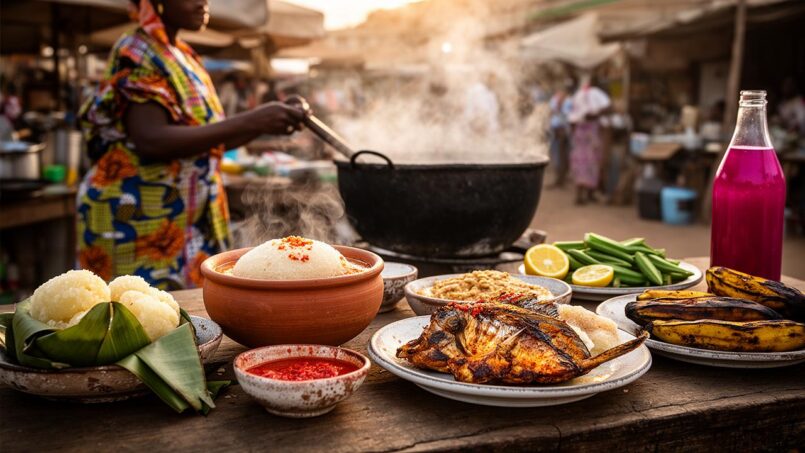
 Published on and written by Cyril Jarnias
Settling in Togo means entering a country where meals aren’t just for eating—they’re for building connections. Between shared bowls, spicy sauces, and millet drinks, local gastronomy is one of the best ways to understand the culture. This guide is for expats who want to truly eat like the locals, avoid etiquette blunders, and stay smart about health.
Understanding the table spirit in Togo
Togolese cuisine is rooted in a warm and communal lifestyle. Most dishes are built on a base of starches—especially corn, but also cassava, yams, plantains, rice, or millet—paired with boldly flavored sauces, often spicy, enriched with meat, fish, or leafy vegetables.
Meals are highly social. You often eat with several people around a large shared platter, share a drink, and chat long after finishing the meal. It’s not a quick affair: showing that you take time to enjoy the meal is a sign of respect for your hosts.
Basic table manners
Before diving into specialties, you need to master a few essential rules, because a simple misstep can be seen as disrespect.
Good to know:
Wash your hands before and after the meal (soap and water are often provided). Eat only with your right hand, as the left is considered dirty. From a shared dish, take small mouthfuls without taking too much to avoid seeming greedy. Wait until everyone is served and the eldest or host begins. Do not sniff the dishes or ask ‘what is it?’ before tasting. Leave a little food on your plate at the end to show you’ve had enough; a discreet burp can be a sign of satisfaction. Avoid talking with your mouth full or making noise while eating—lively conversations are normal, but chewing sounds are not.
Another important detail: in many families, men eat among themselves, while women eat with children or separately. As an expat, you’ll often be included on the side of male guests, but it helps to understand this logic so you’re not caught off guard.
The place of greetings
In Togo, nothing starts without greetings, not even a meal. You shake hands (often with a little finger snap at the end), ask about the family, and with elders you gladly use “Papa” or “Maman” rather than their first name.
Tip:
Before sitting down to eat, a “Bonjour, ça va ?” in French or a word in Ewe like “Afi abe ?” will always be appreciated. This exchange matters just as much as the meal itself.
The main pillars of Togolese cuisine
The strength of Togolese gastronomy lies in simple, local ingredients, prepared in countless ways. A large part of the dishes revolve around a few basics every expat should know.
Corn, cassava, yams: the essential trio
Corn is the true king of the plate. It’s eaten grilled on the cob in the street, but more often ground to make porridges and thick pastes that accompany sauces and stews.
Cassava and yams complete this base: boiled, mashed, fermented, they yield preparations that are sometimes tangy, with varying firmness, and are “eaten” with the right hand by forming small balls that you dip into the sauce.
Here’s how the main starchy staples break down:
| Main Starch | Common Forms | Characteristics |
|---|---|---|
| Corn | Akume, pâte, djenkoumé, kom, ablo | Slight tang when fermented, texture from porridge to dense cake |
| Cassava | Fufu (with plantain or yam), gari, attiéké, tchéké | Can be ground into a “couscous”-like semolina or elastic paste |
| Yam | Fufu, boiled or grilled dishes | Very filling, typical base for “classic” fufu |
| Millet / sorghum | Tchakpallo (beer), porridges | More common in the north of the country |
| Rice | Jollof, ayimolou, groundnut sauce rice | Often cooked with palm oil and tomato sauces |
Fufu, akume, pâte, ablo: how to tell them apart
For an expat, these words quickly appear on menus and in conversations. They refer to preparations made from flour or tubers that all serve as the “bread” of Africa, but with big texture differences.
Fufu
It’s the national star. A soft, elastic dough made by pounding yams, cassava, or plantains (or a mix) in a large mortar. Traditionally, two people take turns: one pounds with the pestle, the other turns and moistens the mass. Fufu is naturally gluten-free, very filling, and relatively mild in flavor.
Example:
It’s served piping hot with a soup or stew—for instance, a rich groundnut sauce, a palm nut sauce (dékou déssi), a fish or meat broth. You take a small piece with your right hand, roll it into a ball, make a dent with your thumb, and “scoop” up the sauce.
Akume / Akoumé / La Pâte
Another staple of the country, akume is a thick cornmeal porridge (sometimes mixed with millet or rice), often fermented. It’s described as a Togolese polenta, but more acidic and sometimes denser. When the paste is made from long-fermented corn flour, it’s also called émakoume.
This starch is ubiquitous, to the point that many Togolese consider it the foundation of their culinary identity.
| Preparation | Main Ingredient | Texture | Typical Accompaniment |
|---|---|---|---|
| Fufu | Yam / cassava / plantain | Very elastic, smooth | Palm nut soup, groundnut sauce, fish or meat broth |
| Akume | Corn (often fermented) | Firm paste, slightly tangy | Okra sauce, gboma sauce, tomato-based meat or fish sauces |
| “White” or “black” pâte | Corn (light or dark), sometimes millet | Denser, cereal taste | Green sauces, spicy tomato sauce |
| Ablo | Corn + rice, with yeast | Soft little cakes, slightly sweet | Tomato sauces, grilled fish, stews |
Ablo and variations
Ablo is a festive version: a batter made from corn and rice flour is leavened with yeast, then steamed in molds. The result is small, very soft “buns,” slightly sweet, served with sauces or fried fish. It’s a common side at celebrations or more elaborate meals.
The world of sauces: the heart of flavor
While corn pastes or fufu satisfy hunger, it’s the sauces that make the meal sing. They combine tomatoes, onions, chili, leafy greens, and sometimes peanut paste or palm nut pulp, enriched with a mix of meats, fresh, smoked, or dried fish.
Among the most iconic:
Togolese sauces
Discover the main traditional sauces of Togo: stews, soups, and creamy sauces, often served with akume, fufu, or rice.
Gelatinous stew made with okra, palm oil, smoked fish, and sometimes meat.
Thick and creamy, made from ground peanuts, tomatoes, onions, and spices, served with rice or corn pastes.
Soup made from pounded palm fruits, very filling, with offal, meat, fish, and vegetables.
Green stew with gboma leaves (local spinach), tomatoes, and onions, often served with akume or fufu.
Soup made from jute leaves, tangy and earthy, enriched with smoked fish and chili.
Creamy sauce made from ground melon seeds, with leafy greens, meat, beef skin, or seafood.
Key spices are chili, ginger, garlic, onion, and sometimes anise seeds, pepper, or herbs like local basil. The aromatic base, often pounded and stored, combines onions, ginger, garlic, sometimes coriander seeds, pepper, and a splash of vinegar.
Must-know dishes
With these basics in mind, here are the great classics every expat should try, from everyday family meals to festive feasts.
Fufu and its ceremonial soups
In many homes, a big shared meal of fufu and a rich sauce is as celebratory as a family Sunday. Among the most typical pairings:
– Fufu + groundnut sauce: an extremely filling marriage, where the mildness of the tuber paste balances the depth of roasted peanuts and spices.
– Fufu + palm nut sauce (dékou déssi): a highly popular combination in the south, with fish, offal, or beef pieces.
– Fufu + okra sauce: for lovers of slippery textures, a regional must.
These dishes are rarely eaten alone: they are shared, each person taking their portion from a large central bowl.
Akume and leaf sauces
Akume, the fermented corn “paste,” often pairs with green sauces. The most popular duo among many Togolese remains akume + gboma sauce, a mix of slightly sour corn and a local spinach stew with beef or fish.
Good to know:
The combination of akume and adémè is very common, especially in areas where jute leaves are abundant.
Rice and beans: everyday dishes
When looking for a simple, cheap, and typically Togolese lunch, you quickly come across a few star preparations.
– Ayimolou: rice and beans (often cowpeas) cooked together, sometimes with a dash of palm oil for color and flavor, served under a layer of spicy tomato sauce. Often placed in the middle of the table in a large dish, shared among several people.
– Groundnut sauce rice: white rice served with a very fragrant peanut sauce. You may find pieces of chicken, beef, or fish in it.
– Jollof rice: rice cooked in a long-simmered tomato and bell pepper sauce with onion, garlic, herbs, sometimes a bouillon cube, served with meat or fish. It’s known for its beautiful red-orange color.
These dishes are found both in maquis (small eateries) and at “cooked food” stalls in markets.
Grilled meats and skewers: the call of charcoal
The tradition of grilling holds a central place, especially in towns and in the evening.
Example:
Koklo meme: chicken marinated in ginger, garlic, onions, chili, and palm oil, grilled over embers, topped with a spicy sauce. Brochettes: beef, goat, chicken, or liver marinated in chili and spices, served with spicy sauce, raw onion, corn fritters, or paste. Grilled tilapia / braised fish: tilapia marinated in garlic, ginger, lemon, chili, and herbs, grilled whole, with a spicy tomato-onion relish, tchéké or attiéké, sometimes fries.
On the coast, grilled shrimp are another must-try specialty: caught the same day, simply seasoned, and cooked over fire.
Cooked corn dishes: djenkoumé, kom, pinon
Corn also comes in more elaborate preparations that will delight enthusiasts.
Good to know:
Djenkoumé is a dense, orange-colored roasted corn paste, served in balls with chicken or fish. Kom is a steamed corn paste, served with a spicy tomato-chili sauce and fried fish. Pinon (pignon pignon) uses gari (cassava semolina) mixed with spices and boiled meat (goat or pork).
Iconic soups and stews
Beyond the sauces already mentioned, a few dishes deserve special mention.
– Gbomo déssi: spinach stew with beef or goat, heavily spiced, sometimes described as a meat and green leaf “stew.” Served with akume, fufu, or rice.
– Adzèvan: fish stew (fresh or smoked) with tomatoes and onions, spiced with local seasonings.
– Gawu: savory bean fritters (often ground cowpeas) deep-fried, sometimes served as a side with corn porridge or a sauce.
Street food, markets, and maquis: where to eat like a local
For an expat, the best culinary laboratory is the street and markets. In Togo, the line between restaurant, canteen, and street stall is blurred: everywhere people cook, everywhere people eat.
Markets in Lomé and beyond
The big markets in Lomé (Grand Marché, neighborhood markets, Saturday markets) are full of “cooked food” stalls: large pots of rice, beans, sauces, porridges, grilled meats, fritters. You’ll also find stalls with fruits (mangoes, pineapples, papayas, watermelons, oranges, avocados…), vegetables (tomatoes, okra, gboma leaves, onions), and spices.
Caution:
Prices are very affordable—a full meal costs a few hundred CFA francs. It’s normal to haggle with a smile. It’s advisable to have small bills and to choose very busy stalls for food safety, as the food turns over quickly.
Maquis: the Togolese-style restaurant
The maquis is a small informal restaurant, often outdoors, serving simple, very local food: grilled fish, rice, sauces, skewers, ayimolou, akume. It’s where you’ll often eat the most authentic food at excellent value.
Some pointers for an expat:
– Ask what’s available: the menu is often spoken and based on the day’s arrivals.
– Ask for “not too spicy” if you’re not used to very strong sauces.
– Don’t expect a menu or European-style service: here, you come as much for the atmosphere as for the food.
Practical box: reading a Togolese plate
| Item on the plate | What it is | How to eat it |
|---|---|---|
| Smooth white/yellow ball | Fufu (yam/cassava/plantain) | Pinch with the right hand, roll into a ball, dip in the sauce |
| Compact yellow/orange piece | Djenkoumé (corn + tomato + palm oil) | Cut a piece with your hand or spoon, eat with chicken or sauce |
| Light granular, like semolina | Tchéké / attiéké (cassava) | Eat with grilled fish, spicy tomato sauce |
| Beige, slightly tangy paste | Akume / fermented corn paste | Form balls with the right hand, dip into the sauce |
Drinks: from bissap to millet beer
Discovering local gastronomy also goes through the glass. In Togo, you drink both very flavorful juices and iconic fermented beverages.
Non-alcoholic drinks
– Bissap juice (hibiscus): an infusion of dried hibiscus flowers, bright red, both tart and sweet. Served very cold, sometimes with mint. Perfect against the heat.
– Ginger juice: a very spicy drink made from fresh ginger, sweetened with sugar and sometimes pineapple or lemon juice. Very popular in maquis and at markets.
– Akpan: fermented corn “yogurt,” often mixed with condensed milk and served cold in small plastic sachets. You bite off a corner and drink it directly. Refreshing and slightly tangy.
– Mint tea and coffee: local coffee is mostly robusta, strong and often sweetened, served with condensed milk. In urban cafes, you’ll also find espresso, cappuccino, or latte.
Tip:
Always ask if the ice cubes are made with safe drinking water. To be cautious, it’s best to avoid ice outside of reputable establishments.
Traditional alcoholic drinks
– Palm wine / sodabe: a drink obtained by fermenting palm sap. Fresh, it’s sweet and slightly fizzy; the more it ferments, the stronger and more acidic it becomes. Distilled, it yields a potent liquor, still called sodabe. Very present at festivals and rituals, sometimes first poured on the ground as an offering to ancestors.
– Tchakpallo / tchoukoutou: a millet or sorghum beer, cloudy, with a fermented cereal aroma, consumed mainly in the north and some working-class neighborhoods. Often drunk from large calabashes, shared.
21
The legal drinking age in this country is 21 years old.
Vegetarian, vegan, and halal options
Expatriates with specific dietary needs aren’t left out in Togo—you just need to know what to ask for.
Eating vegetarian or vegan
Many staples are plant-based: corn, yams, cassava, rice, beans, okra leaves, local spinach, okra, tomatoes. Several dishes can be adapted or are naturally meat-free:
Good to know:
Several dishes can be adapted without meat or fish: gboma déssi (vegetable-only version), ayimolou (rice and beans without meat), okra sauce or adémè (on request), alloco (fried plantains with chili sauce, watch the oil). Many leaf-vegetable and corn-based sauces are entirely plant-based, especially in canteens that cook in large pots.
However, you need to be careful: many sauces contain a bit of smoked fish, dried shrimp, or bouillon cubes with animal products. Don’t hesitate to clearly say “without meat, without fish.”
Halal food
Northern regions (e.g., around Sokodé) have significant Muslim populations; you’ll easily find halal meat and restaurants that follow these rules. Even in the south, some establishments advertise serving exclusively halal meat.
Health, hygiene, and food safety for expats
Enjoying local cuisine requires some precautions. The tropical climate, sometimes fragile infrastructure, and the presence of many waterborne diseases mean you need to be careful.
Water and drinks
– Do not drink tap water. Prefer bottled water, always check that the cap is sealed.
– Avoid ice cubes outside of safe hotels and restaurants: they are often made with tap water.
– For brushing your teeth, also use bottled or boiled water.
– Be wary of diluted juices or street drinks prepared with untreated water.
Street food: how to choose without getting sick
Street food is an integral part of Togolese life and lets you eat very well for little. But it takes a bit of discernment:
Caution:
To avoid food poisoning, choose very busy stalls (especially those with women and children), make sure dishes are hot and cooked to order, observe whether the vendor separates money and food, and opt for fruits you can peel rather than raw salads washed in tap water.
Vaccinations and prevention
For a stay in Togo, a yellow fever vaccination certificate is mandatory from age one. Additionally, it is strongly advised to:
Good to know:
Make sure your basic boosters are up to date (tetanus, MMR). Get vaccinated against hepatitis A and typhoid, which are transmitted through water and food. Consult a doctor for antimalarial treatment (doxycycline, mefloquine) as malaria is endemic.
Finally, don’t forget mosquito repellent, especially if you’re eating on a terrace or at maquis at dusk.
Adapting to cultural codes around food
Cuisine isn’t just about recipes; it’s also loaded with symbols and unwritten rules.
Accepting hospitality
Refusing an offered dish or drink can be taken as an insult. If you’re not hungry, at least accept a small portion, explain that you’re “already full,” but show that you taste it with pleasure.
When someone hands you a glass of palm wine or tchakpallo in a friendly setting, taking a sip, even symbolic, shows you’re sharing the moment. Hospitality—”hospitab” in Ewe—is a true cultural pillar.
No criticism
Togolese are very proud of their dishes and their appearance. Openly criticizing food, clothing, or someone’s physique, even jokingly, can be poorly received. Better to express what you like (“It’s very good,” “I really enjoy this sauce”) than what you like less.
Men, women, and seating at the table
You might be surprised to see men eating on one side and women and children on the other, especially in villages or more traditional settings. Let your hosts decide where you sit. If you’re a female expat, you’ll likely be invited to sit with the female guests; if you’re a man, you’ll be placed with the men.
Where to find the country’s flavors as an expat
After a few weeks, you’ll naturally learn where to buy your products and where to eat regularly.
Where to eat in Lomé
Discover the best places to enjoy local and international cuisine in Lomé, from bustling markets to seaside restaurants.
Fresh produce (fruits, vegetables, spices), home-cooked food stalls, and grilled items.
Affordable daily specials: ayimolou, rice with sauce, fufu, akume, grilled fish.
Grilled tilapia and shrimp with a view of the Atlantic.
Togolese and international cuisine, high hygiene standards, ideal for getting acclimated.
As an expat, you’ll quickly see that in Togo, you can eat very well for little, or choose more upscale places that blend local ingredients with European techniques.
Practical tips for a good start
To finish, a few concrete pointers to keep in mind during your first culinary weeks:
Tip:
1. Don’t hesitate to choose saucy dishes, often flavorful and well-cooked, just ask for the spice level. 2. Learn a few words in French or Ewe like “Bon appétit,” “Merci beaucoup,” or “Not too spicy” to build rapport. 3. Keep hand sanitizer on you, especially if eating with your hands outdoors. 4. Leave a tip of about 10% in restaurants where service isn’t included; in maquis or at someone’s home, a small gesture or a piece of fruit is appreciated. 5. Experiment gradually: start with simple dishes (rice, grilled fish, skewers), then explore fufu, akume, adémè, gboma, or djenkoumé as your digestion adjusts.
By taking the time to learn these codes, taste without prejudice, and respect the customs, you’ll discover that Togolese gastronomy is one of the most beautiful gateways to feeling at home in Togo. Every shared bowl, every glass of palm wine passed from hand to hand, every sachet of akpan bought at the market will bring you a little closer to those around you.
A wealth management project or a question? Contact us now to speak with an expert in wealth management.
Disclaimer: The information provided on this website is for informational purposes only and does not constitute financial, legal, or professional advice. We encourage you to consult qualified experts before making any investment, real estate, or expatriation decisions. Although we strive to maintain up-to-date and accurate information, we do not guarantee the completeness, accuracy, or timeliness of the proposed content. As investment and expatriation involve risks, we disclaim any liability for potential losses or damages arising from the use of this site. Your use of this site confirms your acceptance of these terms and your understanding of the associated risks.

Cyril Jarnias is an independent expert in international wealth management with over 20 years of experience. As an expatriate himself, he is dedicated to helping individuals and business leaders build, protect, and pass on their wealth with complete peace of mind.
On his website, cyriljarnias.com, he shares his expertise on international real estate, offshore company formation, and expatriation.
Thanks to his expertise, he offers sound advice to optimize his clients' wealth management. Cyril Jarnias is also recognized for his appearances in many prestigious media outlets such as BFM Business, les Français de l’étranger, Le Figaro, Les Echos, and Mieux vivre votre argent, where he shares his knowledge and know-how in wealth management.





