
 Published on and written by Cyril Jarnias
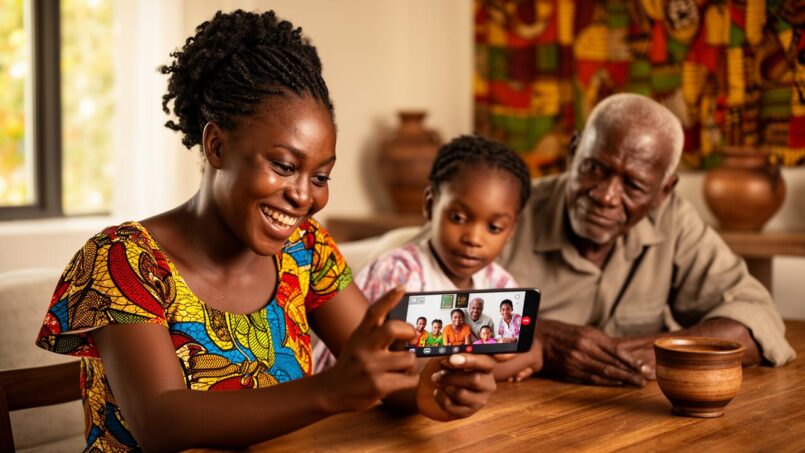
Staying close to family when you live far away, or simply keeping the daily connection with loved ones within the country, now largely relies on digital technology. From Togo, the possibilities have multiplied in recent years, but they remain unevenly accessible depending on the area, budget, and equipment. Between messaging apps, international calls, money transfers, and new connectivity projects, it is nevertheless possible to build a real “presence” at a distance.
This article provides a concrete overview, based on current data and projects, to understand Togo’s digital ecosystem and choose the right tools to stay in touch with your loved ones, whether in the country or abroad.
An increasingly connected country, but still very unequal
Staying in touch starts with a simple question: is a connection available where you are, and at what price? Recent figures paint a mixed picture.
On one hand, mobile phones have become almost ubiquitous. By the end of 2025, there were 8.40 million active mobile connections, equivalent to 86% of the population. Mobile penetration actually surpassed 100% during 2025, meaning many people own more than one SIM card. Over 90% of residents have at least one phone, although more than 40% of these devices are still 2G, making them poorly suited for advanced internet services.
Approximately 6.15 million people remain totally offline by the end of 2025, representing 37% of the connected population.
The table below summarizes a few key indicators regarding connectivity.
| Indicator (end of 2025) | Estimated Value |
|---|---|
| Active mobile connections | 8.40 million (≈ 86% of pop.) |
| Internet users | 3.62 million (37% of pop.) |
| Offline population | 6.15 million (63% of pop.) |
| Median fixed internet download speed | 36.28 Mbps |
| Internet user growth (2024–2025) | +77,000 (+2.2%) |
These figures show that while access is improving, staying in touch through digital means still heavily depends on where you live, what kind of phone you have, and your budget. In major cities, fiber from Togo Telecom, Canalbox, or Teolis, as well as 4G from mobile operators, allow for comfortable video calls. In rural areas, you often have to make do with unstable 3G or even a total lack of network.
Mobile phone: the backbone of connection
In this context, the mobile phone remains the number one tool for keeping in touch. Traditional calls and SMS are still essential, especially for people who don’t have smartphones or live in areas with poor 3G/4G coverage. But usage patterns have changed significantly with the rise of smartphones and apps.
Coverage and quality: what you need to know before relying on the network
The country’s main mobile operators — Togo Cellulaire/Togocel, Moov Africa Togo, and Yas (for data) — have expanded their 3G and 4G networks, especially in larger cities like Lomé, Sokodé, and Kara. Quality of service measurements by the regulatory authority (ARCEP) show a strong disparity between the Lomé metropolitan area and the rest of the country.
On 3G in Lomé, web loading times meet standards nearly 100% of the time, but this rate drops to 85% outside the capital. Download speeds degrade in rural areas with frequent failures. Call audio quality is good once established, but call setup and success rates remain insufficient in several locations.
In other words, a WhatsApp video call between Lomé and a relative abroad might work well during the day, then become choppy in the evening during peak hours. Out in the bush, you may have to settle for voice calls, or even search for the “right hill” or the right spot in the yard to get a signal.
Factors that disrupt the signal
Several factors directly affect communication reliability:
Several elements influence mobile signal quality: distance from the antenna weakens the signal; terrain and buildings (hills, high-rises, basements) block or reduce coverage; traveling by car or train passes through variable zones, which can drop calls; weather, especially tropical storms, temporarily degrades the signal; finally, the phone’s condition, such as the model or a low battery, also impacts performance.
To stay in touch with loved ones reliably, it is therefore useful to identify spots in your home or neighborhood where coverage is better, and to anticipate the times of day when the network is least congested.
Social media usage statistics in the country provide another perspective on communication habits. Platforms are not just for entertainment: they have become essential channels for talking to family, following the news, or participating in civic life.
WhatsApp: the king of daily communication
Globally, WhatsApp has nearly 3 billion monthly active users and handles about 150 billion messages per day. In Togo, this messaging app has become the simplest solution for voice chats, sending voice notes, photos, or organizing family life.
More than half of internet users aged 16 and over say they use it at least once a month, and testimonials from young users describe it as “the easiest and most accessible way to stay in touch with loved ones and communities,” including for people who are not very tech-savvy. The app has the advantage of working on basic entry-level smartphones and offers free audio and video calls, provided you have at least a minimal data connection.
In practice, many families use WhatsApp groups for various activities.
Exchange photos and videos of family events.
Organize family meetings, meals, or outings.
Ask for advice, share information, or help each other.
– coordinating events (weddings, funerals, baptisms) ;
– sending daily updates (photos of the kids, voice messages to grandma in the village) ;
– sharing important information (health, schooling, emergencies).
However, its use is not without risks. Political activists or human rights defenders have warned about digital surveillance, recalling the past use of spyware to target certain opponents. They sometimes encourage using other channels for sensitive discussions. But for ordinary family exchanges, WhatsApp remains by far the preferred channel today.
Facebook and Messenger: staying connected with the diaspora
Facebook plays a dual role: as a “showcase” social network and as a messaging tool via Messenger.
In early 2025, the platform had about 934,000 users in the country, and by April 2026 there were over 1.3 million, just over 13% of the population. Men are in the majority (nearly 68% of accounts), and the 25‑34 age group dominates, which also corresponds to the age when many leave to study or work abroad. Messenger, integrated with Facebook, brings together more than a million users in the country and often serves as a relay when WhatsApp isn’t enough or when contacts are primarily on this network.
Between parents who stayed in the country and children in Europe or North America, Facebook therefore remains a preferred way to:
– follow daily life through photos and status updates ;
– make occasional video calls via Messenger ;
– keep a connection, however tenuous, with distant cousins or friends.
Market data shows that Facebook captures more than 80% of social traffic in the country, far ahead of Twitter, YouTube, or Instagram, confirming its central role.
TikTok and new forms of connection
Even though precise figures for TikTok in Togo are not detailed, testimonials indicate that this platform has taken on considerable importance, especially among young people. A student at the University of Lomé describes it as a key space for “expressing talent, entertaining, and sometimes making money”.
To stay in touch, TikTok is not necessarily the most direct tool, but it creates closeness through video sharing: a son abroad can follow content posted by his little sister in Lomé, or vice versa. The dances, skits, and challenges become ‘signs of life’ that maintain the feeling of being together, even at a distance.
Observation on TikTok
WhatsApp groups and online communities
Beyond individual exchanges, a large number of thematic WhatsApp groups have emerged, covering friendship, the environment, regions of the country, the diaspora, or defending democracy. This fabric of groups, often very active, serves as a forum to discuss, help each other, share opportunities, or organize actions.
For an expatriate who wants to maintain a living connection with their country, joining these groups — when they are authentic and moderated — can be a good way to:
– follow what’s being said locally ;
– virtually meet other diaspora members ;
– keep a “hot” connection with social or political developments.
However, the same popularity of these groups has led to calls for caution, especially in times of political tension, with some activists urging people to avoid certain channels in favor of platforms considered safer or that work without internet (such as Bluetooth messaging like Bitchat in case of network shutdown).
When online is not enough: the issue of money and mutual aid
Staying in touch with loved ones is not just about talking: it’s also about helping when there’s a health issue, a difficult school year, or a price crisis. In practice, for many families, money transfers and video calls go hand in hand.
International transfers: Western Union, MoneyGram, Xoom, Remitly, TalkRemit
Several specialized services make it easier to send money to Togo from abroad. They are not communication tools per se, but they create an essential financial bridge between the diaspora and the family back home, relying on the same digital infrastructure.
Western Union, for example, allows sending money from the United States to Togo 24/7 via its app, website, or in person. The sender can:
– credit a local bank account directly ;
– have cash picked up at a Western Union agent location ;
– send to a mobile wallet, depending on available partnerships.
Online registration requires a government-issued ID (driver’s license, passport, or official document) and the recipient’s bank details. Once the transfer is made, the sender receives a tracking code (MTCN) that they can share by message with their relative, who can track the funds in real time. The company also offers exchange rate alerts and a price simulator, allowing better planning of the amount to send.
Other players like MoneyGram, Xoom (a PayPal service), Remitly, or TalkRemit compete in the same space, with some variations:
– Xoom relies on Togolese partners such as Banque Atlantique, La POSTE or Orabank for quick cash pickups or bank deposits within 24 hours;
– Remitly allows sending via cash pickup (La Poste, Bank of Africa), bank deposit, mobile money, or debit card;
– TalkRemit adds a social dimension, with an app that combines low-cost money transfer, an e-wallet, and free instant messaging (chat and video) between users.
A diaspora member sends the money, then notifies their family via WhatsApp, Messenger, or a regular call. The family confirms receipt by sending a photo of the confirmation SMS or a screenshot of their mobile wallet.
The following table illustrates the diversity of possible channels for sending to Togo.
| Service | Main sending methods | Receiving methods in Togo |
|---|---|---|
| Western Union | Website, app, agent, card, account, cash | Bank account, cash, Mobile Wallet |
| MoneyGram | Website, app, agent, card, account, cash | Cash, bank deposit, depending on partners |
| Xoom | Website/app, PayPal, card, account | Cash pickup (banks/La POSTE), bank deposit |
| Remitly | Website, app, account, card | Cash pickup, bank account, mobile, card |
| TalkRemit | Website, app, card, wire transfer, eWallet | Account, cash pickup, digital wallet |
For families, the choice often depends on cost, speed, but also familiarity with the service and proximity to a pickup point. The widespread use of mobile money in the country — with operators like Moov or Yas — then makes it easier to use the received funds daily for paying bills, groceries, or school fees.
Social transfer programs: when the state contacts its citizens via mobile
Togo has also developed massive use of digital money transfers for social assistance, which indirectly strengthens the “connection” between the state and vulnerable households.
Nearly a quarter of the adult population was reached by the Novissi program at its peak.
This experience served as a foundation for new initiatives, including a major national cash transfer program launched more recently to support nearly 700,000 vulnerable households facing the rising cost of living. Each eligible household receives 25,000 F CFA, paid digitally via operators such as Yas (Mixx) or Moov (Flooz). The goal is to meet urgent needs while stimulating local economic activity.
For families, this type of program concretely means: easier access to resources and enriching activities, enhanced support for children’s well-being, and better integration into the community.
– being able to send money to a relative in need, while knowing there are also public safety nets;
– communicating with government agencies via mobile to verify enrollment, receive notifications, or contest an omission;
– using that same phone number to then talk with loved ones about how the aid was used.
Here again, the phone becomes the main entry point, even without an internet connection, while reinforcing the habit of using digital services.
International voice calls: controlling the bill without cutting the connection
Voice calls remain irreplaceable in certain situations: for elderly relatives who don’t use the internet, for areas where data is too unstable, or simply to hear the voice of a parent without worrying about video. But the rates of traditional operators can quickly skyrocket.
Voice over IP apps and eSIM: international calls over the internet
Thanks to the spread of smartphones, many choose to use apps like WhatsApp, Skype, FaceTime, or Viber. In this case, the main challenge becomes the cost of the data connection.
Foreign operators often charge very high roaming rates in Togo ($10 to $15 per day in some cases), which leads more and more travelers or expats to use local or international eSIMs. Offers like “eSIM Togo” provide limited or unlimited data plans for 30 days, with activation upon arrival at Lomé airport. The user can thus:
Keep your usual WhatsApp number and use the local 4G/5G network to make audio/video calls via the app. You control your spending with a fixed price for a defined data volume.
These solutions are still limited to recent smartphones that support eSIM and relatively comfortable budgets.
Prepaid calling cards and specialized calling plans
For those who prefer — or need — to call traditional lines (landlines or mobile) without using the internet, several international calling services offer rates far lower than the major operators.
Platforms like BOSS Revolution, DialAnyone, or CallingCards.com advertise per-minute prices significantly lower than those of the phone giants. A comparative example shows that a 10-minute call can cost:
| Provider | Estimated cost for 10 minutes to Togo |
|---|---|
| DialAnyone | ≈ $5.56 |
| Generic calling card | ≈ $16.67 |
| T‑Mobile | ≈ $33.33 |
| Verizon | ≈ $41.67 |
| AT&T | ≈ $44.45 |
The difference is dramatic: in this example, using a specialized service allows savings of up to about 86% compared to a traditional operator. Calls are placed via an app or a local access number, then routed to the destination country.
For a family with several members living in Europe or North America, structuring communications around carefully managed prepaid credit and regular call slots can make a big difference over the long term, without giving up hearing the voices of loved ones back home.
Regional agreements to reduce costs
Efforts to reduce costs are not limited to connections between Togo and the rest of the world, but also involve regional traffic. An agreement between the regulatory authorities of Togo and Ghana has eliminated certain roaming fees between the two countries: incoming calls become free for 30 days for travelers, and rates for communications and mobile internet roaming have been sharply reduced.
For families and cross-border workers who live between Togo and Ghana, this means they can remain reachable on their usual number, make calls, and use data without changing their SIM card or blowing their budget — a concrete step forward for maintaining cross-border ties.
When the connection is missing: workaround strategies
Even with all these possibilities, about 63% of the population remains offline, and large rural areas suffer from very poor coverage. How do you stay in touch under these conditions?
First, we should not underestimate the still central role of voice and SMS. In some villages, the only option remains the “small” 2G phone that allows calls on low bandwidth, but reliably. Many social assistance solutions — like Novissi — were specifically designed to work via simple USSD codes, without requiring an internet connection.
Second, new projects are working to fill the “white zones”. The Togo Digital Agency and the World Bank are leading a “digital acceleration” program aiming to expand affordable connectivity, notably through:
– broadband connections for nearly 8,000 public institutions (schools, health centers, government offices), which should benefit surrounding households;
– deploying infrastructure in rural areas, sometimes combined with solar solutions to power towers and Wi‑Fi hotspots;
– complementary exploration of satellite access to reach the most isolated regions.
While waiting for widespread infrastructure, some communities are exploring local solutions like equipment sharing, lightweight nodes for low bandwidth, and solar caches on the network periphery. These innovations allow a school or health center to stay connected and serve as a digital contact point for residents.
Finally, faced with the threat of intentional internet shutdowns during periods of tension, activists encourage the use of messaging apps that work offline, via Bluetooth or Wi‑Fi Direct, to continue exchanging at least locally. While these tools remain marginal for the general public, they illustrate a reality: the desire to stay in touch is strong enough to drive innovation, even when the network goes down.
Building a “relational ecosystem” from Togo
Given all these elements, staying in touch with loved ones from Togo is no longer about a single app or a single operator. Instead, it is about assembling a personal little “ecosystem” that combines several components, depending on your means, your location, and your family’s habits.
In practice, many Togolese people adopt a mixed strategy:
Set of communication and money transfer tools and services used by migrants to stay in touch with their loved ones and support them.
A local mobile number, often dual-SIM, for basic calls and SMS, and access to 3G/4G.
One or more messaging apps (WhatsApp, Messenger, sometimes Telegram or Viber) for daily exchanges, with family and community groups.
One or two social networks (Facebook, TikTok, Instagram) to follow from afar the lives of loved ones and the country, share highlights, or simply reassure those who worry.
A carefully chosen money transfer service (Western Union, Remitly, Xoom, TalkRemit, MoneyGram), to help the family more easily when needed, combining messaging and transfer.
Optionally, for those who travel often, an eSIM or specific data plan to call over the internet at controlled cost.
The key, ultimately, is not technological but organizational: setting rituals (the Sunday video call, the morning messages in the family group, the transfer at the beginning of the month accompanied by a long voice message), distributing channels according to needs (this aunt only handles calls, that cousin prefers TikTok, this friend is only on Facebook), and accepting that connection quality sometimes forces a return to good old voice without video.
With a simple phone and well-chosen tools, it is possible to maintain strong ties with loved ones, even at a distance. Public policies (fiber, 4G, satellites, digital programs) are strengthening this access, but even today, everyone can take action to never really ‘leave’ their people.
A wealth management project or a question? Contact us now to speak with a wealth management expert.
Disclaimer: The information provided on this website is for informational purposes only and does not constitute financial, legal, or professional advice. We encourage you to consult qualified experts before making any investment, real estate, or expatriation decisions. Although we strive to maintain up-to-date and accurate information, we do not guarantee the completeness, accuracy, or timeliness of the proposed content. As investment and expatriation involve risks, we disclaim any liability for potential losses or damages arising from the use of this site. Your use of this site confirms your acceptance of these terms and your understanding of the associated risks.

Cyril Jarnias is an independent expert in international wealth management with over 20 years of experience. As an expatriate himself, he is dedicated to helping individuals and business leaders build, protect, and pass on their wealth with complete peace of mind.
On his website, cyriljarnias.com, he shares his expertise on international real estate, offshore company formation, and expatriation.
Thanks to his expertise, he offers sound advice to optimize his clients' wealth management. Cyril Jarnias is also recognized for his appearances in many prestigious media outlets such as BFM Business, les Français de l’étranger, Le Figaro, Les Echos, and Mieux vivre votre argent, where he shares his knowledge and know-how in wealth management.





