
 Published on and written by Cyril Jarnias
Nestled on the island of Borneo, Brunei is a still-unknown destination that holds true gems. Between magnificent mosques, stilt villages, and preserved rainforests, the sultanate offers a complete change of scenery for travelers seeking authenticity. Embark on an unforgettable journey to discover the must-see sites of this fascinating little country!
The Architectural Wonders of Bandar Seri Begawan
Brunei’s capital is full of treasures you won’t want to miss during your stay:
Omar Ali Saifuddien Mosque: A true symbol of the country, this impressive mosque stands majestically in the heart of the city. Its golden domes and 52-meter minaret reflect in an artificial lagoon, offering a magical spectacle at sunset. The richly decorated interior is also well worth a visit.
- Pros: Stunning architecture, free admission
- Cons: Strict dress code required, closed during prayer times
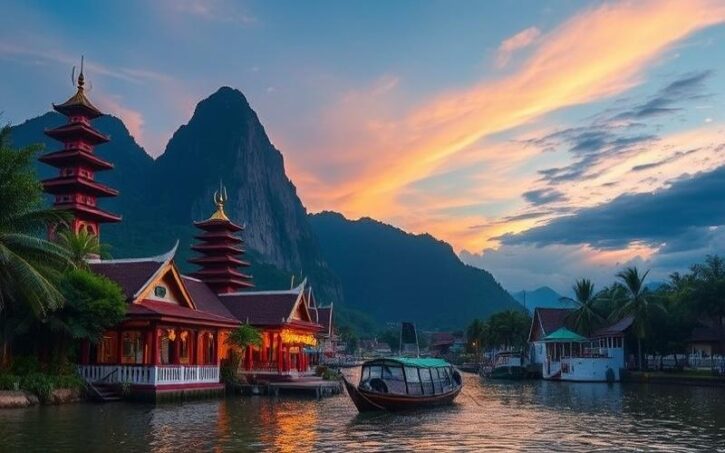
Kampong Ayer Floating Village: Nicknamed the “Venice of the East,” this stilt village is home to over 30,000 residents. A water taxi ride will let you discover the traditional way of life of Bruneians and admire the colorful houses rising above the water.
- Pros: Authentic experience, beautiful sunsets
- Cons: Sometimes unpleasant odors, aging infrastructure
Royal Regalia Museum: Dive into the fascinating history of the Bruneian monarchy by admiring the royal treasures on display in this museum. You’ll especially see the golden chariot used during the current sultan’s coronation.
- Pros: Unique collection, free entry
- Cons: Photos not allowed inside, few explanations in English
Good to know:
The capital concentrates most of the country’s tourist attractions. Plan at least 2 days to explore its main sites.
In the Heart of Lush Nature
Brunei is also home to breathtaking natural wonders:
Ulu Temburong National Park: Nicknamed the “Green Jewel of Brunei,” this park offers total immersion in the primary rainforest. Don’t miss the canopy walkway suspended 50 meters high, which offers a stunning view over the treetops.
- Pros: Exceptional biodiversity, guided hikes
- Cons: Accessible only by boat, mosquitoes
Muara Beaches: For a relaxing break, head to the white sand beaches of the Muara district. Meragang Beach and Serasa Beach are especially popular with locals for their tranquility and crystal-clear waters.
- Pros: Uncrowded beaches, pleasant swimming
- Cons: Few tourist facilities, far from the capital
Good to know:
The best time to visit Brunei is from March to October, during the dry season.
How to Get to the Sultanate?
Brunei is served by Bandar Seri Begawan International Airport. The national airline, Royal Brunei Airlines, offers direct flights from several major Asian cities.
Once there, the most practical way to get around is to rent a car. The roads are in excellent condition and driving is on the left. Taxis are also available but quite expensive.
For the more adventurous, water taxis can take you to some remote areas like Ulu Temburong National Park.
Where to Stay?
Brunei offers a wide range of accommodations for all budgets:
Royal luxury: The Empire Hotel & Country Club offers palace-worthy amenities with its private beach and golf course.
Affordable comfort: The Radisson Hotel Brunei Darussalam offers modern rooms in the city center at reasonable rates.
Budget options: Guesthouses like Pusat Belia Youth Hostel offer clean, inexpensive dormitories.
Good to know:
Upscale hotels often offer great weekend rates to attract local clientele.
Disclaimer: The information provided on this website is for informational purposes only and does not constitute financial, legal, or professional advice. We encourage you to consult qualified experts before making any investment, real estate, or expatriation decisions. Although we strive to maintain up-to-date and accurate information, we do not guarantee the completeness, accuracy, or timeliness of the proposed content. As investment and expatriation involve risks, we disclaim any liability for potential losses or damages arising from the use of this site. Your use of this site confirms your acceptance of these terms and your understanding of the associated risks.

Cyril Jarnias is an independent expert in international wealth management with over 20 years of experience. As an expatriate himself, he is dedicated to helping individuals and business leaders build, protect, and pass on their wealth with complete peace of mind.
On his website, cyriljarnias.com, he shares his expertise on international real estate, offshore company formation, and expatriation.
Thanks to his expertise, he offers sound advice to optimize his clients' wealth management. Cyril Jarnias is also recognized for his appearances in many prestigious media outlets such as BFM Business, les Français de l’étranger, Le Figaro, Les Echos, and Mieux vivre votre argent, where he shares his knowledge and know-how in wealth management.





