
 Published on and written by Cyril Jarnias
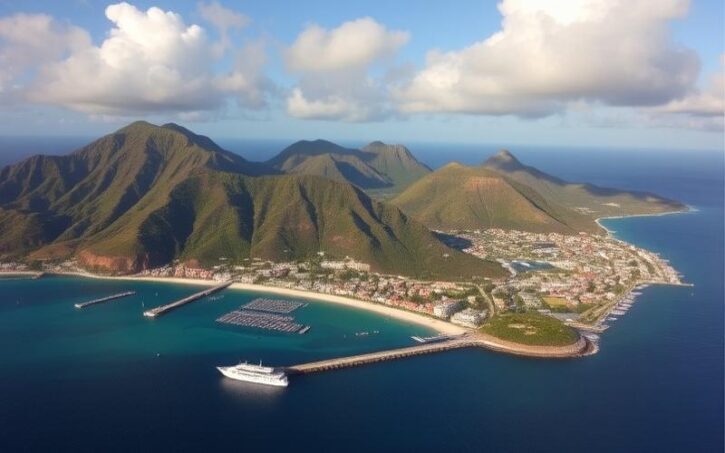
Nestled in the crystal-clear waters of the Caribbean, the islands of St. Kitts and Nevis offer an idyllic setting and a unique living experience for expatriates.
Whether you’re looking to immerse yourself in a rich island culture, enjoy breathtaking landscapes, or benefit from a relaxed, stress-free lifestyle, these islands are sure to captivate you.
Moving to St. Kitts and Nevis might seem like a complex adventure, but with the right guide, you’ll discover how to navigate through administrative formalities, integrate into the local community, and fully take advantage of the multiple opportunities offered by this tropical paradise.
Preparing Your Move to St. Kitts and Nevis: The Essentials
Key Steps to Prepare for Your Move to St. Kitts and Nevis as an Expatriate
1. Required Administrative Documents
- Valid passport (valid for at least 6 months beyond your planned departure date)
- Round-trip ticket
- Visa: For stays under 90 days, no visa is required for French nationals; for longer stays, inquire about residence or work procedures
- Work permit: To be obtained from local authorities if you plan to work
- Additional documents for expatriation or citizenship procedures:
- Official forms (C1, C2, C3)
- Birth certificate
- ID card
- Medical certificate (including HIV test)
- Police certificate
- Recent photographs
- Marriage certificate (if applicable)
- Apostille on certified documents for countries signatory to the Hague Convention
2. Housing Search Before Arrival
- Research popular and safe neighborhoods (Basseterre, Frigate Bay, Nevis)
- Consult local or international real estate platforms
- Contact real estate agencies or expatriate groups
- Arrange a virtual tour or request recent photos
- Verify rental terms (contract, security deposit, lease duration)
- Plan for temporary housing (hotel, seasonal rental) for the first days
3. Health and Vaccinations
- Recommended vaccinations:
- Hepatitis A and B
- Typhoid
- Universal vaccinations (DTP, MMR)
- Yellow fever (if coming from a risk country)
- Obtain international health insurance covering medical expenses on site
- Local healthcare system is limited: public hospitals in Basseterre and Charlestown, restricted access to specialized care
- Possibility of medical evacuation for complex needs
4. Financial Aspects
| Financial Aspect | Details |
|---|---|
| Local currency | Eastern Caribbean Dollar (XCD) |
| Account opening | Requires passport, proof of address, proof of employment or income |
| Cost of living | Moderate to high depending on lifestyle; imported goods more expensive |
| Payment methods | Bank cards accepted, but cash recommended in some cases |
- Research local banks (Republic Bank, St Kitts-Nevis-Anguilla National Bank)
- Prepare sufficient funds for initial deposit and banking fees
5. Cultural Differences and Integration
- Warm and welcoming population, strong English-speaking influence
- Vibrant social life centered around beaches, Caribbean music, and festivals
- Respect for local traditions and dress customs
- Importance of community network (expatriates, locals)
- English practice: essential for professional and social integration
6. Transportation Upon Arrival
- Taxis available at airport and in town
- Car rental recommended for more autonomy
- Limited public bus network, variable schedules
- Ferries between St. Kitts and Nevis
- Adequate road infrastructure but left-side driving
7. Useful Resources and Links
- Official St. Kitts and Nevis government portal: administrative information, online procedures
- Local real estate platforms and expatriate Facebook groups
- French Ministry of Foreign Affairs: travel advice and security
- Specialized websites for citizenship by investment and work permits
- Expatriate forums and French-speaking associations
Key takeaways:
Carefully prepare your documents, anticipate housing search, obtain appropriate health insurance, inform yourself about cost of living and banking procedures, and familiarize yourself with local culture to facilitate your integration.
Good to know:
Ensure you have a valid passport, visa, and work permit before leaving; government website links can provide updated information on required documents. Consider obtaining international health insurance and research mandatory vaccinations, and for your finances, plan to open a local bank account with your ID and proof of address.
Getting Started: Procedures Upon Arrival
Administrative Procedures Upon Arrival in St. Kitts and Nevis
- Present a valid passport and return ticket upon arrival.
- Complete the electronic immigration and customs form before arrival.
- Stay authorized for up to 90 days without additional formalities. Beyond that, apply for a residence permit with the Ministry of National Security.
- To open a local bank account, present passport, proof of address, and sometimes a bank reference letter.
Registration with Local Authorities
- Register with immigration services if stay exceeds 90 days.
- Boaters must complete customs and police formalities upon arrival and departure.
Housing Search
- Consult local real estate agencies, online platforms, and expatriate groups.
- Schedule on-site visits to verify property condition.
- Long-term rentals are common, with security deposit equivalent to one or two months’ rent.
Registration for Public Services (Water, Electricity)
- Provide proof of residence and ID to the provider.
- Main providers are:
- Electricity Department (St. Kitts)
- Nevis Electricity Company Ltd. (NEVLEC) (Nevis)
- Water Services Department
Education Options for Children
| Type of Institution | Description |
|---|---|
| Public schools | Local education system, instruction in English. |
| Private/international schools | International programs, higher tuition fees. |
- Registration generally requires birth certificate, vaccination record, passport.
Telecommunications and Internet Providers
- Main operators:
- FLOW
- Digicel
- Services offered:
- Mobile and landline telephony
- High-speed Internet access (ADSL, fiber in some areas)
- Prepaid plans and monthly subscriptions
Registration with Local Health Organizations
- Register with local hospital (JN France in St. Kitts or Alexandra in Nevis).
- Present passport and, if possible, proof of health insurance.
- For emergencies: dial 911 for ambulance.
- Plan for evacuation to Guadeloupe for specialized care.
Advice on Local Customs
- Greet with courtesy and respect formal customs during meetings.
- Neat attire in public and administrative places.
- Respect local schedules (punctuality appreciated in official procedures).
- Participate in community events to facilitate integration.
Resources for Expatriates
- Expatriate groups on social media to share advice and housing offers.
- French Embassy in Saint Lucia for consular procedures and emergencies.
- Local associations facilitating integration and mutual aid among newcomers.
Key Takeaways
Valid passport, registration for essential services, procedures with immigration and banks, and adaptation to local customs are the keys to a successful settlement in St. Kitts and Nevis.
Good to know:
Upon your arrival in St. Kitts and Nevis, register with local authorities to obtain a residence permit, open a local bank account, and consult real estate agents for housing. For setting up public services, such as water and electricity, and for Internet access, inquire with local companies like Flow or Digicel, while registering with health organizations.
Integrating and Thriving in the Local Community
Integrating and thriving in the local community of St. Kitts and Nevis involves active participation in the islands’ cultural and social life, respect for customs, and establishing authentic connections with residents.
Importance of Festivals and Local Events
Participating in numerous festivals and events is an excellent way to understand local traditions and identity.
Main events include:
| Festival / Event | Period | Key Features |
|---|---|---|
| Carnival (Sugar Mas) | December to January | Parades, music, dances, colorful costumes, community spirit |
| Culturama (Nevis) | Late July to early August | Folk performances, cultural parade, heritage promotion |
| St. Kitts Music Festival | June | International artists, varied music, open-air concerts |
| Nevis Mango Festival | July | Gastronomy, culinary workshops, celebration of local fruit |
| Reenactment of the Battle of St. Kitts | March | Historical event, immersion in colonial past |
Participating in these events not only allows you to discover the cultural richness of St. Kitts and Nevis but also to establish informal contacts with residents and integrate into community life.
Opportunities for Expatriates
To facilitate integration and build lasting connections, several options are available to newcomers:
- Social and sports clubs: golf, swimming, triathlon, hiking, book clubs.
- Volunteer activities: involvement in local charitable associations, support for cultural events, help organizing festivals.
- Workshops and classes: Caribbean cuisine, local crafts, music, traditional dance.
- Informal gatherings: markets, fairs, community picnics.
Language and Communication
Mastering basic phrases in English (official language) and showing interest in the local Creole is highly appreciated. This shows respect for the culture and facilitates building trust. Even a simple greeting or thank you in Creole or English can open doors and encourage exchanges.
Useful phrase examples:
| French | English | Local Creole (examples) |
|---|---|---|
| Bonjour | Good morning | Mawnin’ |
| Merci | Thank you | Tank yuh |
| Comment ça va ? | How are you? | Ow yuh deh? |
Cultural Aspects to Respect
For harmonious integration, it’s essential to:
- Respect traditions and religious diversity.
- Adopt an open, polite, and discreet attitude during public events.
- Observe dress codes during ceremonies or official visits.
- Avoid judgments on local customs, prioritize listening and learning.
- Actively participate in community life without imposing your own cultural references.
Resources for Expatriates
Several resources facilitate adaptation:
- Expatriate assistance associations: mutual aid groups, welcome and orientation sessions.
- Online forums: exchange of practical information, advice on daily life, upcoming events.
- Municipal services and tourist information offices: documentation on events, useful addresses, association contacts.
Actively engaging in local life, learning a few words of the language, and respecting customs are the keys to lasting integration and thriving in St. Kitts and Nevis.
Good to know:
Participating in festivals like the St. Kitts Music Festival or Nevis Mango Festival allows immersion in local traditions, while joining social clubs or volunteering offers opportunities to build connections with residents. Learning a few phrases in Creole and respecting local customs, such as not rushing social interactions, contributes to successful integration, with support from associations and online forums to guide newcomers.
Everything About Visas and Residence Permits
Everything About Visas and Residence Permits in St. Kitts and Nevis
| Type of Visa or Permit | Main Conditions | Duration / Renewal | Main Required Documents | Specific Observations |
|---|---|---|---|---|
| Tourist Visa | Not required for many countries (EU, Canada, USA, CARICOM, etc.) for stays up to 90 days. | 90 days (renewable on site) | Valid passport, proof of accommodation, return ticket, form | E-visa possible depending on nationality |
| Business Visa | For professional stays over 90 days. | Variable | Passport (6 months validity), employer letter, photos, ticket | Requires work permit afterwards |
| Temporary Residence Permit | Retirees, spouses of temporary residents, disabled children. | 6 or 12 months (renewable) | Passport, proof of resources, form, photos, insurance | $300 (6 months) or $600 (12 months) |
| Annual Residence Permit | Expats, spouses, disabled children. | 6 or 12 months (renewable) | Passport, proof of resources, form, photos, insurance | $750 (6 months) or $1,500 (12 months) |
| Permanent Residence | Retirees who purchased property ≥$350,000 and held it ≥7 years. | Permanent | Property title, passport, proof of resources, insurance | Real estate acquisition mandatory |
| Citizenship by Investment | Investment: donation (≥$250,000) or real estate (≥$325,000 in shares or ≥$600,000 house). | Permanent (citizenship) | Complete file, police, medical, proof of investment | Includes family, unlimited residence rights |
| Work Permit | Issued after obtaining entry visa for work. | Generally annual | Passport, medical tests, criminal record, employment contract | Job offer required |
Administrative Procedures and Required Documents
- Complete application form (online or paper depending on visa/permit type).
- Provide valid passport (often required for entire stay duration).
- Submit recent ID photos.
- Justify accommodation (hotel reservation or host certificate).
- Provide return or onward ticket.
- Attest sufficient financial resources (bank statements, employer letter or pension proof).
- Present health insurance certificate covering stay duration.
- For work permits: provide job offer, contract, medical certificate (including tuberculosis and syphilis tests), criminal record extract, and notarized passport copy.
- For residence or citizenship by investment permits: complete file including proof of real estate or financial investment, medical certificates, criminal record, family documents (marriage, birth).
Renewal Process
Temporary and annual permits expire on December 31 each year and must be renewed with local authorities before expiration.
Provide updated documents again (passport, insurance, resources), pay corresponding fees.
For permanent residence, renewal not necessary as long as initial conditions are met.
Work permits are generally renewable annually, subject to maintained employment and hiring conditions.
Long-Term Stay Options for Expatriates
- Annual residence: accessible to expatriates, renewable each year.
- Permanent residence: possible for retiree property owners meeting criteria.
- Citizenship by investment: accelerated procedure for investors and their families, granting citizenship and passport access.
- Work permit: for foreign employees with locally validated job offer.
Practical Tips for Settlement
- Check specific document list required according to your situation (family status, country of origin) in advance.
- Obtain international health insurance covering entire stay, as it may be required and local healthcare system is limited.
- Anticipate administrative delays (two weeks to several months depending on file type).
- For families, prepare translated marriage and birth certificates, ensure they’re apostilled if necessary.
- Expatriates must often justify sufficient financial resources, especially for residence permits (bank statements, income proofs).
- Real estate investors must ensure property acquisition meets required thresholds and is validated by competent authorities.
- For work permits, employer must prove no local resident could fill position (job posting published at least 3 weeks).
Specific Conditions for Expatriates
- Financial requirements: proof of income or investment (amount varies by permit).
- Health insurance: often mandatory, covering hospitalization and routine care.
- Clean criminal record: required for most residence and work permits.
- Medical check: mandatory health tests for certain permit types, including tuberculosis and syphilis tests.
- Property ownership: required for permanent residence (minimum amount and holding duration).
Key takeaways: For a smooth and compliant stay, it’s essential to prepare all documents well in advance, inform yourself about specifics according to your nationality and status, and seek assistance if needed from an immigration professional or local lawyer.
Good to know:
To obtain a visa in St. Kitts and Nevis, prepare documents such as a valid passport, proof of financial resources, and health insurance; expatriates can also consider the permanent residence program for extended stays. Visa renewal follows specific procedures, ensure you start procedures in advance and check if legal updates are in effect.
Disclaimer: The information provided on this website is for informational purposes only and does not constitute financial, legal, or professional advice. We encourage you to consult qualified experts before making any investment, real estate, or expatriation decisions. Although we strive to maintain up-to-date and accurate information, we do not guarantee the completeness, accuracy, or timeliness of the proposed content. As investment and expatriation involve risks, we disclaim any liability for potential losses or damages arising from the use of this site. Your use of this site confirms your acceptance of these terms and your understanding of the associated risks.

Cyril Jarnias is an independent expert in international wealth management with over 20 years of experience. As an expatriate himself, he is dedicated to helping individuals and business leaders build, protect, and pass on their wealth with complete peace of mind.
On his website, cyriljarnias.com, he shares his expertise on international real estate, offshore company formation, and expatriation.
Thanks to his expertise, he offers sound advice to optimize his clients' wealth management. Cyril Jarnias is also recognized for his appearances in many prestigious media outlets such as BFM Business, les Français de l’étranger, Le Figaro, Les Echos, and Mieux vivre votre argent, where he shares his knowledge and know-how in wealth management.





