
 Published on and written by Cyril Jarnias
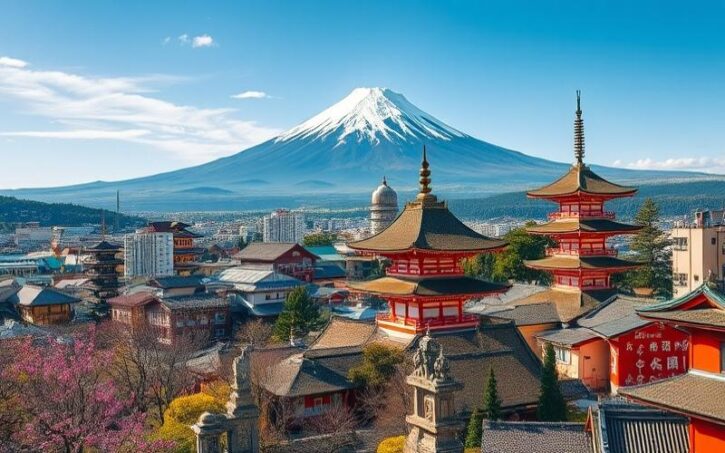
Japan, a country where relentless modernity and ancient traditions coexist in harmony, offers a fascinating panorama of religious life through its countless places of worship and the diversity of its communities. Buddhist temples and Shinto shrines dot the landscape, each telling a rich and complex story, blending deep spirituality with cultural practices.
At the heart of Japanese society, these sacred edifices are not only places for quiet reflection but also hubs for festivals that mark the rhythm of the year. To immerse oneself in this world is to discover how architecture, rituals, and beliefs intertwine to form a unique mosaic, where each tradition contributes to a living spiritual and cultural heritage.
Living Your Faith in Japan: A Guide for Expatriates
Diverse Religions Practiced in Japan
Japan is a country where Buddhism and Shinto have a long history, but in recent years, the increase in the number of foreigners has led to world religions such as Christianity, Islam, Judaism, and Hinduism also being widely observed. Especially in major metropolitan areas like Tokyo, Osaka, and Kobe, there are diverse worship facilities and communities, and efforts are made to welcome foreigners according to each denomination or belief.
Examples of Major Religions and Places of Worship
- Christianity (Catholic, Protestant, Orthodox)
- There are many Christian churches in major cities like Tokyo, Osaka, and Yokohama.
- Many offer masses and services in English or other languages, which can be attended not only by residents of Japan but also by tourists.
- Islam
- There are several mosques in major metropolitan areas, including Kobe Mosque (the oldest in Japan), Tokyo Camii Mosque (Yoyogi-Uehara), and Nagoya Mosque.
- Mosques hold Friday congregational prayers (Jumu’ah) and events related to Ramadan, with activities led by multicultural communities.
- Prayer rooms reserved for or shared by Muslims also exist in airports, large shopping centers, and some universities.
- Judaism
- There are synagogues in the Hiroo district of Tokyo and Kitanocho in Kobe, where Sabbath services are held for Jews residing in Japan and visitors. They often offer support in English.
- Hinduism and Other Indo-Indian Religions
- There are Hindu and Jain temples in Kobe, accessible not only to residents of Indian origin but also to the general public.
- Small temples integrated into Nepalese restaurants are also increasing.
Services and Events for Foreigners
- Each facility is making progress in displaying information signs in English, operating multilingual websites, and accommodating dietary restrictions (e.g., with certified halal restaurant guides).
- In addition to masses/prayers/congregational services, activities aimed at fostering intercultural understanding, such as multicultural food festivals, workshops exploring celebrations, and cultural exchange events, are organized.
- There are consultation desks for foreign students and trainees, as well as information exchange networks via social media groups.
Potential Challenges and Solutions
| Challenge | Content | Main Solutions/Support |
|---|---|---|
| Language Barrier | Many places where only Japanese is understood | Introduction of English masses, use of multilingual signage |
| Dietary Restrictions | Difficulty obtaining halal/kosher food | Creation of websites introducing specialized restaurants / use of certification systems |
| Lack of Places of Worship | Few dedicated facilities outside urban areas | Promotion of installing prayer rooms in public spaces |
| Religious Learning Opportunities | Lack of dissemination of basic knowledge according to denominations | Creation of multicultural awareness brochures / educational partnerships |
| Community Isolation | Separation due to regional differences among followers of the same faith | Creation of networks via social media and apps |
Welcoming Religious Communities and Available Resources
- Diverse Meetup Groups: Facebook groups, the Meetup app, communities named International Church, Muslim Community, Jewish Association across Japan
- Support Organizations: NGO JIST (Mita City), JEMA (Japan Evangelical Missionary Association), Tokyo Muslim Guide, etc.
- Online Tools: Searches possible on Google Maps for mosque, church, temple. The latest information is available via official websites/SNS
What’s Good to Know About the Cultural and Social Context
Japanese society has traditionally prioritized ceremonies over personal beliefs. Many people consider themselves non-religious, and public proselytizing activities can often meet with resistance or be perceived as unusual. However, there is flexibility in participating in other faiths’ rituals only on specific occasions such as weddings and funerals, with a tendency to calmly accept without excluding what is different.
Therefore, behavior focused on reserved personal expression and respectful appreciation of others—that is, paying attention to attire or voluntarily offering supplementary explanations—promotes harmonious interaction.
In conclusion, even in Japan, major urban areas are beginning to develop an environment that can serve as a place of spiritual rest for almost all major world faiths. The ability to build unique networks, collect information autonomously, and efforts to understand diversity are the keys to safely maintaining a life of faith.
Good to Know:
Expatriates living in Japan can practice their faith thanks to the diversity of places of worship present in major cities like Tokyo, Osaka, and Yokohama. Christian churches, Muslim mosques, Jewish synagogues, and Hindu temples offer adapted services and sometimes even events in English to facilitate the integration of foreigners. For example, Tokyo is home to several international churches and the Tokyo Camii Mosque offers guided tours and intercultural meetings. However, expatriates may encounter challenges due to cultural and linguistic differences or the limited availability of resources, especially in rural areas. To address this, meetup groups and support networks exist, such as those offered by International Christian Fellowship or by Muslim organizations that provide help with halal dietary traditions. Apps and online forums also allow maintaining a connection with the religious community, facilitating spiritual practice and the creation of social relationships within the country.
Exploring Japan’s Iconic Places of Worship
In Japanese culture, Buddhist temples and Shinto shrines play a central role spiritually and historically, and in contemporary society, they also fulfill a crucial function as centers for religious activities, community life, and even as tourist resources. These establishments are not simply places of worship; they are essential elements in shaping the Japanese way of life, values, and cultural landscape.
Differences and Coexistence of Buddhist Temples and Shrines
Temples (or Buddhist temples) are religious establishments based on Buddhism, which originated in India, and serve as places of practice and ceremonies for monks. They primarily feature statues of Buddha, and people pray there for salvation in the afterlife or for worldly benefits.
In contrast, shrines are places of Shinto faith, an indigenous religion of Japan, where the eight million deities (yaoyorozu no kami) are venerated, and people express their reverence and gratitude towards nature. Both types of establishments have long coexisted in the form of kami-buddha syncretism, and many diverse ceremonies and rituals have been held there.
Iconic Buildings: Kinkaku-ji, Sensō-ji, Fushimi Inari-taisha
- Kinkaku-ji (Kyoto)
- Kinkaku-ji is famous as a Zen temple, with its characteristic three-story pavilion, the top floor of which is entirely covered in gold leaf.
- This opulence symbolizes the ideal world of the Pure Land and enlightenment, and the harmony with the magnificent garden attracts visitors.
- Sensō-ji (Tokyo)
- Sensō-ji is the oldest and one of the largest temples in Tokyo, attracting millions of pilgrims each year through fervent devotion to the Kannon Bodhisattva.
- The magnificent Kaminarimon gate, the large lantern, and the bustle of Nakamise Street offer a richly colorful scene. In the main hall, many devotees pray for their wishes to be granted.
- Fushimi Inari-taisha (Kyoto)
- Considered the largest Shinto shrine, Fushimi Inari-taisha is famous for its approximately 10,000 vermilion torii gates, offered as prayers for business prosperity and good harvests, which form an impressive tunnel.
- This enchanting atmosphere attracts many visitors from around the world.
Architectural Styles and Rituals
- Temples feature distinct styles, with entrance gates (sanmon), main halls, and pagodas, such as five-story pagodas and large structures housing the Buddha.
- Shrines feature torii gates, main buildings, and purification pavilions. The torii marks the boundary between the mundane world and the sacred realm.
- Rituals include sutra recitations, Buddhist ceremonies (daily routines/annual events), as well as New Year’s visits, festivals, and various prayers.
- Traditional seasonal events are held across Japan, such as the Sanja Matsuri in Asakusa, the Setsubun ceremony, and Niiname-sai.
Attraction for Devotees and Tourists
Recently, many visitors come not only from Japan but also from abroad, attracted by:
- The solemnity and beauty of the gardens, typical of historical and cultural heritage,
- Pilgrimages to power spots, the quest for blessings,
- Interactive events like illuminations during cherry blossoms or autumn maple leaves.
Furthermore, collecting calligraphy stamps (goshuin) has become a growing trend among young people.
Function of Religious Ceremonies and Local Communities
Through these holy places, various festivals and rituals, such as traditional artistic performances, New Year’s visits, New Year’s Eve ceremonies, Obon offerings, or mikoshi parades with citizen participation, continue to infuse vitality and a sense of unity into the entire city, thereby strengthening ties with the local community.
Therefore, beyond their role as mere places of worship, these sites are also expected to fulfill multiple functions as elements of historical continuity, in shaping urban identity, as refuges in times of disaster, and as spiritual cultural pillars.
Thus, Japanese temples and shrines, particularly Kinkaku-ji, Sensō-ji, and Fushimi Inari-taisha, continue to possess universal value, deeply connected to the social fabric as well as to the spirit of the Japanese people.
Good to Know:
Japan’s Buddhist temples and Shinto shrines, like the famous Kinkaku-ji in Kyoto and Sensō-ji in Tokyo, are cultural gems steeped in spirituality that captivate both devotees and tourists. The refined architecture and traditional rituals, such as the sound of bells or water purification, create a unique atmosphere during visits. Fushimi Inari-taisha, famous for its thousands of red torii gates, is another must-see. These sites are at the heart of religious festivals such as the Gion Matsuri in Kyoto, where processions and ceremonies recall the interconnection between daily life and the spiritual. To fully enjoy these places, it is advisable to visit early in the morning to avoid crowds and to respect local customs, such as removing shoes before entering certain sacred spaces.
Religious Communities in Japan: Finding Your Place
Diversity of Religious Communities in Japan and Their Social Expression
In Japan, many new religions and minority religions coexist, including Shinto, Buddhism, and Christianity. Shinto is the indigenous ethnic religion of Japan and is polytheistic in nature, believing in “yaoyorozu no kami” (eight million deities). It is considered that gods reside in everything in nature and daily life, and this influence is strongly felt in Japanese expressions and customs.
Buddhism was introduced around the 6th century and has many branches (Pure Land, Zen, etc.), each of which has developed unique rituals and conceptions of life and death. Christianity also spread from the modern period but remains a minority with less than 1% of the population. Other religions like Islam, Judaism, and Hinduism, practiced by foreign communities residing in Japan, as well as new religious groups, are also active.
Organization and Rituals Anchored in Daily Life
Although Japanese people often describe themselves as “non-religious,” they practice various traditional rituals without consistency, such as the first shrine visit of the year (Shinto), chapel weddings (Christianity), and funerals led by a temple (Buddhism). This “multi-layered” style of belief is characteristic.
Representative places of worship include shrines, temples, Christian churches, and mosques across the country. Regional festivals and annual events also play an important role. Furthermore, new religious groups have their own facilities, headquarters, and large meeting halls.
Challenges Related to Acceptance and Integration
On the surface, Japanese society is perceived as “tolerant.” However, according to surveys, the “level of trust towards believers of other religions” and the willingness to “accept them as neighbors” are low compared internationally, raising criticism of superficial tolerance. Fundamental understanding and acceptance of monotheistic theological systems from other countries are also limited.
Post-war educational policies, favoring the separation of religion and state and the exclusion of religion from public education, have had a significant impact, often resulting in a posture of “ignorance = defenselessness,” making one vulnerable to sectarian issues. Minorities like resident foreign Muslims also often encounter assimilation pressures, misunderstandings, and feelings of intolerance.
Main Examples: Symbolic Facilities/Rituals by Denomination
| Religion | Place of Worship | Representative Rituals |
|---|---|---|
| Shinto | Shrines | First shrine visit of the year (Hatsumode), purification, Shichi-go-san |
| Buddhism | Temples | Funerals, Obon services, Ohigan |
| Christianity | Churches | Mass/Communion, weddings, Christmas |
| Islam | Mosques | Jumu’ah (Friday congregational prayer), Eid al-Fitr |
Dialogue and Cooperation Activities for Peaceful Coexistence
Shortly after the war, the Japan Federation of Religious Organizations and other inter-organizational dialogue platforms were created, with many examples of participation in concrete problem-solving projects such as anti-nuclear movements, human rights defense, and disaster support.
Since the 1960s, lay Buddhist groups like Rissho Kosei-kai have actively organized Buddhist-Christian dialogues and promoted civic awareness programs. In recent years, at the NGO/NPO level, the number of examples of regular seminars and intercultural exchange workshops is increasing. However, these activities remain primarily at a leadership level and have not deeply permeated the daily consciousness of citizens.
Thus, in Japanese society, there exist diverse and complexly layered faith practices, sometimes generating friction, and real and sustained efforts for mutual understanding are still further needed.
Good to Know:
Japan is home to a mosaic of religious communities where Shinto and Buddhism predominate, with places of worship such as Shinto shrines and Buddhist temples, essential in daily life through rituals like Hatsumode or O-bon ceremonies. Christianity and other minority religions, although less widespread, have their own spaces, notably churches and mosques, and sometimes face challenges of acceptance in a Japanese society deeply rooted in its traditions. Efforts at interreligious dialogue, notably through events like peace forums, illustrate a willingness to promote harmonious coexistence, even if the penetration of these practices remains moderate. Communities often organize into associations that facilitate integration and cultural sharing, thereby strengthening religious diversity in Japan.
Disclaimer: The information provided on this website is for informational purposes only and does not constitute financial, legal, or professional advice. We encourage you to consult qualified experts before making any investment, real estate, or expatriation decisions. Although we strive to maintain up-to-date and accurate information, we do not guarantee the completeness, accuracy, or timeliness of the proposed content. As investment and expatriation involve risks, we disclaim any liability for potential losses or damages arising from the use of this site. Your use of this site confirms your acceptance of these terms and your understanding of the associated risks.

Cyril Jarnias is an independent expert in international wealth management with over 20 years of experience. As an expatriate himself, he is dedicated to helping individuals and business leaders build, protect, and pass on their wealth with complete peace of mind.
On his website, cyriljarnias.com, he shares his expertise on international real estate, offshore company formation, and expatriation.
Thanks to his expertise, he offers sound advice to optimize his clients' wealth management. Cyril Jarnias is also recognized for his appearances in many prestigious media outlets such as BFM Business, les Français de l’étranger, Le Figaro, Les Echos, and Mieux vivre votre argent, where he shares his knowledge and know-how in wealth management.





