
 Published on and written by Cyril Jarnias
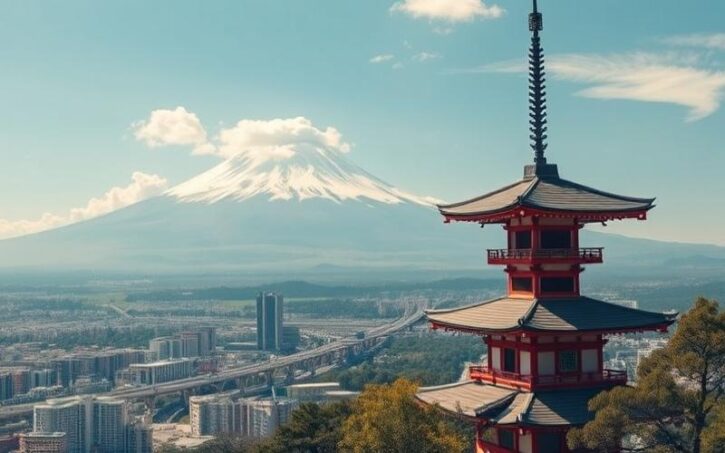
Choosing Japan as a retirement destination is an option that appeals to more and more people seeking a balance between modernity and tradition. This island nation offers stunning landscapes, unparalleled cultural richness, and a healthcare system renowned for its excellence. Beyond these assets, Japan also provides attractive tax benefits for expatriate retirees, making it a destination of choice. Living in Japan means adopting a harmonious and serene lifestyle, where quality of life and safety are central concerns. This combination of economic advantages and quality of life attracts those who wish to spend their retirement focused on discovery and personal enrichment.
Tax Benefits for Retirees in Japan
For retirees in Japan, various tax relief measures are in place to lighten the tax burden. The retirement income deduction and the elderly person deduction systems are particularly representative, each with detailed conditions and calculation methods.
Tax Benefits for Retirement Income
- Severance pay benefits from a retirement income deduction and is taxed at half-rate as an exception.
- A significant deduction amount is set based on years of service (400,000 yen per year of service for 20 years or less, 8 million yen plus 70,000 yen per year of service beyond 20 years).
- Only half of the remaining amount after deduction is taxable, separated from other income with a lower effective tax rate.
- For example, after 40 years of service, up to 22 million yen can be tax-exempt, which significantly increases the net amount in most cases.
- As everything is finalized through withholding tax, a tax return is often not required.
Various Deductions for the Elderly
- Dependent Elderly Relative Deduction: By supporting parents meeting certain conditions (annual income less than 480,000 yen, etc.) aged 70 or over, an additional deduction of 100,000 to 480,000 yen (depending on whether they live together or not) can be granted to the taxpayer. This reduces the burden of income tax and residence tax for the entire household.
- Public Pension Deduction: Public pension recipients can also benefit from tax exemptions ranging from 1.1 to 1.955 million yen depending on their income situation, as well as various basic deductions for employment income and other miscellaneous income.
Recently Introduced or Expanded Systems
Fixed-Rate Tax Reduction: Applied from the 2024 fiscal year, under certain conditions, additional reduction measures can be applied when filing a tax return. However, simple withholding tax may sometimes not be sufficient to benefit from it.
International Comparison
| Japan | United States | Germany | France |
|---|---|---|---|
| High exemption for lump-sum severance pay (half-rate taxation + high-level deductions), tax-free thresholds for public pensions | Focus on deferral and exemptions for pension and IRA gains. Lump-sum payments are more progressive | Tax-free thresholds for public/private pensions with partial progression, increased restrictions for lump-sum payments | Generous allowance based on age and family composition, partially in the form of resident services |
What is unique to Japan is the favorable tax treatment for large lump-sum payments linked to a long career. In other countries, cashing out after a long period of retirement savings can often result in general progressive or higher taxation, whereas in Japan, a large portion can be nearly exempt if the career was long. The clearly identified additional allowance for supporting elderly parents is also notable.
Impact on Public Finances and Standard of Living
Thanks to these preferential measures, Japanese retirees benefit from the formation of substantial capital at retirement and the maintenance of overall household disposable income, which helps reduce feelings of insecurity during retirement. In fact, major studies often show that, after age 60, the average household savings balance and consumption level remain among the highest within OECD countries.
In the recent period of rising prices, discussions are ongoing about the balance between fairness and maintaining the safety net function, for example by increasing basic deductions. Statistical examples, such as the case of a lump-sum payment of over 20 million yen after 40 years of service with more than 90% of the sum available net, and case analyses showing savings of over 100,000 to 500,000 yen per year for families using the dependent elderly relative deduction, provide data on the various benefits. Such schemes are typically financial stabilization policies for retirement specific to Japanese society.
Good to Know:
Retirees in Japan benefit from various tax advantages designed to lighten their tax burden, such as exemptions and reductions on income tax. The elderly can enjoy specific allowances, including partial exemption of pensions and retirement income, significantly reducing their tax due. These schemes often require residency in Japan and having an income below certain thresholds, thereby establishing stable financial security for many retirees. Compared to other countries, such as the United States or the United Kingdom, Japanese benefits are generally more concentrated on retirement income, which improves the financial well-being of seniors by allowing them to maintain a decent standard of living. According to a recent study, these tax measures have helped approximately 70% of Japanese retirees significantly decrease their annual tax-related expenses, thereby relieving their overall budget.
Cost of Living for a Comfortable Retirement in Japan
Average Monthly Expenses After Retirement in Japan
Consumption expenses for an elderly unemployed couple (husband aged 65 or over, wife aged 60 or over) are estimated between 220,000 and 270,000 yen per month on average. For a single person, the estimate is about 125,000 to 155,000 yen. This includes basic living expenses such as food, housing, utilities, and medical care.
Cost of Living Comparison by Major City (Tokyo, Osaka, Kyoto)
| City | Estimated Monthly Living Expenses | Housing Cost | Food Prices | Transportation Cost |
|---|---|---|---|---|
| Tokyo | High (250,000 to 300,000 yen and above) | Very High | Slightly High | Well-developed public transport network |
| Osaka | Relatively High (approx. 230,000 to 280,000 yen) | High | Slightly Cheaper | Well-developed public transport network |
| Kyoto | Intermediate (approx. 220,000 to 260,000 yen) | Lower than Tokyo but increasing | Standard | Available public transport network |
In Tokyo, rents and prices are among the highest in the country, with housing costs sometimes more than double those in regional areas. In Osaka and Kyoto, rents are also increasing in the city center.
Cost of Living Differences Between City and Countryside
- City
- Rent: Very high, even for a studio apartment, between 70,000 and 100,000 yen/month.
- Food: Supermarket product prices are slightly higher.
- Medical Care: Good access to major hospitals but wait times can be long.
- Transportation: Developed public transport network, no need for a car.
- Countryside
- Rent/House Maintenance Cost: For an older single-family home, possible from a few thousand to several tens of thousands of yen/month.
- Food: Local vegetables can be cheaper.
- Medical Care: Mainly clinics, major hospitals may be far away.
- Transportation: Car essential, increased fuel and maintenance costs.
Regarding utilities, cold regions lead to increased heating costs, and vehicle costs (insurance and taxes) are higher than in the city.
Main Expense Items (Example Monthly Averages for a Couple)
- Food: Approximately 65,000 to 70,000 yen
- Housing: Approximately 13,000 to 25,000 yen (varies by ownership/rental and location)
- Utilities: Approximately 18,000 to 20,000 yen
- Medical Care: Approximately 15,000 to 18,000 yen
- Leisure and Entertainment: Approximately 20,000 to 25,000 yen
- Communication and Transportation: Approximately 20,000 to 30,000 yen
For a Comfortable Retirement?
According to some studies, to include leisure and travel, one should budget around 350,000 yen per month. This is an addition of 100,000 to 130,000 yen to basic expenses.
Social Security Systems and Benefits for Retirees
- Public Pension System: Two-tier structure with Basic Old-Age Pension and Employees’ Old-Age Pension. Starts at age 65 with option to defer for increase. Exceptions like flat-rate additions for long-term enrollment exist.
- Health/Long-Term Care Insurance: After age 70, patients bear 20% of medical costs, but public subsidies are available.
- Various Senior Discounts: Discounts for trains, buses, highway tolls, museum admission fees, etc. Some municipalities offer free hot spring vouchers or free health checkups.
Summary of Housing Options and Their Cost
| Type | Urban Area | Rural Area |
|---|---|---|
| Rental Apartment (Studio) | 70,000 to 120,000 yen/month | 30,000 to 60,000 yen/month |
| Condominium (Purchase) | Maintenance and management fees totaling approx. 10,000 to 40,000 yen/month | Lower property taxes, less costly maintenance |
| Single-Family Home Purchase (New) | Over 50 million (city center), outskirts approx. 20 to 35 million | Often less than 10 to 20 million, even less for used |
In urban complexes, convenience is paramount while in the countryside, priority is given to size and properties with gardens are abundant. However, to settle in the countryside, one must account for the additional costs of purchasing and maintaining vehicles as well as snow removal measures.
For senior housing with services or retirement homes, one should expect a significant initial investment or monthly fees on the order of 100,000 to 200,000 yen.
Overall, for a comfortable life after retirement in Japan, one should budget at a minimum between 200,000 and 270,000 yen/month, and over 350,000 yen/month for comfort. In the city, the focus is on housing and food, and in the countryside on transportation-related costs. It is advisable to plan according to one’s lifestyle, health status, and financial situation.
Good to Know:
For a comfortable retirement in Japan, plan for an average monthly budget of approximately 250,000 to 400,000 yen ($1,900 to $3,000), depending on location. Major cities like Tokyo, Osaka, and Kyoto have a higher cost of living, especially in terms of housing, where a city apartment can cost between 70,000 and 150,000 yen per month, while a house in the countryside can be significantly cheaper. Monthly food expenses range from 30,000 to 50,000 yen, and transportation can cost about 10,000 to 20,000 yen, with monthly passes available. Healthcare is relatively affordable thanks to national health insurance, covering 70% of expenses. Retirees benefit from certain social security benefits, as well as discounts on public transportation and other services. Choosing to live in a rural area can reduce costs significantly while offering a different quality of life.
Japanese Lifestyle: An Enriching Retirement in the Land of the Rising Sun
The Japanese lifestyle is often perceived as unique and rich, thanks to the harmony between deep cultural traditions and modern society.
Cuisine and Culinary Traditions
First, the local cuisine is rooted in the nature and history of each region, with traditional dishes utilizing typical ingredients, such as Hokkaido’s Ishikari-nabe, Aomori’s Senbei soup, or Yamanashi’s Hoto, thereby enriching people’s daily lives. This culinary diversity offers new taste experiences and seasonal pleasures, thus contributing to retirees’ sense of fulfillment.
Zen Spirituality
Spirituality, represented by Zen, has established itself as a lifestyle focusing on the present moment, offering a calming period for mind and body. Through Zen thinking, daily life transforms into meditation, and even small joys gain value, allowing for a spiritually enriching old age. Especially after retirement, when one is freed from hustle and bustle, this Zen approach serves as great support for self-reflection.
Traditional Festivals
Traditional festivals also symbolize the unique regional character and community spirit specific to Japan. Through events such as the Awa Odori (Tokushima), Takayama Matsuri (Gifu), or Tenjin Matsuri (Osaka), not only local residents but also many tourists participate, creating a sense of unity and intergenerational exchange. Participating in these festivals also contributes to lifelong learning and creating new connections, offering the elderly an opportunity to actively participate in social activities.
Community and Social Life
Regarding the importance attached to family and the local community, Japan has a deeply ingrained culture of mutual aid both within families and among neighbors. Many opportunities to interact with various generations, from children to the elderly, create a caring community environment that prevents isolation and contributes to mental health. Especially in small urban areas, housing designs that optimize space and mini-gardens strengthen the bonds between people and nature, thereby enhancing life satisfaction.
Safety and Quality of Life
In urban settings, safety and cleanliness, which are among the best in the world in Japan, are rigorously applied in all aspects of life. The low crime rate allows for safe outings, and every place, such as parks, public transport, and streets, offers a pleasant and hygienic environment, which is a major attraction. Strict water quality management allows tap water to be used safely, even in parks.
Medical Services for Expatriates
For foreign residents, medical services in major urban areas have medical facilities with English-language services, multilingual information systems, and advanced medical technologies that allow one to manage their health with confidence, even when emigrating for a second life at retirement age.
Respect for Elders
Respect for the elderly is ever-present in Japan, the country of longevity, thanks to the recognition of seniors as holders of great life experience. This recognition is found in multi-generational households and community activities, where wisdom and experience are valued. This allows the elderly to feel their usefulness both inside and outside the community, to maintain their self-esteem, and promotes a positive attitude of lifelong activity.
All of this – a rich and varied food culture, spiritual satisfaction through Zen, seasonal festivals, carefully nurtured family and community ties, a safe and comfortable environment – as well as the respect always shown to the elderly, complement each other to enrich the daily lives of retirees living in Japan.
Good to Know:
Experiencing retirement in Japan offers a unique cultural experience with health-focused local cuisine, a Zen lifestyle promoting peace of mind, and a multitude of enriching festivals that celebrate traditions. Japanese society values community and family, offering retirees a warm environment where respect for elders is deeply rooted. This social attention is also reflected in the exemplary safety and cleanliness of Japanese cities. Furthermore, the Japanese healthcare system is renowned for its quality, offering expatriates top-tier medical services. These factors combine to create a fulfilling living environment where retirees can truly appreciate every moment of their new life in Japan.
Disclaimer: The information provided on this website is for informational purposes only and does not constitute financial, legal, or professional advice. We encourage you to consult qualified experts before making any investment, real estate, or expatriation decisions. Although we strive to maintain up-to-date and accurate information, we do not guarantee the completeness, accuracy, or timeliness of the proposed content. As investment and expatriation involve risks, we disclaim any liability for potential losses or damages arising from the use of this site. Your use of this site confirms your acceptance of these terms and your understanding of the associated risks.

Cyril Jarnias is an independent expert in international wealth management with over 20 years of experience. As an expatriate himself, he is dedicated to helping individuals and business leaders build, protect, and pass on their wealth with complete peace of mind.
On his website, cyriljarnias.com, he shares his expertise on international real estate, offshore company formation, and expatriation.
Thanks to his expertise, he offers sound advice to optimize his clients' wealth management. Cyril Jarnias is also recognized for his appearances in many prestigious media outlets such as BFM Business, les Français de l’étranger, Le Figaro, Les Echos, and Mieux vivre votre argent, where he shares his knowledge and know-how in wealth management.





