
 Published on and written by Cyril Jarnias
Japan is an island country located in East Asia, in the Pacific Ocean. This fascinating archipelago offers a unique geography, blending steep mountains, rugged coastlines, and vast urban plains. Let’s dive into discovering this multifaceted territory.
Japan’s Geographic Location
Japan is an archipelago composed of four main islands and thousands of smaller islands, stretching over 3,000 kilometers from north to south. It is bordered to the east by the Pacific Ocean, to the west by the Sea of Japan, to the north by the Sea of Okhotsk, and to the south by the East China Sea.
- Hokkaido in the north
- Honshu, the main island in the center
- Shikoku in the south
- Kyushu in the southwest
This island configuration gives Japan a strategic position in East Asia, close to major countries like China, South Korea, and Russia.
Good to know:
Japan has the 6th longest coastline in the world, with nearly 30,000 km of coastline.
Tokyo: Japan’s Largest City
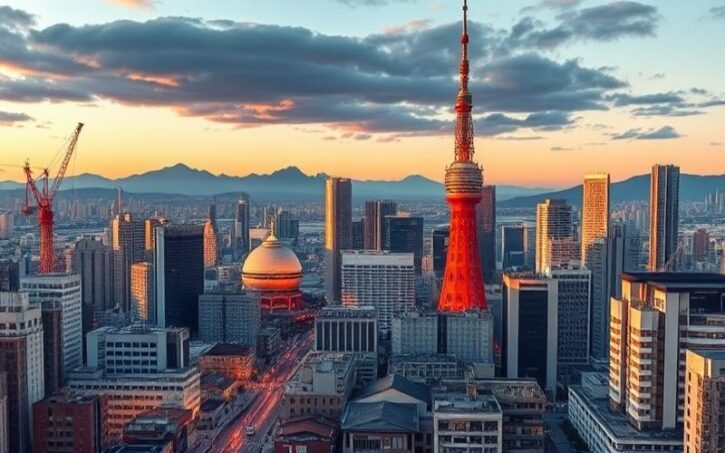
Tokyo, the capital of Japan, is by far the country’s largest city and one of the world’s largest megacities. Located on the island of Honshu, in the Kanto region, Tokyo has approximately 14 million inhabitants in its metropolitan area.
This immense urban area spans over 2,000 km² and includes 23 special wards, as well as numerous satellite cities. Tokyo is the economic, political, and cultural heart of Japan, housing the seat of government, the Emperor’s residence, and many international companies.
The city is renowned for its unique blend of tradition and modernity, with its futuristic skyscrapers standing alongside centuries-old temples and peaceful gardens.
Japan’s Main Regions
Japan is divided into eight major regions, each with its own geographical and cultural characteristics:
1. Hokkaido The northernmost region, known for its vast wilderness, ski resorts, and its capital Sapporo.
2. Tohoku Located in northern Honshu, this region is known for its mountains, hot springs, and rural traditions.
3. Kanto Japan’s most populous region, including Tokyo and its surroundings.
4. Chubu In central Honshu, this region is home to Mount Fuji and the Japanese Alps.
5. Kansai An important historical and cultural region, including the cities of Osaka, Kyoto, and Kobe.
6. Chugoku In western Honshu, this region includes the city of Hiroshima.
7. Shikoku The smallest of the four main islands, known for its 88-temple pilgrimage.
8. Kyushu and Okinawa The southernmost region, including the subtropical island of Okinawa.
Good to know:
Each region of Japan has its own culinary specialties, dialects, and traditions, offering great cultural diversity within the country.
Japan’s Major Cities
Besides Tokyo, Japan has several other important large cities:
1. Yokohama Japan’s second most populous city, located in the Kanto region, famous for its international port.
2. Osaka The country’s third-largest city, the economic center of the Kansai region, renowned for its cuisine.
3. Nagoya Japan’s fourth-largest city, a major industrial center in the Chubu region.
4. Sapporo The main city on the island of Hokkaido, known for its snow festival and beer.
5. Fukuoka The largest city on the island of Kyushu, an important commercial and cultural center.
6. Kyoto The former imperial capital, famous for its many historic temples and gardens.
7. Kobe An important port in the Kansai region, famous for its Kobe beef.
Japan’s Neighboring Countries
Although Japan is an archipelago, it shares maritime borders with several countries:
1. Russia To the north, separated by the Sea of Okhotsk. There is a territorial dispute concerning the Kuril Islands.
2. South Korea To the west, separated by the Sea of Japan (or East Sea). The two countries are in conflict over the Liancourt Rocks.
3. China To the west, separated by the East China Sea. There is a territorial dispute concerning the Senkaku/Diaoyu Islands.
4. Taiwan To the southwest, separated by the East China Sea.
Good to know:
Despite its geographical proximity to these countries, Japan has no direct land borders, which has helped shape its unique history and culture.
Japan’s geography, with its mix of mountains, coastal plains, and islands, has profoundly influenced the country’s development. This unique configuration has led to a concentration of the population in urban areas along the coasts, creating one of the most densely populated nations in the world.
Disclaimer: The information provided on this website is for informational purposes only and does not constitute financial, legal, or professional advice. We encourage you to consult qualified experts before making any investment, real estate, or expatriation decisions. Although we strive to maintain up-to-date and accurate information, we do not guarantee the completeness, accuracy, or timeliness of the proposed content. As investment and expatriation involve risks, we disclaim any liability for potential losses or damages arising from the use of this site. Your use of this site confirms your acceptance of these terms and your understanding of the associated risks.

Cyril Jarnias is an independent expert in international wealth management with over 20 years of experience. As an expatriate himself, he is dedicated to helping individuals and business leaders build, protect, and pass on their wealth with complete peace of mind.
On his website, cyriljarnias.com, he shares his expertise on international real estate, offshore company formation, and expatriation.
Thanks to his expertise, he offers sound advice to optimize his clients' wealth management. Cyril Jarnias is also recognized for his appearances in many prestigious media outlets such as BFM Business, les Français de l’étranger, Le Figaro, Les Echos, and Mieux vivre votre argent, where he shares his knowledge and know-how in wealth management.





