
 Published on and written by Cyril Jarnias
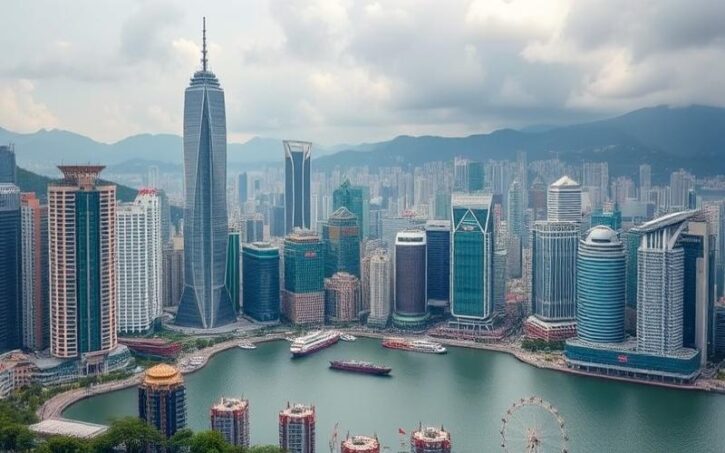
At the heart of Asia, Hong Kong stands out as one of the most dynamic and cosmopolitan metropolises in the world, offering a fascinating blend of Eastern traditions and Western modernity.
However, this iconic city, often seen as a must-visit hub for international business, presents significant financial challenges for expatriates who come to settle there. The cost of living is notoriously high, with exorbitant rents, often surprising food prices, and a lifestyle that can quickly strain budgets.
Understanding these aspects is crucial for any expatriate looking to establish themselves here, and this guide aims to break down the essential details to successfully navigate this complex urban world.
Exploring the Cost of Living for Expatriates in Hong Kong
Housing
The most sought-after neighborhoods by expatriates in Paris include Le Marais (3rd and 4th arrondissements), the 9th arrondissement (Opéra, Cadet, Poissonnière), the 5th (Latin Quarter), the 15th (Vaugirard, Necker), as well as the 16th arrondissement.
| Neighborhood | Type of Housing | Average Monthly Rent (1 Bedroom) | Average Monthly Rent (2 Bedrooms) | Key Features |
|---|---|---|---|---|
| Le Marais (3rd, 4th) | Furnished Apartment | €1,800 to €2,500 | €2,800 to €3,500 | Cultural life, central, cosmopolitan atmosphere |
| 9th arrondissement | Furnished Apartment | €1,500 to €2,200 | €2,500 to €3,200 | Theaters, museums, shops, well-connected |
| 5th arrondissement | Furnished Apartment | €1,400 to €2,200 | €2,200 to €3,000 | Latin Quarter, student life, near the Seine |
| 15th arrondissement | Furnished Apartment | €1,500 to €2,100 | €2,300 to €3,100 | Family-friendly, green spaces, reputable health services |
| 16th arrondissement | Furnished Apartment | €1,800 to €2,600 | €3,000 to €4,000 | Residential, quiet, green spaces, near Bois de Boulogne |
Popular and gentrifying neighborhoods (18th, 19th, 20th) offer lower rents, often between €1,000 and €1,600 for a one-bedroom apartment.
Daily Expenses
- Food :
- Baguette: €1.20
- Milk (1 L): €1.10
- Dozen eggs: €3.50
- Meal at a restaurant (inexpensive): €15 to €20
- Meal for two (mid-range restaurant): €60 to €80
- Transportation :
- Metro/bus ticket: €2.15
- Monthly Navigo pass (zones 1-2): €86.40
- Bike-sharing (Vélib’): €3 to €8 per day, monthly subscription from €19
Education
- Public schools: free, low ancillary fees (cafeteria, supplies)
- Private international schools: €10,000 to €30,000 per year depending on the institution and grade level
- Public universities: tuition fees between €200 and €600 per year for European students; higher for non-Europeans
Healthcare
- General practitioner visit: €25 (partially reimbursed by Social Security)
- Specialist visit: €30 to €70
- Private health insurance (mutuelle): €40 to €150 per month depending on coverage and age
- Public hospital: limited out-of-pocket costs, very good quality of care
Taxes and Additional Fees for Expatriates
- Housing tax (taxe d’habitation): being phased out for primary residences, may still apply to some secondary residences
- Property tax (taxe foncière): only paid by property owners
- Home insurance: mandatory, €120 to €300 per year
- Security deposit: generally one to two months’ rent
International Comparison
| City | Average Rent 1 Bedroom City Center | Meal at Restaurant | Monthly Transport Pass |
|---|---|---|---|
| Paris | €1,800 to €2,500 | €15 to €20 | €86 |
| London | €2,200 to €3,000 | €20 to €25 | €180 |
| Berlin | €1,200 to €1,800 | €10 to €15 | €49 |
| New York | €3,000 to €4,500 | €20 to €30 | €130 |
Key Takeaways
- The cost of living in Paris is high, but comparable to other major global capitals.
- The most sought-after neighborhoods offer an excellent quality of life, but at a high price.
- Public services (education, health, transportation) are of good quality and well-structured.
- Expatriates should anticipate certain administrative fees upon arrival (insurance, security deposit, potential local taxes).
In Paris, the choice of neighborhood heavily impacts the housing budget. Daily expenses remain high, but public services are of good quality and relatively accessible.
Good to know :
Expatriates in Hong Kong often favor the Mid-Levels and Sai Ying Pun neighborhoods, where the average monthly rent for a two-bedroom apartment can exceed HKD 30,000; in comparison, a metro ticket costs about HKD 10 and a meal at an affordable restaurant comes to HKD 60. Tuition fees at international schools are high, sometimes reaching HKD 200,000 per year, while healthcare is modern but may require costly private insurance, and the tax on employment income is 15%, a comparatively low figure relative to cities like New York or London.
Price Comparison: Hong Kong vs. Other Major Cities
| City | Rent (1 Bedroom City Center) | Meal for 1 (Mid-Range Restaurant) | Monthly Transport Pass | Private Medical Consultation | Overall Cost of Living Index |
| Hong Kong | $4,000 to $6,000 | $15 to $30 | $65 | $80 to $150 | Very High |
| New York | $4,500 | $25 to $35 | $130 | $150 to $250 | Very High |
| London | $3,500 to $4,000 | $20 to $30 | $190 | $120 to $200 | Very High |
| Tokyo | $2,500 to $3,500 | $10 to $20 | $100 | $70 to $140 | High |
| Paris | $3,000 to $3,500 | $15 to $25 | $90 | $50 to $100 | High |
Housing
Hong Kong and New York have the highest rents, with Hong Kong standing out for its particularly small living spaces for the same or higher price.
London and Paris remain very expensive but generally offer slightly more spacious housing at a price equivalent to Hong Kong.
Tokyo offers lower rents, but the size of housing remains smaller than in Western cities.
Everyday Consumer Goods
Food products, clothing, and essential goods are generally more expensive in Hong Kong and New York, with high supermarket prices often due to imports.
In Tokyo and Paris, some local goods are affordable, but imported products remain costly.
Healthcare Services
Hong Kong and New York have expensive healthcare systems, especially for expatriates without local insurance.
London offers access to the NHS (public service), but private care remains costly.
Tokyo and Paris offer good value for money for medical care, with cheaper consultations and an effective national health insurance system.
Transportation
The cost of public transportation is highest in London, followed by New York and Tokyo.
Hong Kong benefits from an efficient network at a moderate fare, but the cost of taxis and private vehicles is high.
Dining Out
Eating out is expensive in all these cities, but Hong Kong and New York stand out for the high price of a standard meal and the prevalence of upscale offerings.
In Paris and Tokyo, there are more affordable options for fast food or small local restaurants.
Impact on Expatriates’ Choices
Housing remains the main cost factor in Hong Kong, often cited by expatriates as limiting their quality of life. The lack of space and the high cost of real estate are sometimes seen as discouraging, even if professional attractiveness and taxation remain strong arguments.
In New York, high salaries in certain sectors partially offset the cost of living, but saving remains difficult.
London attracts for its cultural diversity, but the cost of transportation and housing forces people to move away from the city center.
Tokyo appeals for its safety and efficient services, despite high rents in sought-after neighborhoods.
Paris combines high cost with an appreciated quality of life, but taxation and housing prices deter some profiles.
Expatriate Testimonials
“In Hong Kong, I paid an exorbitant rent for a tiny studio, but I was drawn to the energy and professional opportunities. In New York, it’s just as expensive, but at least the size of the housing is a bit more reasonable. In Paris, you manage better if you’re willing to move a bit away from the center.”
Marc, finance executive, 3 cities in 8 years
“London is about diversity and access to culture, but everything is expensive, especially transportation. Tokyo is a culture shock, but you feel safe there and everyday food sometimes costs less than in Hong Kong.”
Sarah, consultant, expatriate in London, Tokyo, then Hong Kong
“The cost of living in Hong Kong is the hardest to manage for a family, especially with children in private schools. The other cities are expensive, but Hong Kong remains in a league of its own when it comes to real estate pressure.”
Pierre, French expatriate, 10 years in Asia
Note: The amounts are averages, in US dollars, for the year 2025. Variations according to neighborhood, lifestyle, and professional status are significant.
Good to know :
Hong Kong stands out for having some of the highest rents, even surpassing those in New York, while everyday consumer goods are cheaper than in London; expatriate testimonials reveal that the lower cost of transportation and healthcare compared to Tokyo and Paris can offset these expenses for some.
What Budget Should You Plan for Relocating to the Asian Metropolis?
Cost of Housing in Hong Kong (2025)
| Type of Housing | City Center (HKD/month) | Outside City Center (HKD/month) | Cost in EUR/month |
|---|---|---|---|
| Studio / 1 Bedroom | 18,000 – 25,000 | 13,000 – 19,000 | €1,430 – €1,992 |
| 3-Bedroom Apartment | 28,000 – 60,000 | 19,500 – 37,000 | €2,755 – €4,249 |
| Shared Housing (double room in Central) | ~10,000 | 7,700 – 7,900 (Wan Chai) | – |
| Detached House (rare, high-end) | Up to 200,000 | – | – |
- More affordable neighborhoods: New Territories, some areas of Kowloon, and districts like Sha Tin or Tseung Kwan O offer more moderate rents.
- Tips: Look for housing in late summer or early autumn, when supply is more abundant. Shared housing remains the most economical option for young professionals or students.
Daily Cost of Living
| Expense Item | Average Cost in Hong Kong | Regional Comparison |
|---|---|---|
| Housing utilities | €183/month | ≈ France |
| ADSL Internet | €20/month | -38% vs. France |
| Mobile plan | €13.7/month | -29% vs. France |
| Groceries (monthly) | €400 – €600/month | +30% vs. Singapore |
| Meal at a restaurant | €8 – €15 (budget) | Comparable to Tokyo |
| Average restaurant meal | €40 – €60 | More expensive than Seoul |
| Gym membership | €63/month | +84% vs. France |
Schooling and Education
| Type of School | Annual Fees (HKD) | Cost in EUR/year |
|---|---|---|
| Private kindergarten | ≈ 8,500 – 10,000 | €885/month |
| International primary school | 120,000 – 250,000 | €14,000 – €29,000 |
| International high school | 170,000 – 350,000 | €20,000 – €40,000 |
Hong Kong has some of the highest tuition fees in the region, ahead of Singapore and Shanghai for international schools.
Transportation
- Monthly MTR pass: €55 to €70 (depending on zones traveled).
- Taxi (short trip): €4 – €6.
- Octopus Card: helps optimize costs on all public transport.
Health and Insurance
- General practitioner visit: €50 – €80 at a private clinic.
- International health insurance: €1,500 – €4,000/year depending on the plan.
- The public system is efficient but overloaded; private insurance is highly recommended.
Leisure and Public Services
| Activity / Service | Average Cost |
|---|---|
| Cinema | €12 – €18 |
| Theater, concert | €30 – €80 |
| Gym | €63/month |
| Electricity, water, gas | €183/month |
Regional Comparison (Housing)
| City | Rent 1 Bedroom Center (€) | Purchase Price/m² Center (€) |
|---|---|---|
| Hong Kong | €1,992 | €22,270 |
| Singapore | €1,650 | €17,500 |
| Shanghai | €1,050 | €13,100 |
| Tokyo | €1,200 | €14,000 |
Tips for Optimizing Your Budget
- Opt for shared housing: Significant reduction in housing costs.
- Choose peripheral neighborhoods: Rents are 30 to 40% lower than in the center.
- Groceries: Shop at local markets or chains like Wellcome or ParknShop, avoid imported items.
- Transportation: Use the Octopus Card, consider cycling in some flat neighborhoods.
- Free leisure activities: Take advantage of beaches, hikes, and often free public events.
Remember: Hong Kong remains one of the most expensive metropolises in the world, but strategic choices regarding neighborhood, lifestyle, and search timing can help you manage your budget.
Good to know :
The cost of renting in Hong Kong varies greatly by neighborhood, with more affordable options in Kowloon or the New Territories, while tuition fees at international schools can reach USD 20,000 per year, and the average price of a restaurant meal is similar to Singapore’s; it is advisable to rent in the off-season to benefit from more favorable rates.
Disclaimer: The information provided on this website is for informational purposes only and does not constitute financial, legal, or professional advice. We encourage you to consult qualified experts before making any investment, real estate, or expatriation decisions. Although we strive to maintain up-to-date and accurate information, we do not guarantee the completeness, accuracy, or timeliness of the proposed content. As investment and expatriation involve risks, we disclaim any liability for potential losses or damages arising from the use of this site. Your use of this site confirms your acceptance of these terms and your understanding of the associated risks.

Cyril Jarnias is an independent expert in international wealth management with over 20 years of experience. As an expatriate himself, he is dedicated to helping individuals and business leaders build, protect, and pass on their wealth with complete peace of mind.
On his website, cyriljarnias.com, he shares his expertise on international real estate, offshore company formation, and expatriation.
Thanks to his expertise, he offers sound advice to optimize his clients' wealth management. Cyril Jarnias is also recognized for his appearances in many prestigious media outlets such as BFM Business, les Français de l’étranger, Le Figaro, Les Echos, and Mieux vivre votre argent, where he shares his knowledge and know-how in wealth management.





