
 Published on and written by Cyril Jarnias
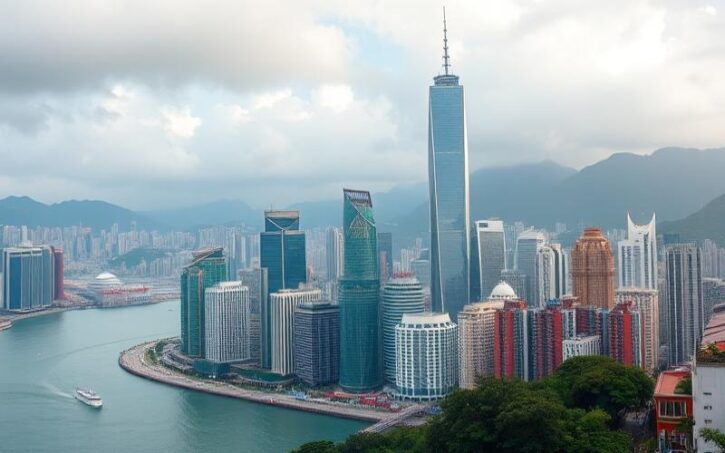
In an increasingly globalized world, the idea of investing in real estate abroad appeals to many expatriates seeking new lucrative opportunities. Hong Kong, despite its reputation as an expensive real estate market, offers interesting potential thanks to its dynamic economic landscape and its position as a strategic crossroads in Asia.
This article explores the specifics of the Hong Kong real estate market, highlighting potential advantages for expatriates, challenges to overcome, and effective strategies to maximize investments. Discover how to decipher current trends, understand the legal framework, and navigate the intricacies of financing to make this investment a success.
Understanding the Legal and Administrative Framework for Real Estate in Hong Kong
Land Legislation in Force in Hong Kong
Hong Kong’s land framework is primarily based on two key texts:
- Land Titles Ordinance (LTO, Cap. 585): aims to establish a system of land title registration, gradually replacing the historic deed registration system (Land Registration Ordinance, LRO, Cap. 128). The LTO establishes registration in the register as conclusive proof of ownership.
- Land Registration Ordinance (LRO, Cap. 128): in force until the transition to LTO is complete, this system requires thorough examination of historical title deeds during property transactions.
Security of Ownership
- The current system does not provide an absolute guarantee of title: ownership must be verified by the buyers’ lawyers through examination of title histories.
- The upcoming system (LTO) aims to enhance security: registration of the title in the register confers ownership, thus limiting the risk of fraud or dispute.
- Protection mechanisms exist (caution mechanism) to register unregistered interests (equitable rights).
Land Tenure System
Ultimate Ownership:
- The Government of Hong Kong is the ultimate owner of almost all land.
- Individuals and companies hold rights through long-term leases (leases) of very long duration, often 50, 75, or 99 years, sometimes renewable.
Implications:
- Upon expiry of the lease, land rights revert to the State, unless renewed.
- Property transactions therefore involve the purchase of leasehold rights, not freehold ownership.
| Land Ownership in Hong Kong | Ultimate Holder | Typical Lease Duration |
|---|---|---|
| Leasehold | HK Government | 50, 75, 99 years |
| Freehold | Extremely rare exception | — |
Administrative Procedures for Property Purchase
- Selection and Offer: Price negotiation through a licensed agent.
- Title Verification: A specialist lawyer checks the title history.
- Signing of Preliminary Agreement: Deposit paid.
- Signing of Final Agreement: Balance payment, notarial formalities.
- Registration: Submission of documents to the Land Registry.
- Payment of Taxes and Fees:
| Type of Cost | Description |
|---|---|
| Stamp Duty | Duty on all transactions |
| Buyer’s Stamp Duty | Additional duty for non-residents |
| Registration Fees | Fees for registration in the land register |
| Legal Fees | Mandatory for title verification |
| Real Estate Agency Fees | Usually shared between buyer and seller |
Restrictions for Foreigners
There are no major legal restrictions preventing foreigners from buying real estate in Hong Kong.
Non-residents are, however, subject to additional taxes, notably the Buyer’s Stamp Duty.
Regulations on Property Management
Condominium buildings are subject to strict management regulations (Building Management Ordinance).
Owners must comply with the co-ownership rules and contribute to maintenance charges.
Importance of Professional Guidance
It is essential to use licensed real estate agents and lawyers specializing in local property law to:
- Verify the validity of titles and the absence of hidden charges or interests.
- Secure transactions and avoid fraud.
- Optimize tax and regulatory management of the property.
Key Points to Remember:
- Ownership is in the form of a leasehold with the government as the ultimate owner.
- Registration system transitioning to enhanced title guarantee.
- Purchase procedures require legal checks, registration, and payment of specific taxes.
- No restrictions for foreigners but increased taxation.
- Essential to use certified professionals to secure the transaction.
Good to Know:
In Hong Kong, most land belongs to the government, which leases it for long terms—this is crucial to understand when buying. Working with local professionals is essential to navigate the complex procedures and taxes, such as Stamp Duty.
Financing a Real Estate Investment as an Expatriate
To finance a real estate investment as an expatriate in Hong Kong, several eligibility criteria must be met. Hong Kong banks accept mortgage applications from both residents and non-residents, without nationality restrictions. Since 2024, conditions have been aligned for all borrowers, with a loan-to-value (LTV) ratio of up to 70% of the property price.
Eligibility Criteria and Required Documents
- Nationality/Residence: No restrictions, no special permit required.
- Loan-to-Value (LTV) Ratio: Up to 70% of the property price.
- Repayment Capacity: Monthly payments must not exceed 50% of monthly income.
- Required Documents:
- Valid passport
- Proof of overseas residence
- Official income evidence (pay slips, tax assessments)
- Recent bank statements
- Signed preliminary contract or offer to purchase
Differences Between Loans for Residents and Expatriates
Generally, conditions are now the same for all borrowers. However, banks may require more guarantees or additional documents for non-residents, notably a strong international credit history.
Average Interest Rates
Interest rates for mortgages in Hong Kong range between 3% and 5% per annum, depending on the bank and the borrower’s profile.
Alternative Financing Options
- International Lenders: May offer loans tailored to expatriates, but conditions may be more restrictive.
- Specialized Brokers: They can help navigate available loan options and optimize the application.
Tax Aspects and Regulations
- Applicable Taxes: Buyers must pay a special stamp duty (BSD) of 15% of the purchase price, as well as other taxes depending on the type of property.
- Specific Regulations: No quotas or nationality restrictions for buying real estate, except for social/public housing reserved for permanent residents.
Practical Tips
- International Credit Score: A good score is crucial for obtaining a favorable loan.
- Substantial Down Payment: A down payment of 30% of the property price is generally required to maximize chances of getting a loan.
- Complete Documentation: Prepare a thorough dossier with all necessary documents to speed up the application process.
Good to Know:
Hong Kong banks often require expatriates to have a substantial down payment and a good international credit score for mortgage eligibility, and it is advisable to also explore international lenders or specialized brokers. Interest rates for mortgages in Hong Kong are generally around 3.5%, with tax and regulatory aspects to consider, especially for foreign investors.
Managing the Tax Implications of Transnational Investment
Hong Kong stands out with an attractive but complex tax system for expatriate real estate investors. Understanding local regulations, optimization strategies, and pitfalls to avoid is a major challenge for successful investment in this Asian jurisdiction.
Tax Regulations Applicable to Expatriate Investors
Foreign investors benefit from free access to property in Hong Kong, with no nationality restrictions for acquiring residential, commercial, or industrial properties. However, local taxation imposes several specific charges that significantly impact the entry cost and profitability.
The Buyer’s Stamp Duty (BSD) is the main surcharge for non-residents, set at 15% of the purchase price, on top of the basic stamp duty (Ad Valorem Stamp Duty) which ranges from 1.5% to 4.25% depending on property value, but can also reach 15% for standard residential transactions. This double taxation makes acquisition particularly expensive for expatriates compared to Hong Kong permanent residents.
The Special Stamp Duty (SSD) aims to discourage property speculation by imposing a tax of 10% to 20% on resales made within 36 months of acquisition. The faster the resale, the higher the rate: 20% for a resale within 6 months, gradually decreasing to 10% for a holding period between 24 and 36 months.
Regarding rental income, Property Tax applies at a rate of 15% on the net assessable value, calculated after a standard deduction of 20% for expenses and repairs. For an annual gross rent of 120,000 HKD, the net assessable value is 96,000 HKD, generating a property tax of 14,400 HKD.
One of the most attractive features of the Hong Kong system is the absence of capital gains tax on property. This exemption promotes market liquidity and attractiveness for international investors, unless the resale activity is deemed commercial by the tax authorities, in which case it may be subject to profits tax.
Double Taxation Agreements and Tax Optimization
Hong Kong has developed a network of double taxation agreements with many jurisdictions, allowing expatriates to optimize their overall tax burden. These treaties aim to prevent the same income from being taxed in two different countries, particularly for rental and professional income.
For tax residents of other countries, it is necessary to check whether a tax treaty exists between Hong Kong and their home country. These agreements generally determine which jurisdiction has the primary right to tax and provide mechanisms for tax credits or exemptions.
Optimization strategies include structuring the investment through an offshore company or a Hong Kong entity, benefiting from the corporate tax rate of 16.5%, with a reduced rate of 8.25% on the first 2 million HKD of profits. This approach can be advantageous depending on the investor’s personal situation and tax residence.
The deduction of mortgage interest for a primary residence, up to 100,000 HKD per year for 20 years, represents a significant tax advantage for expatriates established long-term in Hong Kong. This measure reduces the taxable base and improves the net return on investment.
Common Mistakes to Avoid and Practical Tips
Several tax pitfalls await unwary expatriate investors. The first mistake is to underestimate acquisition costs, notably by omitting the 15% BSD from initial profitability calculations. The cumulative impact of various taxes can represent up to 30% of the purchase price, substantially altering the financial equation.
Not anticipating the Special Stamp Duty in case of a quick resale is another frequent error. Investors considering a short-term strategy must incorporate this potential cost of 10% to 20% into their financial model, lest their profit margins be significantly reduced.
Lack of planning regarding tax residence status can lead to complications. Obtaining a certificate of residence for tax purposes is crucial if the acquired property serves as a primary residence, potentially allowing for exemptions or reduced rates.
Confusion between investment activity and commercial activity represents a major tax risk. If the authorities classify property transactions as a commercial activity due to their frequency or nature, capital gains become subject to profits tax, nullifying the usual exemption advantage.
Failing to correctly declare rental income or attempting to conceal it exposes investors to penalties. Hong Kong has an efficient and transparent tax system where voluntary compliance remains the best long-term strategy.
Tax Implications Upon Sale and Reporting Obligations
Selling a property in Hong Kong generates several specific tax implications. With no capital gains tax on non-commercial transactions, the gain on sale is generally tax-exempt, constituting a considerable advantage for long-term investors.
However, the Special Stamp Duty applies automatically if the resale occurs within 36 months. It is calculated on the sale price, and the seller must pay this tax upon registration of the transaction with the Land Registry.
| Holding Period | Applicable SSD Rate | Example on 5M HKD |
|---|---|---|
| Less than 6 months | 20% | 1,000,000 HKD |
| 6 to 12 months | 15% | 750,000 HKD |
| 12 to 24 months | 10% | 500,000 HKD |
| 24 to 36 months | 10% | 500,000 HKD |
| More than 36 months | 0% | Exempt |
Proceeds from the sale must be reported in the investor’s country of tax residence. American expatriates, for example, remain obligated to report their worldwide income to the IRS, even if they benefit from Hong Kong’s exemption on capital gains from real estate. The Foreign Earned Income Exclusion and Foreign Tax Credit can nevertheless mitigate potential double taxation.
The timing of reporting varies by jurisdiction. In Hong Kong, property income returns (Property Tax Return) must be submitted within one month of receiving the notice from the Inland Revenue Department. For investors residing in other countries, reporting obligations in their home jurisdiction must be met according to local schedules.
Specialized Tax Resources and Advice
Hong Kong has a robust professional ecosystem to support expatriate investors. International accounting firms such as KPMG, Deloitte, PwC, and Ernst & Young maintain offices in Hong Kong with teams specializing in international and expatriate taxation, capable of advising on optimal investment structures.
Lawyers specializing in international tax law offer crucial expertise for navigating the complexities of bilateral tax treaties and structuring acquisitions in a tax-efficient manner. These professionals also ensure compliance with ever-evolving regulations.
Grant Thornton and other mid-sized firms provide tax optimization services for expatriates, including tax residence analysis, estate planning, and management of multi-jurisdictional reporting obligations.
Hong Kong’s Inland Revenue Department makes guides and online resources available, although consulting professionals is recommended for complex situations. The department also organizes information sessions for foreign taxpayers.
Expatriate associations and international chambers of commerce in Hong Kong are valuable networks for obtaining recommendations for reliable professionals and sharing experiences among investors.
Recent and Anticipated Regulatory Changes
Hong Kong’s 2025-2026 Budget introduced significant measures affecting property investors. A one-off 100% reduction in profits tax, salaries tax, and personal tax for 2024/25, capped at 1,500 HKD, was announced to stimulate the local economy.
For properties worth 4 million HKD or less, a reduced stamp duty rate of just 100 HKD was introduced in 2025, aimed at facilitating homeownership for first-time buyers and boosting the affordable segment of the market. This measure could indirectly benefit investors targeting lower-value properties.
Tightening linked to global economic instability has increased selectivity toward foreign investors. Hong Kong authorities maintain a policy aimed at stabilizing the market and discouraging speculation, while preserving attractiveness for long-term investments.
The regulatory direction confirms the intention to limit the speculative weight of foreigners while preserving local social stability. Recent reforms reinforce this restrictive approach, imposing increased tax barriers for obtaining residential rights through standard property purchases.
Investors should anticipate enhanced tax compliance monitoring and a potential strengthening of reporting obligations, particularly in the context of the international BEPS (Base Erosion and Profit Shifting) initiative and automatic exchange of tax information standards.
Expatriate Experiences: Successes and Challenges Encountered
A European investor based in Hong Kong since 2018 illustrates a successful strategy by acquiring a 5 million HKD apartment in a developing neighborhood. By structuring the purchase through a local company and holding the property beyond 36 months, he avoided the SSD and benefited from the capital gains exemption when reselling at 7.5 million HKD in 2023, realizing a substantial net gain after deducting initial acquisition taxes.
Conversely, an American investor encountered difficulties in 2022 after underestimating the impact of the BSD. Having calculated his profitability based solely on the purchase price, he discovered late that the 15% BSD (750,000 HKD on a 5 million HKD property) combined with the AVD and ancillary fees brought his total investment to over 6.5 million HKD, significantly degrading his projected rental yield.
A French family based in Hong Kong since 2015 successfully optimized their tax situation by acquiring their primary residence and benefiting from the mortgage interest deduction of 100,000 HKD annually. This strategy, combined with proper reporting to French authorities and use of the Sino-French tax treaty, allowed them to avoid double taxation on their professional income while building real estate wealth.
A problematic case involves an Asian investor who executed three property transactions within 18 months in 2021-2022. The tax authorities reclassified his activity as commercial, applying profits tax at 16.5% on the gains realized, whereas he had counted on the usual capital gains exemption. This situation underscores the importance of maintaining a long-term investment approach rather than a property trading strategy.
A British expatriate leveraged the network of tax treaties by structuring his investments through a Hong Kong entity while maintaining his tax residence in the UK. This approach, validated by specialized tax advisors, allowed him to optimize his overall tax burden while scrupulously meeting reporting obligations in both jurisdictions.
These examples demonstrate that tax success in Hong Kong relies on rigorous planning, a deep understanding of local and international regulations, and guidance from qualified professionals. Errors generally stem from underestimating initial tax costs or a lack of awareness of the long-term implications of adopted investment strategies.
Good to Know:
Expatriates investing in Hong Kong must consider capital gains and property taxes, while leveraging double tax treaties to optimize their tax situation. Consulting specialized accountants and staying informed about recent legislative changes is essential to avoid common mistakes.
Developing Investment Strategies for Expatriates in Hong Kong
Current Real Estate Market in Hong Kong
The Hong Kong real estate market has experienced a major correction with residential prices dropping approximately 23% since August 2021. However, the trend reversed in late 2024/early 2025, thanks to stabilizing interest rates and easing government policies. Transaction volumes rebounded (+30% between Q1 and Q2 2025), and residential construction accelerated (+75% in completions in 2024). Despite this, the city still faces a structural housing shortage, particularly for small units (≤40 m²), which now account for over 60% of new completions.
| Indicator | Recent Situation | Expected Trend |
|---|---|---|
| Economic Growth | Weak but stabilized | Slow improvement |
| Residential Property Prices | -23% since Aug 2021 | Gradual rebound from 2025 |
| Transaction Volume | +30% Q2/Q1 2025 | Sustained increase |
| New Housing | +75% completions in 2024 | Focus on small formats |
Recent Trends and Economic Forecasts
- Government restrictions on real estate were lifted in early 2024, notably the abolition of additional stamp duties for non-residents and multiple property investors.
- Gradual price recovery expected through 2030, especially in developing areas and neighborhoods connected to new transport infrastructure.
- Lower interest rates facilitate access to credit and boost demand, despite a stagnant demographic context.
Investment Opportunities for Expatriates
Preferred neighborhoods and property types:
- Northern Metropolis (especially San Tin Technopole): strategic area with strong appreciation potential by 2030 thanks to regional integration and massive public investments.
- Lantau: major urban development and infrastructure projects.
- Kowloon East: booming business district, MTR (metro) extension, commercial development of Kai Tak, and increased residential supply in Tseung Kwan O.
- Small units: The Hong Kong market offers unique opportunities for expatriates in 2025, provided they target high-potential areas, master local procedures, and surround themselves with reliable professionals to optimize and secure the investment remotely.
Good to Know:
Investing in Hong Kong requires focusing on developing neighborhoods like Tseung Kwan O, with particular attention to strict regulations on taxes and foreign ownership. The services of a local property manager can help navigate the legal and cultural complexities.

Cyril Jarnias is an independent expert in international wealth management with over 20 years of experience. As an expatriate himself, he is dedicated to helping individuals and business leaders build, protect, and pass on their wealth with complete peace of mind.
On his website, cyriljarnias.com, he shares his expertise on international real estate, offshore company formation, and expatriation.
Thanks to his expertise, he offers sound advice to optimize his clients' wealth management. Cyril Jarnias is also recognized for his appearances in many prestigious media outlets such as BFM Business, les Français de l’étranger, Le Figaro, Les Echos, and Mieux vivre votre argent, where he shares his knowledge and know-how in wealth management.





