
 Published on and written by Cyril Jarnias
Choosing to study abroad is always a bet on the future. In Slovenia, this bet combines quality education, a reasonable cost of living, a spectacular natural setting, and real professional opportunities in Central Europe. The country is still far from being saturated like other more publicized destinations, making it a strategic choice for students who want to stand out without blowing their budget.
This comprehensive guide presents the Slovenian university system, institutions, costs, administrative procedures, student life, job opportunities, scholarships, and career prospects. All statistical and institutional information is sourced from official Slovenian bodies or referenced international rankings.
A small country, a highly structured university system
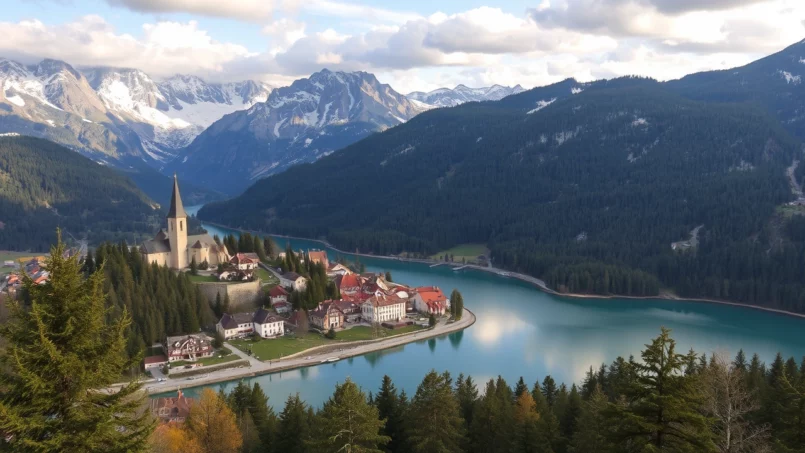
Slovenia is a member state of the European Union, the Schengen Area, and NATO, located in the heart of Europe, between Italy, Austria, Croatia, and Hungary. With its Alps, valleys, a stretch of Adriatic coast, and cities on a human scale, the country combines a preserved natural environment with modern infrastructure.
The Slovenian higher education system is fully aligned with the Bologna Process. In practice, it is organized around the three classic levels: bachelor’s (1st cycle), master’s (2nd cycle), and doctorate (3rd cycle), structured in ECTS credits and recognized throughout the European Higher Education Area.
Slovenia has 29 accredited higher education institutions, including public and private universities and research institutions.
To get your bearings, here is a summary of the Slovenian higher education structure:
| Type of institution | Approximate number | Main characteristics |
|---|---|---|
| Public universities | 3 | Intensive research, state-funded, reduced or free tuition for many groups |
| Private universities / private higher schools | 26 | Strong specialization (business, management, IT, health, etc.), market-rate tuition fees |
| Institutions evaluated by AD Scientific Index | 27 | Ranking based on scientific output, h-index, and citations |
| Institutions listed by uniRank (2025) | 29 | Overview of officially recognized institutions |
| Universities verified by UNIRANKS (2026) | 34 | Includes additional institutions and national/regional rankings |
Degrees awarded by accredited institutions are internationally recognized. The study architecture is dual: an “academic” track oriented towards research, and a “professional” track geared towards labor market integration, with professional higher schools and “higher vocational education” colleges.
Major universities and their ranking positions
Although no Slovenian university is in the global top 200, the country maintains a regular presence in major international rankings (QS, THE, ARWU, etc.), which is significant for a country of 2 million inhabitants.
The central role of the University of Ljubljana
The University of Ljubljana is the country’s flagship institution, both in terms of its size (approximately 40,000 students, 23 faculties, and 3 art academies), its scientific output, and its international network. It is also the oldest (founded in 1919) and highest-ranked in Slovenia.
Some key figures help situate the institution:
| Ranking / Indicator | Position / Value |
|---|---|
| QS World University Rankings 2026 | 535th globally |
| THE World University Rankings 2026 | between 801st and 1000th |
| ARWU (Shanghai) 2025 | in the 501–600 range |
| EduRank 2025 (alternative ranking) | 313th in the world, 119th in Europe, 1st in Slovenia |
| Scientific publications | ~75,856 articles |
| Citations | ~1,640,364 citations |
| Subjects in the global top 50% | 230 research fields |
| Notable alumni listed | 423 |
In some highly targeted fields, Ljubljana achieves remarkable ranks: around 100th globally in landscape architecture, close to 114th in product and industrial design, and well-positioned in several engineering or social science themes. The university closely monitors its ranking indicators as a quality management tool.
QS world ranking of the university in 2026, up 61 places from 2024.
Maribor, Primorska, Nova Gorica: credible alternatives
Other Slovenian universities are gradually gaining visibility:
| University | QS Ranking 2026 | THE Ranking 2026 |
|---|---|---|
| University of Maribor | 901st | between 1201st and 1500th |
| University of Primorska | between 1201st and 1400th | between 1501st and 1800th |
| University of Nova Gorica | – | between 801st and 1000th |
Maribor excels in certain engineering and management fields, Primorska in natural sciences, mathematics, IT, and Nova Gorica for its cutting-edge research (it appears in the 801–1000 range of the THE ranking). Several business schools (DOBA Business School, Bled School of Management, etc.) complete this landscape, notably with professional master’s and online programs.
Five Slovenian universities appear in at least one international ranking, and the country’s institutions are evaluated in 23 different ranking systems, whether institutional or subject-specific. This illustrates that, although modest in size, Slovenia actively participates in global academic competition.
Programs in English, strong fields, and types of courses
A major advantage for international students is the growing number of programs taught in English, especially in business, economics, STEM (science, technology, engineering, mathematics) and certain social sciences.
Where to find programs in English?
English-language courses are available at all levels:
Discover the main universities and master’s programs available in Slovenia, with a diversity of study fields.
Bachelor’s and master’s programs in economics, computer science, engineering, environmental sciences, and biosciences via the School of Economics and Business and other faculties.
Master’s programs in computer science, logistics, applied sciences, and cultural studies.
Specialized 2-year programs (120 ECTS) in English, often in hybrid mode, on intercultural communication, digitalization, human rights, or kinesiology.
Master’s in international management, smart cities, education, etc. offered by DOBA, Alma Mater Europaea, and the International School for Social and Business Studies.
Examples of attractive fields and programs
While not an exhaustive list, several key areas clearly stand out:
– Business, management, and economics: MBA, international business, marketing, supply chain management, quantitative and actuarial finance, banking and finance, sports management, sustainable tourism management, business informatics…
– STEM and IT: data science, computer science, engineering, applied artificial intelligence, sensors and technologies, materials science, statistics…
– Environment, tourism, health: nature conservation, environmental studies, sustainable tourism, kinesiology and human performance, health and sport sciences.
– Humanities and social sciences: intercultural communication, language studies (English, Slovenian), karstology, human rights and digitalization, cultural studies, psychology, education.
A master’s degree typically takes 1 to 2 years (often 2 years, i.e., 120 ECTS credits), with various formats: full-time, part-time, hybrid, and sometimes distance learning for certain programs like those in business. A doctorate is standardly planned for 4 years.
Language requirements
To enter an English-taught program, you usually need to demonstrate a B2 or C1 level (depending on the course) via a standard test (IELTS, TOEFL, Cambridge, PTE…) or a previous degree already completed in English. Native speakers and graduates from English-speaking universities may be exempt, but institutions reserve the right to test language proficiency if in doubt.
For Slovenian-taught programs, the required level is higher: typically at least a B2 CEFR, or even C1 for some programs, sometimes with progressive requirements (e.g., validation of A2 level before the 2nd year, then a higher level before the end of the course). Several universities offer free Slovenian language courses for their international students.
Study costs: tuition fees and monthly budget
One of the main arguments in favor of Slovenia is the value for money. The country is regularly described as “budget-friendly” for students, with enrollment fees and overall cost of living generally lower than in many Western European capitals.
Tuition fees: who pays what?
In public universities, the rule is very advantageous for certain groups.
| Group | Bachelor’s / Master’s level (full-time) | Doctorate / 2nd degree, part-time, private… |
|---|---|---|
| EU citizens | Exempt from tuition fees in public institutions | Fees payable for doctorates, part-time studies, equivalent 2nd degrees |
| Citizens of Bosnia‑Herzegovina, Montenegro, Kosovo, Serbia, North Macedonia (bilateral agreements) | Exempt for full-time public bachelor’s and master’s | Doctorate fees apply; specific conditions per university |
| Other non-EU students | Typical annual fees: approx. €2,000 to €11,000 for bachelor’s, €2,000 to €15,000 for master’s | Doctorate: approx. €2,000 to €6,000 per year |
| Students in private programs (all countries) | Market-rate fees, usually no EU / non-EU distinction | – |
Concrete examples show that some universities offer master’s programs at €0 / year for EU/EEA students (Ljubljana, Maribor), while institutions like the University of Nova Gorica charge fees around €2,800 / year for bachelor’s and master’s programs open to international students.
Even within the same university, like the University of Maribor, tuition fees can differ depending on the program and language of instruction. Some English-taught programs are fee-paying, even for European students, but reduced rates apply to EU citizens and those from certain Balkan countries.
Living budget: how much to budget per month?
Available data converge towards a “reasonable” range between €400 and €700 per month to cover housing, food, transportation, and basic expenses, excluding tuition fees. For a more comfortable lifestyle, several sources mention €600 to €800 / month.
This is the average monthly budget reported by students, an average heavily influenced by extreme cases.
To get a clearer picture, here is a breakdown of a typical student budget:
| Expense item | Average observed monthly expense | Share of average student budget |
|---|---|---|
| Housing | ~€410 (from €63 to €4,500) | ~21% |
| Groceries | ~€340 (from €52 to €3,800) | ~22% |
| Transportation | ~€120 (from €18 to €1,300) | ~5% |
| Energy / water / gas (utilities) | ~€68 (from €10 to €760) | ~5% |
| Internet | ~€36 (€18 to €48) | – |
| Mobile phone | ~€24 (€14 to €72) | – |
| Health / insurance | ~€100 (€16 to €1,100) | ~8% |
| Leisure / culture | €30 to €70 | – |
| Other goods and services | ~€85 (€13 to €950) | ~4% |
| Study costs (books, etc.) | ~€320 (€50 to €3,600) | ~19% |
In Ljubljana, considered one of the most affordable capitals in Europe, the cost of living index is around 53.2 (base 100), with a rental index of 22.3. The city is ranked as the 2nd most expensive city in Eastern Europe, but remains cheaper than over half of the world’s cities.
The choice of housing is the main factor affecting the budget. Slovenia offers a fairly wide range of options, especially in larger university cities.
Public student dormitories
University dorms are by far the most economical but also the most in-demand solution. In Ljubljana, several dormitories are located in the Bežigrad, Šiška, Center, and Vič districts, with the large Rožna dolina complex near Tivoli Park. Rooms are almost always shared (two beds per room), with kitchens and bathrooms common to a floor or section.
The approximate price ranges are as follows:
| Type of public dorm housing | Monthly price range (Ljubljana) |
|---|---|
| Dormitory room (per person) | €80 to €250 |
| Common rate in Ljubljana | €100 to €150 |
| Example UL – Ljubljana residence agreement (2 pers.) | ~€200 / month, utilities included |
| Vič Dormitory (Dijaški dom Vič) | ~€110 / month, utilities included |
Universities reserve quotas for certain categories (Slovenian students, scholarship holders, people with specific status, Erasmus exchange…). International students in full-degree programs often have to go through the national allocation system or look in the private sector.
For those who don’t find a spot in a dorm or prefer more autonomy, shared apartments are the most common option. Here too, prices vary significantly based on location, size, and condition of the property.
In Ljubljana, the following is observed:
Average monthly price for a one-bedroom apartment in the city center.
In smaller cities like Maribor or Koper, rents are significantly lower: a room in a shared apartment can be found for around €150–220 / month utilities included, and a full apartment generally ranges from €300 to €600.
The student almost always has to pay a security deposit (“varščina”), often equivalent to one or two months’ rent, refundable at the end of the contract if the apartment is returned in good condition.
Eating on a budget: the subsidized meal system
Slovenia has developed a very particular system that completely changes the budgetary game for students: a national subsidized meal system via electronic vouchers.
In practice, the state provides a subsidy for each meal taken at partner restaurants. The observed subsidy amounts are around €2.63 to €3.50 per meal. The student only pays the difference, leading to extremely low final prices:
– Maximum price paid by the student after subsidy: between €4.37 and €5.50 according to cited examples.
– Minimum price: €0 for some very cheap snacks or sandwiches.
A standard student meal usually includes soup, a main course, salad, and fruit. The voucher system is so attractive that many students report cooking very little at home.
The process is relatively simple: online registration (in Slovenian), activation of voucher rights at an info point, registration of a device (smartphone, card), and selection of partner restaurants. Result: a monthly food budget of around €100 to €175 is realistic if you use this system well.
For comparison, a meal at an inexpensive restaurant without the subsidy in Ljubljana costs about €7.50 to €15 (average €14.50), a fast-food meal around €7.20, and a more elaborate set menu €18 to €36 for one person. The financial advantage of the student system is therefore very clear.
Getting around: bus, bike, and BicikeLJ
Slovenian cities, and especially Ljubljana, are designed to be navigated on foot or by bike. For a student, the combination walking + biking + bus covers almost all needs.
Number of bikes available 24/7 in the BicikeLJ public bike-sharing service in Ljubljana.
Overall, this translates into an average monthly transportation budget of around €120, but this amount easily decreases by living near campus and combining walking, biking, and only a few bus trips.
Administrative procedures: visa, residence permit, and enrollment
Procedures differ depending on whether you are an EU/EEA citizen or a third-country national.
EU / EEA / Swiss students
They can enter Slovenia with just an ID card or a valid passport. For a stay longer than 90 days, they must apply for a certificate of registration of residence at the Local Administrative Unit. This document is valid for up to 5 years or for the intended duration of stay. The student must also register their address within 3 days of moving in.
Non-EU students
Third-country nationals must generally:
To study in Slovenia, you first need to obtain a long-stay visa (type D) or a temporary residence permit directly by applying at the Slovenian consulate or embassy in your home country. The application must include essential documents: a letter of admission from a Slovenian institution, a valid passport, photos, proof of financial means (approx. €494 per month), a health insurance certificate covering at least €30,000 in medical costs, a recent criminal record certificate, and proof of accommodation. All documents must be translated into Slovenian by a sworn translator and legalized if necessary (by apostille or other procedure).
Administrative fees remain reasonable: a D visa costs €77, a first application for a temporary residence permit around €102 (or €50 if submitted locally), plus about ten euros for the physical card. Processing times can be long (up to several months), so you need to plan well ahead.
Students on exchange via European programs (Erasmus+) sometimes benefit from reduced or waived residence permit fees, excluding the cost of the card.
Admission process: national portal, calendar, and required documents
For most universities, enrollment is done through the national portal eVŠ. The applicant creates an account, fills out a form, and uploads supporting documents (diplomas, transcripts, ID, language proof, etc.). A Slovenian particularity: the enrollment application also serves as the basis for the foreign education recognition procedure, avoiding parallel steps.
The application periods are structured in successive waves:
Applications for the academic year take place in several phases. The first round is usually between February and March (e.g., Feb 18 to Mar 18 for 2025/26). A second round is organized at the end of August, sometimes later depending on the institution. Finally, a very short “remaining places” period takes place at the end of September to fill the last vacancies.
Universities can also have specific calendars depending on the level and nationality. The University of Ljubljana, for example, sets slightly different periods for EU and non-EU applicants.
Common documents include: invoices, quotes, purchase orders, bank statements, contracts.
To apply for a bachelor’s, you need a high school leaving diploma with transcripts. For a master’s, a bachelor’s degree is required. Documents must be accompanied by official translations into Slovenian or English if not in the original language. Proof of proficiency in the program’s language (English or Slovenian) is mandatory. A valid ID or passport must also be provided. For some master’s programs, a CV, motivation letter, and sometimes a test score (like GRE or GMAT for highly selective programs) may be requested.
For holders of foreign degrees, education recognition is handled in parallel; the university may request additional information (syllabi, detailed course descriptions) to assess equivalencies or impose bridging courses.
Scholarships and financial aid: who can benefit?
Despite its modest budget, Slovenia has put in place an interesting range of scholarships, notably within the framework of bilateral agreements and programs targeting certain regions of the world.
Bilateral scholarships via CMEPIUS
The Centre for Mobility (CMEPIUS) manages a scholarship program based on agreements between Slovenia and various countries (China, India, Poland, Italy, Turkey, etc.). These scholarships mainly cover:
Discover the main features of this academic mobility program for master’s and doctoral students.
Study or research stays lasting from 3 to 10 months.
A scholarship of approximately €400 per month is granted.
Accommodation in a student dormitory is fully covered.
Subsidized meals and basic health insurance for non-EU candidates without a bilateral agreement.
Applications are not made individually but through the competent authorities in the country of origin (ministries, national agencies). The scholarships do not fund a full degree program and do not include tuition fees, but they significantly ease the burden of a semester or year-long stay.
Slovenian public funds and targeted scholarships
Another key body is the Public Scholarship, Development, Disability, and Maintenance Fund (SRIPS). It publishes annual calls for:
Slovenia offers various scholarship programs for international students, including offers for the diaspora, nationality-based programs, and thematic scholarships.
Scholarships for Slovenians abroad (diaspora) wishing to undertake bachelor’s or master’s studies in Slovenia.
Programs targeting students from specific countries: Angola, Senegal, Nepal, Timor‑Leste, Ethiopia, Uganda, Rwanda, Palestine, as well as refugee students in Turkey.
Scholarships in specialized fields, such as karstology or other strategic sectors for Slovenia.
– Some universities also offer their own scholarships:
– The University of Ljubljana has, among others, scholarships for designers and architects (Architect Grega Košak scholarships), support for its MBA, etc.
– The University of Nova Gorica and its foundation support programs like the European master EMMIR.
– The Jožef Stefan Institute funds doctoral students via its Postgraduate School.
For highly mobile students, European programs like Erasmus+ remain a major lever, often combinable with preferential statuses in Slovenian universities (tuition exemption, specific support).
Working during your studies: the “student work” system
Slovenia has developed a very specific framework for student employment, called “student work”. These are temporary and part-time contracts managed by specialized agencies, the “Student Services”. This system is open to Slovenian students but also to foreigners meeting certain conditions (enrollment in a Slovenian institution and, for non-EU, possession of a valid residence permit).
How does it work?
– The student must first register with a “Student Service” agency (often online) by providing ID, Slovenian identification number (EMŠO), Slovenian tax number, bank details, and proof of enrollment.
– The agencies post job offers (cafes, shops, tutoring, events, administrative assistance, etc.) and issue a specific document called a “referral” for each job.
– This “referral” must be obtained before starting work: without it, the work is considered undeclared, with risks of penalties for both the student and the employer.
This is the recently effective legal gross minimum hourly wage for student work in Slovenia.
Contributions and taxation
On each gross salary, several deductions apply:
For salaried students, a pension-disability contribution (13.95% to 15.5% of gross) is deducted and counts towards their pension. Foreign students who are non-resident taxpayers are subject to a withholding tax of about 22.5% as an advance payment on income tax.
This mechanism may seem heavy, but double taxation agreements exist with many countries: the excess tax paid in Slovenia can be refunded, via a specific form (KIDO 12) to be filed with the Slovenian tax authority (FURS). Students who become Slovenian tax residents may be taxed differently and only incur the pension contribution.
This system has a real economic impact: in the 2010s, student work accounted for around 3% of the country’s total labor market, and a study showed that nearly two-thirds of students who worked during their studies were later hired by a company where they had already worked as a student. In short, it’s also a stepping stone to employment.
After graduation: staying, working, settling
Slovenia, like many European countries, seeks to attract and retain qualified graduates, especially in high-demand sectors (IT, engineering, health, research, business). The legal framework offers several pathways.
A non-EU graduate who has completed higher education in Slovenia within the previous two years can apply for a “single permit” valid for about 9 months for job searching or starting a business. This permit covers both the right to stay and the right to work. Once a job contract is obtained, an application for an employment residence permit or a European Blue Card (for highly qualified profiles) can be made jointly with the employer.
After five years of uninterrupted legal residence (with certain rules on absences), a resident can apply for a permanent residence permit, which greatly facilitates long-term stability. Particularity: for calculating the five years, time spent as a student only counts for half, which lengthens the timeline but does not prevent the procedure.
Slovenia is also considered one of the safest countries in the world (often in the top 10 for safety), with a high standard of living and an export-oriented economy. These conditions make the option of long-term settlement even more attractive.
Why choose Slovenia over a more “classic” destination?
Several arguments emerge from the data analysis:
Slovenia offers an attractive study environment thanks to several major assets. Academically, its universities are in the upper European average, with recognized research and good integration into European networks like Erasmus and Horizon. Costs are controlled: tuition fees are often free for Europeans in public institutions, and the cost of living remains reasonable (affordable housing, subsidized meals). The country is very safe, with a pleasant living environment, omnipresent nature, and strong environmental commitment. Its geographic location is strategic, just a few hours from Italy, Austria, or Croatia, making travel within Europe easy. Linguistic openness is notable, with a population proficient in foreign languages, many English-taught programs, and accessible Slovenian language courses. Finally, work opportunities are real, with a developed student employment system, dynamic industries, and clear procedures for transitioning from student to employee status.
Slovenia is still relatively unknown as a higher education destination. For a student seeking a Europe-recognized education, at a good-quality university, with a contained budget, a safe environment, and a particularly pleasant living setting, this low level of saturation is precisely its strength.
The Slovenian higher education system is mature and aligned with European standards. It is financially accessible and open to international students, offering a combination of academic quality, intercultural experience, and a good quality of life.
Disclaimer: The information provided on this website is for informational purposes only and does not constitute financial, legal, or professional advice. We encourage you to consult qualified experts before making any investment, real estate, or expatriation decisions. Although we strive to maintain up-to-date and accurate information, we do not guarantee the completeness, accuracy, or timeliness of the proposed content. As investment and expatriation involve risks, we disclaim any liability for potential losses or damages arising from the use of this site. Your use of this site confirms your acceptance of these terms and your understanding of the associated risks.

Cyril Jarnias is an independent expert in international wealth management with over 20 years of experience. As an expatriate himself, he is dedicated to helping individuals and business leaders build, protect, and pass on their wealth with complete peace of mind.
On his website, cyriljarnias.com, he shares his expertise on international real estate, offshore company formation, and expatriation.
Thanks to his expertise, he offers sound advice to optimize his clients' wealth management. Cyril Jarnias is also recognized for his appearances in many prestigious media outlets such as BFM Business, les Français de l’étranger, Le Figaro, Les Echos, and Mieux vivre votre argent, where he shares his knowledge and know-how in wealth management.





