
 Published on and written by Cyril Jarnias
Aruba is often referred to as “One Happy Island”. This marketing slogan rather aptly captures the vibe of this small Caribbean island, a constituent country of the Kingdom of the Netherlands, with sunshine almost year-round, located outside the main hurricane belt, and known for its safety. This idyllic setting attracts millions of tourists each year, as well as a growing community of expatriates, retirees, and digital nomads who choose to settle down more permanently.
Aruba has eight districts with distinct profiles, offering very different price levels and lifestyles. Choosing between expat-favored areas like Noord or Palm Beach and more residential districts like Paradera or Savaneta is crucial. This understanding is essential for settling down, whether for work, investment, remote work, or retirement.
This article provides a detailed overview of the most popular neighborhoods among expatriates in Aruba, examining quality of life, the real estate market, accessibility, local atmosphere, and investment potential, while also considering the island’s economic and tourism context.
Understanding the Aruban Context Before Choosing a Neighborhood
Settling in Aruba first means accepting a number of structural realities. The island is small, with just over 100,000 inhabitants and an area of about 70 square miles, but it welcomes more than two million visitors per year, primarily from the United States. Tourism is the engine of the economy and strongly influences real estate prices, especially in the most touristy coastal areas like Noord, Palm Beach, or Eagle Beach.
The cost of living is generally high, particularly for imported goods. However, rents remain on average well below those in major North American cities. The island benefits from a modern healthcare system, safe tap water produced by desalination, a low crime rate, and a highly multilingual population (fluent in Papiamento, Dutch, English, and Spanish).
The flip side of this very comfortable setting is a significant dependence on cars. Public buses exist but don’t truly replace a personal vehicle for daily life, especially in residential neighborhoods away from the waterfront. Most expatriates end up renting or buying a car, often taking over a vehicle from another expat leaving the island.
Foreigners can acquire property as full ownership or through long leasehold (Long Lease Land, typically 60 years). Many sought-after areas (Palm Beach, Eagle Beach, Noord) are under this type of lease, which allows resale and mortgages, but requires a precise understanding of the contract terms.
Finally, one element increasingly weighs on the residential market: the rise of short-term rentals. A study cited in the data indicates that over 4,200 homes, representing about 11% of the housing stock, are dedicated to tourist rentals, with a strong concentration in Noord and Eagle Beach. This drives prices up in the most touristy sectors and reduces the supply of long-term rentals, hence the importance of carefully targeting your neighborhood based on your budget and project.
Noord: The Expat and Investor Stronghold
Noord is often described as “the” expat neighborhood in Aruba. Located north of Oranjestad, it encompasses some of the island’s most famous areas, including Palm Beach and Malmok, making it the heart of the western tourist strip.
This district lives to the rhythm of hotels, restaurants, iconic beaches, and a vibrant nightlife, but it also includes quieter residential streets, secure housing developments, and gated communities favored by foreigners.
A Highly Sought-After Mix Between Local Life and Tourist Zone
Noord attracts for a simple reason: almost everything is there within a few minutes’ drive. The island’s flagship beaches – Palm Beach, Eagle Beach, Arashi, Boca Catalina, Tres Trapi – are within easy reach. Shopping centers, supermarkets, restaurants, schools, and beach clubs are plentiful. The atmosphere is both international, driven by tourism, and marked by a strong expat presence, which facilitates integration.
Figures from the Association of Aruban Realtors illustrate the pressure on Noord’s real estate market, where prices heavily depend on proximity to the sea and level of luxury.
The Real Estate Market in Noord
Available data shows a very broad price spectrum, particularly for high-end properties on the waterfront or in gated communities.
Here is a summary of the ranges observed in Noord:
| Property Type | Observed Price Range (USD) |
|---|---|
| Apartments / Condos | ~249,000 to 7,500,000 |
| Single-family homes, cottages, villas | ~330,000 to 5,500,000 |
This district features many condominium complexes and luxury residences like O-Condominiums, Oasis Luxury Condominiums, Azure Residences, Oceania, Blue Residences, or The Cove Condominiums. Large gated communities, such as Tierra del Sol (located in Malmok) or Gold Coast Aruba, clearly target an affluent clientele, both local and foreign, with amenities like golf courses, swimming pools, gyms, and 24/7 security.
Noord is the area of Aruba with the highest number of seasonal rental listings, with average daily rates exceeding $278 for properties comparable to those in Eagle Beach. Strong tourist demand supports estimated gross yields between 5 and 6% for investors, according to AirDNA data and market analyses.
For Which Expat Profile?
Noord is perfectly suited for expatriates who want to stay in the heart of the action: proximity to the most famous beaches, numerous bars, restaurants, clubs, water activities, modern tourist infrastructure. It’s an ideal base for digital nomads, active retirees, international families appreciating schools and services within minutes, or expats working in hospitality and tourism.
On the other hand, tight budgets may struggle, especially in the immediate vicinity of Palm Beach and Eagle Beach. To reduce costs, some opt for more inland areas within the district, where houses on larger plots can be found, or for neighboring neighborhoods like Paradera or Santa Cruz, which are less expensive while keeping Noord within a reasonable driving distance.
Palm Beach and Eagle Beach: Beachfront Showcase and Paradise for Vacationers… and Expats
When mentioning Aruba, the image that most often comes to mind is that of the beaches of Palm Beach and Eagle Beach, west coast, white sand and turquoise waters. These two sectors are both major tourist hubs and significant residential sub-markets, whose notoriety influences real estate prices.
Palm Beach: Luxury, Animation, and “Everything on Foot” Living
Palm Beach is the beating heart of Aruba’s tourism industry. A lineup of large resorts, casinos, shopping malls, international boutiques, restaurants of all cuisines, clubs and bars, all on a fine-sand beach with calm waters perfectly suited for swimming and water activities.
For an expat, living in Palm Beach means choosing a very urban and very touristy lifestyle at the same time, with high hotel density, a constant flow of international visitors, and the possibility to do everything on foot: dining, shopping, having a drink, reaching the beach or a boat for a sunset cruise.
The price of an ocean-view suite in Palm Beach’s major hotels can easily exceed this amount in US dollars per night.
Eagle Beach: Calm, Standing, and Postcard Setting
Eagle Beach, a bit further south, stands out for a more peaceful atmosphere. Hotels there are generally lower-rise, the vibe is more serene, the beach is wider and internationally recognized: it was ranked #1 in the Caribbean in 2023 and #2 in the region in other recent rankings. Its clear waters and white sand, lined with iconic fofoti trees, create an ideal setting for sunsets.
Discover the different types of accommodation available in the residential neighborhood of Eagle Beach, offering a quieter atmosphere than Palm Beach.
An example of a typical smaller hotel in the neighborhood, contributing to its residential feel.
A condo and residence complex part of Eagle Beach’s diverse landscape.
A renowned, adults-only complex, very popular with couples and travelers seeking tranquility.
For expatriates, Eagle Beach offers an interesting compromise: direct access to one of the world’s most beautiful beaches, a calmer setting than Palm Beach, while remaining close to Oranjestad and Noord. Short-term rental data shows that Eagle Beach is among the most expensive sub-markets in terms of average nightly rate, on par with Noord, confirming its investment potential but also the price level for purchase and long-term rental.
Palm Beach vs. Eagle Beach: Which Choice for an Expat?
Even though the two beaches are only a few kilometers apart, the atmosphere changes significantly. Palm Beach suits those who want to live in the midst of permanent animation, in a very touristy and international environment, with most services accessible on foot. Eagle Beach appeals more to lovers of tranquility, sunset strolls, and quieter residential complexes, without giving up the advantages of the hotel zone.
However, both sectors share important common characteristics: high costs, strong pressure from seasonal rentals, land often on long-term lease, excellent bus and taxi service, and an excellent reputation for safety.
Oranjestad: Capital, Urban Heart, and Strategic Compromise
Oranjestad, the capital and largest city on the island, is not limited to its cruise port and pastel-colored Dutch colonial-inspired buildings. For many expatriates, it’s a logical choice, especially for those working in administration, services, healthcare, education, or seeking a more urban lifestyle with direct access to essential infrastructure.
A Small-Scale but Very Complete City
The city offers a mix of renovated historic houses, modern waterfront buildings, residential neighborhoods set back, marinas, shopping centers, and cultural venues. Key institutions are located here: hospital, local and international schools, museums, banks, public services. The presence of a free downtown tram enhances the pedestrian dimension of certain areas.
The colorful colonial architecture, squares like Plaza Daniel Leo, Fort Zoutman, or the Renaissance Marketplace give Oranjestad a particular charm that appeals to many foreigners, especially those who appreciate neighborhood life blending local shops, cafes, restaurants, and quick access to the sea (Surfside Beach, for example, is very close).
Description of Oranjestad
More Varied Prices Than in the Hotel Zone
Oranjestad’s real estate market is more diverse than that of Noord or Palm Beach, with a broader price range, particularly for single-family homes away from tourist areas. Published data shows significant price ranges:
| Property Type | Observed Price Range (USD) |
|---|---|
| Apartments / Condos | ~230,000 to 5,500,000 |
| Single-family homes | ~135,955 to 1,999,500 |
Here we see that the entry-level for a house can be significantly more affordable than in Noord, opening opportunities for expatriates with a more limited budget, without cutting themselves off from essential services. Urban renewal projects like City Place Development (on the former La Linda area) or Caribbean Town, near Eagle Beach, contribute to modernizing the residential landscape, with new housing sometimes aimed at an international clientele.
For Which Expat Profile?
Oranjestad attracts a varied audience: young professionals, families who want schools and services nearby, entrepreneurs, digital nomads looking for an urban environment, but also some retirees preferring to stay close to medical facilities and public transportation.
By choosing a home away from the major iconic beaches (like Palm Beach and Eagle Beach, still accessible by car or bus), you potentially benefit from a more reasonable cost and a more authentic immersion in local life and Aruba’s history.
Paradera: The Accessible and Family-Friendly “Green Heart”
Paradera, located inland northeast of Oranjestad, is often presented as the “green heart” of the island. Far from the bustle of the hotel zone, this district offers a more rural setting, with traditional houses, open landscapes, and a close-knit community fabric.
A More Local Environment, Less Subject to Tourist Pressure
Unlike Noord or Palm Beach, Paradera is not saturated with resorts or waterfront condo complexes. The neighborhood caters primarily to residents, both local and expat, seeking a calmer environment, larger plots, and more accessible prices. Families appreciate the relative proximity to schools, safety, and the possibility of having a garden or more generous outdoor space.
The surrounding landscapes – notably the Ayo rock formations and hiking trails – enhance this feeling of closeness to nature while remaining a short drive from the beaches and the capital.
A Market Oriented Toward the Middle Class
AAR data places Paradera in an intermediate price range, lower than Noord but higher than Santa Cruz or some areas of San Nicolas.
| Property Type | Observed Price Range (USD) |
|---|---|
| Single-family homes | ~285,000 to 1,275,000 |
This range reflects Paradera’s vocation well: a residential market for middle-class households, with a fabric primarily composed of single-family homes on more or less large plots, and a few residential projects like Reina Sophia Residences.
For Which Expat Profile?
Paradera is particularly suitable for expat families seeking space and a calm environment without giving up reasonable access to beaches and Oranjestad. Digital nomads and couples prioritizing a more settled lifestyle, away from tourist crowds, can also find their place here, provided they accept using the car for almost all trips.
Santa Cruz: Nature, Authenticity, and Controlled Budget
Santa Cruz occupies the center of the island and stands out for its direct contact with vast natural spaces, notably Arikok National Park, which covers nearly 20% of Aruba’s territory. The district combines a marked residential character, a historical agricultural vocation, and a village atmosphere where community life remains strong.
Living at the Gates of Arikok
For nature lovers, Santa Cruz offers a major asset: immediate access to hiking trails, caves, the wild beaches of the north coast, and iconic sites like Hooiberg (167 m and 587 steps to climb) or Mount Jamanota, the island’s highest point. This setting makes it a natural choice for expats seeking authenticity, calm, and more arid, wild landscapes than the west coast beaches.
The neighborhood consists mainly of traditional single-family homes with gardens, complemented by some recent subdivisions. The atmosphere is decidedly local, with neighborhood restaurants, local shops, and a vibrant social life organized around the community.
Among the Island’s Lowest Prices
Market data shows that Santa Cruz is one of the most affordable areas for real estate purchase.
| Property Type | Observed Price Range (USD) |
|---|---|
| Single-family homes | ~185,393 to 1,300,000 |
The entry-level prices here are lower than in Paradera and significantly below the tourist sectors, which interests many independent expats, long-term remote workers, or families wanting to settle permanently with a controlled budget.
For Which Expat Profile?
Santa Cruz will suit those who accept being a bit further from the major beaches and tourist areas to benefit from a more authentic environment, more affordable rates, and a stronger immersion in Aruban life. Hikers, mountain biking enthusiasts, families who value a peaceful pace of life, and retirees close to nature will find an ideal base here.
Savaneta: Historic Coastal Village and Quality of Life
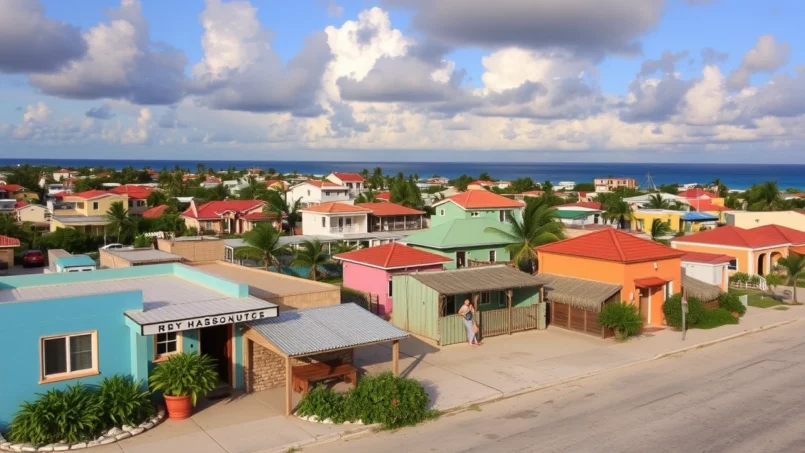
Savaneta, on the southwest coast, is the oldest settlement on the island. Far from the bustle of the “Hotel Zone”, this village retains a fishing village atmosphere, with colorful seaside houses and a life rhythm dictated by fishing, the sea, and a few iconic spots like the Zeerovers restaurant, famous for its fresh fish.
Authenticity by the Sea
Savaneta attracts expatriates looking to live “like a local” without giving up the pleasure of waking up near the water. The coastline is dotted with small beaches, piers, and houses with direct sea access. Mangel Halto, a nearby mangrove beach, is one of the island’s most appreciated snorkeling spots, with its calm and shallow waters.
The absence of large resorts and massive hotel complexes helps preserve an authentic setting. The atmosphere is characterized by a mix of local Aruban families and foreign residents drawn to this more discreet and peaceful side.
A Contrasted but Generally More Moderate Market
AAR figures reveal a surprisingly broad range for Savaneta, with some luxury waterfront properties pulling the high end of the market.
| Property Type | Observed Price Range (USD) |
|---|---|
| Single-family homes | ~224,157 to 5,200,000 |
At the high end of this range are seafront villas, sometimes very high-end. But a good portion of the stock remains more accessible than comparable properties in Noord, especially once you move slightly away from the immediate coastline. Savaneta is often perceived as more gentle in terms of prices than Noord or Oranjestad, while offering a more tranquil coastal charm.
For Which Expat Profile?
Savaneta will appeal to expats ready to live outside the main tourist circuits, who prioritize calm, neighborly relations, and a village atmosphere, with the sea a few steps away. It’s an option to consider for retirees, families, or remote workers in search of an inspiring environment but less exposed to crowds.
San Nicolas: Cultural Capital, Redeployment, and Opportunities
Located at the southern tip of the island, San Nicolas is Aruba’s second city. Long marked by the activity of the oil refinery, now closed, it has gradually reinvented itself around culture, urban art, and targeted tourism projects.
A “Sunrise City” in Transition
San Nicolas is often nicknamed the “Sunrise City” and considered the island’s cultural capital. Its streets have become an open-air gallery, covered in murals, graffiti, and art installations. Festivals, street events, and urban revitalization work make it a unique place, appreciated by travelers seeking local culture.
The beaches in the south of the island, such as Baby Beach, Rodger’s Beach, and Boca Grandi, are known for their calm and low crowds compared to those in the north. They are ideal for visitors seeking tranquility, shallow lagoons, and excellent kitesurfing spots.
Several recent projects, like the Aruba Cultural Mall or the Secrets Baby Beach Aruba by Hyatt resort, whose first phase was completed in 2025, testify to a gradual repositioning of the city toward more targeted tourism.
One of the Island’s Most Affordable Markets
San Nicolas remains, despite these investments, one of Aruba’s cheapest real estate markets, making it a clear target for expats on a limited budget, long-term investors, and those betting on a future upgrade.
| Property Type | Observed Price Range (USD) |
|---|---|
| Single-family homes | ~98,315 to 850,000 |
This range, significantly lower than Noord or even Oranjestad, reflects both the distance from the main hotel zone and the fact that the city is just emerging from a long period of relative economic stagnation following the refinery’s decline.
For Which Expat Profile?
San Nicolas mainly attracts expatriates who accept a certain distance from the major northern beaches and shopping centers, in exchange for lower rents or purchase prices, strong cultural immersion, and privileged access to beaches like Baby Beach. Typical profiles: artists, remote workers on a small budget, retirees, or families seeking a small-town atmosphere, more independent from the main tourist flow.
Comparing Aruba’s Main Neighborhoods for Expatriates
Given this diversity, it can be useful to compare the key districts according to a few criteria: price level, atmosphere, proximity to beaches, and resident profile. The table below summarizes the observed trends.
| Neighborhood / District | Price Level (relative) | Main Atmosphere | Access to Iconic Beaches | Typical Expat Profile |
|---|---|---|---|---|
| Noord (incl. Palm/Malmok) | Very High | Touristic, Animated, International | Palm Beach, Eagle, Arashi, Boca Catalina | Investors, Nomads, Affluent Retirees, Tourism Pros |
| Palm Beach | Very High | Ultra-Touristic, Nightlife | Direct Beach Access | Those who love animation, short & medium stays |
| Eagle Beach | High | Calm, Residential Beachfront | Direct Beach Access | Couples, Retirees, High-end Rental Investors |
| Oranjestad | Medium to High | Urban, Historic, Administrative | Surfside, Quick Access to West | Professionals, Families, Digital Nomads, Pragmatic Retirees |
| Paradera | Medium | Residential, “Green Heart”, Family-Friendly | Beaches a Short Drive Away | Families, Middle Class, Long-Term Expats |
| Santa Cruz | Rather Low | Rural/Residential, Close to Nature | Wild Beaches/Arikok Nearby | Nature Lovers, Tight Budgets, Long-Term Residents |
| Savaneta | Medium to High (waterfront) | Authentic Coastal Village | Mangel Halto, Small Beaches | Expats Seeking Authenticity and Sea View |
| San Nicolas | Low | City in Cultural Revival | Baby Beach, Rodger’s, Boca Grandi | Creative Profiles, Limited Budgets, Long-Term Bet |
This comparison remains indicative: each neighborhood is heterogeneous, and internal variations can be significant, especially between waterfront and inland areas.
Market Trends: What Expat Investors Need to Know
Aruba has experienced a relatively dynamic real estate market for several years, boosted by high tourist numbers, a post-pandemic growing economy, and a stable political environment, reinforced by its status within the Kingdom of the Netherlands. A few key figures help situate the recent context.
Construction on the Rise, Limited Waterfront Supply
Statistics from the Central Bank of Aruba show a strong recovery in residential construction in 2025, with a nearly 52% increase in building permits for housing in the first half of the year, and a doubling of the value of approved projects (nearly 127.5 million florins). Permits for single-family homes increased by about 58%, those for apartments by about 26%.
Despite this dynamism, the inventory of premium waterfront properties remains limited, maintaining pressure on prices in star areas like Noord, Eagle Beach, or Palm Beach. Estimated average price island-wide give an order of magnitude:
| Housing Type (all Aruba) | Estimated Average Price (USD) |
|---|---|
| 1 Bedroom | ~355,000 |
| 2 Bedrooms | ~475,777 |
| 3 Bedrooms | ~545,000 |
| 4 Bedrooms and more | ~589,446 |
These averages, however, mask strong disparities between, for example, a house in Santa Cruz and a sea-view condo in Noord.
Short-Term Rentals: Engine and Constraint
The rise of short-term rentals is a determining factor, especially for expats considering a mixed personal use / investment purchase. According to available analyses, the share of tourists staying outside hotels, resorts, or timeshares rose from about 13% in 2009 to 33% in 2024, exceeding 35% in the first eight months of 2025. Average occupancy rates increased from 49% in 2019 to 58% in 2024, with peaks of 80–90% in high season.
The average nightly rate for high-end segments in Noord and Eagle Beach in Aruba.
Authorities are increasingly monitoring this sector. The Tax Department (DIMP), in collaboration with the tourist office (ATA), uses tracking tools for rental platforms to identify undeclared owners. Income from these rentals is considered taxable economic activity, which any expat investor must factor into their strategy.
Long-Term Rental: High Demand, Limited Supply
For foreign residents not wishing to buy immediately, the long-term rental market remains essential… and tight. On one hand, the share of renter households already represented over 22% of housing according to the 2020 census. On the other hand, the rise of short-term rentals reduces the supply available year-round.
Available estimates of average rents provide an idea of the budget to plan for your future home.
| Housing Type (long-term rental) | Estimated Average Monthly Rent (USD) |
|---|---|
| 1 Bedroom | ~925 |
| 2 Bedrooms | ~2,100 |
| 3 Bedrooms | ~2,750 |
| 4 Bedrooms and more | ~3,650 |
Here too, location strongly modifies the equation: a one-bedroom apartment in Oranjestad or a more inland neighborhood will be significantly cheaper than a comparable property in Noord or a few steps from Palm Beach.
Choosing Your Neighborhood: Beyond Price, a Question of Lifestyle
When deciding between Noord, Oranjestad, Paradera, Santa Cruz, Savaneta, or San Nicolas, expats quickly realize the question is not just a simple financial calculation. The desired lifestyle weighs at least as much as the rent or price per square foot.
Living in Noord or Palm Beach offers immediate proximity to renowned beaches, lively bars like Bugaloe or MooMba, and a vast range of leisure activities. However, it means dealing with tourist crowds, especially during high season and with cruise ship passengers, often higher prices due to tourism, and a very international atmosphere that can feel removed from authentically Aruban character.
Settling in Oranjestad is choosing the city: colorful colonial architecture, cafes, cultural institutions, proximity to the hospital, government offices, international schools, and a life more structured around walking and public transport in some areas.
The areas of Paradera, Santa Cruz, and Savaneta offer a more residential, local, and calm experience of Aruba, with stronger neighborly relations and more intimate inland or coastal landscapes. Prices are generally more accessible. In return, you must plan for greater car dependency and accept being a bit further from iconic tourist attractions.
San Nicolas, finally, embodies a form of bet: that of a city in transition, cultural, creative, endowed with magnificent and less crowded beaches, with still low prices and ongoing development projects. For some expats, it’s the place where you can still “buy early” in a redeployment dynamic.
In Practice: How to Approach Your Move to Aruba Neighborhood by Neighborhood
Concretely, most expatriates moving to Aruba start with temporary housing, often in Noord or Oranjestad, to get a feel for the island and visit several neighborhoods. Furnished apartments, small hotels, or Airbnb-type accommodations allow time to find a long-term rental or a property to buy.
The fact that there is no centralized MLS complicates market analysis somewhat: it is often essential to go through a local real estate agent who is a member of a professional association (like the AAR) to get a reliable overview.
A few reference points can guide the first steps:
Guide to the island’s different zones to find the place that matches your style and priorities.
For a very beachy and social lifestyle, oriented toward beach, bars, and restaurants.
The ideal compromise between urban life, price, and access to services.
For a more family-friendly life, with space and moderate prices.
For an authentic fishing village atmosphere by the sea.
A long-term bet for cultural immersion on a tight budget.
In any case, keep in mind a few constants of the island: the near-essential car, the cost of living influenced by imports, generally high security, water quality, the friendliness of the residents, and that famous “poco poco” philosophy that eventually permeates daily life.
To find your piece of paradise in Aruba, it’s crucial to align the specifics of each neighborhood with your personal project. For example, a remote worker or rental investor might favor the buzz of Noord, while a retiree might seek the tranquility of Paradera or the coastal gentleness of Savaneta. A local worker might thrive in the urban charm of Oranjestad or the creative energy of San Nicolas, and a nature lover in the landscapes of Santa Cruz.
Disclaimer: The information provided on this website is for informational purposes only and does not constitute financial, legal, or professional advice. We encourage you to consult qualified experts before making any investment, real estate, or expatriation decisions. Although we strive to maintain up-to-date and accurate information, we do not guarantee the completeness, accuracy, or timeliness of the proposed content. As investment and expatriation involve risks, we disclaim any liability for potential losses or damages arising from the use of this site. Your use of this site confirms your acceptance of these terms and your understanding of the associated risks.

Cyril Jarnias is an independent expert in international wealth management with over 20 years of experience. As an expatriate himself, he is dedicated to helping individuals and business leaders build, protect, and pass on their wealth with complete peace of mind.
On his website, cyriljarnias.com, he shares his expertise on international real estate, offshore company formation, and expatriation.
Thanks to his expertise, he offers sound advice to optimize his clients' wealth management. Cyril Jarnias is also recognized for his appearances in many prestigious media outlets such as BFM Business, les Français de l’étranger, Le Figaro, Les Echos, and Mieux vivre votre argent, where he shares his knowledge and know-how in wealth management.





