
 Published on and written by Cyril Jarnias
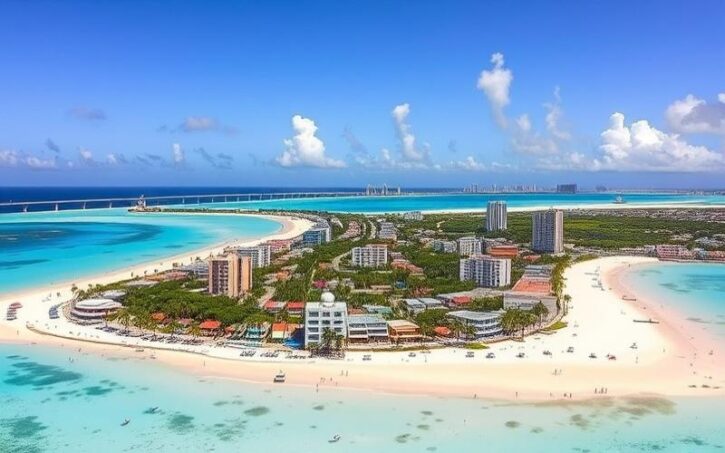
Aruba is more than just postcard-perfect white sand and turquoise water. On this small island in the southern Caribbean Sea, vacations are also about breaking a sweat, paddling, running, cycling, and enjoying the near-constant trade winds. Promoted as an ideal destination for active getaways, Aruba bets on sports as much as relaxation, with an astonishingly vast offering for a territory of just 70 square miles.
Aruba has positioned itself as a tourism destination focused on movement, offering a wide range of sporting activities. Whether you’re a seasoned athlete or a curious vacationer, you can enjoy wind-powered watersports, wreck diving, oceanfront marathons, high-level beach tennis, or mountain biking on desert trails.
Why Aruba is an ideal sports playground
If Aruba attracts so many lovers of physical activity, it’s no accident. The climate, first, works in its favor: nearly constant sunny weather, air temperatures around 79–81°F (26–27°C), water rarely below 78°F (25.5°C), and underwater visibility that can reach nearly 100 feet in good conditions. Add to that steady winds – averaging around 18.5 mph – and terrain mixing protected beaches, rocky coastlines, and semi-desert landscapes, and you get a natural playground tailor-made for sports.
Tourism accounts for over 70% of the island of Aruba’s GDP.
The island is also considered one of the safest in the Caribbean, with low rates of petty and serious crime, which enhances its appeal for outdoor sports, at any time of day.
Watersports: The empire of wind and turquoise water
In Aruba, everything starts (almost) in the water. The calm, protected west and south coasts lend themselves to sports accessible to everyone, while the more exposed north and east attract thrill-seekers.
Kitesurfing and windsurfing: The stars of Fisherman’s Huts and Boca Grandi
Aruba is a world-renowned paradise for kitesurfing and windsurfing. Its constant trade winds, the lower density of warm air which allows for using smaller kites, and the variety of spots have made it a benchmark destination, to the point that the kite industry now represents a significant source of revenue for the island.
Near Palm Beach, Hadicurari beach, better known as Fisherman’s Huts, has been considered the “ultimate” windsurfing and kitesurfing spot since the 1980s. The water is shallow, relatively flat, with steady wind, suitable for both beginners and experienced riders. Centers like Vela or Aruba Active Vacations offer lessons and equipment rental (windsurfing, kitesurfing, wingfoil) as well as full beach facilities (loungers, showers, drinks, wifi, lockers…).
For experienced kitesurfers, Boca Grandi offers more aggressive conditions with swell, side-on wind, and strong currents. Equipment rentals there are more expensive than at Fisherman’s Huts, due to the required skill level and the high-end equipment provided.
A summary of the two premier kite spots:
| Spot | Location | Main Conditions | Recommended Level |
|---|---|---|---|
| Fisherman’s Huts | North of Palm Beach | Flat, shallow water, steady wind | Beginner to expert |
| Boca Grandi | Southeast (windward coast) | Waves, side-on wind, strong current | Independent, advanced riders |
Aruba’s notoriety in this field is also measured by its events. The Aruba Hi-Winds, held at Fisherman’s Huts since 1986, has become the premier wind and watersports gathering in the region, with competitions in windsurfing, kitesurfing, foil, and wingfoil, live music, and food stalls. Access is free for spectators, making it an open-air show for all vacationers.
The emblematic figure of this wind culture remains Sarah-Quita Offringa, a multiple world freestyle champion and native of the island, who has become a true local icon.
Scuba diving and snorkeling: The world of wrecks
Another domain where Aruba shines: scuba diving and snorkeling. The clear waters, pleasant temperature, and numerous reefs and wrecks make it a top destination for exploring the underwater world.
The star dive is the SS Antilla, a German freighter scuttled at the start of World War II. Approximately 440 feet long and resting in 40 to 60 feet of water off Palm Beach, it’s one of the largest accessible wrecks in the Caribbean. Covered in coral and teeming with fish, the site attracts both photographers and recreational divers.
The Baboo and other airplane wrecks, located near Malmok and the Spanish Lagoon, are among the notable dive sites. Centers like Red Sail Sports Aruba, a PADI 5 Star Dive Center, offer various activities: deep dives on these wrecks, certification courses, and for beginners, ‘resort courses’ allowing for a first supervised dive.
For those who prefer to stay on the surface with a mask and snorkel, Aruba is full of coves and beaches perfectly suited:
| Snorkeling Site | Main Features | Recommended Level |
|---|---|---|
| Mangel Halto | Rich reefs, mangroves, possibility for a deeper drift snorkel | Beginner to experienced (currents offshore) |
| Baby Beach | Shallow, calm lagoon, ideal for children and novices | Beginners, families |
| Boca Catalina | Clear water, tropical fish, turtles, and starfish | All levels |
| Tres Trapi | Small rocky cove, very good chance of spotting turtles | Comfortable in water, access via rocks |
| Arashi Beach | Family beach, snorkeling area on the rocky sides | Beginner to intermediate |
Operators like De Palm Tours or Octopus Aruba organize catamaran trips with snorkeling stops, sometimes combined with sunset cruises. It’s also possible to rent masks, snorkels, fins, and flotation vests by the day, with hotel delivery offered by some providers.
Environmental authorities encourage the use of “reef-safe” sunscreens – Aruba has even voted to ban products containing oxybenzone – and publish guidelines for responsible snorkeling: don’t step on coral, don’t feed the fish, avoid holding onto natural structures.
Kayak, paddleboarding, and quiet sports on turquoise water
Beyond the excitement of sails and bubbles, Aruba is also suited for more contemplative watersports. Sea kayaking and stand-up paddleboarding (SUP) are particularly enjoyed in protected bays and lagoons.
Mangel Halto and the Savaneta area, surrounded by mangroves and shallow waters, are perfect grounds for a kayak or paddleboard ride, with the chance to observe fish, birds, and sometimes turtles, all while gliding on mirror-like water. The calm, sheltered Spanish Lagoon is also very well-suited for these activities.
For those wanting to add an original touch to their experience, several options exist: navigating on clear kayaks, practicing sunrise paddleboard yoga, or joining guided tours to islets such as De Palm Island or Sea Glass Island.
Jet-ski, parasailing, tubing, flyboard, and other adrenaline boosts
For adrenaline junkies, the beaches of Palm Beach, Eagle Beach, and Surfside Beach concentrate most motorized activities: jet-ski (waverunner), towable tubes, banana boats, water skiing, wakeboarding, or even flyboarding, which propels participants out of the water with a powerful jet.
Local operators, like Frank’s Place, offer 15 to 30-minute packages, with safety briefing, life jackets, and supervision. Parasailing allows you to soar over Palm Beach attached to a parachute, offering a spectacular view of the west coast.
For those who prefer to immerse themselves without getting wet, excursions on semi-submarines or real submarines are available, as are Sea Trek helmet dives, where you walk on the seabed with a heavy helmet supplied with air.
Sailing, catamarans, and deep-sea fishing
With its steady trade winds and relatively calm waters on the west coast, Aruba is also an excellent playground for sailing. Catamarans ply the waters between Boca Catalina, Malmok, and Palm Beach daily, offering snorkeling trips or simple sunset cruises.
Sport fishing is another pillar of local watersports. Departing from the Renaissance Marina or the Hadicurari pier at Palm Beach, charter boats take anglers to chase blue and white marlin, wahoo, sharks, barracuda, tuna, or mahi-mahi. The island even hosts an annual big-game fishing tournament, the Presidential Challenge Aruba Cup, dedicated to billfish.
Beach sports: From beach tennis to volleyball
Aruba’s beaches aren’t just for laying out a towel. Some are veritable sports arenas, where locals and visitors meet for games of beach tennis, volleyball, or soccer on the sand.
Beach tennis: The local specialty gone global
If you spend a weekend on Eagle Beach or Bushiri Beach, it’s hard to miss the beach tennis courts and players armed with solid-paddle rackets. This hybrid sport, borrowing from tennis, badminton, and volleyball, has become a true institution in Aruba, to the point of hosting the Aruba Open every year, touted as the world’s largest beach tennis tournament.
The 2025 edition, scheduled for Bushiri Beach, is expected to bring together over 1,200 athletes from more than 40 countries, while the sand stands host thousands of spectators. The competition attracts international champions, like double world champion Antomi Ramos, who has already been invited to the island.
Organizers of the 2025 surfing championship
Outside of this event, courts are accessible for friendly matches, notably at Eagle Beach, and some hotels offer introductory lessons. For beginners, getting started is easy: short paddles, depressurized balls, and simplified rules compared to traditional tennis.
Volleyball, beach soccer, and traditional games
Beach volleyball is played all along Palm Beach and Eagle Beach, often in the late afternoon when the heat subsides. Impromptu teams form with locals and tourists, in a very relaxed atmosphere.
Discover premium facilities and services for soccer on artificial turf fields.
Two high-end, fully fenced synthetic turf fields for optimal play.
Refereeing services and a sports bar with a large screen to relive the match.
Traditional games sometimes complement this sports landscape. During certain national holidays, competitions like “Spel zonder grenzen” – sack races, pillow fights, climbing a greased pole – recall the popular roots of playful sports practice in Aruba.
Surfing and wave sports: Surfing, bodyboarding, and bodysurfing
While Aruba is best known for its wind-powered watersports, “classic” surfing also finds its place on the north and east coasts, exposed to Atlantic swells.
Andicuri Beach and Dos Playa, located in or near Arikok National Park, are particularly favored by local surfers and bodyboarders. Andicuri is known for its powerful waves, while Dos Playa – two coves side by side – offers conditions suitable for intermediate to advanced surfers. Swimming there is not recommended outside of surfing practice, due to currents and wave strength.
Some western beaches, like the far end of Arashi, offer gentler waves, suitable for bodyboarding or bodysurfing for vacationers comfortable in the water. For beginners, schools like Aruba Surf and Paddle School organize lessons and board rentals, sometimes with the possibility to combine surfing and stand-up paddleboarding depending on conditions.
Land sports: Mountain biking, hiking, running, and more
Aruba is more than just its beaches. Nearly 20% of the island is occupied by Arikok National Park, a landscape of arid hills, cliffs, coves, and dunes, dotted with cacti and volcanic rocks. This is where another facet of sports in Aruba develops: mountain biking, hiking, and trail running.
Mountain biking and the “12 hours of Aruba”
Mountain biking (MTB) is gaining ground among residents and visitors. An informal network of over 30 miles (50 km) of trails has been traced by enthusiasts, particularly in areas like the island’s wild north and the Tierra del Sol region. A project for an official 34-mile (54 km) trail network has even undergone an environmental impact study, proof of the growing interest in this discipline.
Each year in May, the “12 hours of Aruba” MTB relay takes place, a local event where teams relay for 12 hours on a circuit, mixing amateurs, enthusiasts, and sometimes sponsors like certain hotels. The route winds through the island’s raw landscapes, on terrain alternating between volcanic rocks, sand, and natural tracks.
To rent an MTB (classic or electric) and get advice, specialized agencies like Aruba Active Vacations are recommended. They also offer guided tours and can suggest routes suited to your skill level.
Hiking: Arikok National Park and Hooiberg
Hiking is the other great way to discover Aruba’s wild side. Arikok National Park concentrates most of the trails, with routes leading to spectacular sites like the Natural Pool (Conchi), Dos Playa beach, the Guadirikiri or Fontein caves, or the cliffs of Boca Prins.
Outside the park, Hooiberg, a volcanic cone dominating the center of the island, offers a cardio challenge with its rock-carved staircase. Reaching the top rewards you with a panoramic view of the island.
Trail enthusiasts can also enjoy more technical routes in the “cunucu” (countryside) of Boroncana, Alto Vista, Calbas, or along the north coast, on irregular paths lined with lava stones, fossilized coral, and cacti.
Running and the international marathon
Running has taken on an international dimension with the KLM Aruba Marathon, an annual event offering distances of 5K, 10K, half-marathon, and full marathon. The course starts and finishes at Palm Beach, in front of the Hilton, then runs along different neighborhoods and iconic beaches like Malmok, Arashi, and Eagle Beach. The event attracts runners from various countries, drawn by the combination of organized racing and vacation ambiance.
Day to day, many joggers and walkers use the boardwalk that connects Palm Beach to Malmok and Arashi. By the sea, shaded in parts, it’s perfectly suited for a morning outing at sunrise. Others prefer the natural trails mentioned above, for a wilder run.
Golf: Swinging with an ocean view
Golfers aren’t forgotten. Aruba is home to an official 18-hole course at Tierra Del Sol Resort, Spa and Country Club, the island’s only full-length course, designed in a setting of dunes, cacti, and panoramic ocean views. This is complemented by shorter options, like the 9-hole course at Divi Village Golf & Beach Resort, where lessons are offered for beginners.
Playing golf in Aruba means contending with the wind, terrain, and an environment very different from traditional lush fairways, which adds a particular charm to the experience.
Team sports: Soccer, baseball, and basketball, pillars of local culture
In terms of team sports, Aruba lives to the rhythm of soccer, baseball, and basketball, both recreationally and competitively.
Soccer: The island’s king sport
Soccer is the most popular sport in Aruba. The Aruba Football Federation oversees the men’s and women’s national teams, both members of CONCACAF. The men’s team in its current form has existed since the 1930s, while the women’s selection played its first international match in 2006.
The Guillermo Prospero Trinidad Stadium, in Oranjestad, is the island’s main stadium, used for soccer and athletics. Although international results are modest, soccer is very popular and part of daily life, played in neighborhoods and schools. Visitors might even be invited to join friendly matches.
Baseball: A talent incubator
Baseball is the other major sporting pillar of Aruba. The island has even built an international reputation by sending several players to American Major Leagues, starting with Eugene (Gene) Kingsale, the first Aruban to play in MLB in the late 1990s. Other names, like Xander Bogaerts, Sidney Ponson, Calvin Maduro, or Chadwick Tromp, have confirmed the island’s ability to produce high-level talent.
The year the Little League was founded, marking the start of structured youth baseball in Aruba.
Basketball and other indoor sports
Basketball also enjoys real enthusiasm, notably through a recreational basketball program bringing together more than 200 youths aged 12 to 18 divided into 16 teams. The goal is as much sporting as educational: to offer a structure for progress and open the way to university scholarships in the United States. Efforts are also underway to certify local referees at the international (FIBA) level.
Alongside these major sports, Aruba has federations for track and field, swimming, boxing, weightlifting, and a network of modern gyms (Bodyzone Fitness Club, Cuts & Curves, Unlimited Fitness, Fly Fit Studio…). These facilities allow the most dedicated visitors to maintain their indoor workouts, with high-end equipment and group classes (spinning, fitness, yoga…).
Major sporting events: When Aruba becomes an international stage
Over the years, Aruba has built a calendar of sporting events that attract athletes and spectators from around the world. These events contribute directly to the economy and to the island’s dynamic image.
| Event | Main Discipline | Key Location | Particularities |
|---|---|---|---|
| Aruba Hi-Winds | Windsurfing, kitesurfing, foil | Fisherman’s Huts | Caribbean reference for wind sports, free for the public |
| KLM Aruba Marathon | Running (5K to marathon) | Palm Beach, west coast | Course along Malmok, Arashi, Eagle Beach |
| Aruba Open (Beach Tennis) | Beach tennis | Bushiri Beach | World’s largest beach tennis tournament |
| Presidential Challenge Aruba Cup | Big-game fishing (billfish) | Varadero | Annual sport fishing tournament |
| “12 hours of Aruba” | MTB relay | Wild north | Non-stop 12-hour team event |
To these gatherings add other competitions: triathlons, car races at the Palo Marga Raceway Park, sailing regattas, tennis and pickleball tournaments, not to mention a multitude of smaller local races and walks.
For travelers, these events are an opportunity to participate, if they register in time, or to soak up the atmosphere from the beach or roadside, among Arubans and fans from abroad.
Family sports and activities for beginners
Aruba particularly cultivates its image as a family-friendly destination, and this is reflected in its offering of sporting activities adapted for children and beginners.
Several activities allow for safely introducing the youngest to the underwater world. SNUBA, a mix of snorkeling and diving without a tank on your back, is one option. Glass-bottom boat trips offer observation without getting wet. De Palm Island features water parks with slides and games. Finally, the SASY (Supplied Air Snorkeling for Youth) system allows children aged 5 to 8 to breathe via an air source while staying at the surface.
On land, resort kids’ clubs (like the Sea Turtles Club at Divi & Tamarijn Aruba, for example) integrate fun activities like kite-making, beach sports, easy hikes, or visits to farms (butterflies, ostriches, donkeys) that blend nature discovery and movement.
Large family beaches like Baby Beach, Eagle Beach, Palm Beach, or Arashi are ideal for learning to swim, playing frisbee, beach tennis, volleyball, or simply running on the sand at sunset.
When sports rhyme with the environment
The rise of sports in Aruba is accompanied by questions about environmental impact. The development of mountain biking, for example, led to an impact study warning of risks of habitat fragmentation, erosion, and disturbance of vulnerable species like the Burrowing Owl (Shoco), a threatened endemic bird, or the recently reintroduced Lora parrot.
All-terrain vehicles (ATVs, UTVs), very popular for excursions, are also criticized for noise, dust, and soil degradation when they leave authorized trails. In response, Aruba has limited rental licenses, banned these vehicles in Arikok National Park, and strengthened regulations for access to certain areas.
In the marine environment, the main threats are plastic pollution, climate change, and chemicals from sunscreens. To address this, the island has banned single-use plastic bags, other disposable plastics, and sunscreens containing oxybenzone. Many local initiatives, like beach cleanups, recycling, and reef restoration, involve citizens, tourism businesses, and travelers.
For visiting athletes, a few simple actions can contribute to this effort: follow marked trails when hiking or mountain biking, choose operators who respect wildlife (no feeding, keeping distance from animals), use coral-friendly sunscreen, limit the use of motorized activities in sensitive areas, and inform yourself about safety and behavioral guidelines in the national park and reserves.
How to best enjoy popular sports in Aruba
For a sports-focused stay, one of Aruba’s major assets is its compactness: the island can be traversed in under two hours by car from end to end, allowing you to combine several disciplines in a short time. A morning of paddleboarding at Mangel Halto can easily be followed by a windsurfing lesson at Fisherman’s Huts, then a sunset run along the Palm Beach boardwalk.
On-site logistics are simplified thanks to shuttle services from hotels and frequent equipment rentals (boards, bikes, golf clubs, masks and snorkels, tennis or pickleball paddles). Public beaches are easily accessible by car or bus. The bus network serves main tourist areas like Oranjestad and Palm Beach, while renting a car offers more freedom to explore the wilder regions of the island’s north and east.
Multilingualism – Dutch, Papiamento, English, Spanish – facilitates exchanges with guides and instructors, who can usually teach in several languages. The sports atmosphere is generally relaxed: people come as much to challenge themselves as to have fun, meet locals, and enjoy the ocean.
—
Beyond classic watersports, Aruba offers a wide range of activities: international kitesurfing and beach tennis competitions, diving on historic wrecks, marathons along the coast, hiking in Arikok National Park (covering 20% of the island), and baseball games in lively stadiums. The island concentrates numerous sporting practices in a compact space with spectacular landscapes.
Whether you’re a seasoned competitor, a Sunday jogger, a family with kids, or a traveler eager for new experiences, the island proposes a very simple way to sum up its DNA: here, sports are an integral part of the happiness of being “One Happy Island”.
Disclaimer: The information provided on this website is for informational purposes only and does not constitute financial, legal, or professional advice. We encourage you to consult qualified experts before making any investment, real estate, or expatriation decisions. Although we strive to maintain up-to-date and accurate information, we do not guarantee the completeness, accuracy, or timeliness of the proposed content. As investment and expatriation involve risks, we disclaim any liability for potential losses or damages arising from the use of this site. Your use of this site confirms your acceptance of these terms and your understanding of the associated risks.

Cyril Jarnias is an independent expert in international wealth management with over 20 years of experience. As an expatriate himself, he is dedicated to helping individuals and business leaders build, protect, and pass on their wealth with complete peace of mind.
On his website, cyriljarnias.com, he shares his expertise on international real estate, offshore company formation, and expatriation.
Thanks to his expertise, he offers sound advice to optimize his clients' wealth management. Cyril Jarnias is also recognized for his appearances in many prestigious media outlets such as BFM Business, les Français de l’étranger, Le Figaro, Les Echos, and Mieux vivre votre argent, where he shares his knowledge and know-how in wealth management.





