
 Published on and written by Cyril Jarnias
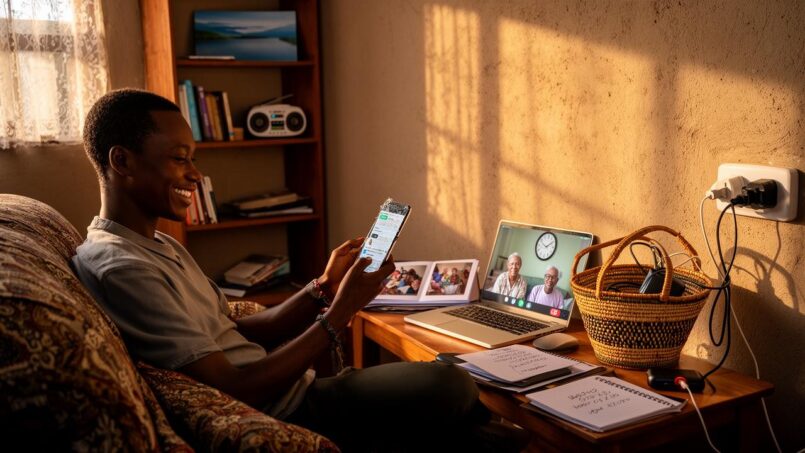
Staying in touch with family or friends when living in or traveling to Burundi requires a bit more planning than in highly connected countries. Network coverage is uneven, internet is expensive, electricity isn’t always available, and the majority of the population lives far from urban centers. Yet, with the right tools and a few simple habits, it’s entirely possible to maintain regular contact via call, message, or video.
This article provides a concrete overview, based on the latest data, of solutions that actually work for communicating from Burundi. It covers available networks, service prices, and digital usage in the country.
Understanding Burundi’s Digital Landscape
To best choose how to stay in touch with your loved ones, you first need to understand the playing field: who has internet, how, at what price, and with what quality.
Burundi has approximately 14 to 14.5 million inhabitants. However, only about 1.6 to 1.78 million people use the internet, roughly 11 to 12.5% of the population. In practical terms, nearly nine out of ten Burundians remain completely offline. The vast majority live in rural areas (about 84%), often far from the main roads where antennas and fiber are concentrated.
Fixed home connections are almost non-existent: there are only about 3,000 wired broadband subscriptions for the entire country, barely 0.3% of households. As a result: 99.6% of internet subscriptions are mobile. In practice, “having internet” almost always means “having a SIM card with some data.”
2G, 3G, 4G Coverage: Where is the Line of Possibility?
The main operators – Lumitel, Econet Leo, and Onatel – have covered the territory with over 800 relay antennas. The good news is that 2G, sufficient for calls and SMS, covers about 97% of the population. The less good news is that networks allowing for decent internet are far from being everywhere.
The situation can be summarized as follows:
| Network Type | Share of Population Covered | Typical Possible Use |
|---|---|---|
| 2G | ≈ 97% | Calls, SMS, USSD, very low data |
| 3G | ≈ 50–53% | Messaging, simple browsing, light social media |
| 4G | ≈ 32–35% | VoIP, low/medium quality video, intensive use limited to cities |
Behind these numbers lies a very uneven reality: Bujumbura, Gitega, Ngozi, Rumonge or major roads benefit from 3G or 4G; many rural hills have only sluggish 2G, or nothing at all. About 3% of the population lives outside any coverage, even for a simple call.
Measured speeds give an idea of the comfort of use:
– median fixed speed around 5.8 Mb/s;
– mobile often between 2 and 6 Mb/s.
A sufficient internet connection allows for basic use of messaging, voice calls (VoIP), and social media. However, it can be unstable and insufficient for more demanding uses like video conferencing or video streaming, especially during peak hours when the network is congested.
Expensive Internet for Very Low Incomes
Another major constraint: price. One gigabyte of mobile data represents about 13.6% of the average monthly gross national income per capita. In other words, for an average Burundian, 1 GB can weigh as much as about fifteen days of income. Commercial offers in dollars illustrate the gap between real cost and local purchasing power:
| Type of Service | Typical Price in Burundi |
|---|---|
| 1 GB of mobile data | ≈ 3.17 USD on average |
| “Basic” monthly mobile plan | ≈ 40,000 BIF (≈ 20 USD) |
| Consumer fiber (when available) | ≈ 200,000 BIF (≈ 100 USD) |
| Average fixed internet | > 300 USD / month (regional level) |
Add to this the low smartphone penetration – probably less than 10% of the population – and very limited access to electricity: only about 11% of residents are connected to the grid. Over 85% of antennas run on diesel generators, which translates to high costs for operators, and thus for users.
In this context, staying in touch means juggling three imperatives: dealing with irregular coverage, conserving data, and coping with power outages.
Choosing the Right Channel: Classic Call, VoIP, Messaging?
To talk to your loved ones from Burundi, you essentially have three main paths: “classic” phone calls via the mobile network, internet calls (VoIP), and messaging (text, audio, video, even offline). Each has its technical and economic constraints.
International Phone Calls: Useful, but Use with Caution
Calling a foreign number directly from a Burundian line is still possible, but rarely the most economical solution. The same goes the other way: calling a Burundian number from abroad is expensive for relatives back in their host country.
Several virtual calling card services or specialized apps specifically target calls to Burundi. They work on a similar principle: you buy prepaid credit online and use it via an app or an access number.
The rate plans noted for calls to Burundi show how every cent counts:
| Call Destination | Offer / Service (example) | Advertised Rate | Minutes for 10 USD / 5 USD |
|---|---|---|---|
| Landlines in Burundi | Service A digital card | 0.559 USD / min | 17 min for 10 USD |
| Mobiles in Burundi | Service A digital card | 0.549 USD / min | 18 min for 10 USD |
| Landlines in Burundi | Service B prepaid credit | 0.555 USD / min | 9 min for 5 USD |
| Mobiles in Burundi | Service B prepaid credit | 0.555 USD / min | 9 min for 5 USD |
| Landlines in Burundi | Service C digital card | 0.689 USD / min | 14 min for 10 USD |
| Mobiles in Burundi | Service C digital card | 0.645 USD / min | 15 min for 10 USD |
| Landlines in Burundi (other brand) | Occasional offer | 0.80 USD / min up to 5 minutes | 12.5 min for 10 USD |
| Landlines or mobiles in Burundi (app) | “Starting from” offer | from 0.389 USD / min | ≈ 25.7 min for 10 USD |
Providers emphasize no hidden fees, no contracts or tricks, and “HD” call quality thanks to the latest telecom technologies. But in the end, even the best rates hover around 40 to 70 cents per minute.
For loved ones without a smartphone, internet, or sometimes electricity, traditional phone calls remain the only solution for communication, despite the high cost of long weekly calls.
When VoIP Calls Become More Interesting
As soon as both parties have a smartphone and a data connection, switching to VoIP calls (WhatsApp, Signal, Telegram, or a dedicated app like KeepCalling or Otubio) completely changes the financial equation.
The call itself costs nothing beyond the data consumption. On a decent 3G or 4G network, a compressed audio call uses little (often well under 1 MB per minute on well-optimized apps). The main limitation then becomes network quality rather than price.
Services like KeepCalling offer a convenient alternative to traditional calling cards for calling Burundi. They provide a mobile app (iOS/Android), an integrated address book, a call history, and online credit top-up. A notable advantage is the transparent display of the per-minute rate to Burundian numbers, including landlines, making it easier to control spending.
– no need to dial endless access numbers;
– price known upfront and stable, no hidden connection fees;
– immediate top-up, wherever you are;
– balance and call tracking within the app.
These services position themselves as the “best deal for staying in touch with family in Burundi” by combining competitive prices and call quality. But their full utility assumes a minimum of 3G/4G coverage on the Burundian side.
Instant Messaging: The Real Backbone of Long-Distance Connections
The backbone of communications from Burundi is messaging apps. WhatsApp leads: about 1.3 million users, nearly 9.5% of the population, making it the country’s dominant digital communication tool.
In 2025, about 1.2 million social media identities will be active in Burundi, making a large portion of internet users reachable through this channel.
For staying in touch, this means that: regular communication is essential to maintain a strong and meaningful relationship.
– if your Burundian loved ones have a smartphone, WhatsApp is almost always the most natural channel;
– Facebook Messenger, Instagram, or other apps (Telegram, Signal) follow, but with smaller user bases.
The appeal of these messaging apps is that they adapt well to local constraints:
– they work on low bandwidth;
– they compress photos and videos;
– they allow for easy switching to text when the connection becomes too unstable for a call.
Some, like Signal, go further in data optimization and security, with end-to-end encryption and aggressive image compression. Others, like Telegram, offer a “data saver mode” for calls and can still manage on a simple 2G network.
Local SIMs, eSIMs, Wi-Fi: How to Get Equipped On-Site
If you yourself are in Burundi – for a long stay, work, a humanitarian mission, or travel – your first crucial decision is the type of connection you will use to keep in touch with the outside world.
Buying a Local SIM Card: The Most Cost-Effective Reflex
Whether you are a resident or a visitor, getting a local SIM from a Lumitel, Econet Leo, or Onatel kiosk remains the most economical solution. The procedure is simple:
– purchase the SIM (generally between 500 and 10,000 BIF, i.e., 0.20 to 4 USD depending on the operator and point of sale);
– mandatory registration with a passport;
– choose a data plan (daily, weekly, or monthly offers).
The observed price ranges show a very favorable quantity/price ratio as soon as you buy decent volumes:
| Data Volume (indicative) | Typical Price (BIF) | Approximate Price in USD |
|---|---|---|
| 60–100 MB / 1 day | 300–500 BIF | 0.10–0.18 USD |
| 1–1.5 GB / 1 day | ≈ 1,000 BIF | ≈ 0.35 USD |
| 1–1.5 GB / 15 days | ≈ 5,000 BIF | ≈ 1.75 USD |
| 4–7 GB / 30 days | ≈ 20,000 BIF | ≈ 7 USD |
| 15–23 GB / 30 days | ≈ 50,000 BIF | ≈ 17–18 USD |
On the scale of a foreign visitor, these amounts remain modest. For Burundians, however, they are heavy, hence the very measured use of data.
Once your SIM is activated, it’s common to use your phone as a Wi-Fi hotspot to share the connection with a computer or multiple devices, a practice recommended by some travelers who estimate that with 10 USD worth of data, they easily cover a week of intensive use.
Traveler’s Tip
eSIM: The Card of Simplicity, Not Economy
eSIM services like Airalo or Maya Mobile offer data plans for Burundi, activatable remotely via a simple QR code. The advantage:
– you arrive already connected;
– you don’t have to look for a kiosk or store;
– no local SIM registration formalities.
Practical offers for travelers, but with compromises on price and features.
These plans are significantly more expensive than local offers. Example: 3 GB for 15 days at 34 USD, versus less than 10 USD for a local equivalent.
Offers are exclusively data-only. You will not be able to make or receive traditional voice calls with these plans.
Lack of a Burundian phone number, which limits the ability to make local calls and use some services requiring SMS verification.
For staying in touch with your loved ones abroad, an eSIM can suffice if you use messaging and internet calls. But to also communicate with local contacts without relying on Wi-Fi, the Burundian SIM remains more flexible.
Wi-Fi in Hotels, Cafes, and Coworking Spaces
In cities, especially Bujumbura, several mid-range and high-end hotels offer relatively good Wi-Fi, sometimes between 25 and 100 Mb/s. Establishments like Burundi Palace Boutique Hotel, Star Hotel, King’s Conference Centre, or Hotel Club du Lac Tanganyika are mentioned for their decent connections.
For professional use, coworking spaces (Regus, Hub Africa, Burundi Business Incubator, etc.) also offer more stable internet, for a fee.
But this landscape remains very urban. Outside major cities, public Wi-Fi is rare, if not non-existent. Some cafes or restaurants may offer access, but you should neither count on it, nor rely on its reliability for important video calls.
When Bandwidth is Scarce: Strategies to Communicate Anyway
Whether you are in Burundi or your loved ones live there, you will sooner or later face slow, unstable connections, or even total outages. Adopting “low consumption” habits is therefore essential to keep the connection alive.
Prioritize Text Whenever Possible
On a 2G network or a congested 3G, an SMS or a short WhatsApp message will go through where a call or video will fail. Good practices to adopt are simple:
– switch to text as soon as the call starts cutting out;
– limit attachment size: compressed photos, no high-definition video;
– avoid long voice messages when the network seems fragile.
A number of apps – WhatsApp, Signal, Telegram – already automatically compress images. You can go further by voluntarily reducing the quality before sending, further lightening the load on an already congested network.
Reserve Video for Truly Important Moments
Video calls consume much more bandwidth than voice alone. In a country where most connections are via mobile on a fragile network, it makes sense to limit their use to chosen moments: birthdays, family events, celebrations.
During these calls, a few tricks can help limit the damage.
– turn off video if the connection becomes unstable, at least on one side;
– close all other apps using internet;
– ask other household members to pause their downloads or streaming during the call.
On platforms like Zoom or Microsoft Teams, you can reduce the video resolution, or even switch to audio-only mode, which significantly improves stability on a weak line.
Organize Message Priority
In some contexts – humanitarian missions, NGO operations, crisis periods – the network is so congested that you have to decide which messages to send first. Recommendations from low-bandwidth scenarios can apply daily:
In case of network congestion, it is advisable to: first define a list of critical contacts and information (health, safety, family emergencies); then, prioritize sending text messages to these people; and finally, postpone sending large attachments (photos, files) to periods of lower network congestion (early morning or late evening).
Some professional communication solutions (for example Rocket.Chat or TrueConf in a team setting) allow setting up message queues so essential traffic gets priority. At the individual level, personal discipline already makes a difference.
Take Advantage of Apps Optimized for Weak Networks
Not all apps are equal when facing limited bandwidth. Several are expressly designed or optimized to survive on poor connections:
– Signal: very lightweight messaging, heavily compressing images and attachments, with very good performance on slow networks and end-to-end encryption;
– Telegram: “low data consumption mode” for calls, very good tolerance for low bandwidth, cloud storage that avoids constantly re-syncing the same files;
– TrueConf (more for teams): video conferencing that remains stable from 256 kb/s, with automatic quality adaptation.
For simple family use (daily conversations, audio calls, sharing compressed photos), the combination of WhatsApp with Signal or Telegram covers most needs.
Prepare Offline Backup Plans
In rural areas where 2G itself is unreliable, or in case of internet shutdowns by authorities (which has already happened with blockades targeting WhatsApp or Viber during political crises), you also need to consider solutions that don’t rely entirely on the network.
Apps like Bridgefy create, via Bluetooth, “mesh networks” between nearby phones, allowing messages to be transmitted from one device to another without internet. These tools mainly make sense for groups of people physically in the same area (camp, protest, event) but illustrate a useful principle: multiply communication modes (Bluetooth, SMS, classic calls) to avoid depending exclusively on data.
To maintain long-distance family connections, the true backup solution often remains international phone calls via an operator or prepaid card, despite the cost. Hence the importance of using them sparingly, for important messages, and falling back on less data-intensive channels the rest of the time.
Quality, Cost, Security: Trade-offs Between Platforms
Not all platforms are suited for all uses, or all budgets. To choose your tools, three criteria stand out: quality (responsiveness, stability), cost (data, minutes, equipment), and security (confidentiality, encryption).
Compare VoIP, Prepaid Cards, and Classic Calls
The different options for talking to someone in Burundi from abroad can be outlined as follows:
| Option | Main Advantages | Main Disadvantages |
|---|---|---|
| Direct call via operator | Maximum simplicity, universal | Very expensive, especially to Burundian mobiles |
| Digital calling card | Lower rates, no announced hidden fees | Remains costly (0.39–0.80 USD/min), requires credit management |
| VoIP call (WhatsApp, dedicated app) | Marginal cost (data), sometimes very decent quality | Depends on sufficient data on the Burundian side |
| VoIP call + access number | Ability to use landline + VoIP services | More complex uses, requires configuration |
In an environment where data remains expensive for Burundians, it can sometimes be more equitable for the person abroad to bear the cost of the classic call or prepaid card, rather than imposing high data consumption on the person on-site.
Encrypted Messaging: An Asset When Confidentiality Matters
Burundi has already experienced periods of political tension where certain messaging apps were blocked, precisely because they allowed protesters to organize quickly and discreetly. In this context, the choice of end-to-end encrypted tools like Signal or WhatsApp is not neutral.
These applications offer several essential guarantees for user security and satisfaction.
Advanced protection of personal information and transactions against unauthorized access.
Continuous and stable operation, with optimal availability to meet user needs.
Strict respect for privacy and non-sharing of data with third parties without consent.
Technical and customer support available to quickly resolve any problems encountered.
– impossibility for a third party to easily intercept message and call content;
– reduced risks in case of phone confiscation (possibility of locking, self-destructing messages, PIN code);
– data compression, which limits consumption for each exchange.
For families where some members work in NGOs, media, or sensitive environments, this layer of security becomes an argument as important as price.
Staying in Touch When Living in Burundi: Practical Advice
For a Burundian wishing to keep in touch with family abroad, the constraints are different: low income, often basic phone, limited access to electricity. Here is a realistic way to optimize connectivity.
Maximizing a Very Tight Data Budget
With low incomes, many Burundians don’t have a monthly subscription. They rather buy small daily or weekly packs, depending on immediate needs. Specific offers (night, social media, YouTube, unlimited WhatsApp) then become very important.
Examples of packages show the very “targeted” orientation of offers:
Operators offer adapted plans to save money: “night” plans (0 AM–6 AM) with several gigs at reduced prices, “unlimited WhatsApp/Facebook” plans valid for a day or 30 days at modest prices, and “YouTube from midnight to 6 AM” offers to watch videos without impacting the main data plan.
To stay in touch, the most economical strategy often consists of:
– reserving large downloads and video for off-peak hours or dedicated offers;
– prioritizing “social” plans including WhatsApp and Facebook, which cover the bulk of exchanges;
– massively using text and short audio messages rather than video.
Coping with Power Outages
Since only a minority of the population has electricity at home, many must:
– recharge their phones at paid charging stations;
– rely on individual solar panels;
– suffer recurrent outages in cities.
To stay reachable, a few good practices are essential: keep your contact details up to date, respond to messages within reasonable timeframes, and clearly indicate your availability.
– keep the phone in power-saving mode, screen and data reduced;
– download important messages or attachments in advance when you have power and network;
– agree with loved ones on time “windows” when you are generally available and connected, taking into account usual outages.
Staying in Touch When Traveling to Burundi
For a traveler, consultant, or humanitarian worker, the challenges change: the data budget is often less constrained, but the reliability of the link becomes critical, especially for exchanges with the team, loved ones, or headquarters.
Before Departure: Prepare Your Tools
Before setting foot in Burundi, you can:
– install and test the main messaging apps (WhatsApp, Signal, Telegram) with your loved ones;
– download offline language packs on a translation app;
– configure, if needed, an eSIM covering the first days;
– save important numbers locally (in case of loss of cloud access).
On-Site: Choose the Operator and Type of Connection
In practice, many travelers opt for:
For optimal connectivity, it is recommended to use a Lumitel SIM card for mobile data, appreciated for its good coverage and generous plans. It can be useful to have a dual-SIM phone with a second Econet Leo card, to benefit from an alternative network coverage as a complement.
Depending on your itinerary (cities vs. isolated rural areas), it may be wise to:
– plan for more data than usual: public Wi-Fi is rare and often unstable;
– have a phone capable of sharing its connection (hotspot mode) to connect a computer.
For missions requiring near-permanent connectivity in the bush, some organizations now equip themselves with low-orbit satellite services like Starlink. The cost (about 600 USD for equipment, 50–100 USD per month) remains very high for individual use but becomes relevant for a shared operational base.
When Infrastructure Evolves: What the Future Holds for Long-Distance Connections
The landscape is not static. Several ongoing or recent projects can, in the medium term, transform how to stay in contact from Burundi.
4G Expansion in Rural Areas
Thanks to the Universal Service Fund and funding of about 9.1 million dollars from the World Bank, a project aims to extend 3G/4G coverage to 178 rural communities (“hills”), i.e., about 786,000 additional inhabitants by 2025–2026. The idea is to encourage infrastructure sharing between operators and open up areas where no data service exists today.
If the objectives are met, hundreds of thousands of Burundians will for the first time be able to easily exchange messages, photos, and calls via the internet with their loved ones abroad, without having to travel long distances to find network coverage.
Arrival of Low-Orbit Satellites
The arrival of Starlink in Burundi in 2024 is already a game-changer for some actors: businesses, NGOs, affluent individuals. With speeds of 50 to 200 Mb/s and latency much lower than traditional geostationary satellites, this type of service finally allows for stable connectivity even in areas completely lacking fiber or 4G.
If satellite technology costs decrease, sharing models could emerge in public places like schools, health centers, or rural internet cafes. This would broaden access to isolated populations. For example, a parent living in a remote area could then occasionally go to such an equipped digital point to make a video call and maintain family ties.
5G Roadmap: A Distant Future for the General Public
The Burundian regulator has identified frequency bands for 5G (700 MHz, 2.3/2.6/3.5 GHz, 26 GHz) and mentioned commercial launches in urban centers. But given the accumulated delay in 3G/4G, the cost of 5G terminals, and the low investment capacity of the population, this technology will likely remain confined to professional and urban uses for a long time.
For most families, the challenge of the next ten years will already be to benefit from reliable and affordable 3G/4G.
In Summary: Weaving a Connection in a Constrained Environment
Staying in touch with loved ones from Burundi means accepting to play with the country’s technical and economic limitations, while taking advantage of existing solutions.
In practice:
Classic international calls, while useful for reaching loved ones without internet, are costly (often >0.50 USD/min). For smartphone owners, a local SIM combined with messengers (WhatsApp, Signal, Telegram) is the most efficient solution. With limited bandwidth, prioritize text and short audio messages, plan exchanges, and use low-consumption tools. For a stay, a local SIM (possibly backed up by an eSIM) is much more economical than roaming. Network evolutions (rural 4G, Starlink, fiber) offer hope for future improvements in communications.
Meanwhile, the key remains intelligent communication: choosing the right channels, at the right time, respecting local constraints. This is what allows, despite everything, to continue talking, seeing, supporting each other – and defying distance.
Disclaimer: The information provided on this website is for informational purposes only and does not constitute financial, legal, or professional advice. We encourage you to consult qualified experts before making any investment, real estate, or expatriation decisions. Although we strive to maintain up-to-date and accurate information, we do not guarantee the completeness, accuracy, or timeliness of the proposed content. As investment and expatriation involve risks, we disclaim any liability for potential losses or damages arising from the use of this site. Your use of this site confirms your acceptance of these terms and your understanding of the associated risks.

Cyril Jarnias is an independent expert in international wealth management with over 20 years of experience. As an expatriate himself, he is dedicated to helping individuals and business leaders build, protect, and pass on their wealth with complete peace of mind.
On his website, cyriljarnias.com, he shares his expertise on international real estate, offshore company formation, and expatriation.
Thanks to his expertise, he offers sound advice to optimize his clients' wealth management. Cyril Jarnias is also recognized for his appearances in many prestigious media outlets such as BFM Business, les Français de l’étranger, Le Figaro, Les Echos, and Mieux vivre votre argent, where he shares his knowledge and know-how in wealth management.





