
 Published on and written by Cyril Jarnias
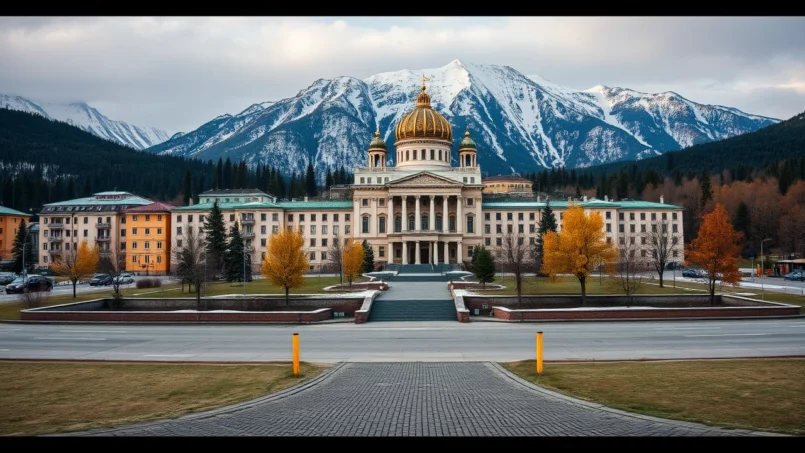
Living in Kazakhstan is increasingly appealing to expatriates, retirees, and digital nomads, drawn by the dynamism of Almaty, the modernity of Astana, and a still reasonable cost of living compared to other major world cities. But behind the image of futuristic skyscrapers and snow-capped mountains lies a highly administrative reality: visas, registration, residence permits, opening a bank account, enrolling children in school, healthcare, taxes, importing personal belongings, driver’s licenses… Nothing can be improvised.
This guide provides a structured overview of key procedures for a long-term settlement in Kazakhstan. It relies on local data and sources to anticipate the main steps and facilitate your project.
Understanding the general framework before moving
Before even discussing forms and waiting lines, it is useful to understand the country’s political, economic, and practical context.
Kazakhstan is officially a secular state. Its political capital is Astana (often still called Nur-Sultan), while Almaty is its largest city and main economic and cultural center. Located in Asia, the country is largely Russian-speaking. Although Kazakh is the official language, Russian remains the most common working language, especially in administration, which can make procedures complex for people who do not speak either of these two languages.
The local currency is the tenge (KZT, symbol ₸). The average net salary is around 290,000 KZT nationally and about 350,000 KZT in Almaty, while the cost of living for a single expatriate can be around $1,500 per month in that city. In other words, a foreigner who wants to live comfortably must often aim for an income significantly higher than local salaries.
The political system is described as having low democracy with limited freedom of expression. The security environment presents a high risk according to some international rankings (e.g., a safety index of 29 for Almaty, high risk of terrorism and scams, medium risks for transport, theft, and assaults). These elements must be considered in decisions regarding neighborhood choice, travel, and insurance.
In terms of climate, the contrast is stark: very cold winters, hot summers, and significant seismic activity, particularly in Almaty. A wardrobe suitable for −20 °C as well as 30 °C, and good home insurance, are not optional.
In this context, administrative preparation becomes a tool for both safety and comfort.
Visas, registration, and residence permits
Settling in Kazakhstan almost always starts with a question: under what legal status will I stay in the country, and for how long?
The visa game and visa-free stays
Many foreigners benefit from a visa-free regime for short stays. Citizens of several dozens of countries can enter Kazakhstan for business or tourism for a limited period (e.g., 30 days per entry, up to 90 days within a rolling 180-day period). Specific regimes exist for certain nationalities, such as India or Iran, with shorter but renewable visa-free stays.
Alongside this, the country issues several visa categories, some of which are key for a settlement project:
| Visa Type | Target Audience | Typical Duration | Main Specificities |
|---|---|---|---|
| C3 (Work) | Foreign employees | Variable, linked to work permit | Requires a local employer and a prior work permit |
| C5 (Business Immigrant) | Business founders or buyers | Few months to one year depending on project | Obligation to create a company and deposit capital within 2 months |
| A5 (Investor) | Major investors | Up to 5 years | Extendable within the country, facilitated access to permits |
| C2 (Family Reunification) | Spouse, children, dependent parents | Multi-year | Marriage of at least 3 years for spouses |
| B8 (for obtaining a residence permit) | Candidates for a residence permit | Up to 90 days | Work prohibited, serves as a stepping stone to permanent residence |
| B12 (Tourist) | Short-term visitors | Variable | For tourism and scouting, not for work |
A little-known point: it is possible, under certain circumstances, to change visa categories from within Kazakhstan, without having to leave the country, which avoids a costly round trip to the city of origin. However, most procedures require that a local “host” (employer, family, university, etc.) officially notifies the migration police of the foreigner’s arrival within three working days, via dedicated online portals.
The cornerstone: the residence permit
A true life project in Kazakhstan sooner or later requires moving from the status of visitor or temporary worker to that of permanent resident. The heart of the system is the residence permit, obtained in two stages:
The two main documents required for permanent residents, in order of obtaining.
Initial document issued by the migration police, attesting to the right of residence.
Plastic document valid for up to ten years, but its expiration date cannot exceed that of the national passport.
The residence permit is accessible to foreigners meeting several cumulative conditions:
To apply for a visa to Kazakhstan, make sure to gather the following documents: a passport valid for at least 180 more days at the time of application, absence of unserved criminal convictions, a recent medical certificate, and proof of financial solvency (the latter is not required for some exceptions like certain overseas Kazakhs, called *kandas*). All documents issued abroad must be translated into Kazakh or Russian, and legalized or apostilled.
The standard file notably includes a foreign criminal record certificate, recent (less than 180 days old), translated and authenticated, as well as various migration forms. Since 2024, fingerprinting is mandatory for any application for a long-stay visa, residence title, or residence permit for foreigners over 16 years old.
The processing of a first residence application is done through the Ministry of Internal Affairs (Migration Service) at the declared residence address. Standard announced processing times are around 17 calendar days, with an expedited path in 7 working days. During processing, the applicant retains their permanent resident status if it was a renewal.
The state fee for the resident card represents 20% of a monthly calculation index (MCI).
And after residence: citizenship
For those planning for the truly long term, Kazakh citizenship is accessible under conditions. The general rule requires five years of uninterrupted legal permanent residence, reduced to three years for persons married to a Kazakh citizen. Exceptions exist for individuals with particular merits, certain in-demand professions, or close family ties with citizens.
Certain absences from the territory (professional assignments, studies, military service) can be counted in the residence period, provided the break does not exceed three months before return. However, years spent in detention or under a simple temporary status are not counted.
It should be kept in mind that citizenship applications are addressed to the president via the Interior services, which translates into a lengthy and very formalized procedure.
Working, starting a business, and managing taxes
Settling in Kazakhstan implies quickly clarifying one’s professional and tax status, at the risk of being in violation or over-taxed.
Work permits, exemptions, and self-employment
For most nationalities, working for a Kazakh company requires a work permit. It is generally up to the local employer to file the application, justifying the need for a foreign skill within a quota system. Processing can take 4 to 8 weeks. “Local content” obligations also impose a minimum percentage of Kazakh employees, which limits the volume of expatriates.
Certain categories are exempt from the classic permit: heads of branches of foreign companies, investors benefiting from specific regimes, as well as citizens of certain countries of the Eurasian Economic Union (Russia, Belarus, Armenia, Kyrgyzstan) who, by treaty, can come to work without a formal visa, although social obligations (pension, health insurance) apply.
Freelancers and entrepreneurs can work as self-employed individuals without a work permit under certain conditions, while respecting local taxation. To formalize an activity, the status of Individual Entrepreneur (IE) is the main tool to consider.
Tax statuses and regimes for the self-employed
In terms of taxation, Kazakhstan distinguishes several profiles for individuals.
For an expatriate without registered activity, the default status is that of an individual: one pays a Personal Income Tax (PIT) of 10% on salaries, and must file an annual declaration (form 270.00) if receiving income not withheld at source.
As soon as one hires employees or turnover exceeds a certain threshold (360 times the MCI), registration as an Individual Entrepreneur becomes mandatory. Registration is quick (one business day) and done online, notably via the e-Salyq Business tax app or administrative portals.
Several regimes are then available, with income and employee limits:
| Regime | Target Audience | Tax Specificities |
|---|---|---|
| General | Any activity, without strict limits | Full accounting, PIT at classic rate, possible VAT, mandatory social contributions |
| Patent Regime | IE without employees, limited turnover | Flat fee payment (patent) covering PIT and charges, no detailed accounting |
| Simplified Regime | Small structures with turnover and employee caps | Single tax (PIT + social tax) of 3% on semi-annual turnover, declarations 2 times a year |
| Regime with flat-rate deduction (until 2026) | Various activities, limited turnover | 30% deduction from receipts without proof, PIT on the balance |
| Regime via e-Salyq mobile app (until 2026) | Micro-entrepreneurs without employees | Reduced PIT to 1%, receipt issuance in the app, automated calculation |
| Retail tax Regime (until 2026) | Retail trade | PIT at 4 to 8% rate depending on clientele, quarterly declaration |
Regardless of the regime, the Individual Entrepreneur must contribute to several social components (mandatory pension at 10%, employer contribution of 1.5%, social insurance at 3.5%, health insurance at 5% of a reference base).
When do you become a Kazakh tax resident?
Beyond immigration, the key question is that of tax residence. An individual is considered a tax resident of Kazakhstan as soon as they spend 183 days or more in the country within a rolling 12-month period, or when their “center of vital interests” is located there (spouse and children on site, primary residence, citizenship or residence title).
Tax residents are taxed on their worldwide income, while non-residents are taxed only on their Kazakhstan-source income. The standard tax rate on salaries is 10% for everyone. For other income (dividends, interest, capital gains), progressive rules and thresholds apply, with rates reaching up to 15% on the highest bracket.
Kazakhstan has signed numerous double taxation avoidance agreements. An expatriate already taxed in their country of origin may, under conditions (including a foreign tax residence certificate), credit the tax already paid abroad against their tax due in Kazakhstan.
Declarations and deadlines
The tax calendar is based on a classic calendar year. For employees, the employer withholds tax at source and remits it to the tax authorities before the 25th of the following month, with quarterly declarations. Non-residents who receive local income without withholding (fees, rents, etc.) must file a declaration (form 240.00) before March 31 and pay the tax before April 10.
Residents with income not withheld at source must file an income and assets form (270.00) before September 15, then pay before the 25th. A single asset declaration system has also been established for certain profiles, coupled with strict transparency obligations on foreign assets.
Delays or omissions are penalized by late payment interest (1.25 times the base rate per day) and fines, especially in case of concealment of assets abroad.
Opening a bank account and organizing finances
Living on site without a local bank account is theoretically possible, thanks to international cards, but very impractical for daily life, especially for paying rent, receiving a salary, or settling bills.
The role of the IIN and new constraints
The central element of any financial procedure is the Individual Identification Number (IIN), a 12-digit number used for taxation, banks, and insurance alike. For a foreigner, obtaining this IIN involves:
– Temporary registration with the migration police;
– Registration with the tax authorities;
– Submitting a file at a Public Service Center.
The standard processing time is about three business days, after which a registration certificate is issued. Since February 2024, it is no longer possible to delegate this request by proxy: the person concerned must appear in person.
Documents to open an account
Once the IIN is obtained, most banks require for an individual account:
– Valid passport, with certified translation into Russian or Kazakh;
– Proof of right to stay (visa, registration, residence permit, entry stamp);
– Temporary registration certificate for foreigners;
– Local phone number;
– Sometimes, proof of address or employment contract.
Banks practice extensive compliance checks, especially since 2022 and the increase in financial flows related to regional sanctions. They may refuse to open an account for a non-resident without clear economic activity in the country, particularly if they have neither a company nor a local contract.
Foreign companies must provide complete documentation, including articles of association, trade register extract, official designation of the signatory, tax certificates, and proof of actual activity in Kazakhstan (lease, local contracts). Documents from outside the CIS require an apostille or consular legalization. Account opening times vary from two weeks to a month.
Costs and banking services
Local banks offer a full range of services: multi-currency accounts, payment cards (Mastercard and Visa in over 95% of transactions), efficient online banking, international transfers, deposits, investment products.
As an indication, typical account opening and management fees are generally in these ranges:
| Service Type | Common Cost Range |
|---|---|
| Business account opening | 10,000–20,000 KZT |
| Monthly business account fee | 5,000–15,000 KZT |
| Interbank transfer fee | 0.1–0.2% of the amount |
| Currency exchange commission | 0.5–1% of the converted amount |
| Individual account | often free with minimum balance, otherwise initial deposit of 100–500 USD |
| Monthly individual account fee | approx. 5–50 USD depending on bank and options |
The deposit guarantee system covers accounts up to 10 million KZT per depositor, individuals and businesses alike, which strengthens the system’s security.
Players like Kaspi.kz, the dominant bank and super-app, offer advanced features (payments, credit, savings, marketplace). Foreigners, however, must go to a branch to activate some services and sign electronic consents, especially without a residence permit.
For international transfers and multi-currency management, platforms like Wise can usefully complement a local account, notably to limit exchange fees and delays.
Finding housing: rental contracts, deposits, and pitfalls to avoid
On the ground, the housing issue is often the first urgent matter. In Kazakhstan, the offering ranges from basic Soviet-era apartments to luxury residences.
Types of housing and rental market
Almaty and Astana concentrate most of the expatriate market. You can find:
– Apartments from the Soviet era, cheap but poorly insulated;
– New residences, secure, sometimes with concierge, gym, underground parking;
– Penthouses and high-end apartments in gated complexes;
– Individual houses on the outskirts, often for families.
Housing can be fully furnished, semi-furnished (equipped kitchen, some furniture) or completely empty. In the latter case, a significant furnishing budget should be planned, as well as time to install appliances and furniture.
In Almaty, observed average rents are for example:
| Property Type | Location | Typical Monthly Rent |
|---|---|---|
| 1 bedroom | City center | 300,000–450,000 KZT |
| 1 bedroom | Outskirts | 200,000–300,000 KZT |
| 3 bedrooms (family) | City center | 450,000–800,000 KZT |
| 3 bedrooms | Outside center | 300,000–500,000 KZT |
The market is tight in some sought-after neighborhoods, like Samal, Dostyk, or Bostandyk in Almaty, or Highvill, Khan Shatyr, and EXPO City in Astana. The September-October period is particularly competitive, between students returning and many expatriates arriving.
Price per square foot can exceed 80,000 KZT in the hyper-center of Almaty.
Rental procedure and required documents
To rent, the key document remains the passport. Some landlords ask for a work visa or a valid residence permit, especially for long-term contracts. An employment certificate or a letter from the employer can facilitate negotiation, without always being essential.
The usual steps are:
The search is mainly conducted via online portals (Krisha.kz, Olx.kz, Yandex Real Estate) or Facebook/Telegram groups. It is common to use a bilingual real estate agent, whose commission (equivalent to one month’s rent) is generally paid by the tenant. The rental is formalized by a written lease specifying the duration (usually 6 to 12 months), the rent, conditions for increase and termination. A security deposit of one to two months’ rent is also required.
The deposit is supposed to be refundable at the end of the lease, but many expatriates complain about unfair deductions (cleaning, minor repairs) or delays in repayment. The best protection is to draw up a detailed inventory upon entry, with photos and videos, and to specify in the contract the exact conditions for return.
Short-term leases (3 to 6 months) are possible, but rents are often higher. It is sometimes possible to negotiate an early termination clause with a 30-day notice or a moderate penalty, to be discussed before signing.
Utilities, services, and registration
Utilities (water, electricity, heating, gas) are in principle the tenant’s responsibility, except for rare “all-inclusive” leases aimed at foreigners. Electricity is generally reliable in the city, but voltage fluctuations can occur in old buildings, hence the interest in buying a stabilizer to protect electronics.
Although treated, tap water is often considered unpleasant tasting due to its variable mineral content. That is why most residents prefer using water bottles or filtration systems.
Waste collection is regular, and a start of selective sorting is being implemented, notably in Almaty and Astana, with different colored bins for recyclables and household waste. Private companies like EcoTaxi or KazRecycleService also offer specialized collection.
Finally, once settled, one must think about registering the address with the migration authorities, within very short deadlines (sometimes five days). This registration can be a condition for obtaining an IIN, opening a bank account, and even some health or education procedures.
Healthcare system, insurance, and obligations for foreigners
Healthcare is an essential pillar of an expatriation project, especially in a country with harsh winters and uneven medical offerings between city and countryside.
Mandatory health insurance and foreigners’ rights
Since 2020, Kazakhstan operates with a mandatory social health insurance system (MSHI), managed by a Health Insurance Fund (SHIF). Funding is shared between the state, employers, self-employed individuals, and private individuals.
For foreigners, the rule is as follows: Mastery of the country’s language is essential to facilitate integration and communication.
Access conditions to the healthcare system depend on residence status. Foreign permanent residents or stateless persons benefit from the same guaranteed package of care as citizens. Temporary stayers are entitled to free care only for diseases dangerous to others. Workers from the Eurasian Economic Union contribute via their employer, like local employees. Their inactive families must pay an independent monthly contribution, equivalent to 5% of the minimum wage (e.g., 4,250 KZT per month for the reference year).
MSHI contribution rates are differentiated:
| Payer Category | Base and Rate | Indicative Amount (reference year) |
|---|---|---|
| Employer | 3% of gross salary (capped at 10 times minimum wage) | max. 25,500 KZT / month |
| Employee / Freelancer | 2% of income (similar cap) | max. 17,000 KZT / month |
| Individual Entrepreneur | 5% of 1.4 times the minimum wage | approx. 5,950 KZT / month |
| Independent payer (dependent family, etc.) | 5% of the minimum wage | 4,250 KZT / month |
To obtain or maintain “insured” status, it is not enough to pay an annual sum in one go. Each month must be individually funded. For example, paying 51,000 KZT at once will not replace 12 monthly payments of 4,250 KZT, month by month.
Membership or status can be checked online via the egov.kz portal, the Insurance Fund website (msqory.kz), a mobile app (Qoldau 24/7), or a dedicated Telegram bot. In case of coverage issues, the patient can contact the establishment’s internal service, the regional health agency, or call the number 1414.
Why private insurance is still recommended
On paper, the country shows improving indicators: massive increase in health budgets, coverage of over 80% of the population, reduction in patient out-of-pocket expenses. But in practice, the public system still suffers from waiting lists, occasional shortages, and a lack of English-speaking staff.
Authorities and observers strongly recommend that expatriates take out international private health insurance. This insurance should cover both on-site medical care, notably in private clinics in Almaty and Astana, and provide for possible medical evacuation to a better-equipped neighboring country in case of a serious health problem.
The cost of such insurance varies widely by age and options, but an indicative range is $35 to $200 per month for an adult, excluding high-end options. Insurers like Cigna, Allianz, AXA, BUPA, or William Russell are frequently present in this segment, sometimes accessible via brokers specializing in expatriates.
Medical infrastructure and precautions
The country has several hundred public hospitals and over 300 private clinics, with a strong concentration of specialized services in Almaty and Astana. Establishments like the International Medical Center in Almaty or certain national cardiology, oncology, or neurosurgery centers in Astana offer high-level care.
Outside major cities, access to specialist doctors is limited. To address this, solutions like telemedicine and itinerant medical trains have been developed to serve regions.
For new arrivals, standard advice remains valid:
– Complete vaccinations (hepatitis A, diphtheria-tetanus-polio, possibly tick-borne encephalitis depending on areas);
– Avoid drinking unfiltered tap water;
– Beware of air pollution, significant in some urban areas like Almaty;
– Bring a supply of personal medications, some treatments being hard to find.
The medical emergency number is 103, but there is no guarantee of reaching an English-speaking operator. Having on hand the contact details of an English-speaking doctor or hospital recommended by one’s insurance or the embassy is a prudent measure.
Schooling children: international schools and administrative requirements
For expatriate families, children’s schooling is decisive. Kazakhstan has developed a substantial offering of international schools, mainly in Almaty and Astana, sometimes in Atyrau.
Types of institutions and programs
There are several dozen international schools in the country, with a particularly strong concentration in Almaty. You can find:
– Institutions following British programs (Cambridge IGCSE, A‑Levels): Haileybury Almaty, Haileybury Astana, Galaxy International School, Tamos Education, Spectrum International School;
– IB (International Baccalaureate) schools, like Kazakhstan International School (KIS) in Almaty and Astana, or Haileybury Astana;
– Bilingual or trilingual schools (English/Kazakh/Russian), such as Miras International School or the International School of Almaty (ISA);
– French-speaking institutions or those offering a French curriculum, like the École Française Internationale Charles de Gaulle‑Miras.
Most employ well-qualified foreign teachers, have modern facilities, and ensure internationally recognized programs (IB, Cambridge, AP, SAT, etc.). Networks like QSI (Quality Schools International) also manage schools in Almaty and Astana.
Tuition fees and budget
Tuition fees reflect these international standards. As an illustration, for a school year:
| International School (Almaty) | Annual Range (KZT) |
|---|---|
| International School of Almaty (ISA) | ≈ 2,524,500 |
| Galaxy International School | 4,500,000 – 5,100,000 |
| Tamos Education | 4,700,000 – 6,200,000 |
| Kazakhstan International School | 4,795,823 – 12,708,930 |
| Miras International School | 6,868,771 – 13,301,048 |
| Haileybury Almaty | 6,932,618 – 15,350,797 |
In addition to these annual fees, there are sometimes:
– Registration and entrance test fees;
– Uniforms, extracurricular activities, optional trips;
– School transport services when available.
This is the monthly cost in KZT per child for a private full-time daycare or kindergarten for the youngest.
Application files and process
Admission is generally continuous, subject to availability, but with some grades sometimes full by spring for the September start. It is recommended to start the process as early as possible.
The standard procedure follows several steps:
Enrollment in an international school generally follows several key steps. It begins with an online form via the school’s website or a dedicated platform. The next step is submitting a complete file including personal documents (birth certificate, passport), academic records (report cards, diplomas, standardized tests like MAP), medical (vaccination certificate), and administrative documents (parents’ IDs, proof of residence). The student then takes entrance tests (cognitive assessments like CAT4, English and math tests) and an individual interview. The final decision is made by an admissions committee, which may offer conditional admission. Finally, enrollment is finalized by signing a contract and paying the fees.
Some schools offer sibling discounts (e.g., 10% for the second and subsequent children), or allow installment payments. In case of unpaid bills, the institution may deny the student access to classes or exams.
Importing personal effects and vehicles
When moving for good, the question is no longer a simple suitcase, but a container. And the Kazakh customs regime is particularly strict.
Personal belongings: allowances and limits
In theory, goods intended for personal, family, or domestic use – not commercial – benefit from customs duty allowances, subject to limits.
For travelers arriving from countries outside the Eurasian Economic Union, the duty-free allowance for personal luggage is, according to reference periods:
– Up to 1,000 euros in value and/or 31 kg in weight, with a reduction planned to 500 euros and 25 kg beyond a certain date;
– For international postal parcels, allowance up to 200 euros and 31 kg.
Beyond that, a tax is applied, often 15% of the value above the threshold, with a minimum of 2 euros per excess kilo. Flows between member countries of the Eurasian Union (Russia, Belarus, Armenia, Kyrgyzstan, Kazakhstan) are, however, exempt within this framework, as part of a common customs area.
For a complete move (furniture and personal effects), goods are subject to payment of customs duties, VAT, and fixed fees. These amounts are calculated on the CIF value (cost, insurance, and freight) indicated in the transport documents. The declared value must be realistic, but it does not necessarily have to match the insurance value, which is often higher.
The main cost items are:
| Cost Item | Indication |
|---|---|
| Customs processing fee | ≈ 20,000 KZT per declaration |
| Customs duties | 0 to 20% of CIF value depending on the nature of goods |
| VAT | 12% on (CIF + duties + fees) |
These amounts do not include storage fees, handling fees in customs warehouses or at the airport, nor the fees of the freight forwarder or customs broker.
Procedure and documents
Individuals benefit from a simplified procedure for their household goods, but must still rely on a local customs broker, as foreign entities are not allowed to deal directly with Kazakh customs officers.
The standard file includes:
– Valid passport and visa;
– Copy of the IIN;
– Letter from the employer confirming assignment to Kazakhstan (for salaried expatriates);
– Notarized power of attorney in favor of the local agent for customs procedures;
– Detailed packing list in English or Russian, mentioning quantity and weight of each box, with model, brand, and serial number for electronic devices;
– Transport documents (bill of lading, air waybill, etc.);
– Carrier’s invoice (to justify the freight component).
The customs clearance time for non-diplomatic shipments is generally 4 to 5 business days if the file is complete. Advanced pre-declaration is possible but not recommended, as any discrepancy with reality upon arrival requires starting all over.
Furthermore, some goods are subject to special authorizations:
– Electronic devices (computers, printers, phones, routers, drones, etc.): Authorization from the National Security Committee (NSC), with a 7 to 14-day procedure and a detailed list of each device;
– Equipment emitting or receiving radio signals (satellite antennas, GPS): authorization from the radio frequency authority;
– Devices containing freon (refrigerators, air conditioners): environmental authorization, which can take several months.
Numerous items are also prohibited for import in a move, including cash, food, alcoholic beverages, jewelry and precious metals, weapons, narcotics, extremist or pornographic literature, undocumented antiquities, or plants with soil.
Vehicles: between technical standards and taxes
Importing a personal car to Kazakhstan is possible, but often costly. The car must comply with the Euro 5 standard since 2018, and right-hand drive vehicles have been prohibited for import since 2007.
Required documents:
– Original vehicle registration document or certificate;
– Invoice or value certificate, mentioning brand, model, year, chassis number, color;
– Bill of lading;
– Power of attorney for the customs broker;
– If applicable, letter of commitment for re-export for temporary import.
Duties and taxes are calculated on the CIF value, with a possible excise tax for engines over 3 liters (100 KZT per cubic centimeter), in addition to standard customs duties, fixed fees, and VAT.
After customs clearance, the vehicle must be registered with the local traffic police based on the import declaration. Diplomatic vehicles first go through the Ministry of Foreign Affairs.
For stays limited to a few months, temporary import is sometimes preferable: one pays reduced fees (approx. 0.2% of CIF per quarter) and monthly payments proportional to the future duty debt, provided the vehicle is re-exported or the situation regularized later.
Given this level of complexity, many expatriates opt for selling their original car and buying or leasing on site, especially in a context where a robust 4×4 is often recommended to tackle Kazakh roads and winters.
Driver’s licenses and local driving
Driving in Kazakhstan requires dealing with both a traffic code close to European standards and sometimes more “creative” driving habits.
Using a foreign license and an international permit
As a tourist or newly arrived resident, one can drive with their national license accompanied by an International Driving Permit (IDP), under the Geneva (1949) and Vienna (1968) Conventions ratified by the country. This possibility roughly covers the first six months of stay, depending on the combination of status (tourist, temporary resident) and document type.
Beyond this period, or for long-term stays, it becomes necessary to convert one’s license to a Kazakh license or retake local exams. Foreign licenses that do not comply with UN convention standards are not exchangeable.
Obtaining a Kazakh license
The Kazakh plastic license is issued by the Ministry of Internal Affairs, via specialized service centers (Government for Citizens). It is valid for 10 years in principle.
Minimum age requirements are:
The minimum age to drive a light motorcycle (license A1) is 16.
For a first-time license, the procedure includes:
– Enrollment in an accredited driving school, with training duration from one to six months depending on category;
– A medical exam including consultation with a general practitioner, ophthalmologist, ENT, and psychiatrist-narcologist;
– A computerized theory exam of 40 questions to be completed in 40 minutes, with a minimum of 32 correct answers;
– A practical road test, where faults are counted in points, with failure beyond 99 points.
In case of failure, one must wait seven days before reappearing (except for exceptions justified by a change of residence or departure for a mission of over three months).
For a foreigner wishing to exchange their license, it is generally necessary to provide:
– The original foreign license and its certified translation;
– A medical certificate;
– Proof of payment of the issuance fee (1.25 MCI);
– Sometimes, retake theory or practical tests, depending on the agreement between countries.
The application can be made physically at a center or partially online via the e-government portal for a renewal. A digital license is also accessible in a government mobile app and tends to be recognized in many common situations.
Traffic rules and safety
The Kazakh code is close to European norms (Vienna Convention on road signs). One drives on the right, with typical speed limits of 60 km/h in the city, 90 km/h on roads, 110 km/h on highways, and 20 km/h in residential areas.
It is crucial to remember and apply the specific rules mentioned in the content.
– Zero tolerance for alcohol: any blood alcohol level is punishable, with penalties potentially including imprisonment or expulsion for foreigners;
– Mandatory seat belt use for all occupants;
– Appropriate child seat mandatory for children under 12, with size and position criteria;
– Prohibition of using a phone without a hands-free kit;
– Mandatory rigid helmet for two-wheeler drivers and their passengers, children under 12 prohibited on motorcycles.
If stopped by traffic police, the officer must identify themselves and justify the stop. The driver has the right to ask for the officer’s badge and, if necessary, an interpreter. In case of an accident, the rule is to secure the scene, not to move vehicles (unless danger), and call the police at 112.
Road conditions vary greatly, from modern highways to poorly lit, degraded tracks. Caution is required, especially at night and outside major cities.
Marriage, family, and civil status procedures
Couple and family projects also require their share of procedures, whether it’s marriage with a Kazakh person or recognition of a marriage celebrated abroad.
Registering a marriage in Kazakhstan
Civil marriage is registered by the public corporation “Government for Citizens” via civil registry offices (ZAGS). The minimum age is 18. Same-sex marriages, marriages between close relatives, adopters and adoptees, or with persons already married or legally incapacitated are prohibited by law.
For a first marriage with no children, you can apply online on the eGov.kz portal. This procedure requires both future spouses to be registered on the platform and have an electronic signature. The application must be submitted at least 15 days before the desired date. The marriage is usually celebrated on the 15th day (or the next business day) after acceptance of the application.
Required documents include:
– Identification documents of the future spouses;
– Application form;
– Receipt of payment of the 3,864 KZT fee.
The marriage certificate is issued in electronic format, with a paper version available upon request. In case of a name change, one must update their ID card within 30 days, as well as other documents (passport, driver’s license, etc.).
Specific provisions exist for marriages involving detainees, registered by the competent civil registry office at the place of incarceration.
Marriage with a foreigner and international recognition
A foreigner can marry a Kazakh citizen on site, respecting general procedures, but must often present a certificate of matrimonial capacity or single status issued by their country of origin. These documents must be translated and authenticated (apostille or consular legalization), unless a bilateral agreement states otherwise.
A marriage celebrated abroad according to local laws is recognized in Kazakhstan, provided it does not contravene Kazakh public order. For example, de facto polygamy or same-sex marriages do not produce the same legal effects in the country.
For the use of Kazakh certificates abroad (marriage, birth, criminal record, diplomas), an apostille or consular legalization is necessary depending on the destination country. The apostille, issued by the Government for Citizens corporation, applies to member states of the Hague Convention, while two-step legalization (Ministry of Foreign Affairs, foreign embassy) targets other countries.
The cost of these formalities is indexed to the MCI (0.5 MCI for an apostille or legalization on the Kazakh side), plus the possible fees of foreign consulates. Typical processing times are 3 to 5 business days for the Kazakh part, and 5 to 15 days for the consular part.
Conclusion: anticipate, document, seek support
Administrative procedures for living in Kazakhstan are numerous, intertwined, and largely dependent on two factors: mastery of Russian or Kazakh, and the ability to anticipate documentary requirements (translations, apostilles, criminal record certificates, proof of solvency, etc.).
Nevertheless, some principles emerge:
For a successful expatriation to Kazakhstan, it is crucial to never underestimate administrative timelines (visas, IIN, residence permits, customs authorizations) and to plan for significant financial buffers to cover often high costs (international schools, private health insurance, security deposits). To protect yourself, always multiply written evidence (contracts, receipts, inventories, payment confirmations) in all transactions (housing, schooling, healthcare). Prioritize using official online tools (egov.kz, msqory.kz, e‑Salyq, banking apps) to simplify procedures, despite the language barrier. Finally, for sensitive files (long-term immigration, import of goods, business creation), use local professionals (lawyers, tax advisors, brokers, relocation agencies).
In a country where the state is investing heavily in modernizing its services, but where practice remains very formalistic, successful settlement depends as much on the quality of human relationships one builds as on the rigor with which one manages paperwork. Anticipating these administrative procedures means giving oneself the means to fully enjoy life in Kazakhstan, from its extreme landscapes to its vibrant urban scenes, while minimizing unpleasant surprises.
Disclaimer: The information provided on this website is for informational purposes only and does not constitute financial, legal, or professional advice. We encourage you to consult qualified experts before making any investment, real estate, or expatriation decisions. Although we strive to maintain up-to-date and accurate information, we do not guarantee the completeness, accuracy, or timeliness of the proposed content. As investment and expatriation involve risks, we disclaim any liability for potential losses or damages arising from the use of this site. Your use of this site confirms your acceptance of these terms and your understanding of the associated risks.

Cyril Jarnias is an independent expert in international wealth management with over 20 years of experience. As an expatriate himself, he is dedicated to helping individuals and business leaders build, protect, and pass on their wealth with complete peace of mind.
On his website, cyriljarnias.com, he shares his expertise on international real estate, offshore company formation, and expatriation.
Thanks to his expertise, he offers sound advice to optimize his clients' wealth management. Cyril Jarnias is also recognized for his appearances in many prestigious media outlets such as BFM Business, les Français de l’étranger, Le Figaro, Les Echos, and Mieux vivre votre argent, where he shares his knowledge and know-how in wealth management.





