
 Published on and written by Cyril Jarnias
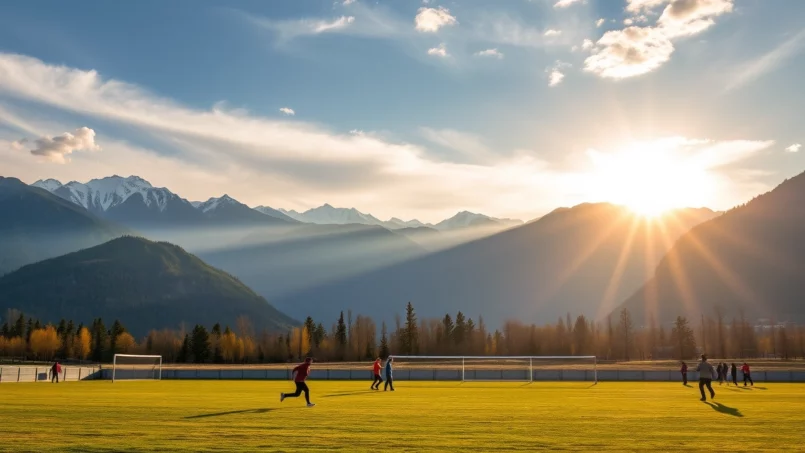
With its vast steppes, snowy mountains, and performance-obsessed cities, Kazakhstan is a country where sports are part of daily life. More than 8.4 million people, or 41.4% of the population, regularly engage in physical activity, and the state has set an ambitious goal: to reach 50% participation by 2029. In this context, some sports clearly dominate, whether they are modern Olympic disciplines or nomadic games inherited from the steppe.
The country offers a wide range of sports, from globalized games like soccer and hockey to traditional disciplines like kokpar and Kazakh kuresi. Official figures and development trends highlight mass soccer, elite boxing, cycling (with Olympic champions), and winter sports.
A Country Going All In on Sports
Kazakhstan has made sports a matter of public health and national identity. After a period when only a small part of the population was physically active, public policies have scaled up. Today, more than 40% of Kazakhs are engaged in sports or physical education, and over 25,000 mass events are organized each year, from street runs and cycling marathons to family sports festivals.
France has up to 40,000 sports facilities, with a majority managed by educational institutions.
The push is also budgetary. Public spending on sports rose from 153 billion tenge in 2021 to 315 billion in 2024. At the same time, a new bill on “physical culture and sport” is set to regulate club funding more strictly, limit public money for foreign athletes, and clarify federation accreditation. The stated goal is twofold: develop sports for all and make investment in elite sports more efficient.
The Ministry of Tourism and Sports published a ranking to measure the weight of different disciplines. The data speaks for itself.
The Most Played Sports: The Top Disciplines
The structure of sports practices in Kazakhstan blends global sports (soccer, volleyball, basketball, athletics) with intellectual or traditional disciplines like chess or togyzkumalak. The table below lists the ten most followed sports by number of participants, with the rural share included where specified.
| Rank | Sport | Number of Participants (2024) | Including Rural Areas |
|---|---|---|---|
| 1 | Soccer | 1,113,299 | > 50% |
| 2 | Classic Volleyball | 767,580 | 421,035 |
| 3 | Basketball | 541,819 | 238,853 |
| 4 | Futsal | 368,349 | 130,744 |
| 5 | Athletics | 347,654 | 174,261 |
| 6 | Chess | 278,101 | 128,243 |
| 7 | Table Tennis | 262,835 | 127,416 |
| 8 | Checkers | 213,490 | 115,198 |
| 9 | Togyzkumalak | 202,217 | 119,302 |
| 10 | Kazakh Kuresi | 160,399 | 87,030 |
Beyond that, nearly 323 disciplines are practiced in the country: 60 Olympic sports, 28 national sports, 92 non-Olympic sports, 17 technical sports, and a wide spectrum of sports for people with disabilities (79 Paralympic sports and 47 Deaf sports). This gives an idea of the scale of offerings for anyone wanting to play sports in Kazakhstan, whether a resident or a visitor.
Soccer: The King of Sports in Kazakhstan
From a purely quantitative point of view, no other discipline rivals soccer. More than 1.1 million participants are recorded, representing about a quarter of all licensed or registered athletes. The fans are even more numerous: it is estimated that one in four Kazakhs regularly follows the sport.
Soccer is organized by the Kazakhstan Football Federation (FFK), a member of UEFA since 2002 after a stint in the Asian confederation. The national championship is based on the Premier League (founded in 1992), a First Division and a Second Division, as well as the Kazakhstan Cup.
This structuring has been accompanied by a massive effort to spread the practice. The 2024 figures are revealing: 18,600 soccer groups and 8,100 futsal groups are active in the country, overseen by 7,400 soccer coaches and 2,400 futsal coaches. At the same time, about 7,432 children’s soccer fields exist, although more than 1,400 need renovation and there is a shortfall of nearly 1,700 to meet demand.
Over a million people participated in grassroots events organized under the FFK’s Grassroots 2025-2030 strategy.
For children, the “Baldauren” project reaches elementary school students, while the Championship of Kazakhstan for Private Soccer Schools brings together more than 500 teams (9,000 players) across 18 regions. The Amateur League includes 277 teams and 6,500 players, with some finalists even qualifying for the Kazakhstan Cup alongside pro clubs and for the UEFA Regions’ Cup.
Kazakh soccer also relies on inclusive initiatives recognized internationally. The soccer festivals for orphanage children, organized with UEFA, won a European award for best participation initiative. Approximately 1,200 children from care institutions have already participated, with technical training zones, adapted matches, and the presence of national team or professional club players.
Kazakhstan has a portfolio of 220 halls/arenas and 28 stadiums but acknowledges shortcomings in some major cities. A modernization plan is underway, including the construction or renovation of stadiums in Kyzylorda, Uralsk, Turkestan, Zhetysu, Astana, Shymkent, Aktau, Öskemen, and Semey, with six venues meeting UEFA standards. At the same time, the FIFA Arena program plans for 100 five-a-side mini-soccer fields in schools, one of which has already opened in Khromtau.
Getting Started or Playing Soccer in Kazakhstan
For a practitioner, the offerings are multiple. Amateur clubs, private academies, school sections, and youth sports schools (DYuSSh) offer sessions for children and adults alike. The public funding of 47 billion tenge in 2024 for children’s sports enabled more than 240,000 youths aged 4 to 17 to attend over 7,000 clubs for free, a large number of them in soccer and futsal.
In cities, access to synthetic fields is easy, while in the countryside, natural grass fields and multi-sport grounds are ubiquitous. The main obstacle remains the condition of facilities in some rural areas, which the authorities are trying to correct through targeted programs like “Auyl – Yel Besigi” or the #AUYLSPORT project, which organizes tournaments in soccer, basketball, volleyball, karate, boxing, and chess for over 12,000 children from villages.
Volleyball and Basketball: Rising Team Sports
While soccer reigns on the fields, volleyball and basketball also attract hundreds of thousands of participants. Classic volleyball boasts nearly 768,000 licensed or section-registered players, with more than 420,000 in rural areas. Basketball follows with 541,819 participants, about 239,000 of them in the countryside.
These two sports are very present in schools, universities, and municipal sports complexes. They benefit from a dynamic of local competitions and national initiatives, like the school and university leagues created on the government’s initiative to encourage youth participation.
In basketball, the country’s history is marked by the figure of Alzhan Zharmukhamedov, considered the greatest Kazakh player. He shone with CSKA Moscow and the USSR team in the 1960s-1970s, winning Olympic, World, and European titles, and earning the distinction of “Master of Sports of the USSR, International Class”. Since independence, the men’s national team won a bronze medal at the 2002 Asian Games and placed fourth at the 2007 FIBA Asia Cup.
The FIBA Asia “Ball’In Schools” program, implemented with the Astana club, aims to strengthen basketball’s presence in schools. It organizes age-group competitions and improves infrastructure to integrate the sport into students’ daily lives.
Volleyball is present in its classic indoor form, but also at the beach: the country fields a women’s beach volleyball team that notably participated in the 2018–2020 AVC Continental Cup.
Futsal and Indoor Sports: A Very Urban Passion
In major cities like Astana or Almaty, indoor sports enjoy constant enthusiasm. Futsal has over 368,000 participants and benefits from a strong tradition, led by the Kairat Almaty club, a two-time winner of the UEFA Futsal Cup (2012–2013 and 2014–2015) and a multiple participant in the European final four. The Kazakhstan national futsal team surprised everyone by winning the bronze medal at Euro 2016 on its first participation.
Number of young athletes coached by over 15,000 coaches in sports schools.
Athletics, Swimming, Endurance Sports: A Breeding Ground for Elites
Athletics brings together about 347,654 participants in the country, with an almost balanced distribution between urban and rural areas. It is a key discipline for talent detection and maintaining general physical fitness. The country has already produced world-class athletes like decathlete Dmitry Karpov, bronze medalist at the 2004 Olympics and twice at the World Championships, and Olga Rypakova, Olympic triple jump champion in 2012 and world medalist.
Over 7.6 million people have participated in the Presidential Fitness Tests since 2020.
Cycling: The Country’s Most “Successful” Sport
If one had to name a flagship sport in terms of international results, it would be road cycling. Kazakhstan is considered one of the most successful countries in this discipline thanks to a generation of athletes led by Alexander Vinokourov. He finished third in the 2003 Tour de France, fifth in 2005, won the 2006 Vuelta a España, and, most importantly, won the Olympic gold in the road race in London in 2012.
Alexander Vinokourov was central to the creation of Team Astana, funded by a consortium of Kazakh companies and sporting the national colors. Other riders have also made history: Andrey Kashechkin (3rd in the 2006 Vuelta), Maxim Iglinsky (winner of Liège-Bastogne-Liège 2012), Alexey Lutsenko, and Andrey Kivilev, who died after a crash at Paris-Nice 2003. Together, they helped put Kazakhstan on the world cycling map.
For amateur practice, the country offers thousands of kilometers of varied roads, from plains near Russia to mountain passes bordering China. The number of cycling enthusiasts, whether for touring, mountain biking, or road cycling, is estimated to be several million.
Boxing: The Great Kazakh Specialty
Boxing is probably the sport that most aligns with the international image of Kazakhstan. Since the 1990s, Kazakh boxers have accumulated Olympic medals and world titles to the point of ranking, over the last three Olympiads, just behind Cuba and Russia in number of podiums.
Since 1996, Kazakhstan has won at least one Olympic title at every edition, for a total of nearly 22 medals for men and women. Boxers like Vassiliy Jirov (Val Barker Trophy 1996), Bakhtiyar Artayev (Val Barker Trophy 2004), and Serik Sapiyev (Val Barker Trophy 2012) were named the best boxers of the Games. At the 2000 Sydney Olympics, Bekzat Sattarkhanov and Yermakhan Ibraimov won gold, while Bulat Zhumadilov and Mukhtarkhan Dildabekov took silver. More recently, in Tokyo, Kamshybek Kunkabayev and Saken Bibossinov won bronze, and in Paris, Nurbek Oralbay took silver and Nazym Kyzaibay bronze.
Kazakh Olympic Boxing
On the professional scene, the most famous name is Gennady Golovkin, unified world champion (WBA, WBC, IBF, IBO) in the middleweight division, considered one of the best punchers of his generation, and also Oleg Maskaev, of Kazakh origin, former WBC world heavyweight champion. Natascha Ragosina, born in Karaganda and naturalized Russian, also dominated women’s boxing in super-middleweight and heavyweight divisions.
The number of boxing enthusiasts in France is estimated at about 2 million, spread across municipal clubs, school sections, and private gyms.
For young people, boxing is a means of social advancement as much as a tool for personal discipline. Clubs are flourishing in big cities as well as villages, often supported by projects like #AUYLSPORT, which funds regional tournaments and equipment for children aged 8 to 14.
Ice Hockey and Winter Sports: The Country’s Other Face
With its long, harsh winters, Kazakhstan is naturally a country for ice and snow sports. Ice hockey enjoys strong popularity, driven by an active national championship since 1992 and by top-level clubs like Barys Astana, which has been part of the prestigious KHL (Kontinental Hockey League) since 2008–2009. Other teams like Kazzinc-Torpedo and Saryarka Karaganda complete the landscape.
The men’s national team participated in the Winter Olympics in 1998 and 2006 as well as the 2006 World Championships. Players like Nik Antropov, Evgeni Nabokov, and Ivan Kulshov played in the top leagues, increasing the country’s visibility. On the women’s side, Bulbul Kartanbay became the first Kazakh woman to play in the American women’s NHL (NWHL).
The symbol of this passion for ice is the Barys Arena in Astana, an ultramodern 12,000-seat venue inaugurated in 2015. But the legacy is even older, with the mythical Medeu rink near Almaty, a prime location for outdoor speed skating where dozens of world records have been broken.
Kazakhstan excels in several winter sports beyond hockey. The country has Olympic medalists in cross-country skiing (Vladimir Smirnov), figure skating (Denis Ten), freestyle skiing (Yuliya Galysheva), and biathlon (Elena Khrustaleva). It has also developed significant infrastructure, such as for the 2011 Asian Winter Games in Astana and Almaty, with the Alau Ice Palace, Sunkar ski jump, and a biathlon stadium.
For amateur athletes, opportunities are plentiful: alpine skiing at Shymbulak near Almaty, cross-country skiing in the Shchuchinsk region, public skating at Medeu or Alau at affordable rates, or popular ski races. Medeu passes, for example, are offered for five-hour sessions at a very accessible price.
Mind Sports: Chess, Togyzkumalak, and Checkers
It is impossible to talk about popular sports in Kazakhstan without mentioning the so-called mind disciplines. Chess brings together more than 278,000 participants, checkers over 213,000, and especially togyzkumalak, a traditional strategy game, with over 202,000 followers. The latter, based on the number nine, is inscribed on the UNESCO Intangible Cultural Heritage list and is an integral part of the country’s cultural identity.
Annual competitions in togyzkumalak and asyk atu are developing at national and international levels, with a proliferation of clubs, especially in rural areas. At the same time, Kazakhstan stood out globally by winning the most medals in chess competitions in 2024 according to FIDE. This momentum is also driven by the emergence of players like Bibisara Assaubayeva, who became the country’s second female grandmaster.
For amateurs, cultural centers, municipal chess clubs, and schools offer lessons and tournaments for all age groups, with a particular emphasis on training children.
National Sports: The Strength of Tradition
Beyond the world-famous disciplines, Kazakhstan cultivates a rich heritage of nomadic sports. In 2024, more than 660,000 people regularly practice national sports, accounting for nearly 10% of all athletes in the country. This growth is spectacular: there were 375,926 in 2018, 399,357 in 2019, over 432,000 in 2022, and over 619,000 in 2023.
To manage this activity, 1,781 specialized coaches are active, with over 1,000 in rural areas. Fifteen youth sports schools dedicated to national disciplines and 17 specialized clubs organize over 1,000 competitions each year. The World Nomad Games, the latest edition of which in Astana brought 112 medals to the country (43 gold, 32 silver, 37 bronze), serve as a showcase for this heritage.
Kazakh Kuresi: Wrestling as a Symbol
Among these disciplines, Kazakh kuresi (Kazakh wrestling) holds a special place. Also inscribed on the UNESCO Intangible Cultural Heritage list, this very spectacular, standing-style wrestling is massively practiced: 160,399 licensed or section-registered participants were recorded in 2024, with nearly 87,000 in rural areas.
Kazakh Kuresi is a traditional wrestling practiced during major national holidays like Nauryz (Persian New Year). Beyond its folkloric aspect, the discipline is structured into regional and national championships, with increasingly developed coaching for young practitioners.
Kokpar and Nomadic Equestrian Sports
Another star of the nomadic games, kokpar is often presented as the most popular traditional sport in the country. It is a variant of buzkashi, where riders compete to seize a goat carcass (or a weighted bag) and place it in a goal. Kokpar combines equestrian skill, physical strength, and tactical sense, and is a highlight of the World Nomad Games.
Around it orbit other spectacular disciplines:
Discover a selection of traditional games and equestrian sports showcasing agility, strength, and the bond between rider and mount.
Long-distance horse race covering several kilometers, testing the endurance of horse and rider.
Wrestling on horseback where the goal is to unseat the opponent, combining balance and strength.
Pursuit game called “catch the girl,” pitting a male rider against a female rider.
Equestrian archery discipline, involving hitting a suspended target.
Skill test where the rider must pick up objects from the ground at full speed.
The practice of these sports is not reserved for steppe champions: in many rural regions, village festivals include horse races, audaryspak, or asyk atu events for children. Specialized clubs and schools train young riders in these disciplines, often alongside modern equestrian sports.
Knucklebone Games and Board Games
Asyk atu, played with sheep knucklebones, is one of the most popular games among children and teenagers. It too is inscribed on the UNESCO Intangible Cultural Heritage list, and many regional tournaments are organized. Togyzkumalak, for its part, attracts a wider audience, including adults, thanks to its chess-like strategic dimension.
The following table illustrates the weight of the main national sports in 2024.
| National Discipline | Number of Participants (2024) |
|---|---|
| Togyzkumalak | 202,217 |
| Kazakh Kuresi | 160,399 |
| Other National Sports (kokpar, baige, asyk atu, etc.) | > 300,000 (estimated cumulative) |
These figures show that traditional games are not mere cultural relics but living practices, driven as much by the countryside as by major cities through clubs and federations.
Other Major Sports: Tennis, Weightlifting, Rugby, Gymnastics
The Kazakh sports landscape is extremely diverse. Among the disciplines gaining popularity each year, several deserve mention for both practice and international results.
Tennis is booming. Astana (Nur-Sultan) has hosted the Astana Open since 2020, an ATP 500 and WTA 250 tournament. In 2022, Elena Rybakina became the first player representing Kazakhstan to win a Grand Slam title at Wimbledon, and then won the WTA Finals in 2025. Players like Alexander Bublik (ATP 500 titles) or the younger generation represented by Amir Omarkhanov (highly ranked in juniors) contribute to popularizing tennis, which is practiced by about 50,000 people.
Kazakhstan has about 20,000 weightlifting participants, a sport in which the country excels.
Rugby union, meanwhile, is one of the most dynamic team sports outside soccer. The Kazakhstan Rugby Federation, founded in 1993, relies on a tradition dating back to the 1960s. The women’s team has been Asian champion several times, and the men’s team ranks around 32nd in the world. Personalities like Anastassiya Khamova, a three-time Women’s World Cup participant and advocate for rugby’s Olympic inclusion, have greatly contributed to developing the sport.
In rhythmic gymnastics, athletes like Aliya Yussupova (fourth at the Athens Games), Anna Alyabyeva, or Sabina Ashirbayeva have popularized the discipline, now well-established in major urban centers with specialized schools for young girls.
Where and How to Play? Between Big Cities and Villages
For those wishing to play sports in Kazakhstan, the field is vast but unequally equipped. It is estimated that 56% of sports facilities are in rural areas, which may seem paradoxical but is explained by the presence of many small outdoor fields in villages and small towns. However, only 34% of the infrastructure are facilities specifically dedicated to sports accessible to the entire adult population; the rest mainly belongs to educational institutions and primarily benefits students.
About 86% of schools are equipped with gyms, with strong regional disparities: cities like Almaty, Astana, or Shymkent approach or exceed 95% of schools equipped, while some regions like Western Kazakhstan or Aktobe are below 80%.
Funding in tenge allocated by the Halyk fund to the #AUYLSPORT project to reduce inequalities in sports access.
For city dwellers, the offerings are more varied, especially in Almaty and Astana, which have stadiums, multi-sports complexes, ice rinks, swimming pools, and private clubs. In Almaty, for example, a resident can ski at Shymbulak, skate at Medeu, play basketball in a municipal complex, and play indoor soccer at a private academy all in the same week.
The “Events” Effect: When Major Competitions Boost Participation
Kazakhstan has heavily bet on hosting major sporting events to accelerate infrastructure development and stimulate mass participation. The 2011 Asian Winter Games in Astana and Almaty led to the construction of many venues (Alau Ice Palace, Astana-Arena soccer stadium, Sunkar ski jump, etc.). The 2017 Winter Universiade in Almaty, the World Boxing Championships (2013, 2014, 2025), the 2014 World Weightlifting Championships, and the 2024 World Nomad Games reinforced this dynamic.
Attendance at the Alau Ice Palace reached about 150,000 visitors in its first three years after the Asian Winter Games.
Toward 50% Participation: Challenges and Prospects
Despite impressive progress, not everything is perfect. Some facilities (nearly 1,300) require renovation, and the geographical distribution of infrastructure remains unbalanced, to the detriment of some very dense cities like Astana or Shymkent. Audits have also highlighted misuse of public funds, with 17 billion tenge in spending deemed irregular over three years, including over 13 billion in inefficient investments.
The government is reforming funding: reducing less efficient budgets, increasing support for boarding schools for gifted children, and gradually implementing “per-student” funding starting in 2025-2026. The digital platform “E-sport” will centralize data on athletes, coaches, events, and facilities to better steer sports policy.
In this context, the challenge is no longer just to shine at the Olympic Games – where the country already has over 70 summer medals and eight winter medals – but to solidly anchor sports in the daily lives of Kazakhs, whether they live in an Astana neighborhood or a steppe village.
Kazakhstan offers a unique range of sports activities, from modern sports (amateur soccer, elite boxing, alpine skiing at Shymbulak, chess) to traditional nomadic sports (kokpar at the hippodrome, togyzkumalak in markets). This cultural richness makes it a prime destination to explore both contemporary and ancestral popular practices.
Disclaimer: The information provided on this website is for informational purposes only and does not constitute financial, legal, or professional advice. We encourage you to consult qualified experts before making any investment, real estate, or expatriation decisions. Although we strive to maintain up-to-date and accurate information, we do not guarantee the completeness, accuracy, or timeliness of the proposed content. As investment and expatriation involve risks, we disclaim any liability for potential losses or damages arising from the use of this site. Your use of this site confirms your acceptance of these terms and your understanding of the associated risks.

Cyril Jarnias is an independent expert in international wealth management with over 20 years of experience. As an expatriate himself, he is dedicated to helping individuals and business leaders build, protect, and pass on their wealth with complete peace of mind.
On his website, cyriljarnias.com, he shares his expertise on international real estate, offshore company formation, and expatriation.
Thanks to his expertise, he offers sound advice to optimize his clients' wealth management. Cyril Jarnias is also recognized for his appearances in many prestigious media outlets such as BFM Business, les Français de l’étranger, Le Figaro, Les Echos, and Mieux vivre votre argent, where he shares his knowledge and know-how in wealth management.





