
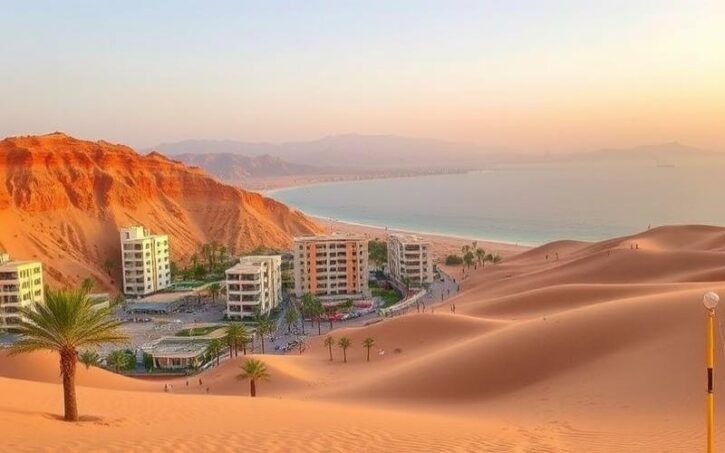
 Published on and written by Cyril Jarnias
Between desert and sea, air-conditioned skyscrapers and arid mountains, the United Arab Emirates has become a massive playground for sports enthusiasts. Here, practicing sports is not just a pastime: it is a tool for international influence, economic diversification, and increasingly, a way of life shared by both residents and visitors.
This article explores in depth the most popular sports to practice in the United Arab Emirates, drawing on existing infrastructure, activity offerings, international events, and underlying trends shaping the local sports scene.
Football, Cricket, and Team Sports: The Passion for the Game
Football remains one of the most played and followed sports in the United Arab Emirates. The country has a professional league, the UAE Pro League, often called the Arabian Gulf League, with flagship clubs like Al Ain FC, Al Wahda, and Shabab Al Ahli. It is estimated that around 50,000 people play football in the country, making it one of the dominant sports, both in clubs and informally in neighborhoods and school fields.
Approximately 30,000 people are estimated to play cricket in France, a sport driven mainly by the South Asian community.
Basketball is also growing, with a national championship (UAE National Basketball League) and an estimated player base of around 25,000 people. Hosting prestigious matchups like the NBA Abu Dhabi Games or high-level games at the Coca-Cola Arena helps attract new audiences and boost participation in clubs and schools.
Rugby sevens is very dynamic, with a major tournament (the Emirates Dubai 7s) and about 10,000 players. Other team sports like volleyball (including beach volleyball), handball, and futsal (very popular in air-conditioned indoor spaces) are also developing.
To give an overview of estimated participant numbers, available data makes it possible to draw up the following table:
| Sport | Estimated Number of Participants in the UAE |
|---|---|
| Football | 50,000 |
| Cricket | 30,000 |
| Swimming | 50,000 |
| Basketball | 25,000 |
| Tennis | 20,000 |
| Golf | 15,000 |
| Table Tennis | 15,000 |
| Rugby Sevens | 10,000 |
| Equestrian Sports | 100,000 |
| Motorsports | 200,000 |
| Camel Racing | 50,000 |
These figures illustrate the extreme diversity of the local sports landscape, where globalized sports coexist with more regionally typical disciplines.
Water Sports: A Paradise Between Gulf and Mangroves
With a coastline bathed by the calm and warm waters of the Arabian-Persian Gulf and a year-round sunny climate, the United Arab Emirates has established itself as a top-tier destination for water sports.
Jet Skiing, Wakeboarding, and Thrills
Jet skiing is among the flagship activities in Dubai and Abu Dhabi. Specialized operators like UAE Waves Club, Hydro Water Sports & Hydro Waves, and Blue Whale Jet Ski Rental offer guided outings, rides along urban skylines, or around iconic landmarks such as the Burj Al Arab, Palm Jumeirah, Atlantis The Palm, and Dubai Marina.
Around jet skiing revolve many towed sports: wakeboarding, water skiing, banana boats, high-speed “donut” tubes, and also a highly Instagrammable curiosity, the “Jet Car,” a watercraft with a supercar aesthetic. These experiences are generally accessible to different audiences: families, groups of friends, companies seeking team building, with life jackets and professional supervision provided.
Paddleboarding, Kayaking, and Mangrove Exploration
For those seeking a more contemplative approach, paddleboarding and kayaking are growing rapidly. Abu Dhabi, an archipelago of about 200 islands, is home to remarkable natural areas like the Mangrove National Park or the Eastern Mangroves, which can be explored by kayak or paddleboard at sunrise or sunset. Operators such as Captain Tony’s and Sea Hawk Water Sports and Adventures organize guided tours, often focused on discovering wildlife, the ecosystem, and ecological awareness.
Along the coast, beaches like Corniche Beach, Hudayriyat Island, and Marsana have been awarded the Blue Flag label. They offer free access, quality facilities, and are suitable for both swimming and paddle activities.
Diving, Snorkeling, and Artificial Surfing
Scuba diving and snorkeling hold a prime spot, especially off the coast of Abu Dhabi (Saadiyat reefs, trips organized by centers like Al Mahara Diving Center or Sea Hawk) and on the east coast near Fujairah, known for its richer seabeds. Introductory prices remain relatively affordable, starting at around 150 AED for an adult and 130 AED for a child, with courses that can lead to certification in a few days.
Surf Abu Dhabi, located on Hudayriyat Island, illustrates the integration of surfing into a desert environment thanks to a state-of-the-art facility. This park offers on-demand, adjustable waves that replicate different types of surf spots such as Beach Break, Cocoa Beach, Point Break, or the Kelly Wave. Sessions, bookable for groups of up to six people, offer up to 90 minutes of uninterrupted surfing in perfectly controlled conditions.
Parasailing, Cruises, and Yachting
Another iconic activity, parasailing, allows you to soar above turquoise waters, often from beaches like JBR Beach or Corniche Beach, with rates starting around 300 AED in Abu Dhabi. These experiences offer spectacular views of coastal skylines, artificial islands, and lagoons.
The market for cruises and yachting is also highly developed, with countless options for speedboat rides, private yacht charters, traditional dhow dinner cruises, or RIB (rigid inflatable boat) trips for quick and photogenic tours. Companies like Yellow Boats offer 45, 60, or 75-minute circuits, some starting from under 200 AED.
To summarize the main water activity options, they can be grouped as follows:
| Type of Activity | Examples in the United Arab Emirates | Primary Audience |
|---|---|---|
| Towed Sports | Jet skiing, wakeboarding, water skiing, tubes, Jet Car | Thrill-seekers, groups |
| Riding & Immersion | Surfing, bodyboarding, diving, snorkeling, e-foil | Athletes, beginner/advanced divers |
| Paddle & Kayak | Abu Dhabi mangroves, artificial lakes, lagoons | Families, nature lovers |
| Aerial Activities | Parasailing, flyboarding | Fans of panoramic views |
| Cruises & Yachting | Dinner cruises, Palm Jumeirah tours, Yas Marina | Couples, families, MICE & corporate |
Safety is generally well supervised: systematic life jackets, pre-departure briefings, regularly maintained equipment, and certified guides.
Golf: An El Dorado for Beginners and Experienced Players
In just a few decades, the United Arab Emirates has gone from a desert with no golf courses to a country with more than 30 courses, including several world-class references. Before 1988, there were no greens; today, the Emirates Golf Federation lists 22 clubs, and the number of regular golfers is estimated at around 20,000.
An Exceptional Selection of Courses
The first grass course in the Middle East, The Majlis at Emirates Golf Club in Dubai, opened in 1988. It still hosts the Hero Dubai Desert Classic, a historic event on the European Tour. In the same city, layouts like the Earth Course at Jumeirah Golf Estates (home of the DP World Tour Championship) and Dubai Creek Golf & Yacht Club complete a very dense offering.
Abu Dhabi features iconic courses like Yas Links, the first true links in the Middle East, and Saadiyat Beach Golf Club, the first seaside course in the Gulf designed by Gary Player. Ras Al Khaimah is home to Al Hamra Golf Club, host of the Ras Al Khaimah Championship, while Ajman and Sharjah also have their own golf facilities.
A non-exhaustive overview highlights the scale of the offering:
| Emirate / City | Iconic Courses | Key Features |
|---|---|---|
| Dubai | Emirates GC (Majlis & Faldo), Jumeirah GE (Earth & Fire), Dubai Hills, The Els Club, Trump International, Dubai Creek | Championship courses, night greens, major pro tournaments |
| Abu Dhabi | Yas Links, Saadiyat Beach GC, Abu Dhabi GC, Abu Dhabi City GC | Links facing the sea, illuminated urban courses |
| Ras Al Khaimah | Al Hamra GC, Tower Links | Seaside golf, courses within mangroves |
| Ajman | Al Zorah GC | Falcon-shaped clubhouse, mangrove environment |
| Sharjah | Sharjah Golf & Shooting Club | Lighted 9-hole course, host of international senior events |
| Al Ain | Al Ain Equestrian, Golf & Shooting Club | Desert course, includes shooting sports and equestrian |
The courses often offer complete facilities: golf academies, driving ranges, pro shops, restaurants, fitness clubs, swimming pools, and sometimes integrated hotels. Some holes have become iconic, like the par-3 shaped like a map of the Emirates at the Montgomerie in Dubai.
An Ideal Season and Growing Accessibility
The high season runs from November to March, when temperatures remain pleasant. Summer, though hotter, paradoxically offers reduced rates for golfers willing to play early in the morning or in the evening. Many courses are fully lit, allowing night play, such as The Faldo at Emirates Golf Club or several 9-hole courses in Abu Dhabi.
The average duration of a round is 4.5 to 5 hours. Motorized carts are often included, and caddies are available on certain courses. It is highly recommended to book in advance, especially during major events such as the DP World Tour Championship or the Hero Dubai Desert Classic.
For beginner players, the academies present a very educational image of the sport, with introductory programs, family packages, and individual lessons. This accessibility, combined with a sunny winter, makes the country a true golf laboratory.
Desert and Adventure Sports: Dunes, Mountains, and Open Skies
A large part of the United Arab Emirates’ territory consists of desert. Authorities and tourism operators have transformed this environment into a gigantic adventure park, combining Bedouin traditions with modern sports.
Dune Bashing, Sandboarding, and ATV Riding
Desert safaris are among the most popular activities for visitors. They often include a session of dune bashing in a 4×4 on the dunes of Lahbab (Red Dunes), Al Khatim, or around the Dubai Desert Conservation Reserve. Other options allow you to take the wheel yourself on ATVs, buggies, or dirt bikes, often with powerful engines (700cc) and equipped with safety cages.
The desert experience can include sandboarding (or sand-skiing), the equivalent of snowboarding on sand. The outing is often extended with a dinner at a Bedouin-style camp, featuring performances (tanoura dance, belly dance, fire shows), henna workshops, trying on traditional costumes, as well as tasting Arabic coffee and shisha.
Hiking, Mountain Biking, and Via Ferrata in the Mountains
To the north and east, the Hajar Mountains and the Jebel Jais massif, the country’s highest point, offer another face of the United Arab Emirates. Here you can go hiking, trail running, mountain biking, and climbing, with marked routes around Hatta, Wadi Shawka, or Jebel Jais. A dedicated center, the Hatta Mountain Bike Trail Centre, offers varying difficulty levels for cyclists.
On the cliffs of Jebel Jais, a via ferrata allows you to combine aerial hiking and crossing suspension bridges, all under the supervision of specialized guides. This is also where one of the longest zip lines in the world is located, capable of propelling participants at over 120 km/h above the canyons.
Skydiving, Hot Air Ballooning, and Aerial Sports
Skydiving has become a signature of Dubai. A tandem jump over Palm Jumeirah offers an unparalleled view of the artificial archipelago, the skyscrapers of Dubai Marina, and the coastline. It is one of the most sought-after extreme experiences in the country, with highly professional supervision and rigorous safety procedures.
Discover unique experiences combining altitude, speed, and breathtaking landscapes in the United Arab Emirates.
Admire the sunrise over the desert during a peaceful hot air balloon flight.
Soar by paraglider over spectacular mountain areas, such as in Ras Al Khaimah.
Experience combined thrills, like the Formula Rossa roller coaster, the fastest in the world, at Ferrari World Abu Dhabi.
The table below provides a summary of the main adventure sports available:
| Environment | Popular Activities | Key Areas |
|---|---|---|
| Desert | Dune bashing, ATV, buggy, sandboarding, safaris, camel ride, camping | Lahbab, Al Khatim, Al Marmoom, Dubai Desert Conservation Reserve |
| Mountain | Hiking, trail running, mountain biking, via ferrata, climbing, zip line | Jebel Jais, Hajar, Hatta, Wadi Shawka |
| Sky | Skydiving, paragliding, hot air ballooning | Palm Jumeirah, Dubai and Abu Dhabi deserts, Ras Al Khaimah |
These activities are offered by a multitude of operators, with equipment provided, transfers in air-conditioned vehicles, and adaptation to different skill levels.
Traditional Sports: Falconry, Camel Racing, and Dhow Racing
Beyond modern activities, the United Arab Emirates has preserved a sports heritage stemming from Bedouin and maritime life. These traditional sports, far from being stuck in folklore, benefit from strong institutional support and genuine popularity.
Falconry: Living Heritage and Identity Symbol
Falconry is one of the oldest traditions in the region, with roots that may date back two millennia. Initially, it was primarily a hunting method to capture hares or houbara bustards. Falcons were sometimes paired with Saluki hunting dogs to pursue gazelles.
Prizes at high-level falconry competitions can reach several hundred thousand dirhams.
This discipline is also valued internationally, through collaborations with UNESCO for its recognition as intangible cultural heritage. It is often presented to visitors during demonstrations, offering a guided first approach to this tradition.
Camel Racing: The “Sport of Sheikhs”
Camel racing, sometimes referred to as the “sport of sheikhs”, holds a central place in the winter sports calendar, generally between October and April. From simple entertainment at weddings or celebrations, it has become an extremely professionalized circuit, with dedicated racetracks such as Al Marmoom near Dubai, Al Wathba near Abu Dhabi, Nad Al Sheba, and Al Lisaili.
Racing camels are selected from specific lineages (Mahaliyat, Omaniyat, Sudaniyat, Muhajanat). Their diet is strict, consisting of dates, honey, alfalfa, milk, and seeds. Structured training begins at the age of two. For ethical reasons, robot jockeys have replaced child jockeys. These animals can reach top speeds of about 40 km/h and maintain 18 km/h for an hour.
Major competitions, especially at Al Marmoom, distribute cumulative prizes totaling millions of dirhams, in both cash and luxury vehicles. For spectators, it is an opportunity to discover a unique atmosphere, blending tradition, technology, and considerable financial stakes.
Horses, Endurance, and Equestrian Sports
Equestrian sports, already very present in the Bedouin imagination, have gained an international dimension. The Arabian horse, famous for its stamina and elegance, remains a central figure. In the United Arab Emirates, show jumping, dressage, endurance riding, eventing, and horse racing are practiced.
Number of stable boxes available at certain luxury equestrian clubs in the United Arab Emirates, such as the Al Habtoor Polo Club in Dubai.
The highlight of the racing calendar is the Dubai World Cup, held at Meydan Racecourse. This race meeting attracts the best horses and trainers from around the world, with total purses exceeding $30 million. Surrounding this event is a long racing carnival, the Dubai Racing Carnival, spanning several months and featuring themed race days.
Dhow Racing and Traditional Sea Sports
At sea, dhow races (dhows, these wooden vessels with one or two sails) perpetuate the memory of the fishermen and pearl divers who long shaped the coastal economy. Regattas are held between October and April, from islands like Sir Bu Nair to the coasts of Dubai, notably the famous Al Gaffal Dhow Race.
These events are accompanied by maritime festivals, historical exhibitions, and family-friendly activities, offering an immersive entry into the country’s maritime past, while giving sailors the opportunity to demonstrate their skill in handling these traditional sailboats.
Fitness, Gyms, and Wellness: A Booming Lifestyle
Beyond competitive or occasional recreational sports, the United Arab Emirates is positioning itself as a major market for fitness and wellness. In 2023, the fitness industry was worth over 1.2 billion dirhams, and the combined market for sports equipment and fitness clubs reached approximately $1.6 billion.
Explosion of Clubs, Studios, and Hybrid Formats
Industry data indicates that the vast majority of facilities have already moved away from the simple “traditional” gym model. About 76% operate as specialized studios or hybrid models, compared to only 24% for classic gyms. Key players include chains like GymNation, Fitness First Middle East, Gold’s Gym, Snap Fitness, as well as many boutique concepts: The Platform Studios, Barry’s, Crank Dubai, Reform Athletica, Fly High Fitness, and women-only spaces like FitnGlam.
Percentage of sector operators expecting short-term growth according to a study of 45 of them.
Digitalization and Home Training
The digital and virtual fitness market is also booming, estimated at over 800 million dirhams in 2025 and expected to exceed one billion dirhams by 2030. This development is driven by several factors: flexibility, reduced cost, the ability to choose a session (live or on-demand), and personalization through apps and sensors.
Group classes generate the main revenue, but individual online sessions are experiencing the fastest growth. Residents are massively adopting home gym solutions, with equipment from brands like SOLE Fitness, AFTON, and XTERRA, and using apps such as Nike Training Club, Peloton, or Centr for their workouts.
Dubai Fitness Challenge and Wellness Culture
The most striking example of this rise in fitness culture is undoubtedly the Dubai Fitness Challenge, an initiative launched in 2017. The principle: encourage residents to engage in at least 30 minutes of physical activity per day for 30 days, through a festive program of events, outdoor group classes, and challenges in companies and schools.
Over 13 million participations have been recorded since the event’s creation, and its success has helped establish sport as a daily practice, well beyond just enthusiasts. In parallel, public programs like Fit@Home in Abu Dhabi, as well as national campaigns promoting youth health, reinforce this underlying trend.
Esports and Gaming: A New Sporting Frontier
Alongside physical disciplines, the United Arab Emirates is increasingly betting on esports and video games as a full-fledged economic and sporting sector. Dubai and Abu Dhabi aim to become regional hubs for this industry.
Festivals, Conventions, and Competitions
In Dubai, the Dubai Esports & Games Festival brings together several flagship events each year, including GameExpo, a public convention with competitive gaming zones, immersive installations, and tournaments like the PlayBeyond Tournament, as well as the GameExpo Summit, a B2B gathering for publishers, investors, and studios. The 2025 edition hosted over 70 international speakers and thousands of visitors in the halls of the Dubai World Trade Centre.
In Abu Dhabi, the EMG Esport Festival gathered thousands of players and fans at ADNEC-Marina Hall for tournaments on popular titles such as PUBG, Rocket League, EAFC, Valorant, Fortnite, Tekken, Street Fighter, and Mortal Kombat. The event included professional cosplay contests, meet-and-greets with influencers, and fully equipped PC/PS5 zones. A dedicated festival for female players, the GIRLGAMER Abu Dhabi Festival, also demonstrates the desire to include more women in this ecosystem.
A Structured and Supported Sector
On an institutional level, the Emirates Esports Federation, attached to the Ministry of Sports, has been admitted to the Global Esports Federation and launched an Emirates Gaming League in 2025 with a prize pool of 9 million dirhams. In parallel, the “Dubai Program for Gaming 2033” aims to create 30,000 jobs in the sector and contribute $1 billion to GDP by 2033.
65% of residents identify as ‘gamers,’ illustrating the massive engagement of the local population with video games.
Infrastructure, Governance, and Sport for All
To understand why it is so easy to play a sport in the United Arab Emirates, one must look at the massive effort made in terms of infrastructure and regulatory framework.
Laws, National Strategies, and Sports Cities
A recent federal law now governs the organization of sports and sports facilities in the country. Sport is also included in the long-term goals of Vision 2071, which considers the quality of sports practice as a key element of national prosperity. The National Sports Strategy 2031 aims in particular to increase female participation in competitions and governing bodies.
On the ground, strategic directions materialize through the construction of diverse infrastructures such as stadiums, racetracks, swimming centers, and multi-sport complexes. A concrete example is the development of integrated “sports cities,” such as Zayed Sports City in Abu Dhabi or Dubai Sports City. These areas combine competition venues, clubs, academies, residential neighborhoods, and commercial spaces, thus creating ecosystems where sport is omnipresent in daily life.
Hamdan Sports Complex, for example, in Dubai, houses two 50-meter Olympic pools with movable floors and a venue that can accommodate 15,000 spectators. The complex uses solar energy for its outdoor lighting, illustrating a desire to integrate environmental concerns into sports policy.
The Role of Women and the Development of Female Sports
The authorities have also made women’s sports a priority. Institutions like the Fatima Bint Mubarak Ladies Sports Academy or Sharjah Women’s Sports develop training programs, competitions, and dedicated facilities. The Sharjah Women’s Olympic Centre, opened in 2024, includes an athletics stadium, specialized halls (judo, taekwondo, fencing, shooting, etc.), a medical center, and a performance optimization service.
Over 60% of female students in the United Arab Emirates participate in a sports activity at school.
When to Come and How to Choose Your Sport in the UAE
To make the most of this incredible range of activities, it is helpful to consider the climate. Average monthly temperatures typically range from around 19 °C in January (the coolest month) to 34–35 °C in July (the hottest), with very few rainy days per year.
A summary of conditions by month helps with planning:
| Month | Average Temperature (°C) | Approximate Crowd Level | Recommended Sports |
|---|---|---|---|
| January | 19 | Low | Golf, running, desert, moderate water sports |
| February | 21 | Low to moderate | Running/cycling events, beach |
| March | 23 | Very busy | Tournaments, desert safaris, sports festivals |
| April | 27 | Very busy | Beach, water sports, start of heat |
| May | 31 | Moderate | Indoor sports, early morning/evening sea |
| June | 33 | Low | Indoor sports, indoor skiing, esports |
| July | 34–35 | Moderate | Activities in air-conditioned centers |
| August | 34 | Low | Indoor (gyms, ice rinks, theme parks) |
| September | 33 | Moderate | Gradual return to outdoor |
| October | 29 | Very busy | Ideal outdoor season, major events |
| November | 26 | Very busy | Golf, triathlon, running, DFC |
| December | 22 | Moderate | Rugby 7s, F1, comfortable outdoor sports |
Generally speaking, the period from October to April is the best season for outdoor activities. From May to September, most sports move indoors, benefiting from an exceptional range of air-conditioned facilities: ice rinks, indoor ski slopes, multi-purpose halls, trampoline parks, climbing walls, etc.
—
The United Arab Emirates offers a rare combination of ultra-modern infrastructure, strong political support, and an ideal winter climate for practicing a wide range of sports, from the most traditional (like falconry) to the most innovative (esports, artificial waves). Almost all sports activities, from the desert to air-conditioned arenas, are possible here.
Disclaimer: The information provided on this website is for informational purposes only and does not constitute financial, legal, or professional advice. We encourage you to consult qualified experts before making any investment, real estate, or expatriation decisions. Although we strive to maintain up-to-date and accurate information, we do not guarantee the completeness, accuracy, or timeliness of the proposed content. As investment and expatriation involve risks, we disclaim any liability for potential losses or damages arising from the use of this site. Your use of this site confirms your acceptance of these terms and your understanding of the associated risks.

Cyril Jarnias is an independent expert in international wealth management with over 20 years of experience. As an expatriate himself, he is dedicated to helping individuals and business leaders build, protect, and pass on their wealth with complete peace of mind.
On his website, cyriljarnias.com, he shares his expertise on international real estate, offshore company formation, and expatriation.
Thanks to his expertise, he offers sound advice to optimize his clients' wealth management. Cyril Jarnias is also recognized for his appearances in many prestigious media outlets such as BFM Business, les Français de l’étranger, Le Figaro, Les Echos, and Mieux vivre votre argent, where he shares his knowledge and know-how in wealth management.





