
 Published on and written by Cyril Jarnias
Moving to the Turks and Caicos Islands means landing in postcard-perfect scenery… and on a genuine gourmet playground. Between the fine dining tables of Grace Bay, the beach shacks with conch and your feet in the water, the local markets, and home cooking with (heavily) imported goods, eating quickly becomes one of the major questions of an expat’s life. How can you taste real local cuisine without blowing your budget? Where can you find good fish, a conch dish worthy of the name, but also a cappuccino or pasta “just like back home”?
This guide offers a concrete overview of the local gastronomy, good addresses, and social codes for integrating into daily life in the Turks and Caicos Islands, while avoiding purely touristy establishments.
Understanding the Culinary Landscape of the Turks and Caicos Islands
The Turks and Caicos Islands readily present themselves as a Caribbean “culinary haven”. Reality largely confirms this reputation: the concentration of good restaurants, especially on Providenciales and around Grace Bay, is impressive for such a small territory. You’ll find an astonishing range, from fine French dining to food trucks in a coconut grove, beach grills, and the buffets of a vast all‑inclusive resort.
Despite the luxury image, the local cuisine of the Turks and Caicos Islands draws its roots from history and geographical constraints. The sea provides the basics like conch, reef fish, lobster, and crab. The arid lands imposed resilient crops: corn, pigeon peas, cassava, and okra. This foundation is then enriched by African, Bahamian, Jamaican, Haitian, and British influences, creating a unique culinary identity.
For an expat, discovering the local gastronomy is not limited to “trying a fancy restaurant”: it’s also about understanding this history, navigating between the cuisine of tourist beaches and that of more modest neighborhoods, and learning to juggle a very high cost of living.
The Cost of Living, a Key Parameter for Food
The first reality to grasp is economic: life is expensive, and food is even more so. Over 90% of food is imported, subject to import duties, freight charges, and the destination’s high-end positioning. The result is seen at the checkout: restaurants, supermarkets, alcoholic beverages, everything carries prices comparable to, or even higher than, those in major North American or European cities.
This is the average cost of a dinner for two at a mid-range restaurant, including starter, main course, and dessert, excluding drinks.
At the same time, supermarket shopping is notoriously expensive, particularly for fresh produce and imported alcohol. An 18-inch takeout pizza costs around $24, a box of cereal can exceed $12, a dozen eggs ranges from $4 to… $18 depending on the time, and a six-pack of imported brand beer is around $22.
For an expat, cooking at home remains the primary weapon for controlling the budget, provided you know the “smart circuit”: large supermarkets, wholesale stores, small farmers’ or fishermen’s markets, local takeaway shacks. To this, add hybrid solutions: cooking part of the week, enjoying happy hours and themed nights for the other part.
The Basics of Local Cuisine: Conch, Sea, and Corn
It’s hard to talk about gastronomy in the Turks and Caicos Islands without starting with conch, that large marine gastropod whose pink shell adorns beaches, official coats of arms, souvenir stalls… and restaurant menus. Conch (pronounced “konk”) is more than just an ingredient: it’s a cultural symbol, to the point of being widely considered a national dish.
Conch in All Its Forms
Conch offers white, firm flesh, with a mild flavor reminiscent of scallops or clams, without a strong fishy odor when fresh. But for it to be pleasant to eat, a mandatory step is required: tenderizing. Raw, the flesh is tough and rubbery; local cooks pound it, slice it thinly, parboil, or marinate it to break down the fibers.
The most common preparations can be found everywhere, from food trucks to fine dining tables:
Bahamian cuisine offers several conch specialties. Conch salad is a ceviche where the raw shellfish, finely chopped, is marinated in citrus juices with tomatoes, onions, and peppers. Conch fritters are beignets with pieces of conch, bell peppers, onions, and spices, served fried with a sauce. Cracked conch consists of tenderized conch, breaded and fried, for a result that’s crispy on the outside and tender on the inside. Finally, stewed or soup versions, like stewed conch or chowder, slowly simmer the meat with tomatoes, okra, herbs, and sometimes coconut milk.
Regulation-wise, conch is subject to a fishing season, generally open from mid‑October to mid‑July. During the closure, serious restaurants avoid offering fresh conch dishes to respect the resource, although frozen stocks may sometimes be used. As an expat, favoring places that respect these seasons is directly participating in preserving an emblem of the archipelago.
Reef Fish, Lobster, and Other Marine Treasures
Beyond conch, the sea provides almost all traditional proteins: reef fish (grouper, snapper, mahi‑mahi, bonefish, tuna), Caribbean lobster, crabs, but also lionfish, now valued in cuisine to combat its invasion of the reefs.
Fishing is strictly regulated with specific seasons: lobster is fished from August to March and Nassau grouper has a determined season; respectful restaurants remove them from their menus during the closed season. Conversely, lionfish is fished year-round, sometimes even by spearfishing, for the purpose of protecting the reefs.
Typical preparations remain simple and focused on freshness: grilled fish on the barbecue, boiled with potatoes and served for breakfast with grits, aromatic stews, blackened or jerk fish, whole grilled fish served with peas and rice and plantains.
Corn, Peas, and Cassava: The Other Pillar of the Plate
Due to a lack of large fertile lands, the islands have long relied on a few drought‑resistant crops: corn (often as hominy), pigeon peas, beans, roots like cassava, sweet potato, and later imported rice.
A mixture of corn grits and peas, served with the fish or conch of the day. Ancestor of the more modern ‘peas and rice’. It was once called ‘Penn On’, a contraction of ‘Depend On’, to designate the fish added depending on the morning’s catch.
Signature Dish: Peas and Hominy
Today, the very common “peas and rice” mixes rice, peas (pigeon peas or red beans), coconut milk, and spices. To this add:
– Johnny cake, a slightly sweet cornbread, pan-fried or baked, heir to the “journey cake” taken on trips.
– Bammy, a cassava flatbread of Jamaican inspiration.
– Corn grits served with boiled fish for breakfast.
– Side dishes borrowed from neighboring cuisines: mac and cheese, potato salad, fried plantains.
For sweets, tradition expresses itself in rum cakes, coconut tarts, puddings, improvised floating islands made with stale bread, or even specific treats like the Salt Cay candies.
Where to Eat Local: From Beach Shacks to Neighborhood Bistros
For an expat, the classic pitfall is to remain confined to the glass‑fronted restaurants on Grace Bay, where prices quickly climb and where the very international menu doesn’t always allow you to taste the real local cuisine. The challenge is to find a balance: enjoying excellent restaurants and postcard landscapes, while also frequenting the places where residents eat.
Conch and Beach Cuisine Institutions
Several addresses have rightly become almost essential if you want to dive into the unfiltered “TCI” vibe.
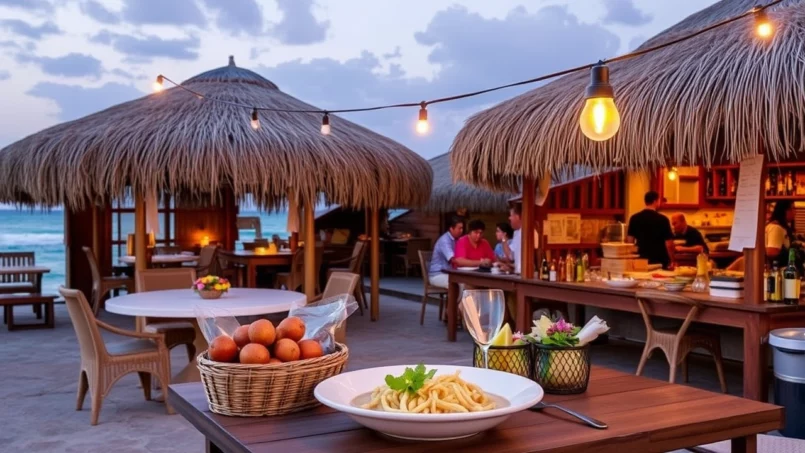
Da Conch Shack, about ten minutes from the airport, lines up its tables right on the sand. The establishment, named one of the world’s best beach restaurants by the BBC, serves all possible variations of conch: fritters, cracked conch, salads, soups, but also jerk chicken and burgers for kids or the less adventurous. On Wednesday nights, live music gives the place the feel of a small village party.
Located in the Five Cays neighborhood, Bugaloo’s Conch Crawl is a unique beach restaurant where tables are placed directly in the sand, sometimes in a few inches of water at low tide. They serve up to eight different conch preparations, as well as other seafood and typical beach bar cuisine. The decor is enhanced by recycled boat hulls used as tables. At low tide, the spot is ideal for families, as kids can explore the residual tidal pools and surrounding sandbanks.
Right next door, Omar’s Beach Hut offers a simpler, more affordable version of this beach cuisine: conch, jerk chicken, burgers, wraps, fish tacos, served in a relaxed atmosphere appreciated by locals and visitors alike.
In a similar vein, Somewhere Café and Lounge is located directly on the beach facing Bight Reef, one of the best snorkeling spots. The food is more Tex-Mex (tacos, burritos, nachos), but you’re still feet in the sand, with the bonus of live music or DJs on some nights. For an expat, it’s a good compromise between dreamy scenery and still reasonable prices in the “waterfront” category.
Family Restaurants and Neighborhood Bistros
Heading a bit inland from the waterfront, you’ll find a whole network of more accessible restaurants frequented by residents, where you can feel more of the soul of the country and its immigrant communities.
A selection of authentic restaurants offering Caribbean specialties and fresh seafood.
Plates piled with oxtail stew, chicken curry, peas and rice.
Specialties in fried conch, lobster bites, and fresh fish.
Fried snapper served with plantains, in a simple, local atmosphere.
Sweet T’s, another popular institution, built its reputation on its $2 chicken and fries. The decor isn’t glamorous, but for an expat who wants a hot meal without wrecking their budget, this kind of address makes a daily difference.
Near the airport, Delicious Dishes offers homemade food for takeout or dine-in. Yummies Drive Thru plays the “cheap and quick” card. Saved By Grace, a Haitian restaurant, lets you discover another facet of Creole cuisine very present in local society (pork griot, sticky rice, weighed plantains).
On the quieter islands of North Caicos and Middle Caicos, a few small spots serve even more traditional cuisine, far from tourist influences: Miss B’s Bayside Café, Aquatic Restaurant & Bar, My Dee’s. You’ll often find conch soup, grilled fish, aromatic rice, in a simple, sometimes rudimentary, but authentic setting.
Markets, the Lifeblood of Gourmet Life
To understand a cuisine, nothing beats a market visit. In the Turks and Caicos Islands, several places allow you to see up close what really goes into the plates of locals.
Among the most useful for an expatriate:
| Place | What You’ll Find | Culinary Interest for an Expat |
|---|---|---|
| West Road Market (Grand Turk) | Small stalls, sea view, crafts | Discover a neighborhood market, start of the gourmet circuit |
| Nearby Fish Market | Fish of the day directly from fishermen | Buy ultra-fresh fish or observe sales |
| Provo Fish Plant (Five Cays) | Processed fish and seafood | Regular source of seafood products |
| Grace Bay Farmers Market | Fresh produce, street food stalls | Mix of local cuisine and tourist options |
| Hydroponic Farm (South Dock) | Tomatoes, salads, cucumbers, herbs | Obtain quality local vegetables at a fair price |
Alongside food markets, craft markets like the TCI Cultural Craft Market or Alverna’s Craft Market offer a glimpse of products made from salt or conch, woven baskets, local hot sauces, which are as many entry points into the culinary culture.
Fine Dining and Island Gastronomy
In the Turks and Caicos Islands, fine dining doesn’t necessarily mean white tablecloths and ties, but rather open-air terraces, views of the turquoise lagoon, and polished service. Most establishments stick to a “casual chic” dress code: no swimsuits or tank tops, but no need for suits or evening heels either.
Iconic Fine Dining Restaurants
Among the most sought-after addresses, some consistently come up in recommendations:
Discover a selection of the archipelago’s best tables, combining local products, culinary creativity, and exceptional settings.
A chic oceanfront experience with a renowned raw bar (tartares, ceviches, oysters), artistic presentations, and excellent lobster preparations in season. Offers a kids’ menu.
At the Grace Bay Club, reinterprets classic French cuisine (steak au poivre, bouillabaisse) with local products, in a romantic garden setting.
Often cited among the island’s best restaurants, set amidst a coconut grove. Chef Stuart Gary’s signature cuisine, blending local ingredients and global inspirations.
At Turtle Cove Marina, offers a varied menu of Caribbean and international grills, its famous conch fritters, and a seasonal menu of local lobster.
Perched above Turtle Cove Marina, offers a magnificent sunset view and refined cuisine (beef tenderloin, seared tuna, homemade focaccia bread).
Steakhouse at the Seven Stars Resort, offers variations of duck, lamb, mahi-mahi, and beef, as well as five-course tasting menus with wine pairings.
These restaurants naturally charge accordingly. For an expat, they often become special occasion spots: celebrations, visits from loved ones, memorable dinners. It’s better to book, sometimes weeks in advance during high season, especially for Coco Bistro, where tables are in high demand.
Resort Restaurants: A City Within a City
The large all‑inclusive resort Beaches Turks and Caicos is itself a sort of “gastronomic city” with over twenty restaurants: pizzerias, French bistros, sushi bars, Tex-Mex, trattorias, beach grills, Indian, Caribbean, Mediterranean cuisines. For an expat staying there upon arrival, this diversity can give the illusion of having “tasted everything.”
The establishment offers good options for specific diets (vegetarian, vegan, allergies) and includes gratuities. However, its setting is very controlled and does not reflect the daily local culinary experience, limiting discovery of authentic street food.
Nevertheless, knowing about these large structures is useful, if only to invite visiting friends or family, or for occasional events, while understanding that you remain in a very filtered version of local gastronomy.
Grocery Shopping: Supermarkets, Wholesale, and Survival Tips
The first visit to the supermarket is often a shock for newcomers. The aisles are well-stocked, but the price tags instantly remind you that the archipelago is dependent on imports.
Overview of Main Stores
On Providenciales, the backbone of the food supply rests on a handful of major players and small specialty stores.
| Type of Store | Example | Main Advantage |
|---|---|---|
| General Supermarket | Graceway IGA (Leeward Hwy) | Wide selection, extended hours (7am–10pm) |
| Neighborhood Supermarket | Graceway Gourmet (Grace Bay) | Ready-to-eat, salad bar, proximity to tourist areas |
| Wholesale / Discount Store | Sunny Foods, Quality Supermarket | Lower prices on dry goods, bulk buying |
| Neighborhood Groceries | Island Pride, small convenience stores | Quick stops, some fresh produce, often cheaper on certain items |
| Farmers Markets | Grace Bay Farmers Market, Hydroponic Farm | More local products, freshness, direct contact |
Prices can vary enormously from one store to another for the same product. Buying some items at IGA, others in bulk at Sunny Foods or Quality, and supplementing at the farmers market helps somewhat smooth out the bill.
Some Price Benchmarks
To get a very concrete idea of the food budget, some examples of prices (in US dollars) noted in the Turks and Caicos Islands are telling:
| Product | Approximate Price |
|---|---|
| Kellogg’s Corn Flakes (340 g) | $12.50 |
| Granola bars (box of 6) | $8.50 |
| Snickers bar (approx. 60 g) | $2.40 |
| Whole raw chicken | $12 |
| Pineapple | $6.40 |
| Cantaloupe melon | $6.30 |
| Takeout pizza (18”) | $24 |
| Milk (1 L) | $4.25–$5.58 |
| White bread (1 loaf) | $3.55–$6.75 |
| Eggs (12 large) | $4–$18 |
| Local cheese (approx. 450 g) | $12 |
| Boneless chicken breast (450 g) | Up to $14 |
| Six-pack of local Turk’s Head beer | $18 |
| Six-pack of imported beer | $22 |
| Six cans of Coca‑Cola | $6 |
| Mid-range bottle of wine | $20 |
These amounts change over time, but the order of magnitude remains telling: the typical “Western” basket is expensive. On the other hand, leveraging more local products or generic brands, buying in bulk, and cooking reduces the cost per meal.
Expat Strategies for Home Cooking
For an expat, a few strategies quickly become essential:
For more sustainable and authentic cooking, it is recommended to cook a larger proportion of locally available and seasonal products. This includes fish bought at the market, conch when its fishing is allowed, vegetables from the local hydroponic farm, and regional herbs. Conversely, the use of imported meats, like beef or pork, should be more sparing and reserved for specific occasions.
Choosing accommodation with a real kitchen, even a villa with a full kitchen, mechanically reduces dependence on restaurants. Many hotels and residences offer suites with kitchenettes, and rental villas are often very well equipped.
It is permitted to bring dry, packaged goods (like pasta, special rice, cereals, condiments, or children’s snacks) in your luggage, provided they are in sealed packaging. These basic reserves help reduce food expenses during the first months.
Batch cooking: prepare a large pot of fish stew, peas and rice, or soup, then freeze in portions. With a fixed cost for gas or electricity, you optimize the number of meals.
Identify the budget-friendly groceries and restaurants near you to supplement: $2 chicken at Sweet T’s, takeout boxes of Creole cuisine, street snacks.
Eating Out Without Breaking the Bank: Happy Hours, Fish Fries, and Good Addresses
The Turks and Caicos Islands have a pleasant particularity: even tourist spots retain a certain conviviality and like to organize regular events. For an expat, this turns into opportunities to eat well, discover the culture, and socialize… without necessarily aiming for the most expensive.
The Thursday Fish Fry, Weekly Rendezvous
Every Thursday evening at Bight Park on Providenciales, the Turks and Caicos Fish Fry takes place, a large culinary and musical gathering. Stalls offer grilled fish, conch salad, jerk chicken, rice and peas, lobster in season, as well as desserts, juices, and rum-based cocktails.
This weekly market offers a lively atmosphere with artisans, steel drum music, and Junkanoo parades. It’s a prime meeting place for everyone: tourists, local families, and expats. Entry is free, only consumption at the stalls is paid.
In parallel, other weekly events exist, like extended happy hours at some beach bars (Rickie’s Flamingo Café, Henry’s Conch Bar, TCI Beach Bar at Sapodilla Bay), with cocktails and beers at reduced prices, small plates of seafood or snacks.
Festivals and Gourmet Events
The archipelago’s cultural life is punctuated by several events that highlight cuisine:
The Caribbean Food & Wine Festival brings together international chefs, sommeliers, and producers for dinners, workshops, and tastings. The Conch Festival celebrates this shellfish with culinary and conch-blowing competitions. Events like ‘Taste of TCI’ offer tastings of small local plates, while cooking workshops teach you how to prepare typical island dishes.
These events sometimes have high ticket prices for the most prestigious evenings, but some aspects remain more affordable or free, particularly the associated markets and “street fairs.”
Some Restaurant Price Benchmarks
To plan outings, it’s useful to have some ballpark figures excluding taxes and service:
| Type of Meal | Typical Price Range |
|---|---|
| Fast‑food combo | $10–$20 |
| Main course at a cheap little restaurant | $15–$20 |
| Burger + fries (bar/grill) | $17 |
| Plate of local fish at a brasserie | $25 |
| Quality takeaway lunch (Cocovan) | ~$22 |
| Large pizza (Pizza Pizza) | $24 |
| Fried chicken take‑away | $11 |
| Dinner for two at a mid-range restaurant (3 courses) | $118–$120 |
| Local draft beers (pint) | Around $5 |
| Imported beer (bottle) | Around $6.50 |
| Bottled soda | $2.60–$2.70 |
| Bottled water | $2.60–$2.70 |
To these amounts, you must systematically add the 12% tourism tax, plus a 10% service charge often automatically included (mandatory for hotels and hotel restaurants). The expected tip is around 15–20% of the total, but if a 10% service charge is already applied, it’s customary to add an extra 5% in cash to reach that level.
Social Rules, Tipping, and Table Etiquette
Integrating into daily life also involves respecting a few unspoken rules, especially around the table.
Away from the beach, ‘casual chic’ attire is the norm. Swimwear, bare feet, or bare chests are not accepted; some supermarkets even refuse entry. Overly revealing clothing (bikinis, topless) is poorly perceived by residents in town.
Tipping is not a minor detail: it constitutes an essential part of the income for servers and service staff. The typical breakdown is as follows: a 12% tourism tax on the bill, a 10% service charge shared among non-management staff, and an expectation of an additional tip to reach 15–20% total. Checking for a “service charge” line on the bill helps avoid double tipping.
At all-inclusive resorts like Beaches or Sandals, gratuities are generally included and employees are not allowed to accept additional tips, with the exception of butlers, masseurs, and guides. However, outside of resorts (for a taxi, dive guide, server, or porter), it is expected to leave a tip of 10 to 20% or a few dollars per service.
Finally, an important point for the image of expats: the relationship with the environment. Residents are increasingly sensitive to the preservation of reefs and beaches. Feeding fish, touching or trampling coral, swimming with very aggressive sunscreens, leaving trash, or stacking stones are all criticized behaviors. Integrating this dimension into your “weekend culture” is part of good integration.
Local Products, Gourmet Souvenirs, and Small Brands to Know
Living on-site also allows you to better spot the local brands that animate the culinary scene, beyond the big imported labels.
Among the essentials:
Discover a selection of artisanal specialties and iconic food products made in the archipelago, perfect for bringing back a tasty souvenir.
Local blend of Caribbean rums, available in several versions. The packaged rum cake is highly appreciated as a gift.
Local brewery offering beers like Island Hopping Ale or Down‑Da‑Road IPA.
Range of hot sauces created from North Caicos peppers, with varied aromatic profiles.
Salts harvested in Salt Cay or South Caicos, sometimes sold as flavored flakes.
Coffees roasted on Providenciales by TCI Coffee Roasters (or Island Coffee Roasters).
Kombuchas with original flavors like Rose Chai or North Caicos plum.
You can find these products in specialty shops like FOTTAC (Flavors of the Turks and Caicos) at Regent Village, in some gourmet groceries, or directly from producers.
From Discovery to Anchoring: Building Your Expat Gourmet Routine
Over the months, many expats end up creating a “gourmet routine” that alternates between several registers.
A combination of the following is often found:
A resident combines strategic bulk shopping for staples with regular visits to the fish market or hydroponic farm. Their home cooking mixes recipes from their home country, like peas and rice or conch soups, with a gradual integration of local techniques and products, including baked or barbecued fish and homemade johnny cakes. They make weekly outings to a small neighborhood restaurant or cheap canteen, and occasional more festive rendezvous at a grand Grace Bay restaurant or during a food festival. Regular stops at cafes and ice cream shops like TurkBerry, Island Scoop, or Lemon2Go also mark their social time.
This routine is built by observing the habits of residents, daring to venture outside tourist zones, and accepting that the gourmet life in the Turks and Caicos Islands rests on two pillars: the very refined international, and the simple but flavorful cuisine of local communities.
Opening Up to the Cuisines of Neighboring Communities
The gastronomy of the Turks and Caicos Islands does not exist in a vacuum. A significant portion of the working population comes from Haiti, the Dominican Republic, Jamaica, the Philippines. This diversity is visible in the streets and on the plates.
The local food landscape is enriched by Haitian, Jamaican, Cuban, and Indian restaurants. These establishments often offer very good value for money and allow exploration of new flavors, especially for visitors from Europe or North America.
For an expat, frequenting these places, chatting with the owners, asking for recipe advice or where to find a specific ingredient, is also a way to broaden your social circle beyond the expat world proper.
As a Guiding Thread: Think “Seasonal” and “Local”
Finally, an important key to taming gastronomy in the Turks and Caicos Islands is to think in terms of seasonality, even for fish. Conch, lobster, grouper have their periods; tropical fruits too. Integrating these natural cycles into your buying and dining habits means gaining in quality, freshness, and contributing to more sustainable fishing.
After a few months, you might find yourself organizing your cravings around these windows: grilled lobster at the opening of the season, conch salads when it’s abundant, dishes based on lionfish to combine gourmet pleasure with an ecological gesture, soups and stews when the winds cool.
This is probably where the shift from a simple extended stay to a genuine expat life happens: the day you start planning your week around market day, the arrival of fish at the Provo Fish Plant, or the next Thursday night Fish Fry.
In the Turks and Caicos Islands, the sea, the barbecue fire, the pepper, the corn, and the rum are in constant dialogue. By learning the discreet language of these ingredients, by respecting the seasons and customs, you discover more than a cuisine: an island way of living together, between the Atlantic Ocean and the Caribbean sun.
Disclaimer: The information provided on this website is for informational purposes only and does not constitute financial, legal, or professional advice. We encourage you to consult qualified experts before making any investment, real estate, or expatriation decisions. Although we strive to maintain up-to-date and accurate information, we do not guarantee the completeness, accuracy, or timeliness of the proposed content. As investment and expatriation involve risks, we disclaim any liability for potential losses or damages arising from the use of this site. Your use of this site confirms your acceptance of these terms and your understanding of the associated risks.

Cyril Jarnias is an independent expert in international wealth management with over 20 years of experience. As an expatriate himself, he is dedicated to helping individuals and business leaders build, protect, and pass on their wealth with complete peace of mind.
On his website, cyriljarnias.com, he shares his expertise on international real estate, offshore company formation, and expatriation.
Thanks to his expertise, he offers sound advice to optimize his clients' wealth management. Cyril Jarnias is also recognized for his appearances in many prestigious media outlets such as BFM Business, les Français de l’étranger, Le Figaro, Les Echos, and Mieux vivre votre argent, where he shares his knowledge and know-how in wealth management.





